As an affiliate, we may earn a commission from qualifying purchases. We get commissions for purchases made through links on this website from Amazon and other third parties.
Reverse osmosis can be a good treatment step for rainwater, especially when the goal is drinking or cooking water. But an RO system should not be treated as the only thing standing between roof runoff and your glass.
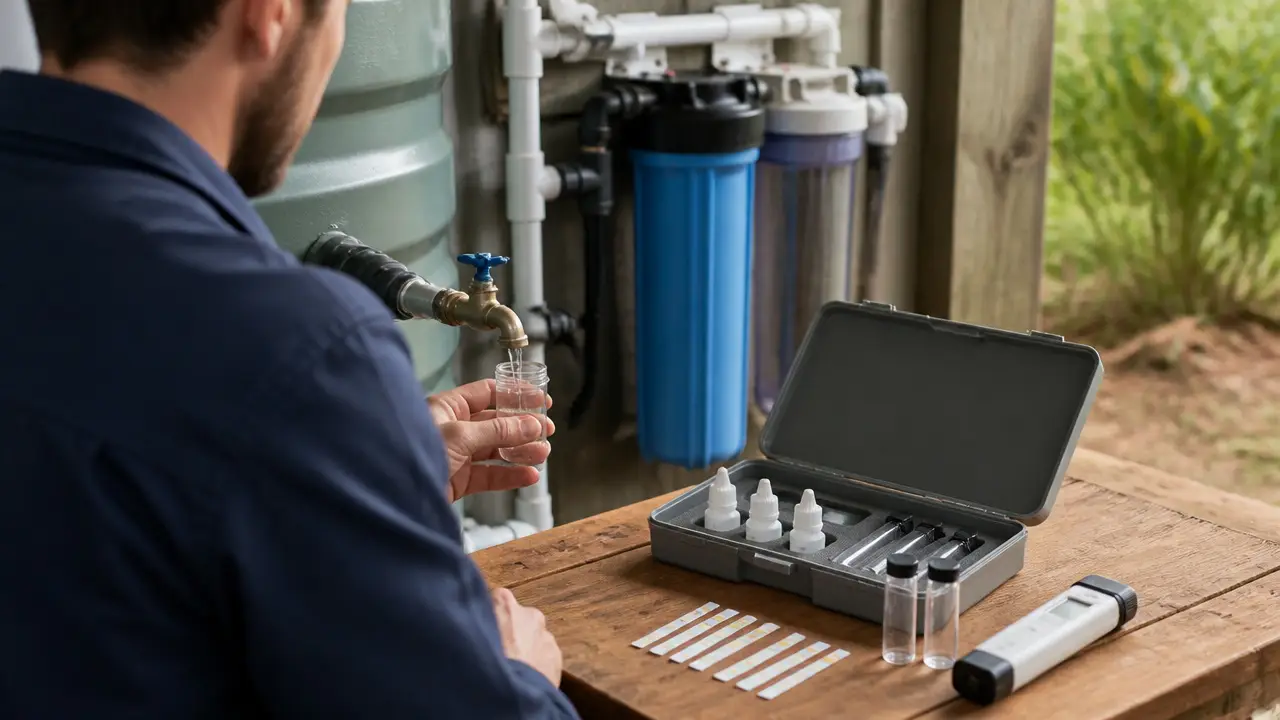
Rainwater can pick up dust, bird droppings, roofing chemicals, metals, and other contaminants before it reaches the storage tank. The CDC recommends testing rainwater used for drinking, cooking, or bathing and choosing treatment that matches the germs and chemicals found.
For most rainwater systems, reverse osmosis works best as a later treatment stage after good collection, sediment removal, and other needed treatment. For garden irrigation, toilet flushing, or outdoor cleaning, RO is usually unnecessary.
What Reverse Osmosis Does to Rainwater
Reverse osmosis, usually called RO, pushes water under pressure through a very thin membrane. Water passes through the membrane while many contaminants are rejected into a separate wastewater stream.
EPA says RO can remove or reduce a wide range of contaminants, including many dissolved solids, inorganic contaminants, and synthetic organic chemicals.
CDC also lists RO as capable of removing parasites, bacteria, and viruses and reducing several chemicals and minerals. The exact contaminants removed depend on the system and membrane, so treatment claims should be checked rather than assumed.
This makes RO useful when collected rainwater contains contaminants such as:
- Lead or other metals picked up from collection materials
- Excess dissolved minerals or salts
- Nitrate or certain other dissolved chemicals
- Some organic contaminants
- Microorganisms
RO is especially valuable for contaminants that ordinary sediment filters cannot remove.
A sediment filter may catch dirt or rust particles. It cannot necessarily remove a metal or chemical that has dissolved into the water.
Why RO Should Not Be the First Treatment Stage
Roof-collected rainwater can contain quite a bit of material that you do not want reaching an RO membrane.
Leaves, grit, pollen, roof particles, insects, algae, and fine sediment can increase maintenance and foul the membrane. EPA notes that pretreatment is frequently needed with RO to prevent membrane fouling and plugging.
It makes more sense to keep contamination out of the stored water first.
A rainwater system may include:
- Clean and suitable roof collection surfaces.
- Gutter screens or leaf guards.
- A first-flush diverter.
- A covered storage tank with protected openings.
- Sediment filtration.
- Additional treatment based on water testing.
- RO where dissolved-contaminant reduction is needed.
- Appropriate disinfection and protected plumbing where the water will be used for drinking.
A first-flush diverter sends away the first portion of runoff from a storm. That first water often carries more dirt, germs, and chemicals washed from the roof. CDC specifically recommends considering first-flush diversion as a way to improve collected rainwater quality.
The exact treatment stages and their order should match the water source, intended use, test results, and local requirements rather than following one standard DIY layout.
RO Is Often More Treatment Than Garden Rainwater Needs
Reverse osmosis does not make much sense for every rainwater system.
If you collect water in a barrel only to irrigate ornamental plants, running that water through RO would usually add complexity without providing a useful benefit.
The same may be true for rainwater used for tasks such as:
- Drip irrigation
- Washing outdoor tools
- Some outdoor cleaning
- Other suitable non-potable uses
Non-potable means water that is not intended for drinking.
For these uses, keeping leaves, mosquitoes, sediment, and other debris out of the storage system may be much more important than removing dissolved minerals with an RO membrane.
RO becomes more relevant as the required water quality rises.
RO Makes More Sense for Drinking-Water Systems
Drinking-water use is different.
Rainwater is not automatically safe because it fell from the sky or looks clear. CDC notes that rainwater may become contaminated by particles in the air and by roofing, gutters, piping, storage materials, dirt, and animal droppings.
If you intend to drink collected rainwater, RO can be one useful part of the treatment system.
But installing RO does not by itself establish that the water is potable.
Potable water is water suitable for drinking.
Drinking-water safety depends on the whole system, including:
- The collection surface
- Roofing and gutter materials
- First-flush control
- Tank design
- Protection from insects and animals
- Sediment removal
- Chemical treatment needs
- Microbial treatment needs
- Plumbing materials
- Treatment maintenance
- Water testing
- Local health and plumbing requirements
CDC recommends regular testing for harmful germs and chemicals when rainwater is used for drinking, cooking, or bathing. It also recommends choosing treatment according to the contaminants present.
An RO system should therefore solve a known treatment problem rather than being used as a substitute for testing.
Rainwater Usually Has Low Total Dissolved Solids
One reason RO is sometimes unnecessary for rainwater is that rainwater often starts with relatively few dissolved minerals compared with many groundwater supplies.
Total dissolved solids, or TDS, is a broad measurement of dissolved substances such as salts and minerals in water.
RO is very effective at reducing dissolved solids. EPA's WaterSense requirements for point-of-use RO systems include performance criteria for TDS reduction.
However, a low TDS reading does not tell you that rainwater is safe.
Water can have low TDS and still contain harmful microorganisms or certain chemicals. A handheld TDS meter also cannot identify individual contaminants.
If your rainwater already has very low dissolved solids, the main treatment problem may instead be microorganisms, fine particles, or specific contaminants picked up from the roof.
That is why laboratory testing is more useful than deciding to install RO based only on a TDS number.
Pretreatment Helps Protect the RO Membrane
A good RO installation starts with reasonably clean feed water.
Sediment is particularly important.
Water coming from a cistern can carry fine particles even when it looks clear. Material can settle on the tank bottom and become disturbed when the tank refills or when a pump runs.
A properly selected sediment-filtering stage helps keep those particles away from the RO membrane.
Some systems may need additional pretreatment depending on the water chemistry and contaminants present. The correct setup cannot be determined from the fact that the source is rainwater alone.
Trying to make an RO membrane handle everything entering directly from a dirty storage tank usually means more maintenance and less dependable treatment.
An RO System Needs Pressure
RO is not simply a gravity filter.
Water must be forced through the membrane. That means the feed water needs enough pressure for the specific RO system.
This matters with rain barrels and cisterns.
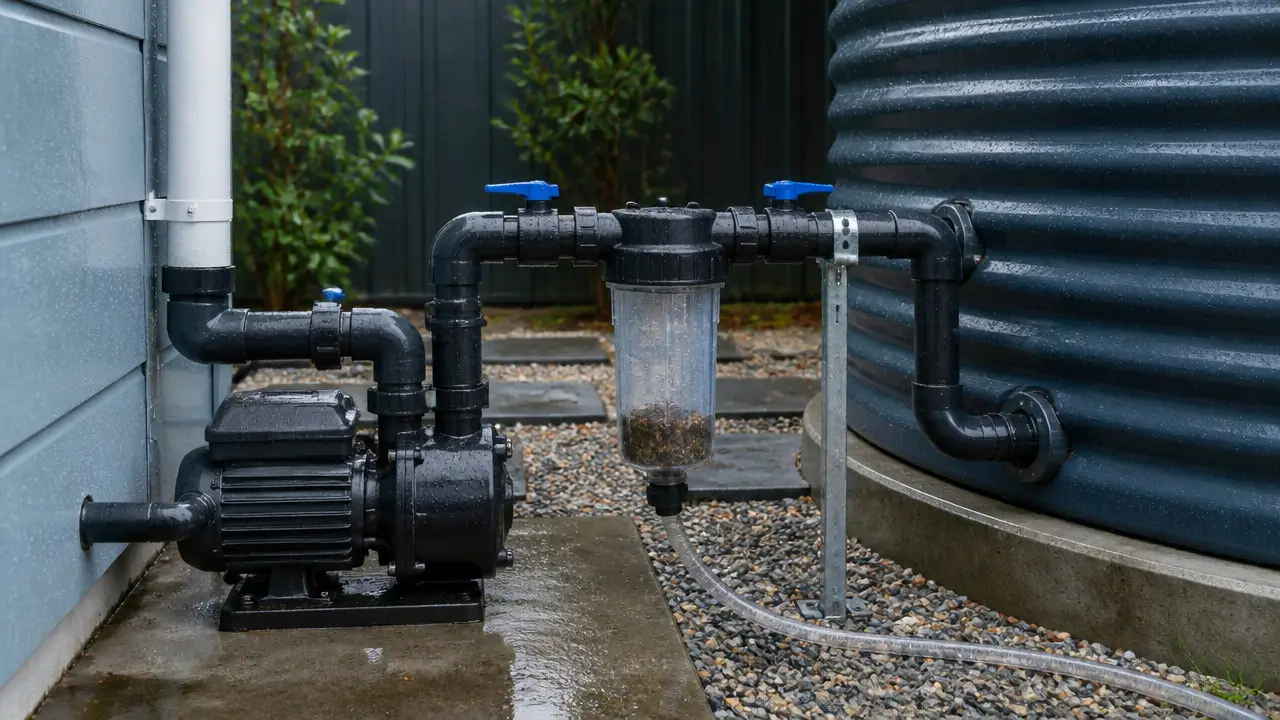
A barrel sitting beside a house may provide enough gravity flow for a garden hose but not enough pressure to operate an RO membrane correctly. The system may need a pump or another source of pressurized water.
When planning the system, check:
- Required inlet pressure
- Available pump pressure
- Pump flow
- Filter pressure losses
- Pipe size
- RO production rate
- Storage needs
- Pump controls and dry-run protection
A pump should also be protected from running when the rainwater tank is empty.
For larger household systems, pressure control and plumbing design can become more involved than a simple rain-barrel DIY project.
RO Produces Reject Water
Check recommended reverse osmosis systems for rainwater to verify this component’s role from catchment to final use.
Reverse osmosis does not turn every gallon entering the system into treated water.
It produces two streams:
Permeate is the treated water that passes through the membrane.
Concentrate, sometimes called reject water, contains a higher concentration of the contaminants rejected by the membrane.
The amount of reject water varies considerably by system and operating conditions. EPA notes that RO inherently produces a concentrate stream and that efficiency is an important consideration when selecting a residential unit.
This matters more when your stored rainwater supply is limited.
A household relying on a cistern through a long dry period should account for RO losses when estimating usable storage. A tank's full capacity is not necessarily the same as the amount of finished drinking water available from it.
RO Water May Need Post-Treatment
RO removes minerals along with unwanted contaminants.
That is not automatically a health problem, but it can change the characteristics of the water.
EPA notes that RO treatment can lower water pH and that post-treatment corrosion control may be needed in some installations.
This is particularly important when RO water will travel through a large household plumbing system rather than going directly to a dedicated drinking-water faucet.
Very low-mineral water can interact differently with plumbing materials. Depending on the system and water chemistry, professional designs may include remineralization or other post-treatment.
Do not assume that adding a mineral cartridge automatically fixes every corrosion concern. Water chemistry should be evaluated as a whole.
RO Does Not Prevent Recontamination
Even excellent treatment cannot protect water that becomes contaminated afterward.
Treated water can pick up microorganisms from:
- A dirty storage tank
- Contaminated tubing
- Poorly maintained filter housings
- An unsanitary faucet
- Open tank vents
- Cross-connections with untreated water
This is one reason drinking-water treatment must be considered from collection all the way to the tap.
CDC warns that germs can grow in filters and treatment systems that are not properly maintained.
RO membranes and prefilters therefore need inspection and replacement according to the system manufacturer's requirements. Storage tanks and rainwater collection components also need routine maintenance.
RO Versus UV for Rainwater
RO and ultraviolet treatment perform different jobs.
RO physically separates many dissolved contaminants and microorganisms from the water.
UV, or ultraviolet disinfection, uses light to inactivate microorganisms when the unit is properly sized, operated, and supplied with water suitable for UV treatment.
UV does not normally remove dissolved metals, salts, or chemicals.
RO can reduce many of those substances.
Because the two technologies solve different problems, some drinking-water systems may use both. That does not mean every rainwater system needs both.
Testing should identify what needs treatment.
For example, if laboratory results show a microbial problem but no chemical issue requiring RO, a properly designed microbial treatment system may make more sense than adding RO simply because it provides finer filtration.
When Reverse Osmosis Is a Good Choice
RO is worth considering when:
- Rainwater will be used for drinking or cooking.
- Testing identifies contaminants that the selected RO system is designed to reduce.
- You need significant reduction of dissolved solids.
- Roof runoff has a known dissolved-contaminant concern.
- You can provide suitable pretreatment and feed pressure.
- You have a plan for reject water.
- You are willing to maintain filters and membranes.
Look for independent certification for the contaminants you actually need to reduce rather than assuming all RO systems have identical performance. EPA recommends checking third-party certification when selecting drinking-water filters for specific contaminant claims.
When RO Probably Is Not Needed
RO may be unnecessary when the rainwater is used only for suitable non-potable purposes such as basic landscape irrigation.
It may also be the wrong first investment when the real problem is poor collection.
For example, RO does not replace:
- Cleaning gutters
- Keeping animals and insects out of the tank
- Using suitable collection materials
- Removing sediment
- Maintaining the tank
- Protecting treated plumbing from untreated rainwater
- Testing drinking water
Improving the beginning of the rainwater system reduces the amount of contamination that every downstream treatment stage has to handle.
The Practical Bottom Line
Reverse osmosis can be very good for rainwater, but mainly as part of a complete treatment system.
For garden and other suitable non-potable uses, it is often unnecessary.
For drinking water, RO can reduce many important dissolved contaminants and microorganisms, but it should not be treated as a one-step guarantee of safe water. Start with good collection practices, protect the storage tank, remove sediment, test the water, and choose treatment stages that address the contaminants actually present.
If rainwater will supply household drinking water, involve your local health authority or a qualified water-treatment professional when designing the system. Requirements and suitable treatment methods vary with location and water quality.
Frequently Asked Questions
Does reverse osmosis make rainwater safe to drink?
Not by itself. RO can remove or reduce many microorganisms and dissolved contaminants, but drinking-water safety depends on the entire collection, storage, treatment, plumbing, testing, and maintenance system. Rainwater intended for drinking should be regularly tested for relevant germs and chemicals.
Should rainwater be filtered before reverse osmosis?
Yes. RO membranes generally benefit from pretreatment. Roof debris and sediment should be kept out of the system as much as possible, and sediment filtration is commonly used before the RO membrane. Additional pretreatment depends on water quality.
Do I need RO for rain barrel water?
Usually not if the barrel supplies only suitable non-potable outdoor uses such as ornamental garden irrigation. RO adds pressure requirements, maintenance, and reject water that normally provide little benefit for simple rain-barrel applications.
Is RO better than UV for rainwater?
Neither is universally better. They perform different jobs. UV is primarily used for microbial disinfection, while RO can reduce many dissolved chemicals and minerals as well as microorganisms. Testing helps determine which treatment is needed.
Can a gravity-fed rainwater tank run an RO system?
Often not directly. RO membranes require pressurized feed water. A gravity-fed tank may need a properly selected pump and pressure-control system before the RO unit.
Does a TDS meter tell me whether rainwater needs RO?
No. A TDS meter measures the general amount of dissolved material in water. It does not identify specific chemicals or tell you whether harmful microorganisms are present. Laboratory testing is more appropriate when deciding how drinking rainwater should be treated.
Does RO waste collected rainwater?
RO produces a treated-water stream and a separate concentrate or reject-water stream. The amount rejected varies by system. This loss should be included when sizing a rainwater supply, especially where stored water must last through dry weather.
Can I connect treated rainwater to my house plumbing?
Possibly, but household rainwater plumbing can involve treatment, backflow prevention, cross-connection control, pressure requirements, and local plumbing or health rules. Keep untreated rainwater from contaminating potable plumbing, and check current local requirements before making the connection.