As an affiliate, we may earn a commission from qualifying purchases. We get commissions for purchases made through links on this website from Amazon and other third parties.
A whole-house water filtration system can be worth getting when there is a water-quality problem that affects water throughout the home. It can help with sediment, chlorine, certain odors, and other specific contaminants when the system is designed for them.
But it is not automatically the best choice just because you want cleaner drinking water. If your main concern is the water you drink and cook with, a point-of-use filter at the kitchen sink may be simpler and more appropriate.
The key is to find out what is actually in your water first. Different treatment systems handle different problems, and no single filter removes every contaminant. The CDC recommends testing or reviewing your water-quality information before choosing treatment.
What Is a Whole-House Water Filtration System?
A whole-house system treats water near the point where it enters your home. It is also called a point-of-entry, or POE, treatment system.
Instead of filtering only one drinking-water faucet, it can supply treated water to:
- Kitchen and bathroom faucets
- Showers and tubs
- Washing machines
- Dishwashers
- Toilets
- Other indoor plumbing
This is useful when the problem affects many uses of water rather than drinking water alone.
Whole-house treatment is not one specific type of filter. A system might include a sediment filter, activated carbon, specialty treatment media, ultraviolet treatment, or several stages. The right setup depends on the water source and the problem you need to solve.
When a Whole-House Filter Is Worth It
A whole-house system makes the most sense when you have a known problem that should be treated before water moves through the rest of the plumbing.
You Have Sediment Throughout the House
Sand, silt, rust, or other particles can clog faucet aerators, valves, washing machines, water heaters, and smaller filters.
A whole-house sediment filter can catch this material before it reaches those fixtures.
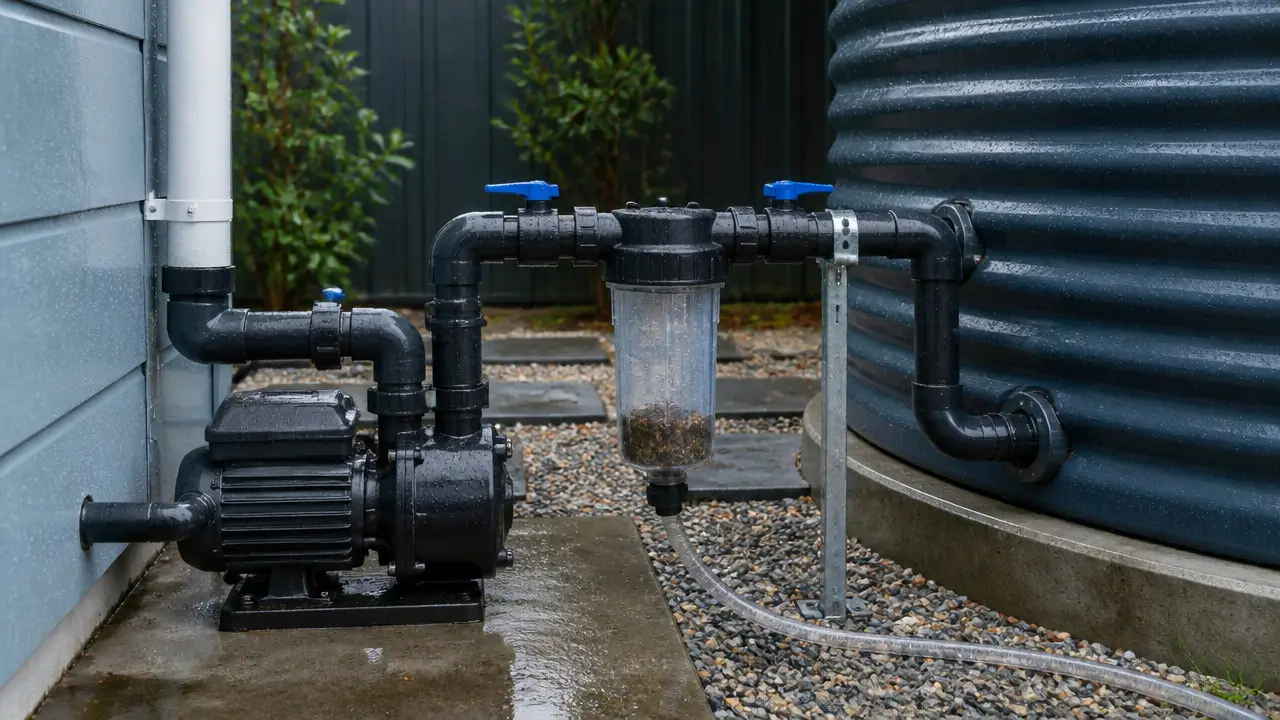
This is especially useful with some private wells, cisterns, and stored-water systems where sediment may be more common.
A sediment filter is often rated in microns. A micron is a very small unit of size. Lower micron ratings generally catch smaller particles, but finer filters can also restrict flow more quickly if the water carries a lot of sediment.
The goal is not simply to choose the smallest micron number possible. The filter must also provide enough flow for the house without causing excessive pressure loss.
Chlorine Taste or Odor Affects More Than Drinking Water
Activated carbon treatment can reduce chlorine and certain taste and odor problems when the system is certified for those claims.
Treating water at the entry point can reduce chlorine not only at the kitchen faucet but also in showers and other fixtures.
However, there is an important tradeoff. Chlorine or another disinfectant in public water helps limit microbial growth in plumbing. The CDC notes that some whole-home filters remove these treatment chemicals, and germs can grow in filters that are not properly maintained.
That makes timely filter replacement and proper system maintenance important.
You Have a Confirmed Contaminant That Requires Point-of-Entry Treatment
Some water problems are better handled before water moves throughout the building.
The treatment method depends on the contaminant. Activated carbon, specialized media, reverse osmosis, aeration, ion exchange, and other technologies do different jobs.
Do not choose a system based only on broad claims such as "removes contaminants."
Look for certification for the specific contaminant you need to reduce. NSF explains that certification to a drinking-water treatment standard does not mean a system reduces every contaminant covered by that general type of treatment. The individual reduction claim matters.
Your Well Water Needs Ongoing Treatment
Private wells are different from public water supplies because the homeowner is responsible for testing and treatment.
The CDC recommends testing private well water at least yearly and selecting treatment based on the germs or chemicals found.
Depending on test results, a well system might need several treatment stages rather than one general-purpose filter.
For example, a system could require sediment removal before another treatment stage. Water chemistry may also affect how well certain treatment methods work.
A qualified water-treatment professional can be useful when a well has several problems at once.
When a Whole-House Filter May Not Be Worth It
Whole-house filtration treats a large amount of water, including water that may not need drinking-water-level treatment.
That can add equipment, plumbing work, pressure loss, filter changes, and other maintenance.
Your Only Concern Is Drinking Water
If the water from your public supply is otherwise suitable for household use and you only want to reduce a specific contaminant in drinking and cooking water, a point-of-use system may make more sense.
A point-of-use system treats water where you use it. Common examples include under-sink filters and dedicated drinking-water systems.
There is little benefit in using expensive treatment media on toilet-flush water when the concern only involves what you drink.
You Have Not Identified a Water Problem
Do not assume that buying more filtration automatically produces better water.
The CDC advises checking your water before choosing treatment because appearance, taste, and smell do not reliably tell you whether harmful contaminants are present.
For public water, start with the annual water-quality report from your utility. If you have a private well or rainwater system used for drinking, laboratory testing becomes especially important.
Your Actual Problem Is Hard Water
A filter and a water softener are not the same thing.
Hard water contains relatively high levels of minerals, mainly calcium and magnesium. These minerals can create scale on plumbing fixtures and appliances.
Most ordinary sediment or carbon filters do not soften water.
A water softener is designed primarily to remove hardness minerals. The CDC describes softening separately from filtration because the treatment goals are different.
If scale is your main complaint, adding a whole-house carbon filter may do little to solve it.
What a Whole-House Filter Can and Cannot Do
There is no universal whole-house filter.
What the system does depends on its treatment technology.
| Treatment type | Common purpose | Important limitation |
|---|---|---|
| Sediment filtration | Sand, rust, silt, suspended particles | Does not automatically remove dissolved chemicals or germs |
| Activated carbon | Certain tastes, odors, chlorine, and certified chemical reductions | Performance depends on the media and specific certification |
| Water softener | Calcium and magnesium hardness | Not a general-purpose germ-removal system |
| UV treatment | Inactivating certain microorganisms | Does not remove dissolved chemicals and works best with suitable pretreatment |
| Specialty treatment media | Targeted contaminants | Must be matched to the water chemistry and contaminant |
| Reverse osmosis | Broad removal of many dissolved substances depending on system design | Usually more complex and commonly used as point-of-use treatment in homes |
The CDC emphasizes that different treatment technologies remove different germs and chemicals. Multiple treatment methods may sometimes be needed.
Whole-House Filtration for Rainwater
Look closely at selecting a sediment filter to interpret which contaminant-specific test should come next.
A whole-house filter deserves extra caution when the source is harvested rainwater.
Roof runoff can pick up:
- Bird and animal waste
- Dust and soil
- Roofing debris
- Plant material
- Airborne pollutants
- Microorganisms
- Materials from gutters and storage tanks
A whole-house cartridge filter by itself does not make this water potable.
Potable means suitable for drinking. Non-potable means water that is not intended for drinking, although it may be suitable for approved uses such as irrigation or toilet flushing.
If collected rainwater will be used only for landscape irrigation, treatment requirements can be quite different from those for household drinking water.
For potable use, think of treatment as a complete system. That may involve suitable collection surfaces, debris exclusion, first-flush management, protected storage, prefiltration, treatment designed for identified risks, current laboratory testing, proper maintenance, and compliance with applicable local requirements.
A first flush device diverts some of the initial roof runoff from a rainfall event. This early runoff may carry a higher load of roof debris and contamination.
The CDC recommends testing drinking water from rainwater collection systems at least once a year for harmful germs and chemicals.
Check Flow Rate Before Buying
Whole-house equipment has to treat water fast enough for several fixtures to operate at once.
Flow rate is the amount of water moving through the system over a period of time, often stated in gallons per minute.
Imagine that someone is showering while a washing machine is filling and another person opens a faucet. The filter must handle the combined demand without creating an unacceptable drop in pressure.
A filter that works well on a single faucet may be far too restrictive for a whole house.
Pay attention to:
- Household peak flow needs
- Filter housing and connection size
- Treatment equipment flow limits
- Existing water pressure
- Expected pressure drop
- Pump capacity if you use a well, cistern, or rainwater tank
Do not size a system solely by pipe diameter. The treatment media and filter condition also affect flow.
Pressure Drop Matters
Every filter creates some resistance to water flow.
As sediment builds up, that resistance usually increases.
Symptoms of a loaded filter can include:
- Weak showers
- Faucets slowing when several fixtures run
- Longer appliance fill times
- Pumps cycling differently
- A noticeable difference between pressure before and after the filter
Installing pressure gauges before and after a filter can make it easier to see when pressure loss is increasing.
Follow the equipment manufacturer's limits rather than relying only on a calendar replacement schedule.
Think About Maintenance Before Installation
A whole-house system becomes part of the home's water infrastructure. It should be installed where routine servicing is practical.
You may need access for:
- Cartridge changes
- Media replacement
- Cleaning
- Sanitizing
- Leak checks
- Pressure checks
- UV lamp or sleeve service, when used
- Drainage from certain treatment systems
Filters should not simply be installed and forgotten.
NSF recommends following the manufacturer's replacement requirements because treatment performance depends on proper maintenance.
A clogged filter can restrict flow. An exhausted treatment medium may no longer provide its intended contaminant reduction.
Look for Certification That Matches the Problem
Certification numbers can be useful, but the number alone is not enough.
For example:
- NSF/ANSI 42 can cover aesthetic effects such as chlorine taste and odor.
- NSF/ANSI 53 can cover certain contaminants that have health effects.
The exact contaminant reduction claim still needs to match the problem you are trying to solve.
Do not assume that a carbon filter certified for chlorine reduction also removes lead, PFAS, arsenic, bacteria, or other unrelated contaminants.
Start with the contaminant, then find the treatment that is independently certified for that job when an applicable certification exists.
A Simple Way to Decide
A whole-house filtration system is more likely to be worthwhile when all three of these statements are true:
- You know what problem you are treating.
- The problem affects water throughout the house.
- You are willing to maintain a system sized for whole-house flow.
If the problem affects only drinking and cooking water, point-of-use treatment may be the simpler answer.
If you do not yet know what the problem is, testing comes before equipment.
For municipal water, review your utility's current water-quality report and consider targeted testing when there is a specific concern.
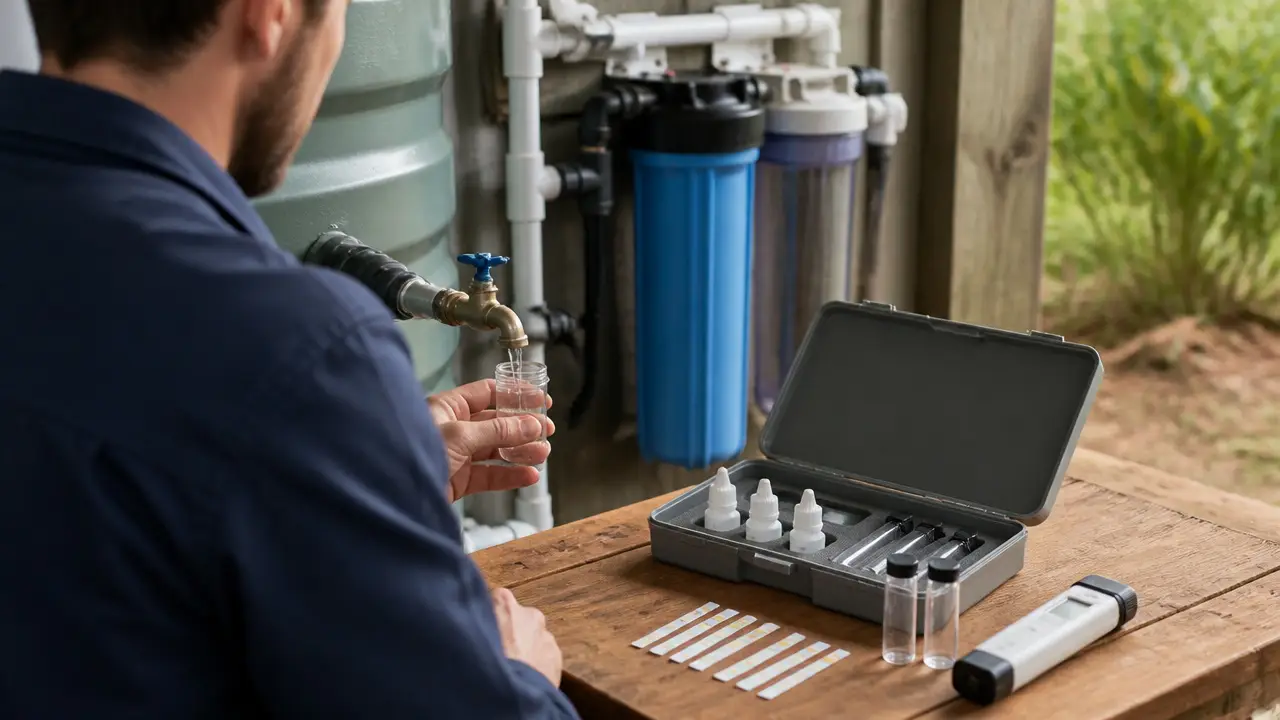
For private wells and rainwater intended for drinking, use appropriate laboratory testing and treat the water based on the results. Do not rely on taste, appearance, a basic handheld meter, or a single filter to establish drinking-water safety.
Frequently Asked Questions
Does a whole-house water filter make tap water safe to drink?
Not automatically. A whole-house filter only reduces contaminants it was designed and verified to treat. Drinking-water safety depends on the source water, identified contaminants, treatment system, maintenance, testing, and other conditions.
Is whole-house filtration better than an under-sink filter?
Neither is always better. Whole-house treatment makes sense when a problem affects water throughout the home. An under-sink system can be a better fit when treatment is mainly needed for drinking and cooking water.
Does a whole-house filter remove hard water?
A normal sediment or carbon filter generally does not soften hard water. Hardness is mainly caused by calcium and magnesium. A water softener uses a different treatment process.
Will a whole-house filter reduce water pressure?
It can. Filters create resistance to flow, and pressure loss usually increases as a cartridge becomes clogged. Proper sizing helps keep the system from restricting household water demand too much.
How often should whole-house filters be changed?
There is no universal schedule. It depends on the filter, water quality, water use, sediment load, and manufacturer's requirements. Increasing pressure drop or reduced flow may also indicate that service is needed.
Do I need a whole-house filter if I have city water?
Not necessarily. Start with your utility's water-quality report and identify the problem you want to address. If your concern only affects drinking water, point-of-use treatment may be enough.
Can I use a whole-house filter for collected rainwater?
Yes, filtration can be one part of a rainwater system, but a whole-house filter alone does not make roof runoff safe to drink. Potable rainwater use requires a treatment plan matched to the source and intended use, along with appropriate testing, maintenance, and applicable local requirements.