As an affiliate, we may earn a commission from qualifying purchases. We get commissions for purchases made through links on this website from Amazon and other third parties.
The most effective whole-house water filtration system is not one filter or one technology. It is a treatment system matched to the contaminants actually in the water.
For many homes, an effective setup uses sediment filtration first, followed by contaminant-specific treatment such as activated carbon, a water softener or other media, and UV disinfection when microbial contamination is a concern. Reverse osmosis is often more practical at the kitchen tap than for the entire house.
The CDC recommends testing the water first and choosing treatment that is specifically designed to remove the germs or chemicals found. Different treatment methods remove different contaminants, and several methods may need to be combined.
What Does "Most Effective" Mean?
A whole-house system, also called a point-of-entry system, treats water before it is distributed to most or all fixtures in the home.
The best system depends on what you need to remove.
For example:
| Water problem | Treatment that may be appropriate |
|---|---|
| Sand, rust, silt, or suspended particles | Sediment filtration |
| Chlorine, taste, odors, some organic chemicals | Activated carbon |
| Hard water | Water softener |
| Iron or manganese | Treatment designed for the specific form and concentration |
| Bacteria or other microorganisms | Properly sized UV or another suitable disinfection process |
| Certain dissolved chemicals | Reverse osmosis, ion exchange, or specialized media |
| Several different problems | Multiple treatment stages |
A carbon filter that works well for chlorine may do almost nothing for nitrate. A water softener that handles hardness does not make contaminated water microbiologically safe. UV can disinfect properly prepared water but does not remove dissolved chemicals.
That is why choosing a system by the number of "stages" on the label is less useful than matching each stage to a known water problem.
A Practical Whole-House Treatment Layout
A common effective treatment train looks like this:
Water source → sediment control → contaminant-specific treatment → optional disinfection → household plumbing
Not every house needs every stage.
1. Sediment Filtration
Sediment filtration removes particles such as:
- Sand
- Silt
- Rust
- Pipe debris
- Fine suspended material
It is often placed near the beginning of the system because sediment can clog carbon media, valves, UV equipment, and other treatment stages.
A filter's micron rating describes the approximate size of particles it is designed to capture. One micron is one-thousandth of a millimeter.
Smaller is not automatically better. A very fine filter can clog quickly if the incoming water contains a lot of sediment.
Some systems therefore use progressively finer filtration rather than forcing all of the water through one very fine cartridge.
A sediment filter should not be treated as a drinking-water purifier. Removing visible particles does not establish that chemicals or microorganisms have been removed.
2. Activated Carbon
For many homes on treated municipal water, a properly selected whole-house activated-carbon system can be one of the most useful treatment stages.
Activated carbon can be used to reduce:
- Chlorine
- Unpleasant tastes
- Odors
- Some organic chemicals
- Certain other contaminants when the system has a specific tested reduction claim
Carbon works by adsorption, meaning substances attach to the large internal surface area of the carbon.
However, carbon does not remove everything. EPA guidance notes that ordinary carbon treatment does not address contaminants such as nitrate, bacteria, or dissolved minerals in the same way that other treatment technologies do.
Look for certification for the contaminant you actually want reduced. NSF/ANSI 42 commonly covers aesthetic effects such as chlorine, taste, and odor, while NSF/ANSI 53 covers specific contaminants that have health effects. Certification to a standard does not mean that every filter certified to that standard removes every contaminant covered by it. Check the actual reduction claims.
Whole-House Carbon Has an Important Tradeoff
Municipal water commonly arrives with a disinfectant residual such as chlorine or chloramine.
A whole-house filter that removes that disinfectant may improve taste and odor, but it also removes some of the protection against microbial growth inside the home's plumbing.
The CDC specifically warns that removing chlorine or other disinfectants from all household water can allow more germs to grow in plumbing.
That does not mean whole-house carbon should never be used. It means the system should be selected and maintained with this tradeoff in mind.
Add a Water Softener Only When Hardness Calls for One
A water softener is not really a general-purpose filter.
It is mainly designed to remove calcium and magnesium, which cause hard water.
Hard water can lead to:
- Scale inside pipes
- Mineral deposits on fixtures
- Scale in water heaters
- Reduced soap performance
- Deposits on appliances
Traditional ion-exchange softeners replace hardness minerals with other ions.
They do not normally remove bacteria, viruses, or parasites. The CDC therefore treats softening as a separate treatment process rather than a complete water purification method.
Have hardness measured before installing one. If hardness is not a problem, adding a softener may provide little benefit.
Iron and Manganese Need Their Own Treatment Plan
Private wells often present problems that municipal water systems do not.
Iron and manganese can produce:
- Orange, brown, or black staining
- Metallic tastes
- Deposits
- Clogged fixtures
- Discolored laundry
There is no universal "iron filter" that works equally well under every condition.
Treatment depends on factors such as:
- Iron concentration
- Whether the iron is dissolved or already oxidized
- Manganese concentration
- pH
- Hardness
- Other water chemistry
- Required household flow
Treatment may involve oxidation, filtration, ion exchange, or specialized media.
This is a good example of why a laboratory water analysis is more useful than buying a generic multi-stage system and hoping it addresses the problem.
When UV Disinfection Makes Sense
UV stands for ultraviolet.
A UV treatment chamber exposes water to ultraviolet light that can inactivate microorganisms when the equipment and incoming water conditions are appropriate.
UV may be useful with:
- Private wells with microbial concerns
- Rainwater systems
- Some remote or cabin water systems
- Other supplies where microbiological contamination needs to be controlled
UV works better when the water has been properly prefiltered. Cloudiness and suspended material can interfere with UV treatment. The CDC recommends prefiltration with UV systems and notes that UV treatment does not remove chemical contaminants.
NSF/ANSI 55 covers ultraviolet microbiological water-treatment systems. Current certified point-of-entry systems are available with specific disinfection-performance claims.
A UV unit also needs ongoing maintenance. Depending on the equipment, that can include cleaning the sleeve, replacing lamps or other UV components, and confirming that operating conditions remain within the manufacturer's requirements.
UV should never be treated as proof that unknown water is safe to drink.
Is Whole-House Reverse Osmosis the Most Effective System?
Reverse osmosis, or RO, can remove a much broader range of dissolved contaminants than ordinary sediment or carbon filtration.
Water is pushed through a semipermeable membrane. Some water passes through as treated water, while another portion carries rejected contaminants away.
RO can reduce many dissolved substances, depending on the membrane and system certification. CDC guidance lists examples including lead, copper, chromium, chloride, sodium, and potentially arsenic, nitrate, fluoride, sulfate, and several other substances. The exact performance depends on the system and contaminant claim.
That does not automatically make whole-house RO the best choice.
Whole-House RO Can Be More System Than Most Homes Need
A point-of-entry RO installation may require:
- Pretreatment
- High-pressure pumping
- A membrane system
- Reject-water drainage
- Treated-water storage
- A pressure tank or repressurization pump
- Periodic membrane and filter replacement
- Possible post-treatment
EPA research into whole-house RO has also noted that demineralized water can require additional consideration because of its interaction with household plumbing.
RO also creates a reject-water stream.
For these reasons, treating every gallon used for toilets, laundry, showers, and outdoor faucets with RO often does not make sense unless the source water has contaminants that require treatment throughout the home.
Point-of-Use RO Is Often More Practical
If the main concern involves drinking and cooking water, an under-sink RO system can treat only the water that needs that level of treatment.
EPA describes residential RO primarily as a point-of-use technology and now has WaterSense criteria intended to reduce the amount of water wasted by qualifying systems.
A common arrangement can therefore be:
Alongside treatment barriers appropriate for household drinking water, verify water-testing requirements for the proposed household purpose.
Whole house: sediment and any needed carbon, hardness, iron, or microbial treatment
Kitchen: additional RO when laboratory results or the desired contaminant reductions justify it
This avoids treating shower and toilet water to the same standard as drinking water when there is no need to do so.
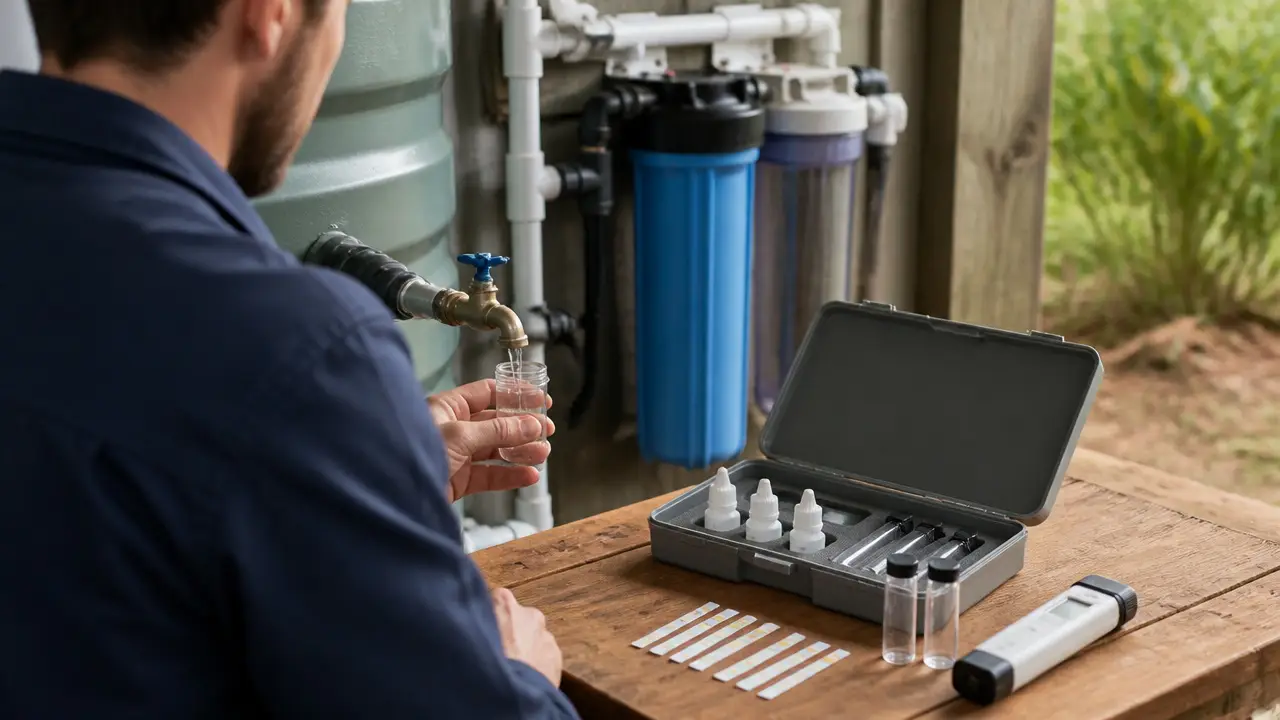
Test the Water Before Choosing the System
Testing is the most important part of choosing an effective filtration system.
Municipal Water
If you use a public water supply, start with information from your water utility.
Then test at the home when there is a reason to investigate something that may occur between the utility and your tap, such as concerns about household plumbing or a particular contaminant.
Do not choose treatment based only on taste, odor, or appearance. The CDC notes that potentially harmful contaminants may have no noticeable taste, smell, or color.
Private Well Water
Private well owners have more responsibility for water quality because private wells are not regulated in the same way as public drinking-water systems.
EPA recommends testing private wells annually for at least:
- Total coliform bacteria
- Nitrate
- Total dissolved solids
- pH
Additional tests should be selected based on local conditions and possible contamination sources. EPA recommends using a certified drinking-water laboratory.
Total dissolved solids, or TDS, is a measure of dissolved material in water. A TDS reading alone cannot tell you whether the dissolved material is harmless or hazardous.
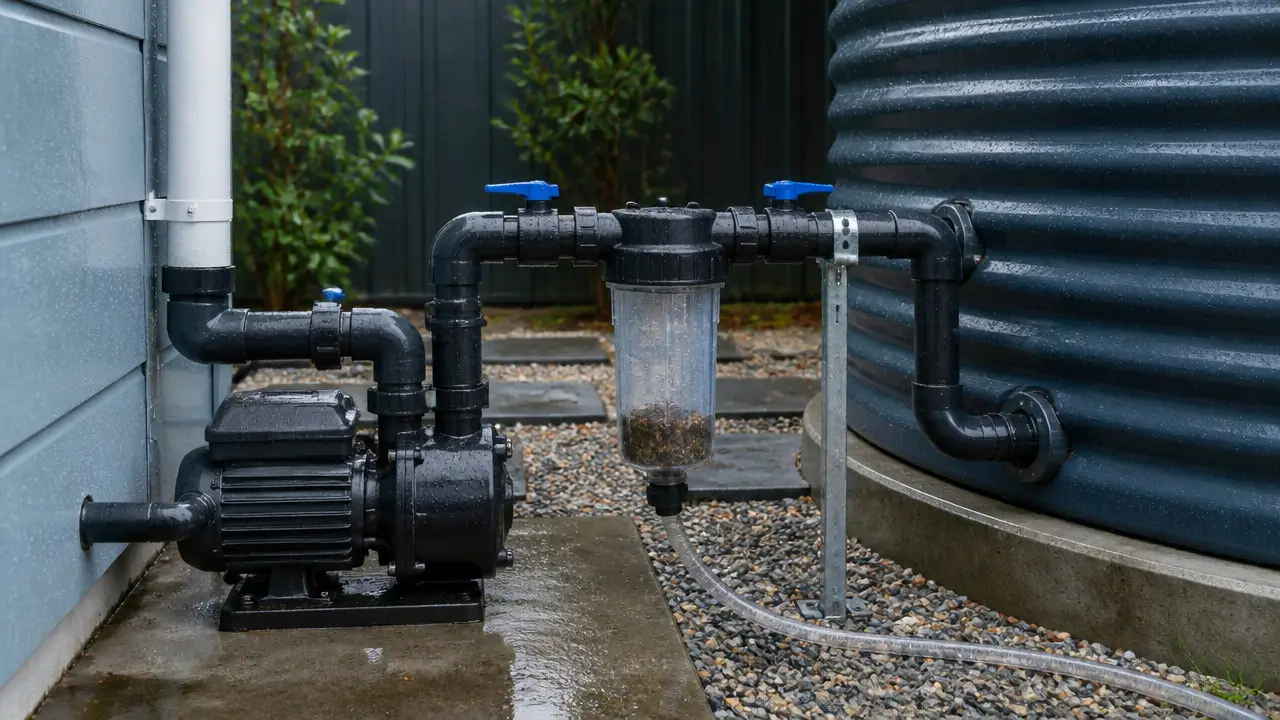
What About Whole-House Filtration for Rainwater?
Rainwater requires a different approach from ordinary municipal water.
Roof runoff can pick up:
- Dust
- Leaves
- Bird and animal waste
- Roofing material residues
- Airborne contaminants
- Microorganisms
A rainwater system may also introduce contamination during storage.
Good system planning starts before the household filter. It can include suitable roof and gutter collection, debris screening, a first-flush arrangement where appropriate, protected storage, sediment management, treatment, maintenance, and water testing.
A first-flush device diverts some of the earliest runoff from a rain event so that dirt accumulated on the collection surface is less likely to enter storage.
If collected rainwater will be used for drinking or other potable uses, do not assume that a sediment filter, carbon filter, UV unit, RO system, or combination of equipment automatically makes it safe.
Potable means suitable for drinking. Drinking-water use should be treated as a whole-system decision involving suitable collection, treatment matched to the water quality, current laboratory testing, consistent maintenance, and applicable local requirements.
The CDC recommends at least annual testing of water from private wells or rainwater collection systems for harmful germs and chemicals.
Size the System for Household Flow
Even the correct treatment technology will perform poorly if the system is too small.
Check the manufacturer's rated flow rate, normally expressed in gallons per minute, or GPM.
Flow rate means how much water can pass through the system in a given time.
A home can briefly demand a lot of water when several fixtures operate together. For example, someone may shower while a washing machine fills and another faucet is running.
An undersized treatment system can cause:
- Low water pressure
- Poor shower performance
- Excessive pressure drop
- Inadequate treatment contact time
- Premature filter clogging
Do not size the system simply from the home's pipe diameter.
Consider both the expected peak household flow and the treatment unit's rated service flow.
Pay Attention to Pressure Drop and Connections
Every filter creates some resistance to water flow.
As a cartridge fills with sediment, that resistance usually increases.
Before installing a system, check:
- Inlet and outlet connection sizes
- Existing pipe size
- Maximum operating pressure
- Minimum operating pressure
- Rated flow
- Pressure loss at that flow
- Drain requirements
- Electrical requirements
- Available installation space
- Bypass-valve arrangement
A large filter housing with small fittings can still restrict flow. Likewise, oversized plumbing does not fix a treatment system whose media bed or cartridge cannot pass the required flow.
Pressure vessels, electrical UV equipment, pumps, and major plumbing changes should be installed according to their listed requirements and applicable local plumbing and electrical rules.
Certification Matters More Than the Number of Stages
Labels such as "3-stage," "5-stage," and "12-stage" do not tell you whether a system removes your contaminant.
Look instead for an independent certification and a specific reduction claim.
Common standards include:
- NSF/ANSI 42: mainly aesthetic effects such as chlorine, taste, and odor
- NSF/ANSI 53: specific contaminants with health effects
- NSF/ANSI 55: ultraviolet microbiological treatment
- NSF/ANSI 58: reverse-osmosis drinking-water systems
- NSF/ANSI 401: certain emerging or incidental compounds
The standard number is not a quality ranking. NSF states that these numbers identify different standards rather than levels of performance.
Check the certification database or documentation for the exact model and contaminant claim rather than relying on a certification logo by itself.
Maintenance Is Part of Filtration Performance
An effective whole-house system can become ineffective when it is neglected.
Maintenance may include:
- Replacing sediment cartridges
- Replacing or rebedding carbon media
- Regenerating or maintaining ion-exchange equipment
- Cleaning housings
- Maintaining UV equipment
- Replacing RO prefilters and membranes
- Checking tanks and pressure equipment
- Watching pressure gauges
- Inspecting for leaks
- Retesting the treated water when appropriate
Do not assume a cartridge is still working simply because water continues to flow through it.
Carbon can eventually lose adsorption capacity. Sediment filters clog. UV output changes over time. RO membranes foul. Treatment media can become exhausted.
CDC guidance stresses following the manufacturer's maintenance and filter-replacement instructions because poorly maintained equipment can allow microbial growth and lose treatment performance.
So, Which Whole-House System Is Most Effective?
For most homes, the best answer is a custom treatment train rather than an all-purpose whole-house purifier.
A sensible process is:
- Test the source water.
- Identify what actually needs to be removed.
- Use sediment treatment when particles need to be controlled.
- Add activated carbon when its specific contaminant reductions are useful.
- Add a softener, iron treatment, ion exchange, or other specialized treatment only when water testing justifies it.
- Use suitable disinfection when there is a microbiological treatment need.
- Consider point-of-use RO for drinking and cooking when dissolved contaminants call for it.
- Size every stage for the home's flow and pressure requirements.
- Choose independently certified equipment with claims that match the contaminants.
- Maintain and periodically verify the system.
That approach is usually more effective than buying the system with the finest filter, the most stages, or the longest list of general filtration claims.
Frequently Asked Questions
Is reverse osmosis the best whole-house water filtration system?
Not necessarily. RO can reduce many dissolved contaminants, but treating all household water with RO requires more equipment, creates reject water, and may require storage and repressurization. Whole-house pretreatment with point-of-use RO for drinking water is often more practical.
Does a whole-house carbon filter remove bacteria?
Activated carbon should not be relied on as a general bacterial treatment. Carbon mainly adsorbs certain chemicals and improves taste and odor. If microorganisms are a concern, use a treatment method specifically designed and certified for that purpose.
What micron filter is best for a whole house?
There is no universal best micron rating. The right filter depends on the amount and size of sediment in the water and the needs of downstream treatment equipment. Very fine filters may clog quickly when the incoming water contains heavy sediment.
Should a water softener be part of a whole-house filtration system?
Only when hardness or another condition suitable for that softener needs treatment. A softener mainly removes hardness minerals. It is not a substitute for sediment filtration, chemical treatment, or disinfection.
Can a whole-house water filter make rainwater safe to drink?
A single whole-house filter cannot establish that rainwater is safe to drink. Potable rainwater requires suitable collection and storage, treatment matched to the water quality, proper maintenance, current laboratory testing, and compliance with applicable local requirements.
How many filtration stages should a whole-house system have?
Use as many stages as the water quality requires and no more. A simple municipal-water installation may need little treatment, while a private well with sediment, hardness, iron, and microbial concerns may require several separate processes.
How often should whole-house filters be replaced?
There is no universal replacement interval. Follow the equipment manufacturer's limits and consider water use, sediment load, contaminant concentration, pressure drop, media capacity, and testing results. A filter that looks clean may still have exhausted treatment capacity.