As an affiliate, we may earn a commission from qualifying purchases. We get commissions for purchases made through links on this website from Amazon and other third parties.
The healthiest way to filter water at home is to find out what is in the water first, then use the least complicated treatment system that removes the contaminants that actually matter. There is no single filter that is healthiest for every home.
For treated city water, a certified point-of-use filter at the kitchen sink may be enough. For water with certain dissolved chemicals, reverse osmosis may make sense. For private wells or collected rainwater, filtration alone may not be enough because germs and chemicals can require different treatment steps. The CDC recommends testing water and choosing treatment for the specific germs or chemicals found.
Start With the Water You Already Have
Before buying a filter, identify your water source.
If you use a public water system in the United States, check the annual Consumer Confidence Report from your water utility. It lists regulated contaminants found during testing.
If you use a private well, collected rainwater, or another private supply, laboratory testing is more important. The CDC recommends testing well and rainwater supplies at least yearly for harmful germs and chemicals, with additional testing when the water changes in color, smell, or taste.
Do not choose a filter based only on how the water looks or tastes. Clear water can contain contaminants that you cannot see, smell, or taste.
Testing also helps you avoid unnecessary treatment. If your public tap water already meets applicable drinking-water requirements and you have no specific contaminant problem, you may not need an elaborate filtration system.
Match the Filter to the Problem
Different treatment methods do different jobs.
| Treatment | Often useful for | Important limitation |
|---|---|---|
| Activated carbon | Chlorine taste and odor and certain chemicals, depending on certification | Does not automatically remove germs or every dissolved contaminant |
| Sediment filter | Sand, rust, dirt, and suspended particles | Does not make contaminated water safe to drink |
| Microfiltration | Larger microorganisms such as certain parasites | Usually does not remove viruses or dissolved chemicals |
| Ultrafiltration | Parasites and bacteria | Usually does not remove dissolved chemicals |
| Reverse osmosis | Many germs and certain dissolved chemicals | Does not remove every possible contaminant |
| UV treatment | Inactivating microorganisms | Does not remove chemicals and works best with suitable pretreatment |
| Distillation | Many germs, minerals, and chemicals | Slow, energy-intensive, and not effective for every volatile chemical |
The exact performance depends on the specific system. A treatment type alone is not enough to prove that a unit removes a particular contaminant.
Activated Carbon Is Often Enough for Treated Tap Water
Activated carbon is common in pitcher filters, refrigerator filters, faucet filters, and under-sink systems.
Water passes through carbon with a very large surface area. Certain substances stick to that surface.
Carbon filtration can be useful when the main goal is improving chlorine taste and odor. Some certified carbon filters can also reduce health-related contaminants such as lead or certain organic chemicals.
But carbon filters are not interchangeable.
A basic carbon cartridge designed for taste may not remove lead. A lead-reduction filter may not reduce another chemical you are concerned about. Most common pitcher and refrigerator filters are also not designed to remove harmful microorganisms.
For many homes supplied by properly treated municipal water, a certified point-of-use carbon filter can be a practical approach when only specific contaminants or taste problems need attention.
When Reverse Osmosis Makes More Sense
Reverse osmosis, often called RO, pushes water through a very fine membrane.
RO systems can reduce parasites, bacteria, viruses, and certain dissolved substances. Depending on the system and its certification, these may include lead, copper, chromium, sodium, and other chemicals. The CDC stresses checking the exact contaminant claims because RO does not guarantee removal of everything.
An under-sink RO system may make sense when laboratory results or your utility report identify contaminants that a simpler filter cannot adequately address.
RO also has tradeoffs. It normally needs several treatment stages, creates a reject-water stream, reduces water flow compared with a normal faucet, and requires regular cartridge and membrane maintenance.
It also removes minerals along with unwanted substances. Removing minerals does not automatically make water unhealthy, but there is little reason to remove substances unnecessarily when a simpler treatment method meets your needs.
When UV Treatment Is Useful
Ultraviolet treatment uses UV light to damage microorganisms so they can no longer reproduce normally.
UV can be useful when microbial contamination is a concern, such as with some well-water or rainwater systems. The CDC notes that UV treatment with filtration before the UV unit works better than UV without suitable prefiltration.
That is because cloudy water and suspended particles can interfere with UV treatment.
UV has an important limitation: it does not remove chemicals.
A UV system therefore cannot correct lead, arsenic, pesticides, salts, or other dissolved chemical problems. If both microbial and chemical risks exist, several treatment stages may be needed.
Sediment Filters Are a First Step, Not a Complete Treatment
Sediment filters catch larger particles such as dirt, rust, and debris.
They are useful because particles can clog finer filters and interfere with later treatment stages.
A filter's micron rating describes the approximate size of particles it can capture. One micron is one-thousandth of a millimeter.
An absolute micron rating is more useful for microorganism removal claims than a nominal rating because an absolute rating limits the largest pore size more closely. The CDC notes, for example, that an absolute 1-micron filter can capture certain organisms that may pass through a nominal 1-micron filter.
But removing visible particles does not mean the water is safe to drink. Chemicals and microorganisms can remain after the water looks perfectly clear.
Look for Certification for the Contaminant You Need Removed
Independent certification is one of the most useful ways to compare home water-treatment systems.
Common NSF/ANSI standards include:
- NSF/ANSI 42: mainly aesthetic effects such as chlorine taste and odor.
- NSF/ANSI 53: specific contaminants that can affect health.
- NSF/ANSI 58: reverse-osmosis systems and their certified reduction claims.
- NSF/ANSI 401: certain emerging contaminants.
These numbers are not quality rankings. A higher number does not mean a better filter.
More important, certification to a standard does not mean a filter removes every contaminant covered somewhere within that standard. Check the individual product's certified contaminant-reduction claims.
For example, if lead is your concern, look for certification specifically covering lead reduction rather than assuming any carbon filter will work.
Point-of-Use Treatment Is Often the Simpler Choice
A point-of-use system treats water at the place where you use it, usually the kitchen sink.
A point-of-entry, or whole-house, system treats water as it enters the home.
If your concern only involves drinking and cooking water, treating one kitchen faucet can be simpler and easier to maintain.
Whole-house treatment may be appropriate when a contaminant also matters during bathing, washing, or other household use.
Whole-house treatment can also create new considerations. For example, removing disinfectant such as chlorine from all incoming water may allow more microbial growth inside household plumbing.
Check key facts about the healthiest water filtration system to understand practical installation decisions for consistent operation.
More filtration is therefore not automatically healthier.
The Healthiest Setup Is Usually the Simplest One That Solves the Actual Problem
A practical drinking-water setup might look like this:
For normal treated municipal water
Start with your utility's water-quality report.
If the water meets drinking-water standards but you dislike chlorine taste or odor, a properly certified activated-carbon filter may be enough.
If you have a specific concern such as lead, select a unit certified for that contaminant.
For a private well
Have the water tested by a qualified laboratory.
Treatment could involve sediment removal, chemical treatment, filtration, or disinfection depending on what the testing finds.
Do not assume a single cartridge can address both microbial and chemical contamination.
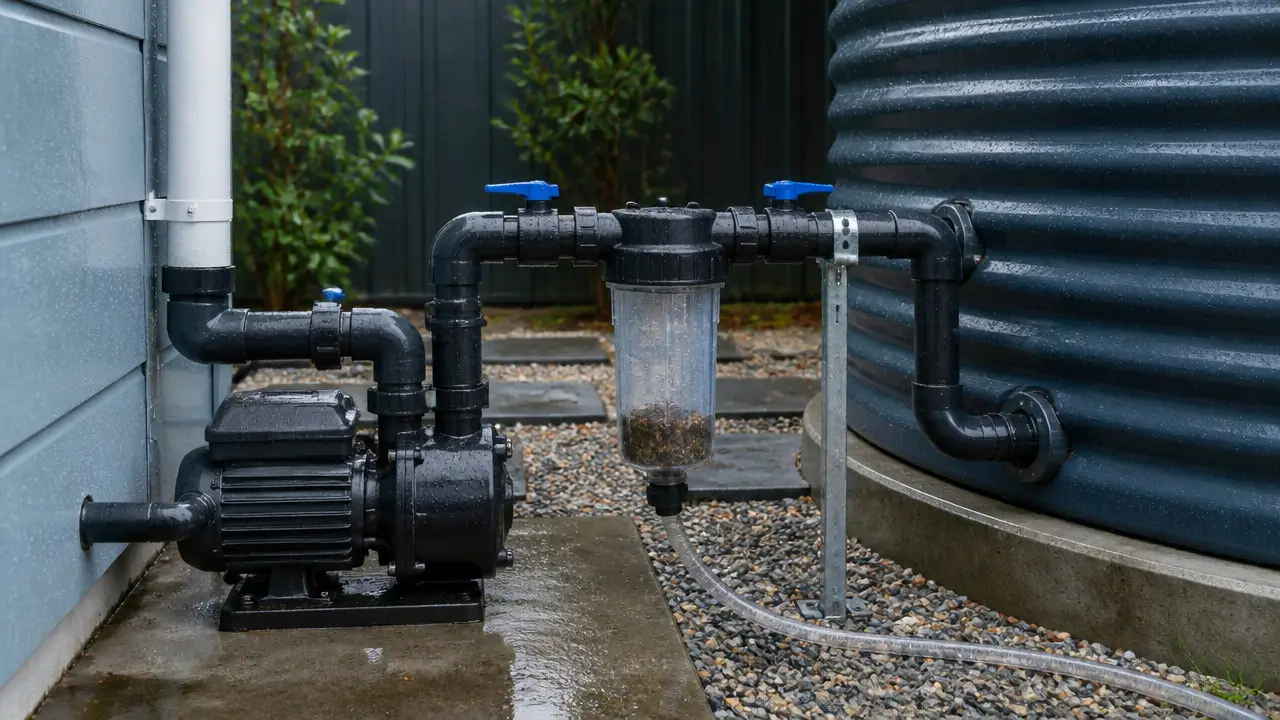
For collected rainwater
Use a whole-system approach.
Roof runoff can pick up dirt, animal waste, insects, roofing material residues, airborne contaminants, and material from gutters or storage tanks.
A drinking-water system may therefore involve suitable collection surfaces, debris exclusion, a first-flush arrangement where appropriate, protected storage, prefiltration, contaminant-specific treatment, disinfection, regular maintenance, and current laboratory testing.
A first flush device diverts some of the earliest roof runoff so that accumulated roof debris is less likely to enter storage.
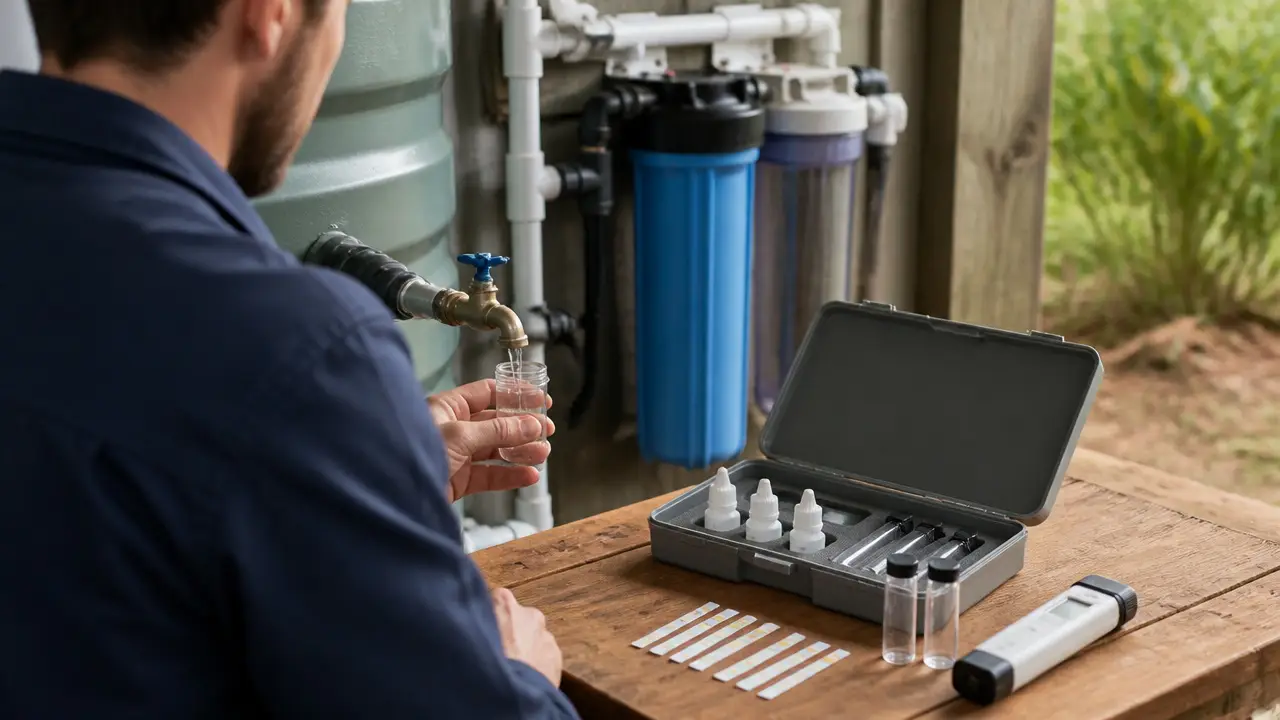
No single sediment filter, carbon cartridge, UV lamp, RO membrane, test strip, or handheld meter by itself establishes that collected rainwater is potable.
Potable means suitable for drinking. Non-potable water is intended for uses such as irrigation or other purposes where drinking-water quality is not required.
If rainwater will be used for drinking, follow current local health and plumbing requirements and involve a qualified water-treatment professional when needed.
Do Not Judge Water Safety With a TDS Meter
A total dissolved solids meter, usually called a TDS meter, measures the electrical conductivity of water and estimates the amount of dissolved material present.
It can be useful for watching changes in some treatment systems, especially RO.
It cannot tell you whether the water contains dangerous bacteria, viruses, pesticides, lead, arsenic, PFAS, or many other specific contaminants.
Low TDS does not mean safe water. High TDS does not automatically mean unsafe water.
Use proper laboratory testing when water safety needs to be established.
Maintenance Matters as Much as the Filter
Even a well-chosen filter can perform poorly when it is neglected.
Replace cartridges and service the system according to its instructions. Filters collect material as they operate. Leaving them in service beyond their intended life can reduce flow and treatment performance and may encourage microbial growth.
Maintenance can include:
- Replacing sediment and carbon cartridges.
- Replacing RO membranes when required.
- Cleaning and sanitizing housings as directed.
- Replacing UV lamps according to the system's requirements.
- Checking seals and fittings for leaks.
- Keeping treatment equipment protected from freezing.
- Retesting private water supplies on an appropriate schedule.
The CDC recommends maintaining filters as directed by their manufacturers and notes that poor maintenance can allow germs to grow in treatment equipment.
What About PFAS?
PFAS treatment is a good example of why contaminant-specific certification matters.
EPA guidance identifies granular activated carbon, reverse osmosis, and ion-exchange technologies as options that can reduce certain PFAS. However, not every system using those technologies is certified for PFAS reduction. EPA recommends checking the specific certification and performance claim.
If PFAS is a concern, first determine whether it has been detected in your water supply. Then choose treatment based on the contaminants and concentrations involved rather than buying a general-purpose filter.
A Good Order for Choosing Home Water Treatment
- Identify your water source. Public water, private well, and rainwater have different risks.
- Check existing water-quality information. Use your utility report when available.
- Test when needed. Private wells and rainwater generally require laboratory testing rather than guesswork.
- Identify the contaminants that matter.
- Choose treatment specifically designed and certified for those contaminants.
- Use the simplest system that does the job.
- Install all stages in the correct order.
- Maintain the system on schedule.
- Retest when appropriate, especially for private drinking-water supplies or after major system changes.
The healthiest home filtration system is not the one with the most stages. It is the one that matches your water, removes the contaminants that matter, is installed correctly, and receives regular maintenance.
Frequently Asked Questions
Is reverse osmosis the healthiest way to filter water?
Not for every home. Reverse osmosis can remove many microorganisms and dissolved contaminants, so it can be useful when those contaminants are actually present. For already-treated municipal water with only a taste or specific contaminant concern, a simpler certified filter may be enough.
Is filtered water healthier than tap water?
Not automatically. Properly treated tap water may already be suitable for drinking. A filter is most useful when it removes a known contaminant or solves a specific taste or odor problem. The CDC notes that some homes may not need additional treatment if harmful germs or chemicals are not present.
What is the best filter for removing lead?
Choose a treatment system independently certified for lead reduction. Do not assume that every carbon, pitcher, refrigerator, or reverse-osmosis system removes lead simply because it uses that type of technology.
Does a carbon filter make water safe to drink?
Not necessarily. Activated carbon can reduce certain chemicals and improve taste and odor, but common carbon filters are generally not designed to remove all microorganisms or all dissolved contaminants.
Does boiling water replace a filter?
No. Boiling can address many harmful microorganisms when performed correctly, but it does not remove many chemical contaminants. Different water problems need different treatment methods.
Can I make rainwater drinkable with a filter and UV light?
Those treatments may be parts of a rainwater treatment system, but they do not by themselves establish that the water is safe to drink. Drinking-water use should consider the collection surface, storage, prefiltration, chemical contaminants, microbial treatment, system maintenance, laboratory testing, and applicable local requirements.
How often should I change my home water filter?
Follow the replacement schedule and operating limits provided for the specific system. Replacement needs depend on the filter design, water quality, amount of water treated, and contaminant loading. Reduced flow alone should not be your only signal that a cartridge needs service.