As an affiliate, we may earn a commission from qualifying purchases. We get commissions for purchases made through links on this website from Amazon and other third parties.
The best activated carbon filter for home use is one that matches your water source, the contaminant you want to reduce, and the amount of water you need to treat. For drinking and cooking water, a certified carbon block under-sink filter is often the most practical choice. For chlorine taste and odor throughout the house, a larger granular activated carbon (GAC) whole-house filter may make more sense.
Do not choose a filter just because the label says "activated carbon." Look for third-party certification for the exact contaminant you care about. Activated carbon is useful for many chemicals, tastes, and odors, but it is not a complete treatment system for every water problem.
What Type of Activated Carbon Filter Is Best?
There are two common types of activated carbon filters for homes.
Carbon Block Filters
A carbon block is made from fine activated carbon that has been compressed into a solid cartridge.
Carbon block filters are often a good choice for:
- Drinking water
- Kitchen faucets
- Under-sink systems
- Refrigerator water
- Removing chlorine taste and odor
- Reducing certain organic chemicals
- Reducing specific contaminants when the filter is certified for them
Water must pass through the dense block. This usually gives the water more contact with the carbon.
That can improve contaminant reduction, but the dense filter can also restrict flow. A small carbon block is therefore better suited to one faucet than an entire house.
For most homeowners looking specifically for better drinking and cooking water, a certified carbon block filter is the best place to start.
Granular Activated Carbon Filters
Granular activated carbon, or GAC, contains loose carbon granules inside a cartridge or tank.
GAC can handle higher flow more easily than a dense carbon block. It is commonly used in:
- Whole-house filters
- Larger treatment tanks
- Well-water systems
- Rainwater treatment systems
- Pretreatment systems
A properly sized GAC tank can be useful when chlorine, taste, odor, or certain organic chemicals need to be reduced throughout a home.
The tradeoff is that water can sometimes find easier paths through loose carbon. System design and adequate contact time matter.
Carbon Block vs. GAC
| Feature | Carbon Block | Granular Activated Carbon |
|---|---|---|
| Best use | Drinking and cooking water | Higher-flow or whole-house treatment |
| Typical location | Under sink or single faucet | Main water line or treatment system |
| Water contact | Usually high | Depends heavily on tank size and flow |
| Flow restriction | Usually higher | Usually lower |
| Sediment filtration | Can provide some, depending on design | Usually limited |
| Good for chlorine | Yes, when properly sized | Yes, when properly sized |
| Maintenance | Replace cartridge | Replace media or cartridge |
| Best choice for most drinking-water setups | Often | Sometimes |
Neither type is automatically better. A large, properly designed GAC system may outperform a tiny carbon block at high flow. A certified carbon block may be a much better choice for one drinking-water faucet.
Look for Certification, Not Just "Activated Carbon"
One of the most important things to check is what the finished filter is actually certified to reduce.
NSF explains that certification standards apply to specific performance claims. A filter carrying a standard number is not automatically certified for every contaminant covered by that standard. You still need to check the filter's individual contaminant-reduction claims.
NSF/ANSI 42
NSF/ANSI 42 covers aesthetic effects such as:
- Chlorine
- Unpleasant taste
- Unpleasant odor
- Certain particulate claims
If your municipal water is safe but tastes strongly of chlorine, a carbon filter certified for chlorine reduction under NSF/ANSI 42 may be all you need.
NSF/ANSI 53
NSF/ANSI 53 covers contaminant-reduction claims related to health effects.
Depending on the specific filter, claims may include contaminants such as:
- Lead
- Certain volatile organic compounds, or VOCs
- Cysts
- Chromium
- Other listed contaminants
Again, "NSF/ANSI 53 certified" is not enough information by itself. Check which contaminants that particular filter has been certified to reduce.
NSF/ANSI 401
NSF/ANSI 401 covers reduction claims for certain trace or "emerging" compounds, including some medications, pesticides, herbicides, and other chemicals.
It can be useful if those contaminants are part of your reason for installing a filter.
What Does Activated Carbon Remove?
Activated carbon works mainly through adsorption.
Adsorption is different from absorption. Instead of soaking deep into the carbon like water into a sponge, many chemicals stick to the enormous internal surface area of the carbon.
Activated carbon can be effective for reducing things such as:
- Chlorine
- Chlorine taste and odor
- Many unwanted odors
- Some volatile organic compounds
- Some pesticides and similar organic chemicals
- Certain other contaminants when the filter is specifically designed and certified for them
Performance varies greatly with the type of carbon, quantity of carbon, water chemistry, flow rate, contaminant concentration, and how long the cartridge has been in service.
That is why the actual certification and performance sheet matter more than the words "activated carbon."
What Activated Carbon Does Not Reliably Remove
A basic carbon filter should not be treated as a universal water purifier.
Activated carbon alone generally should not be relied on to solve problems involving:
- Bacteria
- Viruses
- Many parasites
- Nitrate
- Hardness
- Dissolved salts
- High total dissolved solids
- Every form of arsenic
- Every heavy metal
- All PFAS compounds
- Every chemical that might be present in water
CDC notes that many common pitcher and refrigerator carbon filters are mainly intended to improve taste and odor rather than remove germs.
Total dissolved solids (TDS) are dissolved minerals and salts in water. A normal carbon filter generally does not work like reverse osmosis and remove most dissolved salts.
If reducing a specific health-related contaminant is your goal, test the water when appropriate and choose treatment certified for that contaminant.
The Best Filter for Municipal Tap Water
For most homes supplied by treated municipal water, an under-sink carbon block filter is often the simplest useful option.
It treats only water used for drinking and cooking instead of filtering every gallon used for showers, toilets, laundry, and outdoor taps.
Look for:
- Certification for the contaminant you want reduced
- Adequate flow for the kitchen faucet
- A cartridge that fits a common housing or has readily available replacements
- A clear replacement schedule or rated capacity
- Connections that match your plumbing
- Enough space to change the cartridge
If your only complaint is chlorine taste or odor, NSF/ANSI 42 certification for chlorine reduction may be enough.
If you are concerned about lead or another health-related contaminant, look for a filter specifically certified for that contaminant under an applicable standard such as NSF/ANSI 53.
EPA also maintains guidance for identifying filters evaluated for lead reduction.
When a Whole-House Carbon Filter Makes Sense
A whole-house carbon filter treats water before it is distributed through the home's plumbing.
It can make sense when you want to reduce something throughout the house rather than at one drinking faucet.
Examples include:
- Strong chlorine odor
- Certain organic chemicals
- Treatment needs affecting showers as well as drinking water
- Water-quality problems confirmed by testing
Whole-house carbon systems need much more carbon than a small drinking-water cartridge because household flow can be high.
Flow rate matters because carbon needs enough contact time with the water. Pushing water through too quickly can reduce treatment performance.
You also need to consider pressure loss. A filter that is too restrictive can cause weak showers or poor flow when several fixtures are being used.
There is another issue with removing disinfectant from the entire house. CDC notes that taking chlorine or another disinfectant out at the home's entry point can allow more microbial growth inside downstream plumbing.
For that reason, whole-house carbon should have a clear purpose rather than being installed automatically because "filtered water sounds better."
Should You Use Activated Carbon for Well Water?
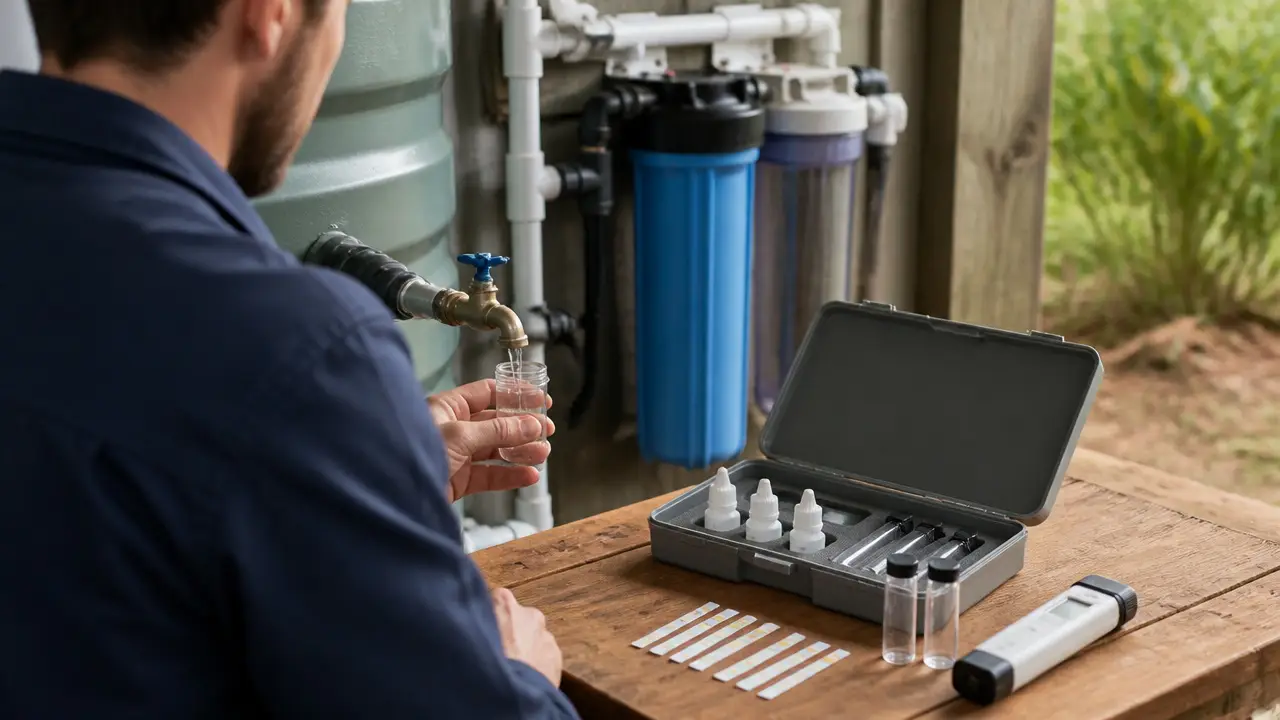
Activated carbon can be part of a well-water treatment system, but the water should be tested first.
Factor in comparing activated carbon options to verify installation details that support reliable daily use.
Private wells can have problems that carbon does not solve, including:
- Bacteria
- Nitrate
- Iron
- Manganese
- Hardness
- Arsenic
- Sediment
- Other local contaminants
Installing carbon without knowing the water problem can give you better-tasting water while leaving the actual problem untreated.
Testing determines what treatment stages belong in the system and what order they should be installed.
Is Activated Carbon Good for Rainwater?
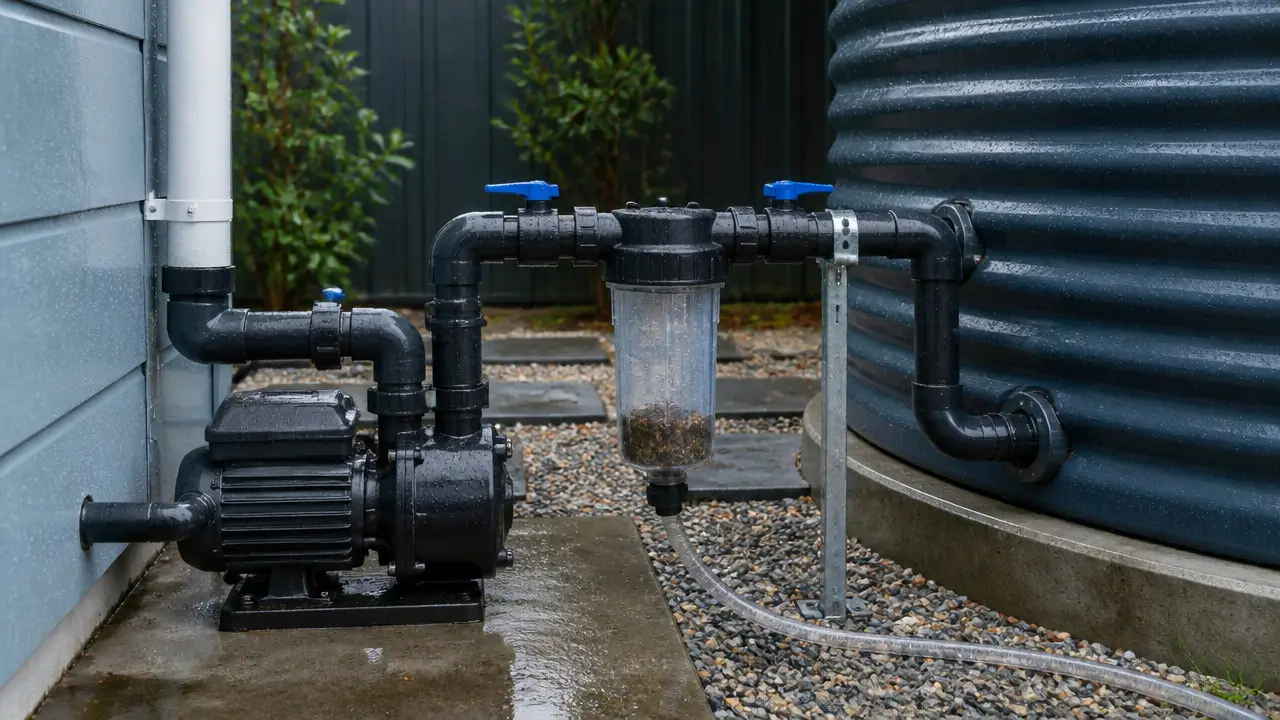
Activated carbon can be useful in a rainwater system, but it should usually be viewed as one treatment stage, not the whole system.
Roof runoff can contain:
- Dirt
- Pollen
- Bird and animal waste
- Roof debris
- Microorganisms
- Chemicals from roofing materials or nearby pollution
For non-potable uses such as some forms of irrigation, carbon treatment may not even be necessary.
For household uses, the system may involve stages such as debris screening, sediment removal, suitable storage, carbon treatment, and other treatment based on the intended use.
For drinking water, a carbon cartridge by itself does not make collected rainwater safe to drink. CDC recommends regularly testing water from private wells and rainwater systems for harmful germs and chemicals.
Potable means water intended to be safe for drinking. A potable rainwater system should be considered as a whole, including the collection surface, storage conditions, pretreatment, treatment, disinfection where appropriate, maintenance, current laboratory testing, and local requirements.
What About PFAS?
Some activated carbon systems can reduce certain PFAS, but this is an area where you should pay close attention to the exact certification claim.
EPA recommends looking for appropriate third-party certification, such as NSF/ANSI 53 for relevant filtration systems or NSF/ANSI 58 for reverse-osmosis systems, and checking that the product specifically lists PFAS reduction.
EPA also cautions that filter certification requirements have not necessarily tracked every newer federal PFAS drinking-water limit. A certification claim therefore should not be interpreted as a guarantee that the finished water will always remain below every current regulatory level.
If PFAS is the main concern, choose the treatment based on current water-test results and the specific certified PFAS claim rather than simply choosing a generic carbon cartridge.
Use a Sediment Prefilter When Needed
Activated carbon works best when it is not being asked to catch large amounts of dirt at the same time.
Sediment can clog a carbon block or fill the spaces in a GAC system. That can:
- Reduce flow
- Increase pressure loss
- Shorten carbon life
- Make replacement more frequent
Well and rainwater systems often benefit from sediment removal before activated carbon.
The correct sediment filter depends on what is actually in the water. A very fine filter is not automatically better because finer filtration can also cause more pressure loss and faster clogging.
Pay Attention to Flow Rate
Flow rate means how much water passes through the filter in a given amount of time.
A drinking-water filter only needs enough flow for one faucet.
A whole-house filter may need to supply:
- Showers
- Sinks
- Washing machines
- Dishwashers
- Toilets
sometimes at the same time.
Do not size a whole-house carbon filter based only on pipe diameter. Check the treatment system's rated service flow and pressure requirements.
More flow usually requires a larger housing, more carbon, or both.
Bigger Carbon Filters Often Last Longer
Carbon has a limited capacity.
As contaminants attach to its surface, less useful surface area remains available. Eventually the media needs to be replaced.
Larger carbon cartridges or tanks generally contain more treatment media and may handle more water before replacement. But service life still depends on:
- Water quality
- Contaminant concentration
- Amount of water used
- Flow rate
- Sediment load
- Carbon type
- Filter design
Do not assume an old carbon cartridge is still working because water continues flowing through it.
Replacement Is Part of the Treatment System
A carbon filter only works properly when it is maintained.
Follow the manufacturer's replacement instructions and rated capacity rather than waiting for the water to taste bad.
CDC warns that filters need regular maintenance to function correctly and to help prevent microbial growth within the filter.
When replacing a cartridge:
- Keep the housing and nearby surfaces clean.
- Follow the sanitation instructions supplied with the system.
- Check O-rings and seals.
- Make sure the cartridge is seated correctly.
- Check for leaks after restoring water pressure.
- Record the replacement date.
A filter that is difficult to service often ends up being neglected. Easy cartridge access is therefore worth considering when planning the installation.
How to Choose the Best Activated Carbon Filter
Start with the water problem rather than the filter.
A practical order is:
- Identify the water source. Municipal water, private well water, and stored rainwater have different treatment needs.
- Decide what the water will be used for. Drinking water at one faucet does not require the same system as whole-house treatment.
- Test the water when contamination is a concern. Taste and smell cannot tell you whether water is safe. CDC recommends choosing treatment based on the contaminants actually present.
- Look for a specific contaminant-reduction certification. Do not rely on broad marketing claims.
- Choose carbon block or GAC based on flow. Carbon block is often better suited to drinking-water faucets. GAC is commonly used for higher-flow applications.
- Check the rated flow and pressure requirements. An undersized filter can make water flow frustratingly slow.
- Plan for sediment removal if needed. Protect the carbon from unnecessary loading.
- Check replacement requirements before installation. Treatment performance depends on regular cartridge or media replacement.
For a typical home with treated municipal water, a certified under-sink carbon block filter matched to the specific contaminant concern is usually the most sensible activated carbon setup.
For whole-house chlorine or chemical reduction, a properly sized GAC system can be a better fit.
For wells or rainwater, test the water and design the carbon stage as part of the larger treatment system rather than treating carbon as a stand-alone purifier.
Frequently Asked Questions
Is a carbon block filter better than granular activated carbon?
For drinking water at one faucet, a carbon block is often the better choice because it provides good contact with the carbon in a compact cartridge. Granular activated carbon can be better for high-flow and whole-house systems. The correct choice depends on flow, contaminants, and certification.
Does activated carbon remove chlorine?
Activated carbon is commonly used to reduce chlorine, taste, and odor. Look for a filter specifically certified for chlorine reduction, such as an appropriate NSF/ANSI 42 claim.
Does activated carbon remove lead?
Some filters that contain activated carbon can reduce lead, but activated carbon alone should not be assumed to do so. Choose a finished filter specifically certified for lead reduction, such as an applicable NSF/ANSI 53-certified product.
Does activated carbon remove bacteria and viruses?
A basic activated carbon filter should not be relied on for bacteria or virus removal. Water with a microbial risk may require other filtration or disinfection stages designed for those organisms.
Does activated carbon lower TDS?
Standard activated carbon generally does not substantially remove the dissolved minerals and salts that make up TDS. Treatment such as reverse osmosis may be appropriate when specific dissolved substances need to be reduced.
Can I use an activated carbon filter for rainwater?
Yes, carbon can be one useful stage in a rainwater treatment system. It can help with certain chemicals, tastes, and odors. It does not make untreated roof runoff automatically safe for drinking. Potable rainwater requires a whole-system approach based on the source, intended use, treatment, testing, maintenance, and applicable local requirements.
How often should an activated carbon filter be changed?
Use the manufacturer's replacement interval or rated treatment capacity. Actual life depends on water use and water quality. Do not wait for bad taste or odor to return before replacing a filter that has reached its service limit.
Is a whole-house carbon filter worth installing?
It can be when a contaminant needs to be reduced throughout the house, such as a significant chlorine problem or certain chemicals confirmed by testing. If you only want better drinking and cooking water, a point-of-use filter is usually simpler and uses much less treatment media.