As an affiliate, we may earn a commission from qualifying purchases. We get commissions for purchases made through links on this website from Amazon and other third parties.
A 7-stage water filter can remove sediment, chlorine, bad tastes and odors, some dissolved chemicals, some metals, and certain germs if the system contains the right treatment stages for those contaminants. The words “7-stage” do not describe a standard treatment process.
One 7-stage filter may include reverse osmosis and UV disinfection. Another may use several carbon cartridges and a mineral cartridge. Their removal ability can be very different.
The safest way to judge a system is to look at what each stage does and what the complete unit is certified to reduce, not how many stages it has. CDC guidance also recommends choosing treatment based on the specific contaminants in your water.
What a Typical 7-Stage Water Filter May Remove
A common 7-stage system may use some combination of these treatment steps:
| Stage | Common purpose | What it may reduce or remove |
|---|---|---|
| Sediment filter | Catch larger particles | Sand, dirt, rust, silt, debris |
| Granular activated carbon | Adsorb chemicals | Chlorine, odors, some organic chemicals |
| Carbon block | Finer carbon treatment | Chlorine, tastes, odors, selected chemicals |
| Reverse osmosis membrane | Separate very small dissolved substances | Many dissolved salts, some metals, some chemicals, and germs |
| Post-carbon filter | Improve finished-water taste | Remaining tastes and odors |
| Mineral or alkaline stage | Change mineral content or pH | Usually adds minerals rather than removing contaminants |
| UV treatment | Disinfect water | Inactivates susceptible microorganisms |
This is only one possible layout. Manufacturers can count treatment stages differently.
For example, two different carbon cartridges might be counted as two stages even though both perform similar jobs.
Stage 1: Sediment Filtration
A sediment filter is usually placed near the beginning of the system.
It catches physical particles such as:
- Sand
- Silt
- Rust flakes
- Roof debris
- Small pieces of organic matter
Sediment filters are often described by a micron rating. A micron is one-millionth of a meter.
A smaller micron rating can catch smaller particles, but the type of rating also matters. An absolute micron rating gives more useful information about the largest pore size than an average or nominal rating. CDC notes that filters with the same stated micron number may perform differently depending on how that rating is defined.
A sediment filter does not normally remove dissolved salts, most dissolved chemicals, or viruses.
Its main job is to protect later stages from dirt and clogging.
Stages 2 and 3: Activated Carbon
Many multi-stage filters use more than one carbon stage.
Activated carbon has a large internal surface that can hold certain chemicals as water passes through it. This process is called adsorption.
Carbon filtration commonly helps reduce:
- Chlorine
- Unpleasant tastes
- Unpleasant odors
- Some organic compounds
CDC notes that activated carbon is commonly used to improve water taste and smell. EPA also notes that carbon treatment can reduce certain organic contaminants, depending on the filter and its certification.
Carbon is not a universal contaminant remover.
A standard carbon filter should not be assumed to remove:
- Nitrate
- Dissolved salts
- Hardness minerals
- All metals
- Bacteria
- Viruses
Some specialized carbon filters are certified for additional contaminants. Always check the exact performance claim rather than assuming every carbon cartridge works the same way.
Stage 4: Reverse Osmosis
Many 7-stage drinking-water systems include a reverse osmosis membrane.
Reverse osmosis, usually shortened to RO, uses water pressure to push water through a very selective membrane. Some contaminants are rejected by the membrane and leave through a separate waste-water stream.
Depending on the membrane and complete system, RO may reduce substances such as:
- Sodium and other dissolved salts
- Lead
- Copper
- Chromium
- Chloride
- Some nitrate
- Some arsenic
- Some fluoride
- Calcium and magnesium
- Some organic chemicals
- Bacteria, parasites, and viruses
CDC lists reverse osmosis as capable of removing germs and reducing several types of dissolved chemical contaminants. EPA also notes that point-of-use RO systems can potentially reduce contaminants including lead, VOCs, PFAS, arsenic, bacteria, and viruses when the system is designed and certified for those purposes.
RO does not mean that every contaminant is completely removed.
Performance depends on the membrane, water pressure, water chemistry, maintenance, and the system's tested reduction claims.
RO also removes some useful dissolved minerals along with unwanted substances.
Stage 5: Post-Carbon Filtration
An RO system often stores treated water in a small pressure tank.
Before that water reaches the faucet, it may pass through another activated carbon cartridge.
This stage is mainly used to improve:
- Taste
- Odor
It is sometimes called a polishing filter.
A post-carbon cartridge should not be counted on as a separate disinfection step or as proof that the water is safe to drink.
Stage 6: Remineralization or Alkaline Treatment
Some systems include a mineral cartridge after reverse osmosis.
This stage may be described as:
- Remineralization
- Alkaline filtration
- pH balancing
- Mineral enhancement
Unlike most other filter stages, this cartridge may add substances to the water rather than remove them.
For example, it may release small amounts of calcium or other minerals.
This is one reason the number of stages can be misleading. A “7-stage” system does not necessarily have seven separate contaminant-removal processes.
If the system claims to raise pH or add minerals, check the manufacturer's specifications for what the cartridge actually contains and does.
Stage 7: UV Disinfection
Some 7-stage systems finish with ultraviolet treatment.
A UV unit exposes water to ultraviolet light. Properly designed UV treatment can disinfect water by inactivating susceptible microorganisms.
UV can be useful against:
- Bacteria
- Some viruses
- Other susceptible microorganisms
However, UV does not physically filter contaminants out of the water.
It does not remove:
- Sediment
- Dissolved salts
- Metals
- Pesticides
- Nitrate
- Other dissolved chemicals
CDC describes UV as a disinfection method rather than a chemical-removal process.
UV also works best when the water reaching the lamp is clear enough for the light to pass through it. This is why sediment and other pretreatment stages are important.
Does a 7-Stage Filter Remove Bacteria and Viruses?
It depends on the system.
A basic sediment-and-carbon system should not be assumed to remove bacteria or viruses.
Some treatment methods provide stronger microbial control. CDC notes that ultrafiltration, nanofiltration, reverse osmosis, and other technologies have different abilities to remove germs. UV can also be used for disinfection.
If microbial contamination is a concern, check specifically for validated or certified microbial treatment performance.
Do not use the number of cartridges as a substitute for that information.
Does a 7-Stage Filter Remove Heavy Metals?
It may remove some metals if it contains the right technology.
Reverse osmosis can reduce several dissolved metals. Specialized adsorption media and ion-exchange resins can also target particular contaminants.
But a sediment cartridge alone will only catch metal that is present as particles. It will not necessarily remove metals that are dissolved in the water.
Look for a specific reduction claim for the contaminant you need to treat.
For example, a filter advertised for chlorine removal should not automatically be expected to remove lead or arsenic.
Does It Remove Chlorine?
Planning around safe filtration ratings for drinking water helps compare the next measurement needed before choosing treatment.
A 7-stage system containing activated carbon will normally be designed to reduce chlorine.
Carbon treatment is commonly used because chlorine can cause noticeable tastes and odors.
If you use municipal water, chlorine reduction may be one of the main jobs of the carbon stages.
Rainwater normally has a different contaminant profile, so chlorine removal may be much less important unless chlorine has been added as part of the treatment process.
Does It Remove Total Dissolved Solids?
A 7-stage filter can reduce total dissolved solids if it contains reverse osmosis or another suitable membrane process.
Total dissolved solids, or TDS, is a general measure of dissolved substances in water. These substances can include salts and minerals.
A sediment or carbon filter usually does not cause a large drop in TDS because those stages are not designed to remove most dissolved minerals.
RO usually causes a much larger reduction.
However, a TDS reading does not tell you whether the water is microbiologically safe or identify every chemical contaminant. Two water samples can have similar TDS readings while containing very different substances.
What a 7-Stage Filter May Not Remove
No 7-stage system should be assumed to remove everything.
Depending on its design, contaminants that may remain include:
- Certain dissolved chemicals
- Contaminants not targeted by its carbon or resin media
- Very small microorganisms if no suitable membrane or disinfection stage is present
- Chemicals that pass through the particular RO membrane
- Contaminants introduced after treatment
- Substances for which the system has no tested reduction claim
Treatment performance can also fall as cartridges become exhausted or membranes foul.
EPA recommends checking independent certification and the specific contaminants a filter is certified to reduce rather than relying on general filtration claims.
Does Seven Stages Mean Better Water?
Not necessarily.
A well-designed three- or four-stage system can be more appropriate than a seven-stage system filled with unnecessary cartridges.
For example, compare these two systems:
System A
Sediment → carbon → RO → UV
System B
Sediment → carbon → carbon → carbon → mineral cartridge → alkaline cartridge → polishing cartridge
System B has more stages, but System A provides a wider range of treatment because it includes both reverse osmosis and disinfection.
The important questions are:
- What is in your source water?
- What will you use the water for?
- Which treatment process targets those contaminants?
- Is the system tested or certified for those reductions?
- Can you maintain it properly?
What Certifications Should You Look For?
For drinking-water filters, certification can make comparison easier.
CDC identifies several commonly used NSF/ANSI standards, including:
- NSF/ANSI 42 for certain aesthetic effects such as taste and odor
- NSF/ANSI 53 for specified health-related contaminant reduction claims
- NSF/ANSI 58 for reverse osmosis drinking-water systems
A certification does not mean a system removes every contaminant covered by that standard.
Check the exact contaminants listed for the specific unit.
Using a 7-Stage Filter With Rainwater
Rainwater needs more careful planning than simply attaching a multi-stage filter to a tank.
Roof runoff can pick up:
- Dust
- Leaves
- Bird and animal waste
- Roofing debris
- Airborne pollutants
- Microorganisms
- Chemicals from roofing and plumbing materials
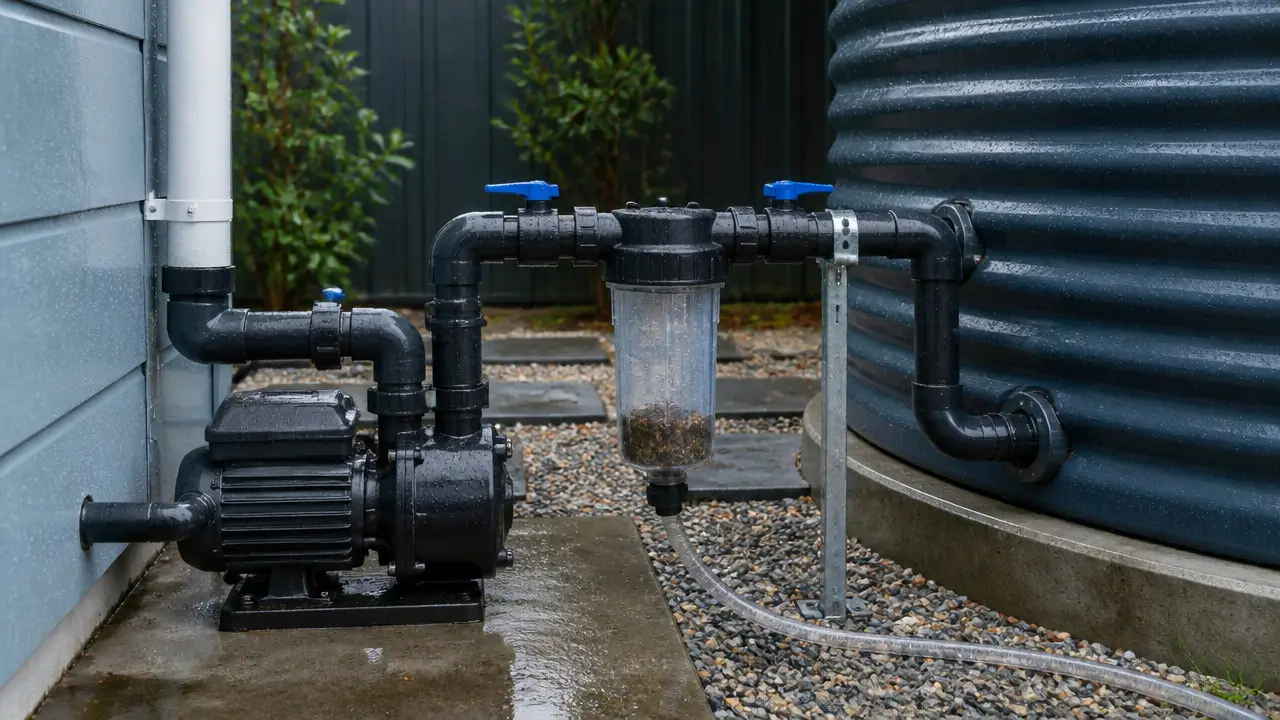
A practical rainwater system normally starts before the indoor filter. Depending on the intended use, the system may include roof and gutter cleaning, debris screening, first-flush management, suitable storage, sediment control, and additional treatment.
A first flush device diverts some of the early runoff from a storm because this water can carry accumulated debris from the roof.
For garden irrigation or other non-potable uses, extensive drinking-water treatment may not be necessary.
Potable means water intended to be safe for drinking. Non-potable water is water used for purposes where drinking-water quality is not required.
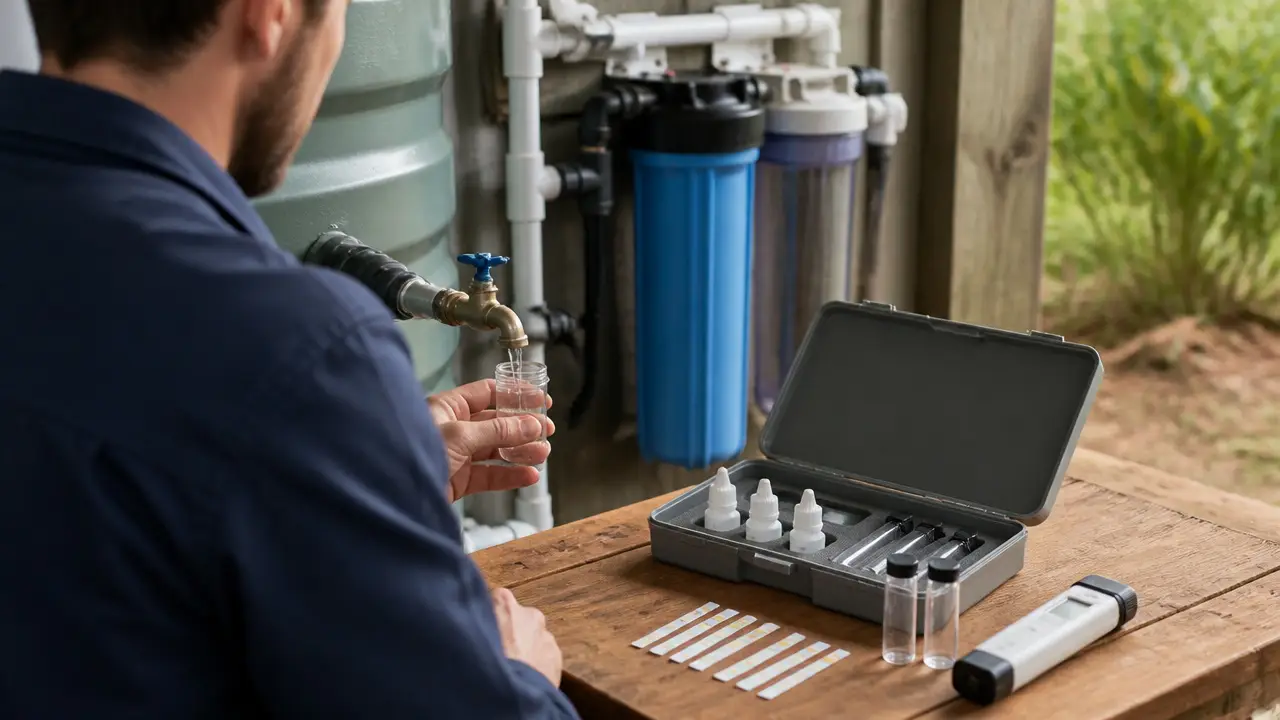
If rainwater will be used for drinking, do not assume a 7-stage filter makes it potable. Treat drinking rainwater as a whole-system issue. Collection surfaces, storage conditions, pretreatment, final treatment, maintenance, current laboratory testing, and applicable local requirements all matter.
Maintenance Matters as Much as the Number of Stages
Every treatment stage eventually needs attention.
Depending on the system, maintenance may include:
- Replacing sediment cartridges
- Changing carbon filters
- Replacing an RO membrane
- Sanitizing filter housings
- Checking storage tanks
- Replacing UV lamps according to the manufacturer's schedule
- Cleaning or replacing mineral cartridges
- Checking for leaks and pressure problems
A dirty sediment filter can reduce flow.
Exhausted carbon may stop providing the expected chemical reduction.
A damaged RO membrane can allow more dissolved material through.
A poorly maintained UV system may not provide the expected disinfection performance.
Follow the service intervals and monitoring instructions for the actual system rather than assuming that water that looks clear is properly treated.
The Bottom Line
A 7-stage water filter does not have one fixed list of contaminants that it removes.
A system containing sediment filtration, activated carbon, reverse osmosis, and UV may reduce particles, chlorine, tastes and odors, many dissolved salts and selected chemicals, some metals, and microorganisms. Other 7-stage systems may provide much less treatment.
Ignore the stage count at first. Check the actual filter media, membrane, disinfection method, certifications, and contaminant reduction claims.
For rainwater intended for drinking, the filter is only one part of the system. Safe use also depends on suitable collection and storage, pretreatment, appropriate treatment stages, maintenance, water testing, and local requirements.
Frequently Asked Questions
Does a 7-stage water filter remove everything?
No. The number of stages does not guarantee removal of every contaminant. Check what each cartridge or treatment stage does and look for specific tested or certified reduction claims.
Does a 7-stage water filter remove bacteria?
Some do. Systems using suitable membrane filtration or properly designed disinfection may control bacteria. Sediment and ordinary carbon filters alone should not be assumed to remove bacteria.
Does a 7-stage filter remove viruses?
Only some systems are designed to do so. Reverse osmosis, certain membrane technologies, or appropriate disinfection may address viruses. Check the system's specific performance claims.
Does a 7-stage filter remove chlorine?
Most systems containing activated carbon are designed to reduce chlorine, along with chlorine-related taste and odor.
Does a 7-stage filter remove TDS?
It can if it includes reverse osmosis or another process that removes dissolved substances. Sediment and ordinary carbon filtration alone usually do not greatly reduce TDS.
Is a 7-stage filter better than a 5-stage filter?
Not automatically. A five-stage system with the right treatment methods can be more effective for your water than a seven-stage system with unnecessary or duplicate stages.
Can I drink rainwater after putting it through a 7-stage filter?
Do not assume so. Drinking rainwater requires a suitable collection and storage system, appropriate treatment for the contaminants present, regular maintenance, current water-quality testing, and compliance with applicable local requirements.