As an affiliate, we may earn a commission from qualifying purchases. We get commissions for purchases made through links on this website from Amazon and other third parties.
A 25-micron water filter is mainly a sediment filter. It catches larger solid particles such as sand, rust flakes, grit, and some silt. It can make cloudy water look clearer and protect finer filters and other equipment downstream.
It does not remove most bacteria, viruses, dissolved chemicals, salts, hardness minerals, or other very small contaminants. A 25-micron filter should not be treated as a drinking-water treatment system by itself.
What Does 25 Microns Mean?
A micron, also called a micrometer, is one-millionth of a meter.
A 25-micron filter has openings designed to trap particles around 25 microns and larger. Twenty-five microns equals:
- 0.025 millimeters
- 0.001 inch, roughly
- About one-quarter to one-third the width of a typical human hair
The exact performance depends on how the filter is rated.
An absolute micron rating means the filter has a defined maximum pore size. A nominal micron rating is less strict and may allow some particles larger than the stated size to pass through. The CDC notes that absolute and nominal pore ratings should not be treated as the same thing.
For a sediment cartridge, check the manufacturer's definition of its micron rating rather than assuming every 25-micron filter performs identically.
What a 25-Micron Filter Can Remove
A 25-micron filter is useful for removing larger suspended material from water.
It may catch:
- Sand
- Grit
- Rust flakes
- Pipe scale
- Larger pieces of silt
- Small plant fragments
- Insect parts
- Larger organic debris
- Some larger particles stirred up from the bottom of a tank
For rainwater systems, this can be helpful when stored water contains fine debris that passed through the gutter screen, inlet screen, or other first-stage filters.
A 25-micron cartridge can also protect a finer filter from filling with sediment too quickly.
For example, a system might use progressively finer sediment stages rather than sending dirty tank water straight into a very fine cartridge.
What a 25-Micron Filter Does Not Remove
The micron number describes particle size. It does not mean the filter removes every type of contaminant.
Bacteria
A 25-micron filter is far too coarse to reliably remove bacteria.
The CDC says an absolute pore size of 0.3 micron or smaller is needed for filtration intended to remove bacteria such as E. coli or Salmonella.
A 25-micron sediment cartridge therefore should not be used as a bacterial safety barrier.
Viruses
Viruses are much smaller still.
A normal 25-micron sediment filter will not remove them. Even many much finer portable microfilters cannot reliably remove viruses.
Giardia and Cryptosporidium
A 25-micron filter is also too coarse to be relied on for parasites such as Giardia and Cryptosporidium.
CDC guidance points to an absolute 1-micron-or-smaller filter, or an appropriate certified treatment system, for parasite removal.
Dissolved chemicals and minerals
A sediment filter cannot strain dissolved substances out of water.
A standard 25-micron cartridge does not remove things such as:
- Dissolved salts
- Hardness minerals
- Nitrate
- Dissolved metals
- Many pesticides
- Many other dissolved chemicals
These substances are mixed into the water at a molecular or ionic level rather than floating around as 25-micron particles.
Taste and odor
A basic sediment filter is not designed to remove dissolved substances that cause unpleasant tastes and odors.
Activated carbon or another suitable treatment stage may be used when those contaminants are the problem. The treatment must be chosen for the specific substance that needs to be reduced.
Very fine clay and sediment
Not all sediment is large.
Fine clay and other tiny suspended particles can be far smaller than 25 microns. They may pass through a 25-micron filter and leave the water slightly cloudy.
A finer sediment stage may be needed when this happens.
Is a 25-Micron Filter Good for Rainwater?
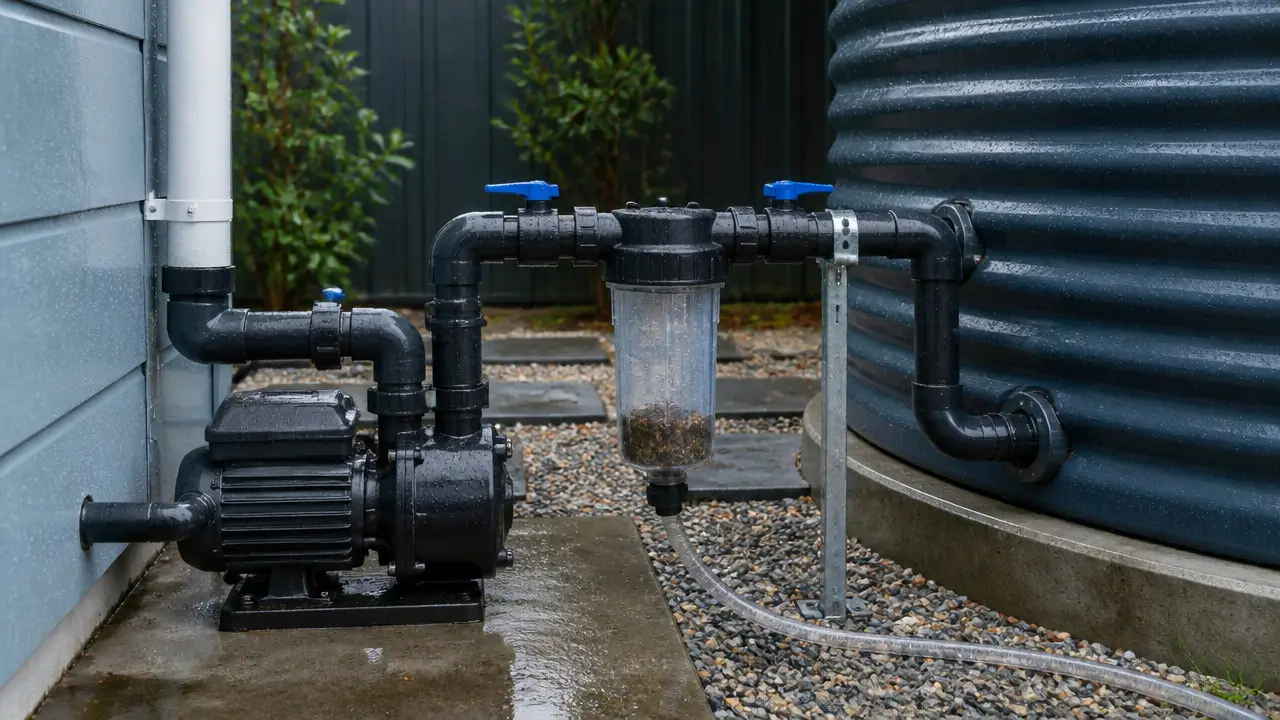
A 25-micron filter can be a useful prefilter in a rainwater harvesting system.
Roof runoff can carry dust, dirt, pollen, roofing debris, bird droppings, organic matter, and other material into the collection system. Gutter guards, inlet screens, and a first-flush device can reduce some of this material before it reaches storage.
A first flush is a device or arrangement that diverts the first portion of roof runoff. That early runoff often carries more dirt from the roof.
A 25-micron filter can provide another sediment-removal stage after collection.
Account for a suitable whole house sediment filter to understand whether the test results point to cleaning or filter service.
A simple system for non-potable uses might follow a path such as:
Roof → gutter screen → first flush → tank → sediment filtration → intended use
The exact setup depends on the pump, plumbing, filter housing, required flow, and how the water will be used.
Do not install a cartridge housing on the suction side of a pump unless the pump and filtration equipment are designed for that arrangement. A clogged filter can restrict flow and cause problems for some pumps.
25 Micron vs. 5 Micron Filters
A smaller micron number means finer filtration.
| Filter rating | General purpose |
|---|---|
| 100+ micron | Coarse debris and larger sediment |
| 50 micron | Coarse sediment |
| 25 micron | Sand, grit, rust, and larger fine sediment |
| 5 micron | Much finer sediment |
| 1 micron | Very fine particulate filtration |
These numbers describe particle filtration only. They do not tell you whether a filter removes chemicals or makes water microbiologically safe.
A 5-micron filter will usually produce finer sediment removal than a 25-micron filter, but it will also clog faster when the incoming water contains a lot of dirt.
That is why staged filtration can be useful.
Should You Use 25 Microns Before a Finer Filter?
Often, yes.
Using a 25-micron filter before a 5-micron or similar finer filter can reduce the amount of larger sediment reaching the final cartridge.
For example:
25 micron → 5 micron
This lets the coarse cartridge catch larger material while the finer cartridge handles smaller suspended particles.
Adding more filter stages is not always better, though. Every filter adds resistance to water flow. A system must have enough flow and pressure for the pump, pipe size, filter housings, and intended use.
If a filter is too small for the required flow, pressure can fall noticeably as the cartridge becomes dirty.
How Often Should a 25-Micron Filter Be Changed?
There is no universal replacement interval.
How quickly it becomes dirty depends on:
- Roof cleanliness
- Tank sediment
- Rainfall conditions
- Water volume used
- Cartridge size
- Filter material
- Flow rate
- Other prefiltration
Signs that a cartridge may need attention include reduced flow, increasing pressure drop across the filter, or visible sediment buildup.
Follow the cartridge and housing manufacturer's replacement or cleaning instructions. Do not keep using a dirty cartridge simply because water can still pass through it.
Can a 25-Micron Filter Make Rainwater Safe to Drink?
No.
Removing visible sediment is not the same as making rainwater potable.
Potable means suitable for drinking. Non-potable means water intended for uses where drinking-water quality is not required.
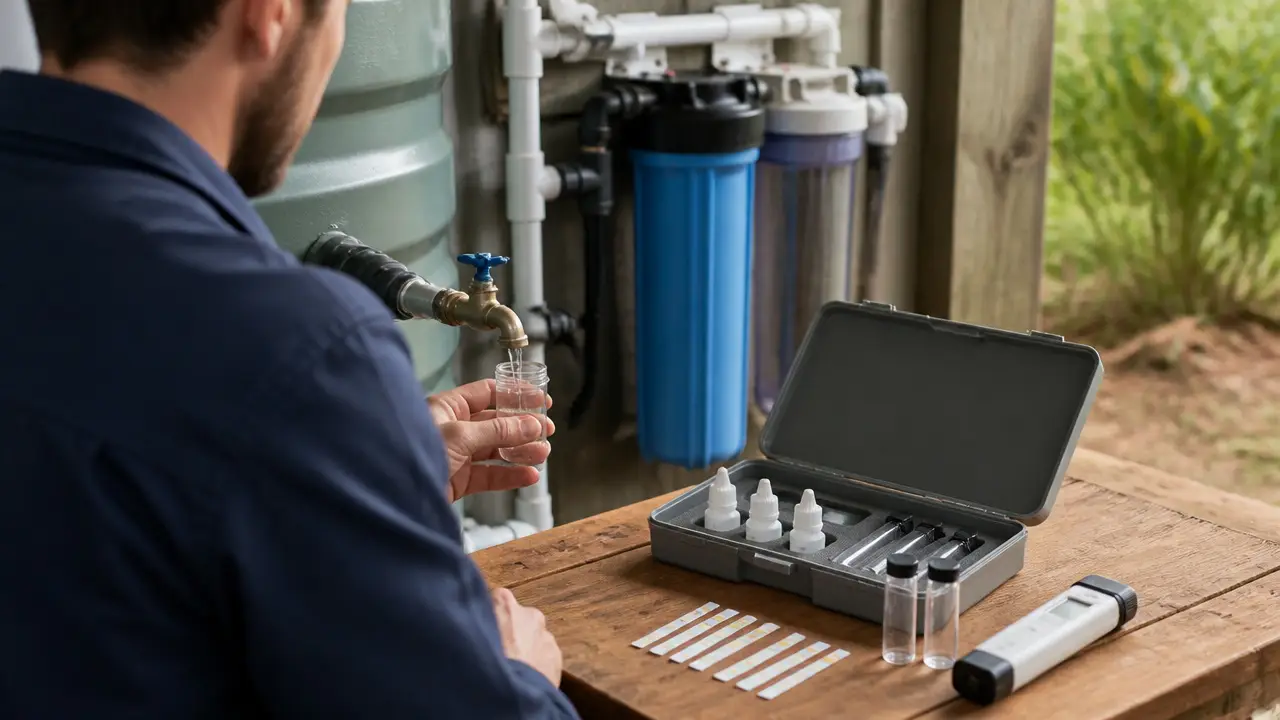
A drinking-water system using collected rainwater requires consideration of the whole system, including the collection surface, contamination risks, storage conditions, prefiltration, appropriate treatment stages, maintenance, and current laboratory testing.
A 25-micron cartridge can serve as a sediment stage, but it does not provide the very fine filtration needed for bacteria or parasites and does not reliably address viruses or dissolved contaminants. CDC guidance shows that much finer and more specific treatment is required for these hazards.
If rainwater will be used for drinking, cooking, brushing teeth, or other potable uses, use current local health guidance and appropriate professional or laboratory support rather than relying on the appearance of the water or a single filter.
Frequently Asked Questions
Will a 25-micron filter remove sand?
Yes. A 25-micron sediment filter can catch many sand and grit particles. Very fine sediment may still pass through, depending on the particle size and the filter's actual rating.
Will a 25-micron filter remove bacteria?
No. A 25-micron filter is much too coarse to reliably remove bacteria. It should be treated as a sediment filter rather than a microbiological treatment stage.
Will a 25-micron filter remove rust?
It can remove rust when the rust is present as suspended flakes or particles large enough to be trapped. It will not necessarily remove dissolved iron from the water.
Is 25 microns finer than 50 microns?
Yes. A 25-micron filter is finer than a 50-micron filter. It can trap smaller particles, although the finer filter may clog faster when the water contains a lot of sediment.
Should I use a 25-micron or 5-micron filter?
Use a 25-micron filter when you mainly need to catch larger sediment or want a prefilter for a finer stage. A 5-micron filter provides finer sediment removal but can clog more quickly. Some systems use both in sequence.
Is a 25-micron filter enough for drinking rainwater?
No. A 25-micron filter only addresses relatively large suspended particles. Drinking-water treatment must also consider microorganisms and dissolved contaminants, along with the collection system, storage conditions, maintenance, laboratory testing, and applicable local requirements.