As an affiliate, we may earn a commission from qualifying purchases. We get commissions for purchases made through links on this website from Amazon and other third parties.
Rainwater can pick up dirt, bird droppings, microbes, roofing chemicals, metals, smoke particles, and other contaminants before it reaches your tank. An activated carbon filter can reduce some of these contaminants, especially certain dissolved organic chemicals, tastes, and odors. But carbon does not remove everything, and a carbon filter alone should not be treated as a way to make collected rainwater safe to drink.
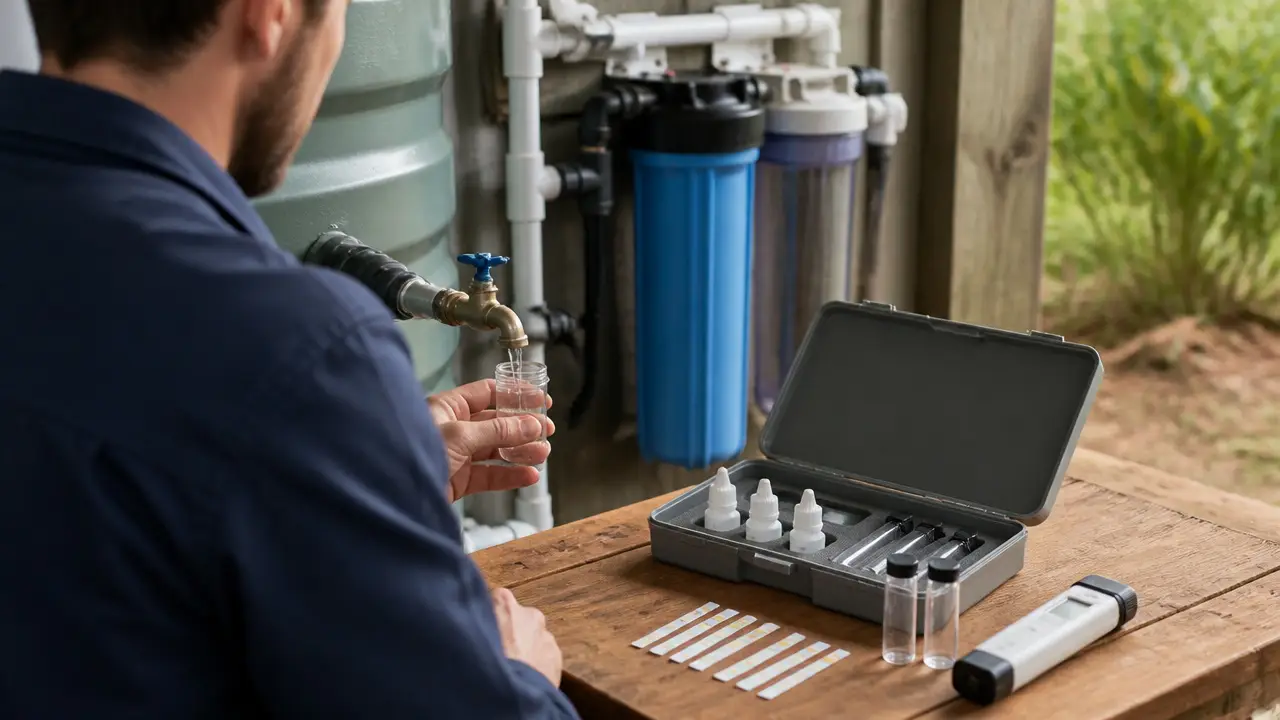
The right treatment depends on what is actually in the water and how you plan to use it. For drinking, cooking, or bathing, the CDC recommends regular testing for harmful germs and chemicals and choosing treatment that addresses those specific contaminants.
What Does a Carbon Filter Do?
Most water filters described as carbon filters contain activated carbon. The carbon has a very large internal surface area with tiny pores.
As water passes through, certain dissolved chemicals stick to the carbon surface. This process is called adsorption.
Two common forms are:
- Granular activated carbon (GAC): Loose carbon granules inside a filter housing or tank.
- Carbon block: Carbon pressed into a solid cartridge. Depending on its construction, it may also physically trap some particles.
Activated carbon works especially well with certain organic chemicals. It is also widely used to improve taste and odor.
That does not mean every carbon filter removes the same contaminants. Carbon type, cartridge construction, water flow, contact time, contaminant concentration, and filter condition all affect performance.
Which Rainwater Contaminants Can Carbon Remove?
Here is a practical way to think about the most common contaminants in roof-collected rainwater.
| Rainwater contaminant | Will a carbon filter remove it? | Better approach |
|---|---|---|
| Leaves and large debris | Not the main job of carbon | Gutter guards and inlet screens |
| Fine sediment and roof grit | Sometimes partly, depending on filter design | Sediment filtration |
| Bad tastes and odors | Often | Activated carbon |
| Some pesticides and organic chemicals | Often possible, depending on the chemical and filter certification | Appropriate certified carbon or other treatment |
| PFAS | Some carbon systems can reduce certain PFAS | Use a filter certified for the specific reduction claim |
| Bacteria | Not reliably with ordinary carbon | Appropriate microbial filtration and/or disinfection |
| Viruses | No with ordinary carbon | Appropriate disinfection, nanofiltration, or reverse osmosis |
| Giardia and Cryptosporidium | Do not assume ordinary carbon removes them | Filter specifically rated or certified for cyst removal |
| Nitrate | No | Treatment such as suitable reverse osmosis or another method designed for nitrate |
| Dissolved salts and high TDS | Generally no | Reverse osmosis or another suitable process |
| Metals | Depends strongly on the metal and filter | Test first and use treatment certified for that contaminant |
TDS, or total dissolved solids, is a general measure of dissolved minerals and salts in water. A typical activated carbon filter is not designed to significantly lower TDS.
The important point is that "activated carbon" describes a treatment material, not a guarantee that every contaminant will be removed.
Carbon Filters Are Good at Certain Organic Chemicals
Carbon is especially useful when rainwater contains certain dissolved organic compounds.
Potential sources include air pollution, smoke, roof deposits, nearby spraying, and materials the water contacts during collection and storage.
Granular activated carbon is commonly used for certain organic chemicals because these compounds can attach to the carbon's large internal surface. However, removal varies considerably from one chemical to another.
For this reason, do not choose a cartridge simply because the package says "activated carbon." If you are treating a known chemical contaminant, look for an independent certification covering that specific contaminant.
What About PFAS?
Activated carbon can reduce some PFAS compounds, but this is another area where the exact filter matters.
The EPA lists granular activated carbon among the technologies that can reduce PFAS in drinking water. It recommends selecting a filter certified for PFAS reduction rather than assuming any charcoal or carbon cartridge will work.
Carbon also has a limited capacity. Once the media becomes loaded with contaminants, its ability to capture more of them falls.
This makes cartridge replacement and other maintenance part of the treatment process, not an optional extra.
Carbon Does Not Reliably Remove Rainwater Germs
This is one of the most important limits of carbon filtration.
Roof runoff can contain microorganisms from bird droppings, insects, animals, dirt, and other material that collects on the roof. The CDC notes that rainwater can contain harmful germs even when it looks clear.
Ordinary activated carbon should not be relied upon to remove:
- Bacteria
- Viruses
- Giardia
- Cryptosporidium
- Other disease-causing microorganisms
Some filters combine carbon with very fine filtration media and may carry specific claims for cyst or microbial reduction. In that case, the relevant feature is the tested performance of the complete filter, not simply the fact that it contains carbon.
The CDC notes that many common pitcher and refrigerator filters use carbon mainly for taste, odor, and some chemical reduction and are not designed to remove germs.
Carbon Does Not Remove Nitrate
Activated carbon is not an effective nitrate treatment.
The EPA specifically states that activated carbon filters do not remove nitrate.
This matters when water contains contamination that carbon does not readily adsorb. The same general limitation applies to many dissolved salts and inorganic substances.
If laboratory testing finds nitrate or another dissolved contaminant, treatment needs to be selected for that contaminant rather than adding more carbon.
What About Lead, Copper, and Other Metals?
This area needs more care because not all carbon filters perform the same way.
Basic granular activated carbon should not be considered a general-purpose heavy-metal filter. However, some complete filter cartridges are specifically designed and independently certified to reduce contaminants such as lead.
Rainwater can pick up metals from roofing, gutters, flashing, pipes, fittings, and storage materials. The CDC specifically notes that substances such as lead and copper can enter collected rainwater from materials in the collection system.
If metals are a concern:
- Test the water.
- Identify the specific metal.
- Look for treatment certified for that contaminant.
- Correct the source when possible.
Removing a lead-containing fitting, for example, can be more sensible than continually treating water contaminated by that fitting.
A Carbon Filter Is Not a Substitute for a First Flush Diverter
Good rainwater treatment starts before the water reaches the filter.
A first flush diverter sends the first portion of roof runoff from a storm away from the storage tank. That first water tends to carry a higher load of roof dust, dirt, animal droppings, and other accumulated debris.
The CDC recommends considering first flush diversion as one way to improve collected rainwater quality.
A practical collection system may also use:
- Clean gutters and roof surfaces
- Leaf or gutter screening
- Inlet screening
- First flush diversion
- A covered storage tank
- Proper overflow protection
- Sediment filtration where needed
These steps reduce the contaminant load reaching later treatment equipment.
They do not guarantee safe water, but they can keep a carbon cartridge from being asked to handle material that should have been removed earlier.
Put Sediment Filtration Before Carbon When Needed
Cloudy water, grit, rust-like particles, roof sediment, and organic debris can clog a carbon filter quickly.
A sediment filter is designed to physically trap particles. It is usually a better first filtration stage when stored rainwater contains visible or suspended material.
A micron rating describes the approximate size of particles a filter is designed to catch. One micron is one-thousandth of a millimeter.
The correct micron rating depends on the rest of the system. Extremely fine filtration is not automatically better. Finer filters generally create more flow resistance and may clog faster.
Carbon works better as a chemical-treatment stage than as the system's primary dirt catcher.
Do You Need Carbon for Garden Rainwater?
Often, no.
If you are collecting water in a rain barrel only for ornamental landscaping, adding a carbon cartridge may provide little benefit while adding flow restriction and another part that needs replacement.
Good screening, keeping the barrel covered, managing sediment, and maintaining the storage container are usually more relevant.
Use drawbacks of using a carbon water filter to interpret testing choices and treatment needs for the intended application.
Food gardens require more care because water can contact edible produce. The CDC recommends limiting rainwater uses that could lead to swallowing untreated rainwater and advises using appropriately safe water for edible plants when possible.
Local public-health or agricultural guidance may provide more specific recommendations for edible crops.
Do You Need Carbon for Toilet Flushing?
Carbon filtration is generally not needed just to remove taste and odor from rainwater used for toilet flushing.
Particle control is often more important because debris can clog valves, pumps, and small plumbing passages.
A non-potable rainwater plumbing system also needs to remain separated from drinking-water plumbing. Cross-connections can allow untreated rainwater to contaminate potable water.
Potable means water intended to be safe for drinking. Non-potable water is water not intended for drinking.
Local plumbing requirements can apply to rainwater used inside a building, so check the current rules for your location before connecting a rainwater tank to household fixtures.
What If You Want to Shower With Rainwater?
A carbon filter can help with certain odors or chemicals, but it does not solve the microbial side of the problem.
The CDC recommends testing collected rainwater for harmful germs and chemicals when it will be used for bathing as well as drinking or cooking.
Treatment may therefore require more than carbon.
What is appropriate depends on the water test results, collection system, storage conditions, and intended exposure. If rainwater supplies household bathing water, get guidance from your local health department or a qualified water-treatment professional.
Can Carbon Be Part of a Drinking-Water System?
Yes, but it should be treated as one possible stage rather than the complete system.
A rainwater system intended to produce drinking water may need several controls, such as:
- Suitable roof and collection materials
- Debris exclusion
- First flush diversion
- Protected storage
- Sediment or other prefiltration
- Chemical treatment matched to test results
- Appropriate microbial treatment or disinfection
- Regular maintenance
- Current laboratory testing
The exact stages vary from one property to another.
Reverse osmosis, fine membrane filtration, ultraviolet treatment, chemical disinfection, carbon, and other technologies all solve different problems. No single treatment method should be assumed to cover every possible rainwater contaminant.
The CDC recommends testing rainwater used for drinking at least annually for harmful germs and chemicals, with additional testing when conditions warrant. It also recommends choosing treatment based on what the testing finds.
Local health requirements and plumbing rules may also apply.
Look at the Certification Claim, Not Just the Word "Carbon"
Independent certification makes it easier to determine what a particular filter has actually been tested to reduce.
For example:
- NSF/ANSI 42 covers aesthetic effects such as certain taste and odor reduction claims.
- NSF/ANSI 53 covers specific contaminants with health effects.
- Other standards and contaminant-specific claims may apply depending on the treatment technology.
Certification to a standard does not mean the filter removes every contaminant covered by that standard. Check the exact reduction claims listed for the particular system.
This is especially important for contaminants such as lead, PFAS, cysts, pesticides, and other substances where performance can differ significantly among filters.
Flow Rate and Contact Time Matter
Carbon needs time to interact with the water.
If water moves through a carbon bed too quickly, treatment performance can change. Larger systems may therefore use a substantial bed of granular carbon rather than a small cartridge.
A filter also adds resistance to the plumbing.
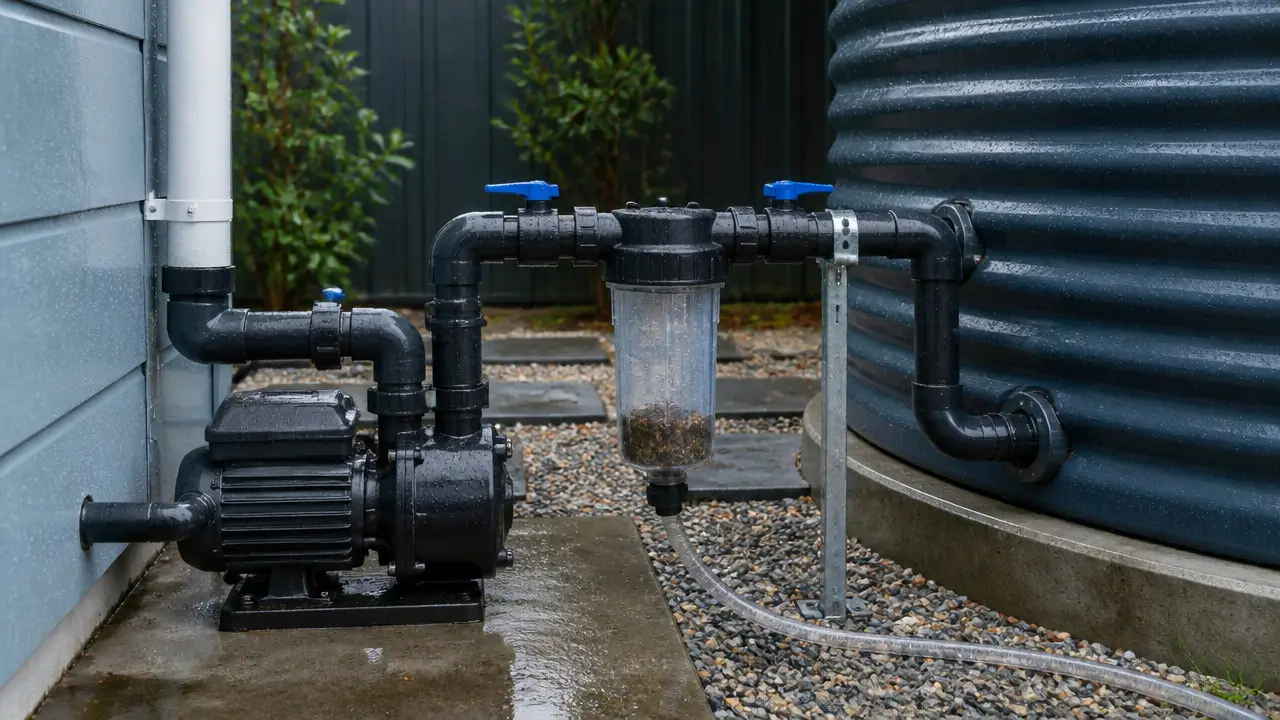
If you use a pump, check that the filter housing, cartridge, pipe size, and expected flow are compatible with your pump and fixtures. A badly undersized filter can cause disappointing flow even if the water-treatment media itself is appropriate.
Follow the treatment system's specified operating conditions rather than assuming that slower or faster flow is always better.
Carbon Filters Need Regular Maintenance
Activated carbon does not keep working forever.
Eventually, its available adsorption sites fill. Contaminants may then begin passing through the filter. This is sometimes called breakthrough.
Maintenance can include:
- Replacing cartridges on schedule
- Cleaning reusable housings as directed
- Watching for unusually low flow
- Preventing sediment from overwhelming the carbon
- Avoiding long periods of neglected stagnant water
- Following startup and flushing instructions after cartridge replacement
The Minnesota Department of Health notes that consistent maintenance is important both for treatment effectiveness and for controlling bacterial buildup.
The CDC likewise warns that germs can grow in poorly maintained water filters.
Do not rely on taste or smell to tell you when a drinking-water filter has stopped removing a health-related contaminant. Many harmful chemicals and germs have no noticeable taste, odor, or color.
The Bottom Line
Carbon filters can be useful in rainwater systems, but they solve only part of the water-quality problem.
Activated carbon is most useful for reducing certain dissolved organic chemicals and improving taste and odor. Some specially designed and certified systems can also reduce contaminants such as particular PFAS compounds or lead.
Ordinary carbon filtration does not reliably remove bacteria, viruses, nitrate, dissolved salts, or every metal and chemical that may occur in roof runoff.
For garden or toilet water, carbon may not be necessary at all. For bathing, cooking, or drinking, identify the contaminants first and build treatment around the intended use. Drinking-water rainwater systems should be treated as a complete collection, treatment, testing, and maintenance system rather than as a tank with a carbon cartridge attached.
Frequently Asked Questions
Does activated carbon make rainwater safe to drink?
No. Activated carbon can reduce certain chemicals, tastes, and odors, but carbon alone does not reliably remove the full range of microorganisms and chemicals that may occur in rainwater. Drinking-water use requires suitable collection, appropriate treatment, regular maintenance, current water testing, and compliance with local requirements.
Will a carbon filter remove bacteria from a rain barrel?
Do not rely on an ordinary carbon filter for bacterial removal. If microbial contamination matters for the intended use, use treatment specifically designed and verified for those organisms.
Does activated carbon remove bird-dropping contamination?
It may reduce some chemicals associated with dirty runoff, but it does not reliably solve the microbial contamination caused by animal droppings. Keeping roofs and gutters reasonably clean, screening debris, using first flush diversion, and applying suitable microbial treatment when required are more important.
Can a carbon filter remove chemicals from roofing materials?
It can reduce some organic chemicals, but it cannot remove every substance that may leach from roofing, gutters, flashing, pipes, or storage materials. Test the water when chemical exposure matters and select treatment for the specific contaminant.
Should I install a sediment filter before a carbon filter?
Often, yes. A sediment filter can keep grit and suspended particles from clogging the carbon stage. The required filter size and micron rating depend on the water quality, flow requirements, and equipment downstream.
Does a carbon filter lower TDS in rainwater?
Usually not by much. Activated carbon is not a general treatment for dissolved salts and minerals measured as total dissolved solids. A treatment such as reverse osmosis may be appropriate for certain dissolved contaminants, depending on water testing.
How often should a rainwater carbon filter be replaced?
There is no universal replacement interval. Filter life depends on the cartridge, contaminant concentration, amount of water treated, sediment load, flow conditions, and system design. Follow the manufacturer's rated capacity and replacement instructions rather than waiting for the water to taste different.