As an affiliate, we may earn a commission from qualifying purchases. We get commissions for purchases made through links on this website from Amazon and other third parties.
A carbon water filter can be very useful for improving taste, odor, and reducing certain chemicals. But it is not a complete water-treatment system.
The main downsides are that carbon does not reliably remove every contaminant, it does not disinfect water, and the filter media eventually becomes exhausted. Carbon filters can also restrict water flow and may support bacterial growth when they are not maintained correctly.
For a rainwater system, activated carbon usually works best as one treatment stage rather than the only filter.
What Does a Carbon Water Filter Actually Do?
Most carbon filters use activated carbon. This is carbon that has been processed to create a very large internal surface area.
Many contaminants stick to that surface through a process called adsorption. Adsorption means the contaminant attaches to the carbon surface rather than simply being caught like dirt in a screen.
Activated carbon can be useful for reducing:
- Unpleasant tastes and odors
- Chlorine
- Some volatile organic compounds (VOCs)
- Some other organic chemicals
Exactly what a filter reduces depends on the type of carbon, the filter design, water conditions, contact time, and the contaminant involved. EPA notes that granular activated carbon is useful for several organic contaminants, but its treatment capacity varies considerably between carbon types and contaminants.
That selectivity is also one of carbon filtration's biggest limitations.
Carbon Filters Do Not Remove Everything
It is easy to assume that water coming through a carbon filter has been fully purified. That is not the case.
Ordinary activated carbon is not a dependable way to remove many dissolved substances.
Depending on the filter, carbon may do little or nothing about contaminants such as:
- Nitrate
- Dissolved salts
- Hardness minerals
- Many dissolved metals
- Certain microorganisms
For example, EPA specifically states that activated carbon filters do not remove nitrate.
Some specialized carbon filters combine carbon with other materials or have certifications for particular contaminants. That is different from assuming that any carbon cartridge provides the same treatment.
If you need to reduce a specific contaminant, check the filter's verified contaminant-reduction claims rather than relying on the word "carbon" on the label.
Carbon Is Not a Disinfectant
This is especially important when treating collected rainwater.
Standard activated carbon should not be treated as a way to kill bacteria, viruses, or other harmful microorganisms. Carbon may trap some material, but ordinary carbon filtration is not the same as disinfection.
CDC notes that germs can also live and multiply inside water filters when the filters are not properly maintained and replaced.
Roof runoff can pick up material from:
- Bird and animal droppings
- Leaves and organic debris
- Dust
- Insects
- Roof and gutter surfaces
- Storage tanks and plumbing
Running that water through a carbon cartridge does not automatically make it safe to drink.
If rainwater is intended for drinking, carbon should be considered only one possible part of a larger treatment plan. CDC recommends regular testing for harmful germs and chemicals when collected rainwater is used for drinking or around the home.
The Carbon Eventually Becomes Exhausted
Activated carbon has a limited capacity.
As water passes through it, contaminants occupy available adsorption sites. Eventually the carbon cannot hold much more.
At that point, treatment performance drops.
The difficult part is that an exhausted carbon filter may still:
- Look normal
- Pass water normally
- Produce clear water
- Produce water that tastes acceptable
You cannot reliably judge carbon life simply by looking at the water.
EPA notes that granular activated carbon must be replaced or regenerated when its treatment capacity has been exhausted.
For a household cartridge, this normally means replacing the cartridge according to its instructions and actual water conditions.
Heavy contaminant loads can shorten filter life.
Dirty Rainwater Can Clog Carbon Quickly
Carbon works better when it does not have to deal with large amounts of dirt and debris.
Rainwater may contain:
- Roof grit
- Fine sediment
- Pollen
- Plant material
- Tank sediment
- Rust or pipe debris
Sending all of this directly into a carbon cartridge can clog the cartridge before much of its carbon capacity has been used.
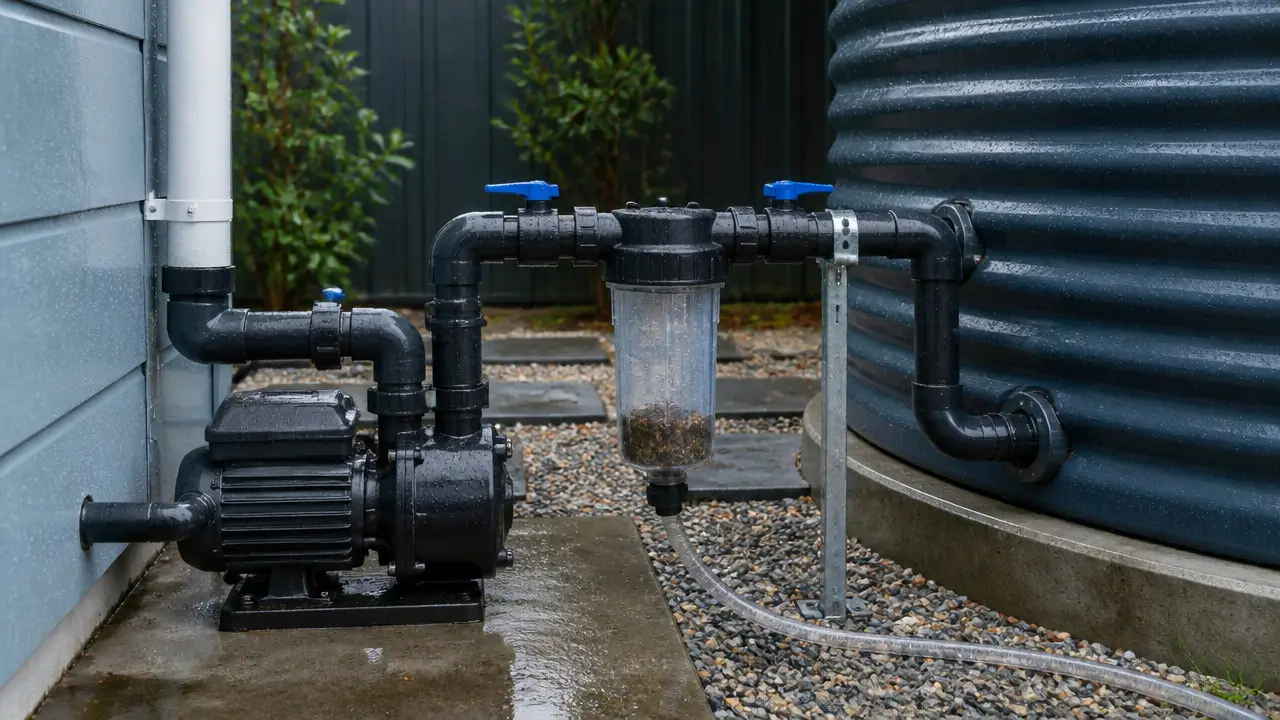
A sediment filter or other suitable prefiltration stage is often placed before carbon when the source water carries particles.
Keeping leaves and larger debris out of the collection system also reduces the load on later treatment stages.
A first-flush system can help divert some of the initial roof runoff from a rain event. That early runoff often carries more accumulated dirt from the roof. First flush can reduce the load entering the tank, but it does not guarantee clean or drinkable water.
Carbon Filters Can Reduce Water Flow
Water must move through the carbon media.
That creates resistance.
The restriction can become more noticeable with:
- Dense carbon-block cartridges
- Small cartridge housings
- High water demand
- Sediment buildup
- Clogged cartridges
- Low-pressure pump systems
A small filter that works well on a drinking-water faucet may be a poor choice for a whole-house rainwater pump system.
The filter must be sized for the required flow rate, which means the amount of water moving through the system during a given time.
Trying to force too much water through a filter can create poor pressure at faucets and fixtures.
Flow also matters for treatment. Carbon generally needs enough contact time with the water for adsorption to occur. Faster is not always better.
A Carbon Filter Can Add Pressure Loss
Flow and pressure are related but are not the same thing.
A filter creates a pressure drop as water moves through it. As the cartridge becomes dirty, that pressure drop may increase.
In a pumped rainwater system, this can lead to symptoms such as:
- Weak shower flow
- Irrigation zones performing poorly
- Pumps running longer
- Pressure switches cycling differently
- Poor flow at distant fixtures
The problem may not be the pump itself. A clogged or undersized filter can become a bottleneck.
Before adding carbon filtration, check whether the pump, filter housing, cartridge, pipe size, and expected flow are compatible.
Removing Chlorine Can Have a Downside
Activated carbon is commonly used to reduce chlorine.
That is useful when chlorine taste or odor is unwanted. However, chlorine may also be providing a disinfectant residual in treated water.
Once carbon removes that residual, the water downstream no longer has the same ongoing protection.
CDC notes that some whole-house filters remove treatment chemicals such as chlorine that help control germs. Poorly maintained filters can then become places where microorganisms grow.
This matters when deciding where carbon belongs in a treatment system.
Do not add a whole-house carbon filter simply because "more filtration" sounds better. The location of each treatment stage should match the water source and intended use.
Carbon Filters Need Regular Maintenance
With contaminant removal available from a carbon stage, you can verify home treatment matched to the contaminants of concern.
Carbon filtration is not maintenance-free.
Depending on the system, maintenance can include:
- Replacing cartridges
- Cleaning filter housings
- Checking seals and O-rings
- Watching for reduced flow
- Flushing new cartridges as directed
- Keeping replacement intervals on schedule
- Inspecting upstream sediment treatment
A neglected cartridge can cause poor flow and reduced contaminant removal.
New carbon cartridges may also release small amounts of carbon fines at first. These are tiny carbon particles. Follow the manufacturer's flushing instructions before using the treated water.
Carbon Can Become a Place for Microbial Growth
Carbon provides a large surface area. It also removes chlorine in systems where chlorine is present.
Those conditions can allow bacteria to establish themselves inside a poorly maintained filter.
This does not mean carbon filters always create dangerous water. It means maintenance matters, especially when the source water already has microbiological risks.
Simply replacing a carbon cartridge should also not be treated as proof that questionable source water is safe.
For drinking applications, water quality needs to be considered from the collection surface all the way to the tap.
Carbon Does Not Fix Hard Water or High TDS
Another common misunderstanding is that carbon removes most dissolved minerals.
Generally, it does not.
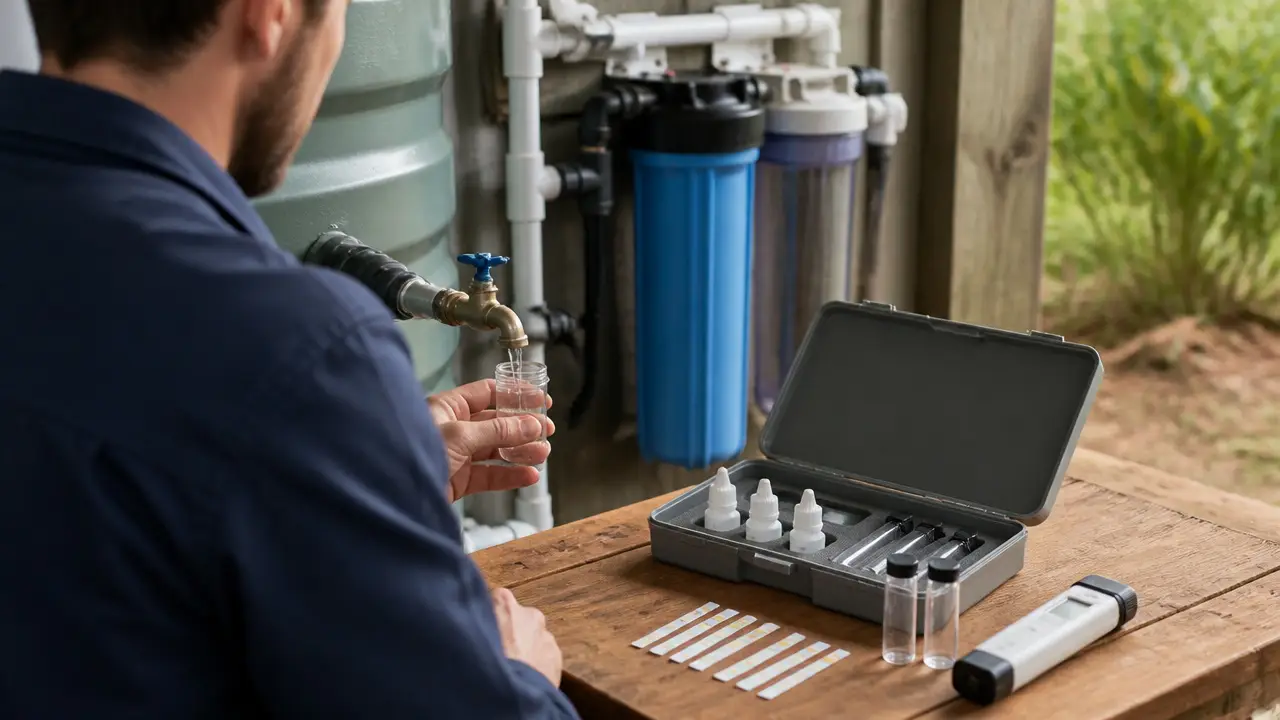
A TDS meter measures total dissolved solids indirectly through the electrical conductivity of water. Dissolved salts and minerals contribute to that reading.
You may run water through a carbon filter and see very little change in TDS even though the filter is working properly on chlorine, odor, or certain organic compounds.
Likewise, ordinary carbon filtration is not a water softener. If calcium and magnesium are causing hard-water scale, a different treatment process may be needed.
Do not judge a carbon filter's effectiveness solely by whether the TDS number changes.
Not Every Carbon Filter Has the Same Capabilities
"Activated carbon" describes a treatment material, not one universal performance level.
Filters can differ in:
- Carbon source
- Carbon quantity
- Granule size
- Carbon-block density
- Cartridge size
- Water contact time
- Flow capacity
- Additional treatment media
- Tested contaminant-reduction claims
A cartridge designed mainly to improve chlorine taste is not automatically suitable for reducing lead, pesticides, PFAS, or other contaminants.
Some filters that contain carbon are independently certified for specific contaminant reductions. For example, EPA recommends choosing an independently tested and certified filter when lead reduction is required.
Match the filter to the contaminant you actually need to address.
Carbon Filtration Can Add More Parts to Maintain
A simple rain barrel feeding a garden hose may not benefit from a carbon filter at all.
For irrigation water, controlling leaves, sediment, mosquitoes, and emitter-clogging particles may be more useful than removing taste and odor.
Carbon makes more sense when its specific treatment abilities are useful.
Adding it unnecessarily means adding:
- Another cartridge to replace
- Another housing that can leak
- More pressure loss
- More winterization work in freezing climates
- Additional fittings and connections
- Another place where stagnant water can sit
Every treatment stage should have a purpose.
Where Carbon Fits in a Rainwater Treatment System
For non-potable uses such as garden watering, carbon may not be needed.
For more demanding uses, carbon may serve as a polishing stage to improve odor, taste, or reduce particular chemicals after other treatment steps have handled larger debris and sediment.
A rainwater treatment system might involve several different functions:
- Keeping large debris out of the collection system.
- Managing the first runoff and tank sediment.
- Removing suspended particles where needed.
- Treating specific chemical concerns.
- Addressing microorganisms with an appropriate treatment process.
- Maintaining all equipment on schedule.
The exact arrangement depends on the source water and intended use.
There is no universal stack of filters that makes every rainwater supply safe for every purpose.
Carbon Filtration and Drinking Rainwater
A carbon filter by itself should not be used as proof that collected rainwater is potable.
Potable means suitable for drinking.
For drinking-water use, consider the complete system, including:
- Collection surface
- Gutters and conveyance
- First-flush or other pre-tank controls
- Storage tank condition
- Sediment removal
- Appropriate treatment for identified contaminants
- Microbial treatment
- Current laboratory water testing
- Ongoing maintenance
- Local health and plumbing requirements
A clear appearance, good taste, low TDS reading, or new carbon cartridge cannot establish that rainwater is safe to drink.
Where drinking water is involved, use current guidance from your health authority and qualified water-treatment professionals when the source or treatment requirements are uncertain.
When Is a Carbon Filter Worth Using?
Carbon makes sense when you have a clear reason for using it.
It can be a good fit when you need to reduce an unpleasant taste or odor or when the specific filter has verified performance for a contaminant you need to address.
It is less useful when your main problem is:
- Mud or heavy sediment
- Hard water
- High dissolved salts
- Nitrate
- Microbial contamination
- Low system pressure
Those problems usually require different treatment or system changes.
The best approach is to identify the problem first and choose the treatment stage second.
Frequently Asked Questions
What is the biggest disadvantage of a carbon water filter?
The biggest limitation is that carbon only treats certain contaminants. It does not provide complete purification or reliable disinfection. Its performance also falls as the carbon becomes exhausted.
Can bacteria grow in a carbon water filter?
Yes. Microorganisms can grow in water filters, especially when filters are poorly maintained. Carbon can also remove chlorine that would otherwise help control microbial growth downstream.
Does a carbon filter make rainwater safe to drink?
No. Carbon filtration alone does not establish that collected rainwater is safe to drink. Drinking-water use requires suitable collection, treatment for relevant contaminants and germs, current water testing, maintenance, and attention to local requirements.
Does activated carbon remove nitrate?
Ordinary activated carbon should not be relied on for nitrate removal. EPA specifically states that activated carbon filters do not remove nitrates. A different treatment method is needed when nitrate is a concern.
Does a carbon filter lower TDS?
Usually not by much. Activated carbon is not designed to remove most dissolved salts and minerals that contribute to total dissolved solids. A carbon filter can therefore be working correctly even when a TDS meter shows little change.
Why does my water pressure drop after installing a carbon filter?
Water must pass through the filter media, which creates resistance. A small, dense, dirty, or clogged cartridge can cause a noticeable pressure drop. Check the filter's flow requirements and whether sediment is clogging it.
Should I put a sediment filter before a carbon filter?
Often, yes, when the water contains suspended dirt or debris. Removing sediment first can help prevent premature carbon-filter clogging and preserve useful carbon capacity. The exact filter arrangement should match the source water and intended use.