As an affiliate, we may earn a commission from qualifying purchases. We get commissions for purchases made through links on this website from Amazon and other third parties.
Carbon filters can catch some microplastics, but not every carbon filter will do so reliably. The result depends on the filter’s physical design and how small a particle it can block.
Loose activated carbon is mainly used to adsorb certain dissolved chemicals, tastes, and odors. It is not automatically a fine particle filter. A dense carbon block, or a cartridge that combines carbon with fine mechanical filtration, may remove much more microplastic because water must pass through smaller openings.
For rainwater, the safest approach is to treat microplastic removal as a particle-filtration job first and a carbon-treatment job second.
Why Microplastic Size Matters
Microplastics are not all the same size. The term generally covers very small plastic particles, but those particles can range from nearly visible pieces down to particles only a few microns across.
A micron, also called a micrometer, is one-millionth of a meter.
Nanoplastics are smaller still. The FDA notes that nanoplastics are commonly considered smaller than about 1 micron, although there is no single standard definition that covers every use of these terms.
That wide size range is important.
A filter may catch larger plastic fibers and fragments while allowing much smaller particles to pass. So a label that simply says "activated carbon" tells you very little about its ability to remove microplastics.
Activated Carbon Does Not Work Like a Screen
Activated carbon has a huge internal surface area. Many dissolved chemicals can attach to that surface through a process called adsorption.
That is different from mechanical filtration.
Mechanical filtration works more like a very fine screen. Particles that are too large to pass through the filter structure become trapped.
Microplastics are particles rather than dissolved substances. Because of that, physical trapping is usually the more important removal mechanism.
Activated carbon can still be part of a filter that removes microplastics. Research on drinking-water treatment has found that granular activated carbon stages can reduce some microplastic particles. But performance varies with particle size, shape, filter design, and the rest of the treatment system.
Granular Carbon and Carbon Block Are Different
Two filters may both say "activated carbon" while behaving very differently.
Granular Activated Carbon
Granular activated carbon, or GAC, contains loose carbon granules.
Water flows around and between those granules. GAC is commonly used to reduce chlorine, tastes, odors, and some organic chemicals.
It can also trap some particles. However, there are many possible paths through the loose bed, so you should not assume a GAC cartridge removes a certain size of microplastic unless that performance has been tested.
Studies of point-of-use filters have found that systems using combinations of granular carbon, ion exchange, and fine filtration can reduce microplastics, but performance differs among filter designs.
Carbon Block
A carbon block compresses carbon into a solid, porous cartridge.
Because the water must pass through a much tighter structure, the block can provide both adsorption and mechanical filtration.
A fine carbon block may therefore trap many larger microplastics. But the word "carbon block" by itself still does not guarantee a particular level of microplastic removal.
Look for a tested particle rating or, better yet, a specific third-party microplastic-reduction claim.
Check the Micron Rating, but Do Not Rely on It Alone
A filter's micron rating describes the particle size the filter is designed to capture under certain conditions.
For example, a filter designed for particles several microns across may catch many microplastic fragments larger than that range. Smaller particles could still pass through.
Micron ratings can also be reported in different ways. Two filters with the same number on the package are not necessarily equal.
For that reason, consider:
- the stated particle size
- whether the rating is nominal or otherwise qualified
- the rated water flow
- how long the cartridge can operate before replacement
- whether the complete filter system was independently tested for microplastic reduction
Do not assume that a 1-micron or 5-micron carbon cartridge removes every plastic particle larger than the printed number unless the manufacturer provides suitable performance testing.
Some Filters Are Specifically Certified for Microplastic Reduction
Independent certification gives you more useful information than the words "activated carbon."
NSF's current drinking-water treatment listings include systems certified under NSF/ANSI 401 with a specific "Microplastics Reduction" claim. Some of those systems contain carbon, while others use carbon together with additional filtration materials.
The important point is that the claim belongs to the tested filter or system. It does not mean every carbon filter meets the same performance.
If microplastic reduction is your main reason for buying a drinking-water filter, look for the exact reduction claim rather than assuming that any NSF-certified carbon cartridge removes microplastics.
Certification can also change. Check the current certification database for the exact model rather than relying only on package wording.
Can Carbon Filters Remove Nanoplastics?
You should not assume they can.
Nanoplastics are smaller than many of the particles normally targeted by common sediment and carbon filters. Very small particles may pass through openings that easily stop larger microplastics.
Research is still developing on both nanoplastic detection and removal. Even identifying and measuring these extremely small particles in water is difficult.
A manufacturer should provide specific testing before you depend on a filter for particles in this size range.
A Better Setup for Rainwater
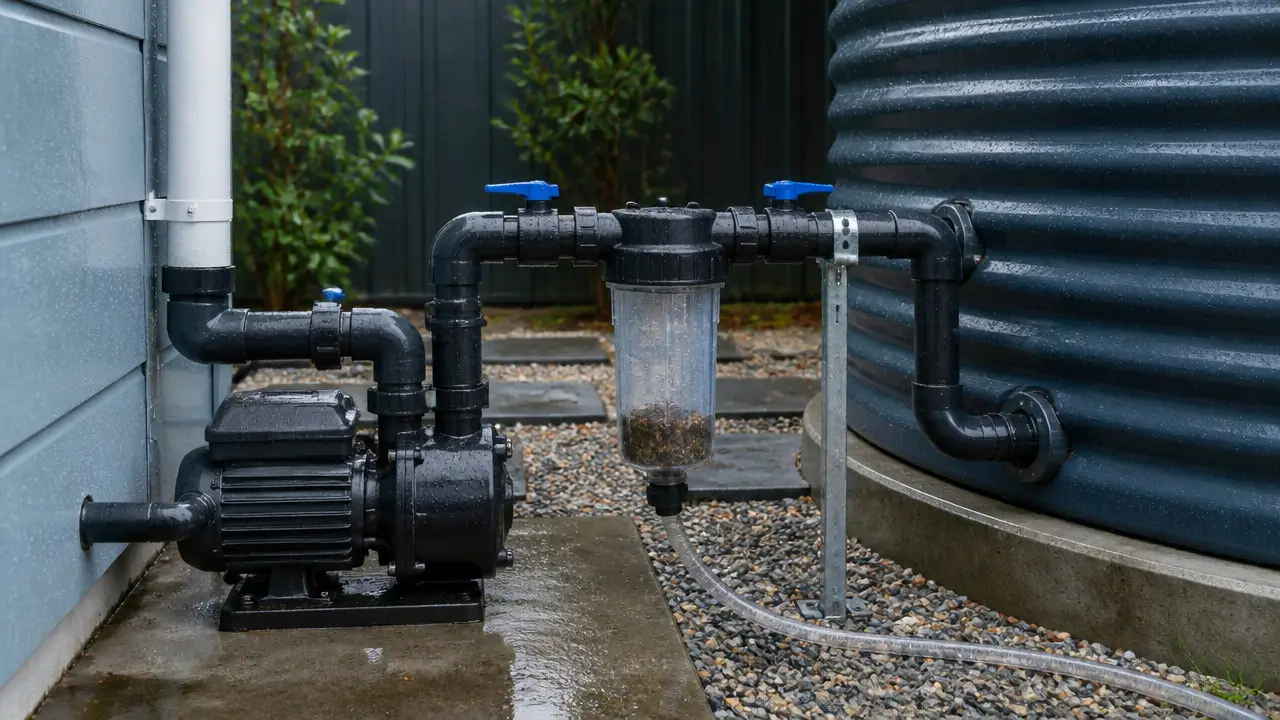
Explore practical considerations for gravity water filters remove microplastics to understand whether the test results point to cleaning or filter service.
If you collect roof runoff, do not make the carbon cartridge handle every particle entering the system.
A practical treatment train may include several stages.
Keep Larger Debris Out First
Use suitable gutter screens, inlet screening, and other debris controls to keep leaves, insects, roofing debris, and larger particles out of storage.
A first-flush device can divert some of the first runoff from the roof. That early runoff often carries more material washed from the roof surface.
Neither device should be treated as complete water treatment.
Use Sediment Filtration Before Carbon
A sediment filter is designed specifically to catch suspended particles.
Placing one before a carbon cartridge can reduce the amount of dirt and debris entering the carbon stage. This may also help prevent the carbon filter from clogging too quickly.
For a system concerned about microplastics, the sediment stage's particle rating may matter more than the fact that the next cartridge contains carbon.
Use Carbon for What Carbon Does Well
After larger suspended material has been reduced, activated carbon can be useful for contaminants it is designed and tested to reduce.
This also gives the carbon more usable surface area instead of loading it with dirt.
The exact treatment stages should depend on how you intend to use the rainwater.
Garden Water Does Not Need the Same Treatment as Drinking Water
If collected rainwater is being used for landscape irrigation, a simple screen or sediment filter may be enough to protect pumps, valves, and emitters. Adding a fine carbon cartridge only to remove microplastics may create unnecessary restriction and maintenance.
Drinking-water use is different.
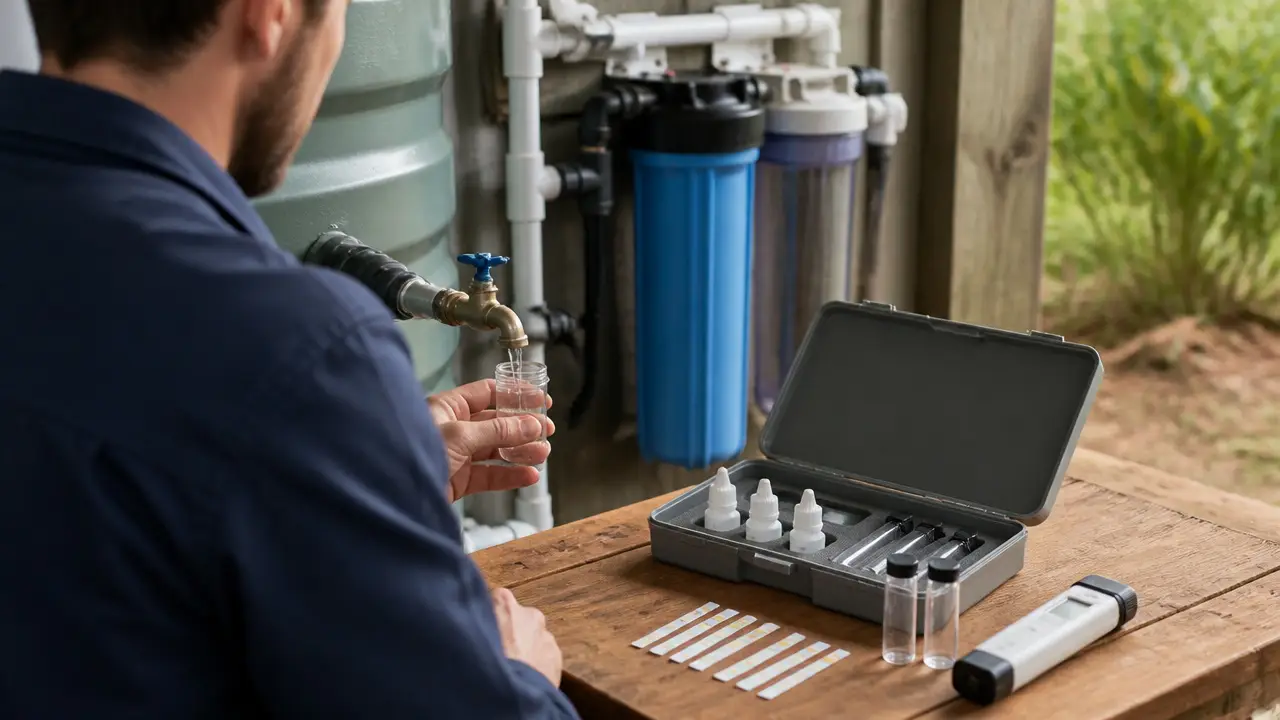
Roof runoff can contain microorganisms, animal waste, roofing material, airborne contaminants, sediment, and other pollutants. Removing microplastics does not establish that the water is potable, meaning suitable for drinking.
A carbon filter also does not make untreated rainwater safe to drink.
Drinking-water treatment should be planned as a complete system involving suitable collection, prefiltration, treatment for identified hazards, regular maintenance, current laboratory testing, and applicable local requirements.
Do Microplastics in Drinking Water Have Proven Health Effects?
Scientists are still working on that question.
The FDA states that microplastics and nanoplastics have been detected in water and other foods, but current evidence does not establish that the levels found in food and water pose a human-health risk. Important gaps remain, especially for very small particles and long-term exposure.
The issue is also receiving more regulatory attention. In April 2026, the U.S. EPA included microplastics as a group in its draft Sixth Contaminant Candidate List. A contaminant appearing on that list does not itself create a national drinking-water limit; it identifies contaminants that may require further evaluation or future regulation.
For homeowners, that means it makes sense to reduce unwanted particles where practical without assuming that one carbon filter provides complete protection.
The Bottom Line
Carbon filters can catch microplastics when the filter is physically fine enough to trap them, but activated carbon alone is not a guarantee of microplastic removal.
A dense carbon block is generally better suited to particle removal than loose granular carbon, but the actual micron performance and testing matter more than the carbon label.
For rainwater systems, use good debris control and sediment filtration before carbon. If microplastic reduction is important for drinking water, choose a complete filter with a specific independently verified microplastic-reduction claim rather than relying on a generic activated-carbon cartridge.
And remember that removing microplastics is only one part of treating rainwater for drinking.
Frequently Asked Questions
Does activated carbon absorb microplastics?
Activated carbon is mainly useful because contaminants can adsorb onto its large internal surface. Microplastics are solid particles, so physical trapping by the filter structure is usually more important than adsorption.
Will a carbon block filter remove microplastics?
It may remove many microplastics if its structure is fine enough. Check its particle rating and independent reduction claims instead of assuming every carbon block performs the same way.
Is granular activated carbon good for microplastics?
Granular activated carbon can reduce some microplastic particles, but removal can vary. Loose granules do not provide the same predictable physical barrier as a purpose-built fine particle filter.
What type of filter is best before a carbon filter?
A sediment filter is often useful before carbon when the water contains suspended debris. It keeps larger particles out of the carbon stage and can reduce premature clogging.
Can a 1-micron filter catch microplastics?
It may catch many microplastic particles above its effective removal range, but the printed micron number alone does not guarantee complete removal. Very small microplastics and nanoplastics may still pass through.
Does removing microplastics make rainwater safe to drink?
No. Roof runoff can contain microbes and other contaminants that a particle filter does not address. Drinking-water use requires a suitable whole-system treatment plan, maintenance, laboratory testing, and compliance with applicable local requirements.
Should I use a carbon filter for rainwater used only in the garden?
Usually not just for microplastic removal. Screening and sediment filtration may be more useful when the goal is simply to keep debris out of pumps, valves, hoses, and irrigation emitters.