As an affiliate, we may earn a commission from qualifying purchases. We get commissions for purchases made through links on this website from Amazon and other third parties.
A carbon filter and an activated carbon filter often mean the same thing in everyday water-filter language. Most filters sold as “carbon filters” actually contain activated carbon.
The important difference is the word activated. Activated carbon has been specially processed to create a huge number of tiny pores. Those pores give the carbon a very large surface area where certain dissolved chemicals can stick.
Plain carbon that has not been activated does not have the same filtering ability.
For a rainwater system, the name on the filter matters less than the actual filter media, its intended contaminant reductions, its flow requirements, and where it sits in the treatment system.
What Is Activated Carbon?
Activated carbon starts with a carbon-rich material. Depending on how it is made, the raw material may come from sources such as wood, coal, or coconut shells.
The material is processed at high temperatures under controlled conditions. This creates a network of very small pores.
Those pores greatly increase the carbon's surface area.
When water passes through activated carbon, some dissolved substances attach to its surface. This process is called adsorption.
Adsorption is different from absorption. With absorption, something soaks into another material. With adsorption, substances mainly stick to the material's surface.
The EPA lists granular activated carbon as a treatment method for substances including taste- and odor-producing compounds, natural organic matter, volatile organic compounds, and some synthetic organic compounds. Performance varies with the carbon, contaminant, water chemistry, and treatment conditions.
What Does "Carbon Filter" Mean?
“Carbon filter” is a broad term.
In most household water-treatment products, it refers to a filter containing some form of activated carbon. You may see names such as:
- Activated carbon
- Activated charcoal
- Granular activated carbon, or GAC
- Carbon block
- Activated carbon block
A product simply labeled “carbon filter” should not be assumed to remove a certain contaminant.
Check what type of carbon it contains and what the filter is actually designed and certified to reduce.
CDC recommends choosing a water filter based on the substances found in your water rather than relying only on the type of filter.
Carbon vs. Activated Carbon at a Glance
| Feature | Plain carbon | Activated carbon |
|---|---|---|
| Specially processed for filtration | Not necessarily | Yes |
| Very porous structure | Limited | Yes |
| Large adsorption surface | Limited | Very large |
| Common in household water filters | Uncommon as untreated carbon | Very common |
| Useful for taste and odor treatment | Limited | Often |
| Can reduce some dissolved organic chemicals | Not something to assume | Yes, depending on the carbon and filter |
| Makes unsafe water safe by itself | No | No |
The practical point is simple: if you need carbon treatment for water, look for activated carbon rather than assuming any carbon material will work.
Granular Activated Carbon vs. Carbon Block
Most home systems use activated carbon in one of two common forms.
Granular Activated Carbon
Granular activated carbon, usually called GAC, consists of loose carbon granules packed inside a filter housing or cartridge.
Water moves between and around the granules.
GAC can work well when the filter provides enough contact time between the water and carbon. EPA notes that activated-carbon performance depends partly on factors such as carbon type and water flow.
If water passes through too quickly, some contaminants may not have enough time to adsorb onto the carbon.
Carbon Block
A carbon block contains fine activated carbon that has been formed into a solid cartridge.
Water passes through small pathways in the block rather than flowing freely between loose granules.
A carbon block can sometimes provide both adsorption and some particle filtration. However, the actual performance depends on the cartridge design.
Do not assume that every carbon block has the same micron rating or contaminant-removal ability.
A micron rating describes the approximate size of particles a filter is designed to catch. It does not tell you everything the filter can remove from water.
What Can Activated Carbon Remove?
Activated carbon is especially useful for certain dissolved organic chemicals.
Depending on the filter design, carbon type, water conditions, and certification, it may reduce:
- Chlorine
- Unpleasant tastes
- Unpleasant odors
- Some volatile organic compounds, or VOCs
- Some pesticides and other organic chemicals
- Certain other chemicals when the filter is specifically designed for them
Activated carbon is commonly used to improve water taste and smell. CDC notes that activated carbon is a common treatment for this purpose.
But the phrase “activated carbon” does not mean a filter removes every chemical on this list.
Different activated carbons have different adsorption properties. Cartridge size, flow rate, water chemistry, and how much water has already passed through the filter also affect performance.
For drinking-water treatment, look for independently certified claims covering the specific contaminant you need to reduce.
What Does Activated Carbon Not Reliably Remove?
Activated carbon is not a complete water-treatment system.
Do not assume a normal carbon cartridge will reliably remove:
- Bacteria
- Viruses
- Other disease-causing microorganisms
- Dissolved salts
- Water hardness
- Every metal
- Every pesticide
- Nitrate
- Every PFAS compound
- Sediment in large amounts
Most household carbon filters are not designed to remove germs. CDC specifically warns that many common home filters use carbon mainly for chemical reduction, taste, or odor rather than microbial treatment.
Carbon also does not automatically remove lead simply because it contains activated carbon. A filter intended for lead reduction should have a specific performance claim for lead.
Which Is Better for Rainwater?
If you are choosing between untreated carbon and activated carbon for water filtration, activated carbon is the useful choice.
But many rainwater systems do not need a carbon filter at all.
For garden irrigation, toilet flushing, or other non-potable uses, removing leaves, grit, roof debris, and sediment may be much more important.
Non-potable means water that is not intended for drinking.
A simple rainwater system might instead focus on:
- Keeping the roof and gutters reasonably clean.
- Screening leaves and large debris.
- Using a first-flush or similar pretreatment method when appropriate.
- Keeping insects and debris out of the tank.
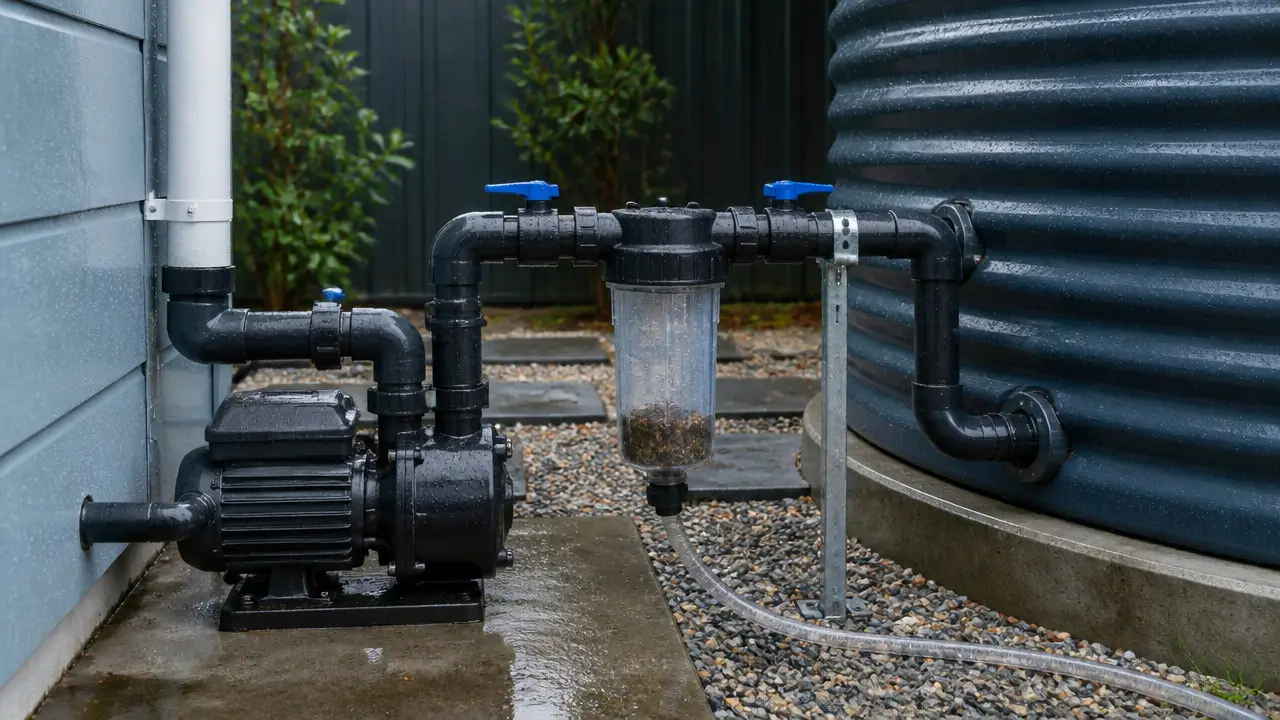
- Filtering sediment before pumps or small irrigation outlets when needed.
A first flush is a device or arrangement that diverts some of the first runoff from a roof before water enters the main storage tank. That first runoff may carry more loose debris and contamination from the roof.
Adding activated carbon where there is no treatment goal simply creates another cartridge that must be maintained.
Where Does Carbon Fit in a Rainwater Treatment System?
Use residential activated-carbon treatment options to interpret the appropriate follow-up check for likely contaminants.
Activated carbon usually works better as a later treatment stage rather than the first filter after the tank.
Roof runoff can contain fine sediment and organic material. Sending dirty water straight into a carbon cartridge can clog or foul it faster.
A treatment train may therefore use sediment removal before carbon.
The exact arrangement depends on the intended use and water quality.
For example, a system designed only to reduce an odor before non-potable household reuse might use:
Tank → sediment filtration → activated carbon → point of use
That is only an example of component order. It does not make the water potable.
For drinking-water use, treatment becomes much more involved.
Activated Carbon Does Not Make Rainwater Drinkable
Passing roof runoff through activated carbon does not establish that the water is safe to drink.
Roof-collected rainwater can be exposed to bird and animal waste, microorganisms, roofing materials, airborne pollution, tank contamination, and other substances.
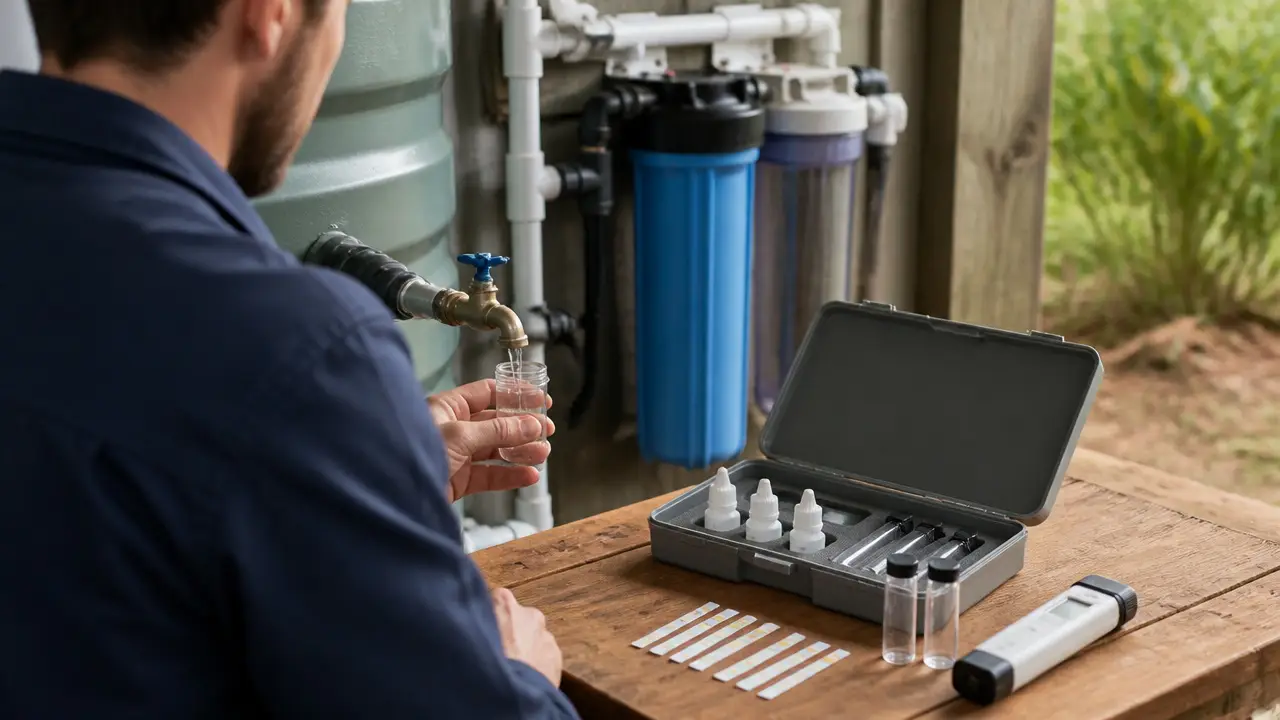
CDC recommends that people using rainwater collection systems test their water at least annually for harmful germs and chemicals and consider additional testing when its color, taste, or smell changes.
If rainwater will be used for drinking, treat it as a whole-system water-quality decision. That may involve suitable collection surfaces, debris control, prefiltration, appropriate treatment and disinfection stages, current laboratory testing, regular maintenance, and applicable local requirements.
A carbon cartridge alone is not a substitute for those steps.
Flow Rate Matters
Carbon needs contact time with water.
If you push water through a small cartridge much faster than it was designed for, treatment performance may decrease.
This is especially important when connecting carbon filtration to a rainwater pump.
A pump may be capable of supplying much more water than a small point-of-use cartridge can handle.
Check:
- Rated flow for the cartridge
- Housing connection size
- Maximum operating pressure
- Pressure loss through the filter
- Required contact time or treatment flow
- Filter capacity
- Replacement instructions
Do not choose a carbon cartridge based only on whether its pipe threads fit your plumbing.
Carbon Filters Eventually Become Exhausted
Activated carbon has limited adsorption capacity.
As substances collect on its surface, less capacity remains for new contaminants.
Eventually the filter must be replaced or, in larger commercial systems, the carbon may sometimes be regenerated. EPA notes that GAC media must be replaced or regenerated after its adsorption capacity is exhausted.
You usually cannot tell whether a cartridge is exhausted simply by looking at the water.
Taste and smell are not reliable water-safety tests either. CDC warns that harmful contaminants may cause no noticeable change in taste, smell, or appearance.
Follow the filter manufacturer's replacement limits and account for the actual condition of your rainwater.
Dirty water may require more frequent attention to upstream sediment filters.
Does Activated Carbon Lower TDS?
Usually not by much.
Total dissolved solids, or TDS, is a broad measurement related to dissolved minerals and salts in water.
Activated carbon works mainly by adsorption of certain compounds. It is not designed to remove most dissolved mineral salts.
That means a TDS meter may show little change after carbon filtration even when the carbon is working properly.
It also means a low TDS reading does not prove that water is safe to drink.
How to Choose a Carbon Filter
Start with the job you need the filter to perform.
For a rainwater system, ask:
- What will the water be used for?
- What contaminants are you trying to reduce?
- Has testing shown those contaminants are present?
- Is sediment already being removed?
- How much water must pass through the filter?
- What pressure will the pump provide?
- What connection sizes are needed?
- How often will the cartridge need replacement?
- Is there an independent certification for the specific reduction claim you need?
For drinking or cooking water, testing should guide treatment choices. Do not select a filter only because its label says “activated carbon.”
Frequently Asked Questions
Are carbon filters and activated carbon filters the same thing?
Usually. In household water treatment, “carbon filter” is commonly shorthand for an activated carbon filter. However, check the specifications rather than assuming any material called carbon has been activated.
Is activated charcoal the same as activated carbon?
For water filtration, the terms are commonly used for the same general type of porous carbon treatment media. The more important details are the media type, filter design, intended contaminants, flow rate, and performance certification.
Is granular activated carbon better than carbon block?
Neither is automatically better. GAC uses loose granules, while a carbon block uses compressed carbon. The best choice depends on flow, pressure, particle filtration needs, contaminant-reduction claims, and the rest of the system.
Does activated carbon remove bacteria from rainwater?
A normal activated-carbon filter should not be relied on to remove or kill bacteria, viruses, or other harmful microorganisms. Microbial treatment requires methods specifically designed and validated for that purpose.
Does activated carbon remove chlorine?
Activated carbon is commonly used to reduce chlorine and the taste or odor associated with it. Actual performance depends on the filter design and operating conditions.
Do I need activated carbon for garden rainwater?
Often, no. For many irrigation systems, screening debris and controlling sediment are more useful than carbon treatment. Carbon may add maintenance without providing a meaningful benefit unless you have a specific water-quality problem it can address.
Can activated carbon make collected rainwater safe to drink?
No. Activated carbon can be one treatment stage, but it does not by itself establish that roof-collected rainwater is potable. Drinking-water use requires suitable collection, treatment matched to the hazards, current testing, maintenance, and compliance with applicable local requirements.