As an affiliate, we may earn a commission from qualifying purchases. We get commissions for purchases made through links on this website from Amazon and other third parties.
A 10-micron water filter is mainly a sediment filter. It can catch many visible and near-visible particles such as sand, rust flakes, pipe scale, silt, and bits of organic debris.
It should not be treated as a drinking-water safety filter. A 10-micron filter is too coarse to reliably remove many disease-causing germs, and a standard sediment filter does not remove dissolved contaminants such as salts, hardness minerals, or many chemicals.
For rainwater systems, a 10-micron filter often works best as one stage in a larger treatment setup.
What Does 10 Microns Mean?
A micron, also called a micrometer, is a unit used to measure very small objects.
One micron is 0.001 millimeter. A 10-micron particle is therefore about 0.01 millimeter across.
A filter rated at 10 microns has openings designed to trap particles around that size or larger. However, the exact performance depends on how the filter rating is defined.
Nominal vs. Absolute Micron Ratings
This difference matters when choosing a filter.
A nominal 10-micron filter is designed to catch a large percentage of particles around 10 microns, but it may have some larger openings. Some particles larger than 10 microns can still pass through.
An absolute 10-micron filter has a much stricter maximum pore size. The CDC explains that an absolute rating describes the largest pore size, while a nominal or mean rating describes an average pore size.
Do not assume two filters labeled "10 micron" provide the same level of filtration. Check whether the manufacturer gives a nominal or absolute rating and what removal performance it actually claims.
What Will a 10-Micron Filter Remove?
A typical 10-micron sediment filter can reduce larger suspended material such as:
- Sand and grit
- Many silt particles
- Rust flakes
- Pipe scale
- Sediment from a storage tank
- Small pieces of leaves and other plant material
- Insect fragments
- Other suspended debris larger than the filter's effective pore size
The filter may also reduce cloudiness when that cloudiness comes from particles large enough to be trapped.
It will not necessarily make cloudy water completely clear. Very fine clay, microorganisms, and other particles smaller than the filter openings may continue through.
What a 10-Micron Filter Will Not Reliably Remove
The micron number only describes particle size filtration. It does not mean the filter removes everything that could make water unsafe.
Bacteria
A 10-micron filter is much too coarse to be relied on for bacterial removal.
The CDC recommends an absolute pore size of 0.3 micron or smaller when a filter is intended to remove bacteria such as E. coli or Salmonella.
A 10-micron sediment filter should therefore be treated as pretreatment, not bacterial protection.
Viruses
Viruses are much smaller than 10 microns and can pass through ordinary sediment filters.
The CDC notes that even much finer microfilters do not reliably remove viruses. Technologies such as suitable nanofiltration or reverse osmosis can provide much finer physical separation, depending on the system and its verified performance.
Cryptosporidium and Other Parasites
A 10-micron filter should not be relied on to remove waterborne parasites.
For parasites such as Cryptosporidium and Giardia, the CDC recommends filters with an absolute pore size of 1 micron or smaller, or filters specifically certified for appropriate cyst reduction or removal.
Some large organisms may be trapped by a 10-micron filter, but that does not make it a dependable parasite treatment stage.
Dissolved Minerals and TDS
A sediment filter does not normally lower total dissolved solids, or TDS.
TDS includes dissolved substances such as salts and minerals. These substances are dissolved in the water rather than floating around as 10-micron particles.
A 10-micron sediment filter therefore does not normally remove:
- Calcium responsible for hardness
- Magnesium
- Sodium
- Dissolved salts
- Nitrates
- Most other dissolved minerals
Much finer treatment processes may be needed when dissolved contaminants are the concern.
Dissolved Metals and Chemicals
A basic sediment filter also should not be expected to remove dissolved contaminants such as lead, arsenic, pesticides, or other chemicals.
The CDC stresses that different treatment methods remove different contaminants and recommends choosing treatment based on what testing shows is actually in the water.
Does a 10-Micron Carbon Filter Remove More?
It can.
A filter can have both a micron rating and another type of treatment media. For example, a 10-micron carbon filter may trap particles while the activated carbon also adsorbs certain substances.
Depending on the specific filter and its verified claims, activated carbon may reduce chlorine, tastes, odors, or certain chemicals.
Those reductions come from the carbon media, not because the pores are 10 microns wide.
Always check the filter's stated contaminant-reduction claims rather than assuming the micron rating tells you what chemicals it removes.
Is 10 Microns Good for Rainwater?
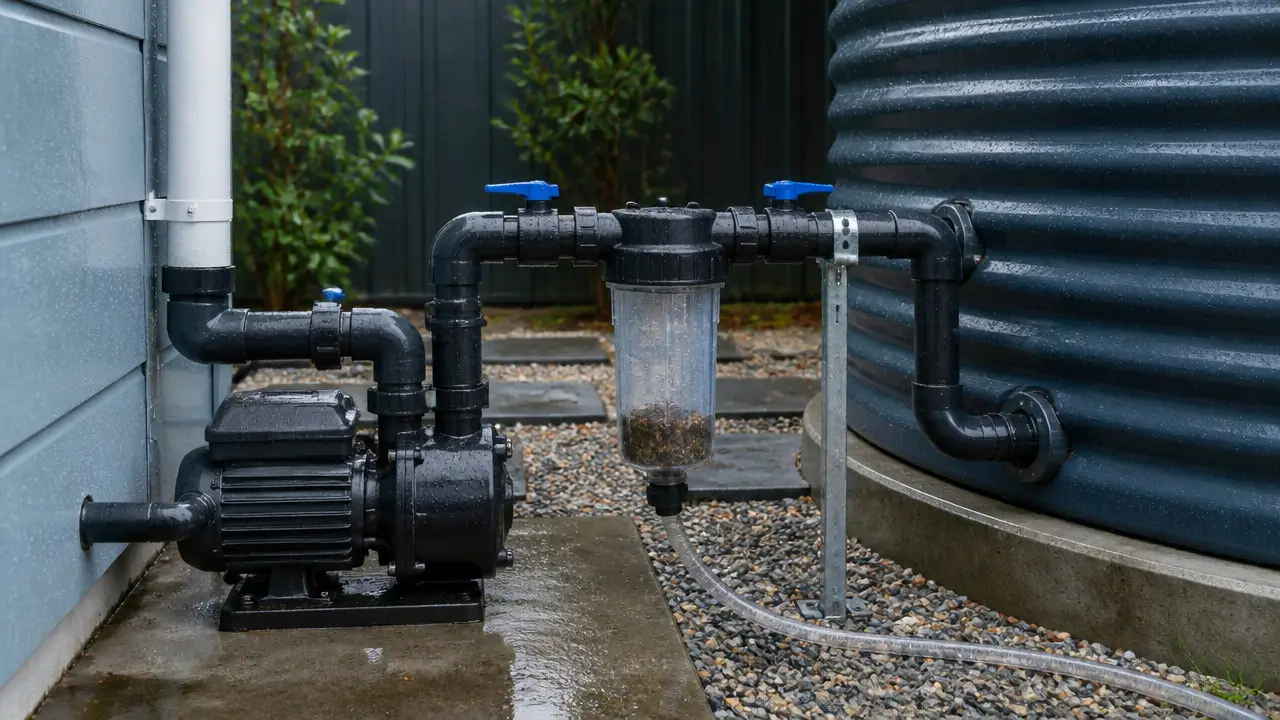
A 10-micron filter can be very useful in a rainwater harvesting system.
Roof runoff can carry dust, pollen, grit, pieces of roofing material, plant debris, insect material, and sediment that settles in a tank. Screens, gutter guards, and a first-flush diverter can reduce some of that material before it reaches storage.
A first-flush diverter sends away part of the first roof runoff, which often carries more loose dirt from the catchment surface.
After storage, a 10-micron cartridge can provide another level of sediment removal before the water reaches irrigation equipment or finer treatment stages.
Account for safe filtration ratings for drinking water to understand a water-safety plan appropriate for the intended purpose.
A common flow path might look like:
Roof screening → first-flush control → storage tank → coarse sediment protection → 10-micron filtration → finer treatment if needed
The exact stages should depend on how the water will be used.
For Garden Irrigation
Ten-micron filtration may be finer than some simple garden systems need.
Large hose outlets and hand watering may work with much coarser filtration. Drip emitters and small irrigation passages are more sensitive to debris, so filtration should match the irrigation equipment manufacturer's requirements.
Using an unnecessarily fine filter can reduce flow and require more frequent cartridge changes.
Before a Finer Filter
A 10-micron filter is often useful as a prefilter for a finer cartridge.
For example, catching larger sediment first can reduce how quickly a downstream 5-micron or 1-micron stage becomes clogged.
This staged approach can be especially helpful with rainwater tanks that collect fine sediment over time.
Before UV Treatment
Sediment filtration can also matter before ultraviolet treatment.
UV systems disinfect water by exposing microorganisms to ultraviolet light. Cloudy water and suspended particles can interfere with that process. The CDC notes that UV systems work better when water is filtered before UV treatment.
A 10-micron stage alone does not mean water is clear enough or otherwise suitable for a particular UV system. Follow the UV manufacturer's required pretreatment and water-quality limits.
Should You Choose 10, 5, or 1 Micron?
The best choice depends on what you are trying to accomplish.
| Filter rating | Typical role |
|---|---|
| 20–50 micron | Larger sediment and equipment protection |
| 10 micron | General sediment reduction and pretreatment |
| 5 micron | Finer suspended sediment |
| 1 micron | Very fine particulate filtration; an absolute 1-micron filter may be used where suitable cyst removal is required |
Smaller is not automatically better.
Finer filters usually create more resistance to water flow. They can also clog sooner when the incoming water contains a lot of sediment.
For pumps and whole-house systems, check the filter housing size, connection size, expected flow rate, and pressure limits.
Flow rate means how much water passes through the system during a given amount of time, usually stated in gallons per minute or liters per minute.
A filter that is too small for the required flow can cause poor pressure even if its micron rating is appropriate.
When Should a 10-Micron Filter Be Replaced?
There is no single replacement schedule that works for every system.
Replacement depends on:
- How dirty the incoming water is
- How much water passes through the filter
- Cartridge size
- Filter material
- Tank cleanliness
- Flow requirements
- Manufacturer instructions
A noticeable drop in flow or pressure can indicate that the cartridge is becoming loaded with sediment.
Do not keep using a filter indefinitely just because water still passes through it. Follow the manufacturer's replacement and sanitation instructions.
Rainwater storage tanks also need maintenance. Replacing cartridges without addressing heavy sediment, dirty gutters, poor screening, or contamination in the tank can lead to repeated clogging.
Is Water Safe to Drink After a 10-Micron Filter?
Not based on 10-micron filtration alone.
Roof-collected rainwater can contain microorganisms, chemicals, animal waste, roofing contaminants, and other material that a sediment cartridge does not remove.
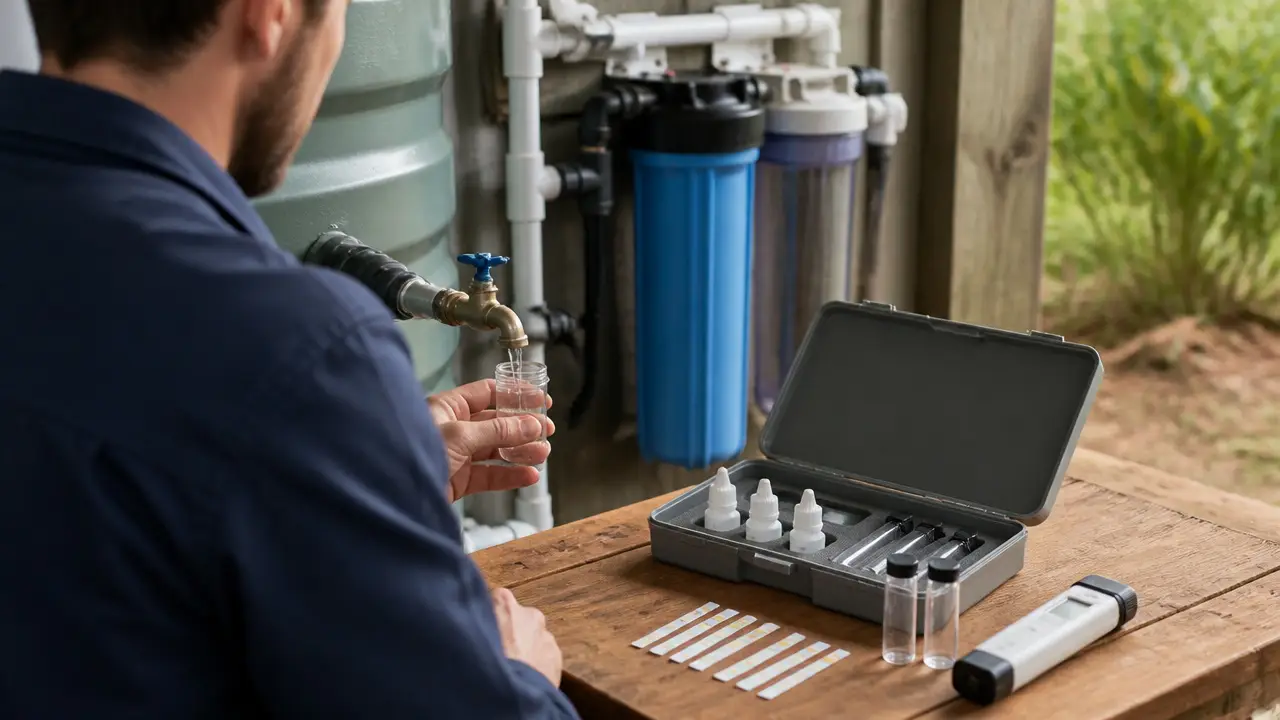
Drinking-water treatment should be planned as a whole system. Appropriate collection, prefiltration, treatment, maintenance, and current water testing may all be needed.
The CDC recommends testing water and selecting treatment based on the germs or chemicals of concern rather than assuming one filter handles every risk.
If rainwater will be used for drinking, cooking, or other potable uses, use current laboratory testing and follow applicable local health and plumbing requirements. A qualified water-treatment professional or local health authority can help when the treatment system becomes complex.
Frequently Asked Questions
Will a 10-micron filter remove rust?
It can remove many rust particles and flakes that are larger than its effective pore size. It will not necessarily remove dissolved iron that is present in the water rather than suspended as particles.
Will a 10-micron filter remove bacteria?
No. A 10-micron filter should not be relied on for bacterial removal. The CDC recommends an absolute pore size of 0.3 micron or smaller when filtration is intended to remove bacteria.
Will a 10-micron filter remove Giardia?
It should not be relied on for Giardia protection. For reliable parasite filtration, the CDC recommends an absolute pore size of 1 micron or smaller or an appropriately certified cyst-removal filter.
Will a 10-micron filter reduce TDS?
A normal sediment filter will not significantly reduce TDS because TDS consists of dissolved substances that are much smaller than suspended sediment.
Is 10 microns better than 5 microns?
Not always. A 5-micron filter catches finer particles, but it may clog faster and create more flow resistance. A 10-micron filter can be a better first stage when the water contains significant sediment.
Can I put a 10-micron filter before a 1-micron filter?
Yes. This can be a useful staged setup because the 10-micron cartridge catches larger sediment before it reaches the finer filter. Make sure the housings and cartridges can provide the flow and pressure your system requires.
Is a 10-micron filter enough for rainwater irrigation?
It may be enough for some irrigation systems, but emitter openings and manufacturer requirements matter. Drip systems may require specific filtration, while ordinary hoses and larger outlets may tolerate coarser water.