As an affiliate, we may earn a commission from qualifying purchases. We get commissions for purchases made through links on this website from Amazon and other third parties.
Activated carbon can be a very useful water-treatment stage, but there is no single type that is best for every system.
For most home systems, carbon block is a strong choice for a low-flow drinking-water filter, while granular activated carbon (GAC) is often a better fit when you need more flow. If the water contains chloramine, look for a filter specifically certified for chloramine reduction; catalytic activated carbon is commonly used for this job.
For rainwater, activated carbon should normally be treated as a polishing stage after sediment removal, not as the only treatment step.
What Does Activated Carbon Do?
Activated carbon is carbon that has been processed to create a huge number of tiny pores. Water passes over or through these pores.
Certain chemicals stick to the carbon surface. This process is called adsorption.
Adsorption is different from absorption. The contaminant does not soak into the carbon like water into a sponge. It attaches to surfaces inside the carbon's pore structure.
Activated carbon is commonly used to reduce:
- Chlorine
- Unwanted tastes
- Unwanted odors
- Some volatile organic compounds, or VOCs
- Some pesticides and other organic chemicals
- Some disinfection byproducts
EPA notes that granular activated carbon can remove many taste- and odor-producing compounds, natural organic matter, VOCs, and synthetic organic chemicals. How well it works depends on the carbon and the contaminant being treated.
Activated carbon is not a universal water purifier.
Most ordinary carbon filters should not be expected to remove every dissolved mineral, salt, metal, bacterium, virus, or other contaminant. CDC advises choosing treatment based on the particular contaminants found in the water rather than assuming one filter handles everything.
Carbon Block vs. Granular Activated Carbon
This is usually the most important choice for a homeowner.
Carbon block
A carbon block cartridge uses finely divided activated carbon formed into a solid filter.
Water has to travel through the block instead of simply flowing between loose carbon granules.
That makes carbon block useful where you want controlled filtration at a kitchen tap, cabin sink, or other point-of-use location.
Carbon block can also provide particle filtration, depending on the cartridge design and its micron rating.
A micron rating describes the approximate size of particles a filter is designed to capture. It does not tell you which dissolved chemicals or microorganisms the filter will remove.
The downside is resistance to flow. A dense carbon block can reduce pressure and flow, especially if sediment begins plugging it.
Granular activated carbon
Granular activated carbon, usually called GAC, consists of loose activated-carbon particles held inside a cartridge or tank.
It generally allows easier water movement than a dense carbon block, making it practical for larger flows.
EPA lists GAC as a well-established adsorption treatment and notes that its effectiveness depends on factors such as the carbon material and manufacturing process.
GAC works best when the system gives the water enough time in contact with the carbon. Water moving too quickly through a carbon bed can reduce treatment performance.
Which form should you choose?
| Situation | Usually the better starting point |
|---|---|
| Kitchen drinking-water filter | Carbon block |
| Final polishing after other filters | Carbon block |
| Higher-flow household treatment | GAC |
| Large media tank | GAC |
| Chlorine taste and odor | Either, if properly sized and certified |
| Chloramine | Carbon specifically rated for chloramine |
| Unknown rainwater quality | Neither should be used alone |
Do not choose between GAC and carbon block based only on the word "carbon." The actual contaminant-reduction claims, flow rate, capacity, and maintenance requirements matter more.
Is Coconut-Shell Activated Carbon the Best?
Coconut-shell carbon is very common in household filters, but coconut shell is not automatically better than every other activated carbon.
Activated carbon can be made from materials including:
- Coconut shells
- Bituminous coal
- Lignite
- Wood
- Peat
EPA notes that these different starting materials create activated carbons with different properties and treatment capacities. Manufacturing methods also affect performance.
That means a label saying "coconut-shell carbon" does not prove that a filter will remove the contaminant you care about.
For a household filter, a better question is:
Has this complete filter been independently tested for the contaminant I need to reduce?
A certified carbon filter made with one source material can be a better choice than an uncertified filter made from a supposedly superior carbon.
When Coconut-Shell Carbon Makes Sense
Coconut-shell activated carbon is widely used in point-of-use cartridges and GAC media.
It can make sense when the system is intended mainly for jobs such as improving taste and odor or reducing chlorine, provided the filter has suitable performance claims for your water.
It is also convenient in compact cartridges because manufacturers can process coconut-shell carbon into highly porous media.
Still, do not use the raw material as your only selection rule.
The amount of carbon, flow rate, contact time, cartridge construction, water chemistry, and remaining filter capacity can all affect performance.
When Catalytic Carbon Is Better
If your water utility uses chloramine instead of ordinary free chlorine, standard activated carbon may not be the best choice.
Chloramine is made by combining chlorine and ammonia. It lasts longer in a distribution system than free chlorine. EPA says more than one in five Americans receives drinking water treated with chloramines.
Catalytic activated carbon is activated carbon modified or manufactured to improve certain catalytic reactions, including chloramine reduction.
The Water Quality Association lists activated carbon and catalytic activated carbon as residential chloramine treatment methods and points consumers toward products certified for chloramine reduction.
The practical rule is simple:
If chloramine is your concern, buy based on a verified chloramine-reduction claim rather than assuming any carbon cartridge will work.
What Is Best for Rainwater?
For harvested rainwater, activated carbon is usually most useful near the end of the treatment train.
A typical arrangement might be:
roof collection → debris screening → first-flush or other prefiltration → storage → sediment filtration → activated carbon → additional treatment required for the intended use
A first-flush device diverts some of the first roof runoff so that part of the dust, droppings, pollen, and other material accumulated on the roof does not immediately enter storage.
Carbon should generally not be the first cartridge after a dirty rainwater tank.
Sediment can clog a carbon block quickly and can interfere with a GAC bed. Removing visible and suspended particles first helps protect the carbon stage.
For garden irrigation, toilet flushing, or other non-potable uses, carbon treatment may not even be necessary unless there is a specific taste, odor, chemical, or equipment-related reason for using it.
Potable means water intended to be safe for drinking.
Details about activated-carbon equipment for domestic water treatment help compare the service interval indicated by reliable monitoring data.
If harvested rainwater will be used as drinking water, activated carbon alone is not enough to establish that the water is safe.
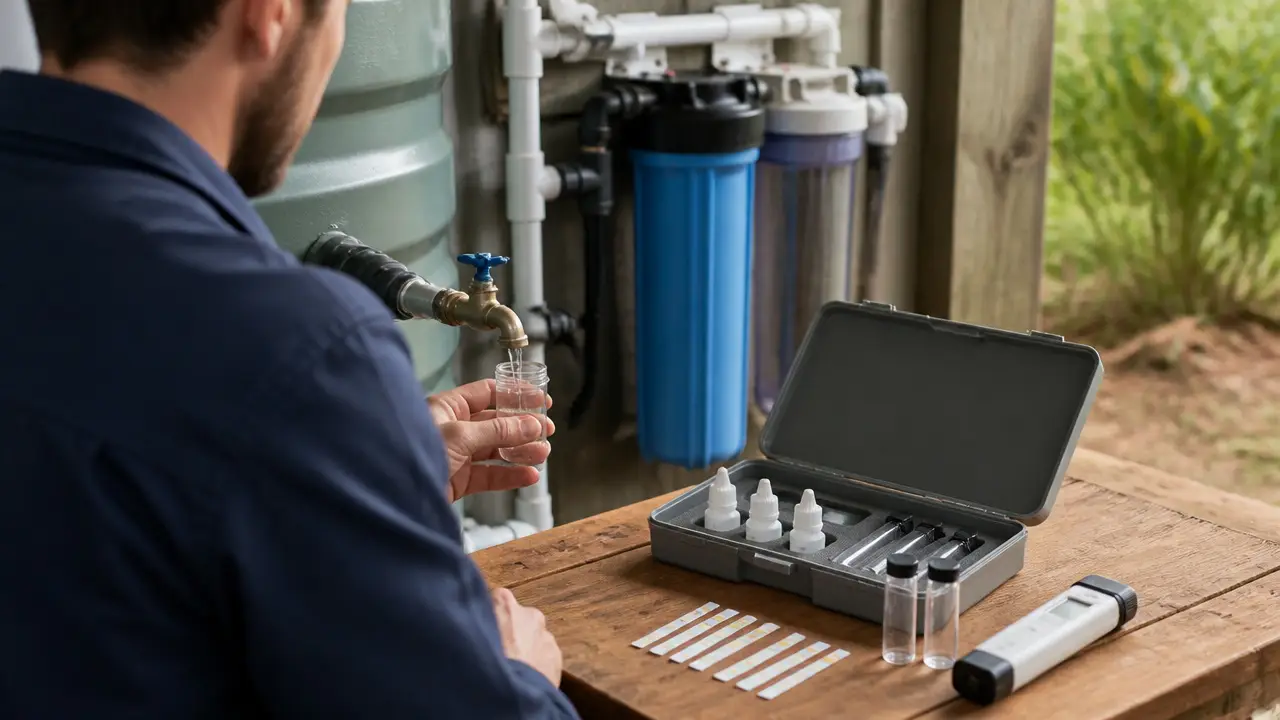
Roof runoff can have microbial and chemical risks that carbon may not address. A drinking-water system should be planned as a complete collection and treatment process, with suitable prefiltration, treatment for identified hazards, disinfection where required, proper maintenance, current laboratory testing, and compliance with applicable local requirements.
CDC specifically warns that many common carbon filters are mainly intended to improve taste and smell and are not designed to remove germs.
Look at Certification, Not Just Carbon Type
When drinking water is involved, the filter's verified performance should carry more weight than marketing terms such as "premium carbon," "natural carbon," or "coconut technology."
Two useful standards you may see are:
NSF/ANSI 42
NSF/ANSI 42 covers aesthetic effects such as chlorine, taste, odor, and certain particulate-reduction claims.
NSF/ANSI 53
NSF/ANSI 53 covers specific contaminants with health effects.
A filter being certified to a standard does not mean it removes every contaminant covered by that standard.
You still need to check the exact reduction claims for that model.
NSF advises consumers to check both the certification and the specific contaminant for which performance was verified.
For example, if lead is your concern, look for a verified lead-reduction claim. If chloramine is the issue, look for chloramine reduction. If PFAS is the concern, select a filter specifically certified for applicable PFAS reduction rather than simply buying any activated-carbon cartridge. EPA also recommends looking for independent certification when choosing a home PFAS filter.
Flow Rate Matters More Than It Seems
Activated carbon needs contact with the water to work.
If you push water through a small carbon cartridge much faster than it was designed for, treatment can suffer.
This is especially important when adding carbon filtration to:
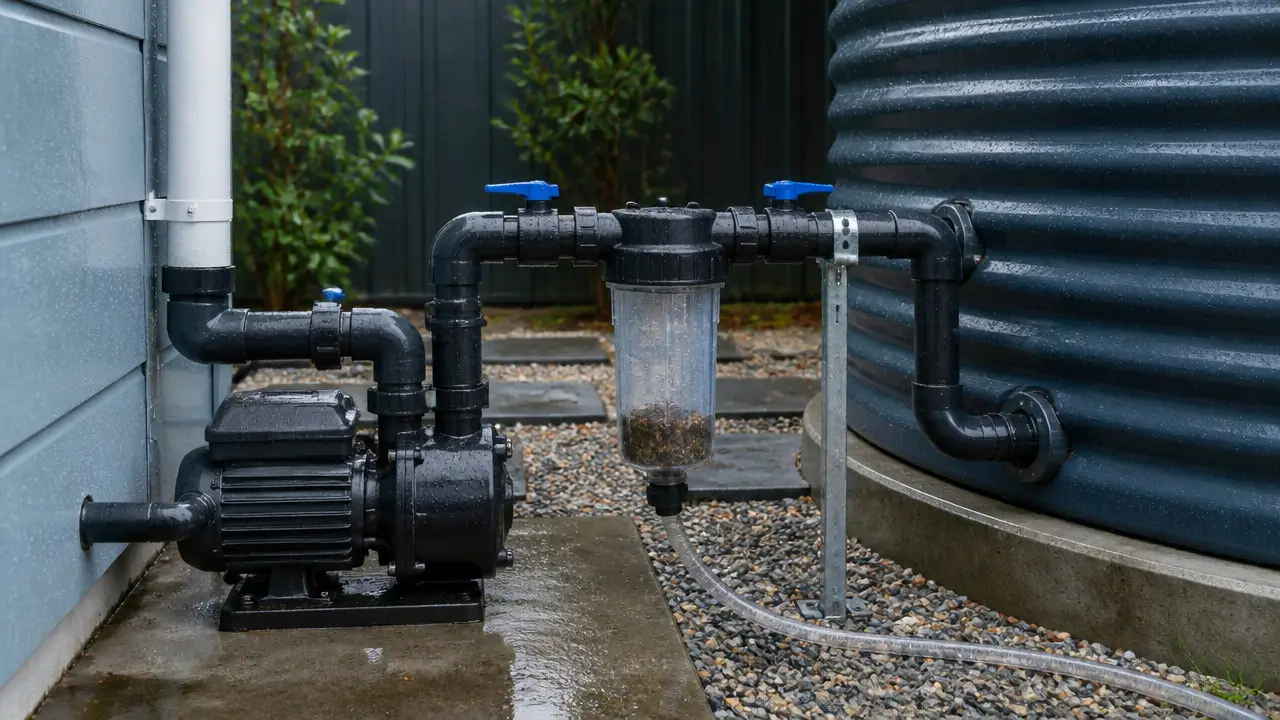
- A rainwater pump
- A whole-house pressure system
- An irrigation supply
- A cabin plumbing system
- A high-flow transfer line
Check the filter manufacturer's rated service flow.
A small under-sink carbon block designed for one faucet is not a suitable replacement for a properly sized whole-house carbon system.
If adding the cartridge causes a large pressure drop, moving to a larger housing or properly sized media system is usually better than simply forcing more pressure through a small filter.
Put Sediment Filtration Before Carbon
Rainwater often carries fine particles from the roof and tank.
Those particles should usually be dealt with before a carbon polishing cartridge.
For example:
Sediment filter → activated carbon
is generally more practical than:
Activated carbon → sediment filter
The sediment stage protects the carbon from unnecessary plugging.
The exact sediment-filter micron rating depends on the water quality and the carbon cartridge that follows. Going immediately to an extremely fine filter can cause needless pressure loss and frequent cartridge changes.
Activated Carbon Eventually Stops Working
Carbon does not keep adsorbing contaminants forever.
Its available adsorption sites gradually become occupied.
The filter can still look clean after its useful chemical-removal capacity has been reduced. Taste and smell are also not reliable ways to judge whether drinking water is safe. CDC specifically advises against relying on appearance, taste, or smell as indicators of water safety.
Follow the replacement requirements for the specific filter.
Also replace or service carbon after unusual contamination events when recommended by the system manufacturer or a qualified water-treatment professional.
Do not assume that rinsing an exhausted household carbon cartridge restores its adsorption capacity.
So Which Activated Carbon Should You Buy?
For most household applications, use this order of importance:
- Identify what you need to remove.
- Choose a filter with a verified reduction claim for that contaminant.
- Choose carbon block or GAC based on required flow and system design.
- Use catalytic carbon when chloramine treatment calls for it.
- Check the rated flow and cartridge capacity.
- Provide sediment prefiltration when the source water contains particles.
- Plan for regular replacement or media service.
Coconut-shell carbon is a good and widely used option, but it should not automatically win just because it is coconut based.
For a small point-of-use filter, a properly certified carbon block is often a sensible choice. For higher-flow treatment, properly sized GAC may fit better.
For rainwater intended for drinking, neither one should be treated as a complete water-safety system.
Frequently Asked Questions
Is coconut-shell activated carbon better than regular activated carbon?
Not automatically. Coconut shell is simply one raw material used to make activated carbon. Coal, wood, lignite, and other materials are also used. The best choice depends on the contaminant, filter design, flow rate, contact time, and verified performance of the complete system.
Is carbon block better than granular activated carbon?
Carbon block is often useful for point-of-use drinking-water filtration because water must pass through a dense filter structure. GAC is often easier to use at higher flows. Neither type is best for every application.
What activated carbon is best for rainwater?
A carbon block or GAC stage can both be useful for polishing prefiltered rainwater. The better choice depends on flow and the contaminants being treated. Activated carbon should generally come after sediment removal and should not be considered a complete treatment system for drinking rainwater.
Does activated carbon remove bacteria?
Most ordinary activated-carbon filters should not be relied upon to remove bacteria or make microbiologically unsafe water safe to drink. Drinking-water treatment may require separate disinfection and other treatment stages based on water testing and system conditions.
Does activated carbon remove chlorine?
Activated carbon is commonly used for chlorine reduction and for improving chlorine-related taste and odor. Check the filter's verified chlorine-reduction claim and rated capacity rather than assuming all carbon cartridges perform equally.
What carbon should I use for chloramine?
Look for a carbon filter specifically rated and independently certified for chloramine reduction. Catalytic activated carbon is commonly used when chloramine reduction is required.
Should carbon go before or after a sediment filter?
Carbon normally goes after the sediment filter. Removing suspended particles first helps prevent the carbon cartridge or media bed from becoming clogged and preserves it for the chemical and taste-and-odor treatment it is meant to provide.