As an affiliate, we may earn a commission from qualifying purchases. We get commissions for purchases made through links on this website from Amazon and other third parties.
A carbon filter is not automatically better than a sediment filter. They do different jobs.
A sediment filter removes solid particles such as dirt, grit, rust, and bits of organic matter. A carbon filter mainly removes certain dissolved chemicals and compounds that affect taste and odor.
For many rainwater systems, the best setup is not one or the other. It is sediment filtration first, then carbon filtration only if the intended water use calls for it.
Carbon Filter vs. Sediment Filter
| Filter type | Main job | Common targets | Usually used first? |
|---|---|---|---|
| Sediment filter | Traps suspended particles | Dirt, grit, rust, debris | Yes |
| Activated carbon filter | Adsorbs certain dissolved compounds | Taste, odor, chlorine, some chemicals | Usually after sediment |
| Combination filter | Provides more than one type of filtration | Depends on the cartridge | Depends on design |
The right choice depends on what is in the water and what you plan to do with it.
What Does a Sediment Filter Do?
A sediment filter works much like a very fine screen. Water passes through the filter while particles larger than the filter's openings are trapped.
In a rainwater system, those particles may include:
- Fine roof dust
- Grit that passed through gutter screens
- Small pieces of leaves or organic material
- Sediment disturbed inside a storage tank
- Rust or scale from some plumbing components
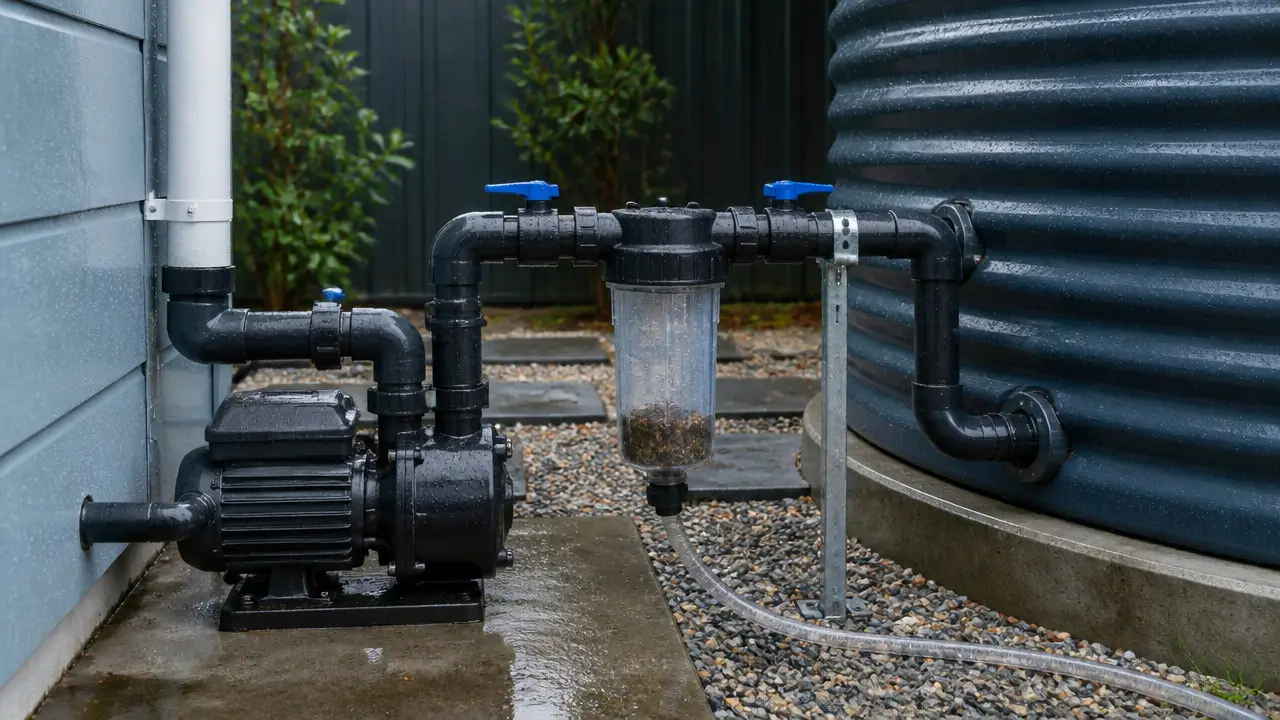
Sediment filtration is especially useful before pumps, valves, irrigation equipment, finer filters, and other treatment equipment.
Removing these particles early can help keep later treatment stages from clogging too quickly.
What Is a Micron Rating?
Sediment filters are often described by a micron rating. A micron is one-millionth of a meter.
A lower micron number generally means the filter can trap smaller particles. However, finer filtration also tends to clog more quickly when the incoming water contains a lot of sediment.
There is another important difference between nominal and absolute ratings.
A nominal rating describes the approximate particle size a filter is designed to capture. An absolute rating gives a more specific maximum pore size. CDC notes that this distinction becomes important when filtration is being relied upon for removing microorganisms.
For ordinary rainwater prefiltration, there is no single micron rating that is best for every system. The right choice depends on how dirty the water is, the flow required, and what equipment comes next.
What Does a Carbon Filter Do?
Activated carbon works differently.
Instead of mainly acting as a screen, carbon has a large internal surface where certain compounds can stick. This process is called adsorption.
Carbon filtration is commonly used to improve water taste and odor and can reduce certain chemicals. The exact substances removed depend on the carbon media, cartridge design, flow rate, contact time, and the specific performance claims of the filter.
CDC notes that many household carbon filters are designed mainly to improve taste and smell rather than remove microorganisms.
This matters with collected rainwater. A carbon cartridge should not be treated as a general-purpose water purifier.
Why Sediment Usually Comes Before Carbon
If rainwater contains visible particles, sending that water straight into a carbon filter can load the carbon with dirt.
That can:
- Reduce useful filter life
- Restrict water flow
- Increase pressure loss
- Make maintenance more frequent
- Reduce the amount of carbon surface available for its intended job
A sediment stage removes much of that physical material first.
A simple treatment path might therefore look like:
Tank → pump → sediment filtration → carbon filtration → additional treatment if required
The actual order can differ depending on the pump, pressure tank, treatment equipment, and intended use.
The important point is that carbon normally should not be expected to do the job of a dedicated sediment prefilter when the incoming rainwater contains substantial suspended material.
When a Sediment Filter Is the Better Choice
A sediment filter is usually the more useful choice when your main problem is particles.
Examples include water that:
- Looks cloudy because of suspended material
- Contains fine grit
- Leaves particles in screens or fixtures
- Plugs irrigation emitters
- Is being sent through a pump or treatment device that needs cleaner incoming water
Garden Irrigation
For many rainwater irrigation systems, particle removal is more important than carbon treatment.
Drip emitters, small valves, and sprinklers can have narrow passages that clog. A suitable sediment filter can help protect them.
Carbon filtration generally adds little benefit unless you have identified a particular contaminant that the carbon filter is designed to reduce.
Protecting Other Filters
Sediment filtration also makes sense as a prefilter.
For example:
Coarse debris control → sediment cartridge → finer treatment
Catching larger material before it reaches an expensive or easily clogged treatment stage usually makes maintenance easier.
When a Carbon Filter Is the Better Choice
Carbon becomes more useful when particles are not the main problem.
You might consider activated carbon when you have a specific need involving:
- Unwanted taste
- Unwanted odor
- Chlorine in previously disinfected water
- A particular chemical that a certified filter is designed to reduce
Carbon performance is not universal. A cartridge advertised as "activated carbon" does not automatically remove every pesticide, metal, organic chemical, or other contaminant.
For drinking-water applications, check the actual reduction claims rather than judging a filter only by its media type.
For example, NSF/ANSI 42 covers certain aesthetic effects such as taste, odor, and chlorine reduction. NSF/ANSI 53 covers specific contaminants that have health effects. Certification to a standard does not mean the filter removes every contaminant covered by that standard; the individual product's certified claims still matter.
Carbon Filters Are Not a Substitute for Disinfection
This is especially important with roof-collected rainwater.
Bird droppings, insects, dust, animals, roofing materials, gutters, and storage conditions can introduce biological and chemical contamination.
A typical activated carbon filter should not be relied upon to make this water microbiologically safe.
CDC states that most common household carbon filters are not designed to remove germs.
Carbon can also remove chlorine or other disinfectants when they are present. Removing a disinfectant residual too early can allow greater microbial growth downstream if the plumbing and treatment system are not properly managed.
Carbon therefore needs to be placed within the treatment system for a reason rather than added automatically.
What About Carbon Block Filters?
Consider key facts about the difference between a 20 micron and a 50 micron sediment filter to compare whether another test is needed for the suspected hazard.
Not all carbon filters are loose granular carbon.
A carbon block compresses activated carbon into a solid cartridge. Because water must pass through the block, some carbon block cartridges can also provide particle filtration.
That does not mean every carbon block should replace a dedicated sediment filter.
Its particle-removal performance depends on the specific cartridge. Feeding dirty rainwater directly into a fine carbon block can also cause rapid clogging.
Where sediment loads are significant, putting appropriate sediment filtration ahead of the carbon block is often the more practical arrangement.
What About Combination Sediment and Carbon Filters?
Combination cartridges can be useful when space is limited or water conditions are mild.
They may combine particle filtration with activated carbon in one cartridge.
The tradeoff is that the whole cartridge generally needs replacement when one part becomes exhausted or clogged. Separate stages let you replace the sediment and carbon filters independently.
Separate housings can therefore make more sense when collected rainwater regularly carries sediment.
Which Filter Is Better for a Rain Barrel?
For a basic rain barrel used for garden watering, sediment control is usually more useful.
Start by keeping larger material out of the barrel with suitable gutter and inlet screening. Depending on the system, additional sediment filtration may help protect hoses, pumps, valves, or irrigation emitters.
A carbon filter is rarely necessary just to water ordinary landscaping.
Adding carbon also creates another cartridge that must be changed and another restriction that reduces gravity-fed flow.
This matters because rain barrels often have very little pressure available.
Which Filter Is Better for an IBC Tote or Cistern?
The same basic rule applies.
If the stored water will supply irrigation, cleaning, or another non-potable use, determine what the downstream equipment needs.
A sediment filter may be enough to protect:
- Pumps
- Solenoid valves
- Sprayers
- Drip irrigation
- Washing equipment
Carbon treatment makes sense only when there is a specific reason to remove compounds that activated carbon can address.
Larger tanks can also accumulate material on the bottom. Drawing water slightly above settled sediment, maintaining the tank, and controlling incoming debris may reduce the load on cartridge filters.
What If the Rainwater Will Be Used Inside the House?
Indoor rainwater systems require more planning.
A filter that removes visible sediment does not establish that the water is safe. A carbon filter that improves taste or smell does not establish that either.
For non-potable uses, meaning water that is not intended for drinking, local plumbing requirements may affect how the rainwater system must be separated, labeled, protected against cross-connections, and maintained.
For drinking or cooking, treatment needs to be designed around the actual source water and intended use.
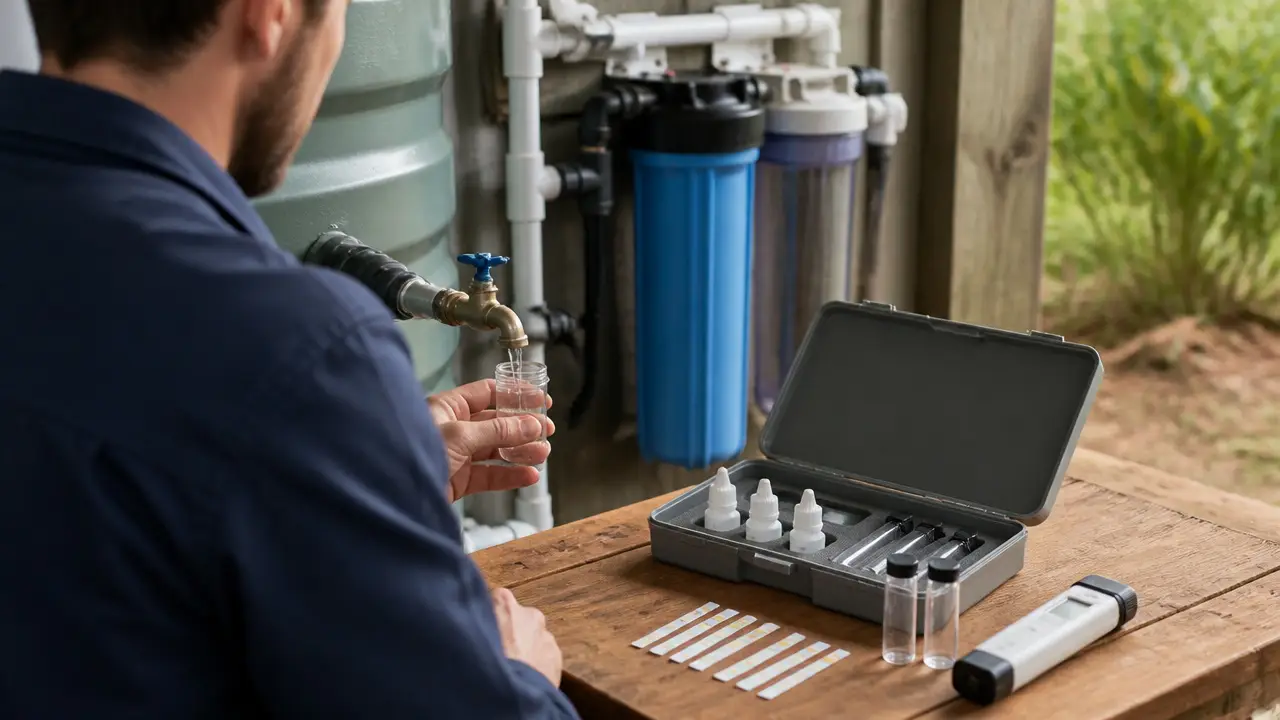
CDC advises people using rainwater collection systems as a water source to test the water at least annually for harmful germs and chemicals, with additional testing when conditions change.
A drinking-water system may require several stages rather than one cartridge. Depending on water quality, that could involve source protection, debris control, sediment removal, specific chemical treatment, microbial treatment, and ongoing testing.
No single sediment or carbon filter should be assumed to make roof runoff potable.
Should You Use Both?
Often, yes.
If your water contains sediment and you also have a reason for carbon treatment, using separate stages usually makes sense.
A basic arrangement is:
- Keep large debris out of storage.
- Let the tank and intake design reduce heavy sediment pickup.
- Use a sediment filter for remaining suspended particles.
- Use activated carbon if you have a specific taste, odor, chlorine, or chemical-treatment goal.
- Add any further treatment required for the intended use.
The last step is especially important when the water could be swallowed.
How to Choose Between Them
Start with the problem rather than the filter.
Choose a sediment filter when you need to remove suspended particles or protect equipment.
Choose a carbon filter when you need treatment for a specific compound that activated carbon can remove.
Choose both, with sediment first, when you have both problems.
If drinking water is the goal, identify the contaminants through appropriate testing and choose treatment equipment with verified reduction claims for those contaminants. CDC recommends choosing filters based on what is actually present in the water rather than assuming one type of filter handles everything.
Frequently Asked Questions
Does a carbon filter remove sediment?
A carbon filter may trap some particles, especially if it is a carbon block, but particle removal is not the main purpose of activated carbon. If your rainwater contains significant dirt or grit, a dedicated sediment filter ahead of the carbon stage is usually more practical.
Does a sediment filter remove chlorine?
No. A normal sediment cartridge is designed to trap particles rather than dissolved chlorine. Activated carbon is commonly used when chlorine reduction is required.
Should a carbon filter go before or after a sediment filter?
The sediment filter normally goes first. Removing dirt and suspended material before the carbon stage can reduce clogging and help the carbon media perform its intended job.
Do I need a carbon filter for rainwater irrigation?
Usually not. For typical garden or drip irrigation, keeping debris and sediment out of the system is generally more important. Carbon may be useful only when you have a specific water-quality problem that it is designed to address.
Can a carbon filter make rainwater safe to drink?
No. A standard carbon filter alone should not be relied upon to make collected rainwater safe to drink. Drinking-water use requires suitable collection, treatment based on the actual contaminants, proper maintenance, current water testing, and compliance with applicable local requirements.
Is a lower-micron sediment filter always better?
No. A finer filter captures smaller particles but can clog more quickly and reduce flow. Choose a rating that provides the particle removal needed by the equipment or treatment stage that follows.
Can I use a combination carbon and sediment cartridge?
Yes, if its specifications match your water conditions and flow needs. Separate sediment and carbon stages are often easier to maintain when rainwater carries a significant amount of dirt because each cartridge can be replaced independently.