As an affiliate, we may earn a commission from qualifying purchases. We get commissions for purchases made through links on this website from Amazon and other third parties.
There is no single “best” water filter for every job. The top three types for most home and rainwater systems are sediment filters, activated carbon filters, and reverse osmosis filters.
Each does a different job. A sediment filter catches dirt and debris. Activated carbon helps with taste, odor, and certain chemicals. Reverse osmosis can reduce a much wider range of dissolved contaminants. For rainwater that may be used for drinking, these filters should be considered parts of a treatment system, not proof that the water is safe to drink.
The Top 3 Water Filter Types
| Filter type | Best for | Main limitation |
|---|---|---|
| Sediment filter | Dirt, rust, grit, and suspended particles | Does not reliably remove dissolved chemicals or germs |
| Activated carbon | Taste, odor, chlorine, and certain chemicals | Usually does not remove most germs or dissolved minerals |
| Reverse osmosis | Broad reduction of dissolved contaminants and many germs | Needs pressure, maintenance, and produces reject water |
1. Sediment Filters
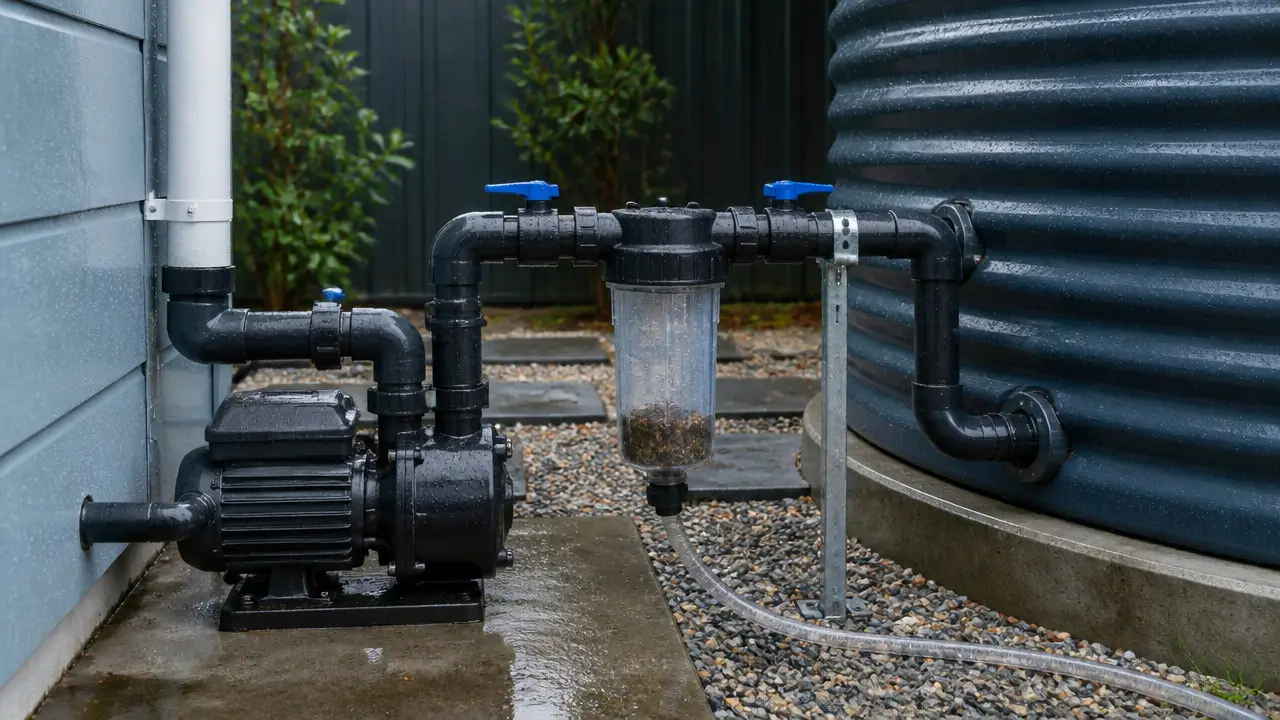
A sediment filter is often the best first filter in a rainwater system.
It catches solid material suspended in the water, such as:
- Sand
- Dirt
- Rust
- Small plant debris
- Fine particles washed from a roof or tank
Sediment filtration also helps protect pumps, valves, carbon filters, UV treatment equipment, and other parts farther down the line.
How sediment filters work
Water passes through a material with small openings. Larger particles stay behind while the water continues through.
Filter fineness is often described using a micron rating. One micron is one-thousandth of a millimeter. A lower micron number generally means the filter can catch smaller particles.
However, a micron rating alone does not tell you whether a filter can make water safe to drink. The CDC notes that the ability to remove germs depends on factors such as pore size and the type of microorganism involved.
Where sediment filtration fits in a rainwater system
A basic system might move water through several debris-removal stages:
Roof → gutter screen → first-flush device → tank → sediment filter → later treatment stages
A first flush diverts some of the first runoff from a rainfall event. That early runoff may carry dirt, droppings, pollen, and other material from the roof.
Sediment filtration does not replace roof cleaning, screens, first-flush management, or tank maintenance.
What sediment filters do not do
A normal sediment cartridge should not be expected to reliably remove:
- Dissolved salts
- Lead or other dissolved metals
- Nitrate
- Most dissolved chemicals
- Viruses
- All bacteria
For non-potable garden use, sediment filtration may sometimes be all that is needed to protect pumps and irrigation equipment. Drinking-water treatment requires a different level of planning.
2. Activated Carbon Filters
Activated carbon is one of the most useful filters when the goal is better taste and odor.
Carbon contains many tiny pores that provide a large surface area. Certain substances attach to that surface as water passes through. This process is called adsorption.
The EPA describes granular activated carbon as a porous treatment material used for substances including taste and odor compounds and various organic chemicals.
What activated carbon can help remove
Depending on the filter and its certification, activated carbon may reduce:
- Chlorine
- Unpleasant tastes
- Unpleasant odors
- Some organic chemicals
- Certain other contaminants for which the filter has been specifically certified
NSF/ANSI 42 certification commonly covers aesthetic effects such as chlorine, taste, and odor. NSF/ANSI 53 covers specified contaminants that have health effects. Certification numbers are not quality rankings.
Always check the exact contaminant-reduction claim rather than assuming every carbon cartridge performs the same way.
What activated carbon cannot establish
A carbon filter does not automatically make rainwater safe to drink.
The CDC notes that common pitcher and refrigerator filters often use activated carbon mainly to improve taste and smell rather than control germs.
Standard carbon filtration should not be relied upon by itself to control:
- Bacteria
- Viruses
- Parasites
- Nitrate
- Dissolved minerals
- Every heavy metal
- Every chemical contaminant
Carbon is often more useful after sediment has already been removed. Heavy sediment can shorten the useful life of the carbon media.
3. Reverse Osmosis Filters
Reverse osmosis, usually shortened to RO, is one of the broadest household filtration methods.
An RO system uses pressure to push water through a very restrictive membrane. Water that passes through becomes the treated stream. Another stream carries concentrated material away as reject water.
The CDC says reverse osmosis can remove parasites, bacteria, and viruses and can reduce several types of chemicals. These include substances such as lead, copper, chromium, chloride, and sodium, although the exact performance depends on the system.
Why RO is different
Sediment filtration mainly deals with particles.
Carbon mainly relies on adsorption.
RO can separate many substances that are dissolved in the water itself.
It may be useful when testing shows that a contaminant is present and a certified RO system has a specific reduction claim for that contaminant.
NSF/ANSI 58 covers residential reverse osmosis systems. Certified reduction claims can include contaminants such as lead, nitrate or nitrite, arsenic, fluoride, chromium, and others, depending on the specific system.
RO limitations
Reverse osmosis has important tradeoffs.
It usually:
- Needs adequate water pressure
- Works better with suitable pretreatment
- Requires membrane and cartridge replacement
- Produces a reject-water stream
- Has a lower flow rate than a simple sediment filter
- Can remove some minerals along with unwanted contaminants
An RO unit also should not be treated as a substitute for maintaining the rest of a rainwater collection system.
Dirty roofs, open tank vents, insects, sediment buildup, plumbing contamination, neglected filters, and poor maintenance can still create problems.
Which Filter Should You Choose?
Choose the filter according to the job rather than simply choosing the finest filter you can find.
For garden irrigation
Alongside key facts about the four main types of filters, verify the filtration depth required by the proposed use.
A sediment filter is often the most important type.
It can help keep grit out of:
- Pumps
- Sprinklers
- Drip emitters
- Valves
Very fine filtration may be unnecessary unless the irrigation equipment requires it. A filter that is finer than needed can clog faster and restrict flow.
For washing and other non-potable household uses
Sediment filtration may be combined with another treatment stage depending on water quality and the intended use.
Non-potable means water that is not intended for drinking.
The treatment needed for toilet flushing is not necessarily the same as the treatment needed for bathing, laundry, or kitchen use.
For taste and odor problems
Activated carbon is often the logical treatment stage when the target contaminant is one that the particular carbon filter is certified to reduce.
Do not choose carbon solely because the water smells unusual. An unexplained change in stored rainwater can also point to contamination or maintenance problems that should be investigated.
For drinking-water treatment
Do not select a treatment system based only on filter type.
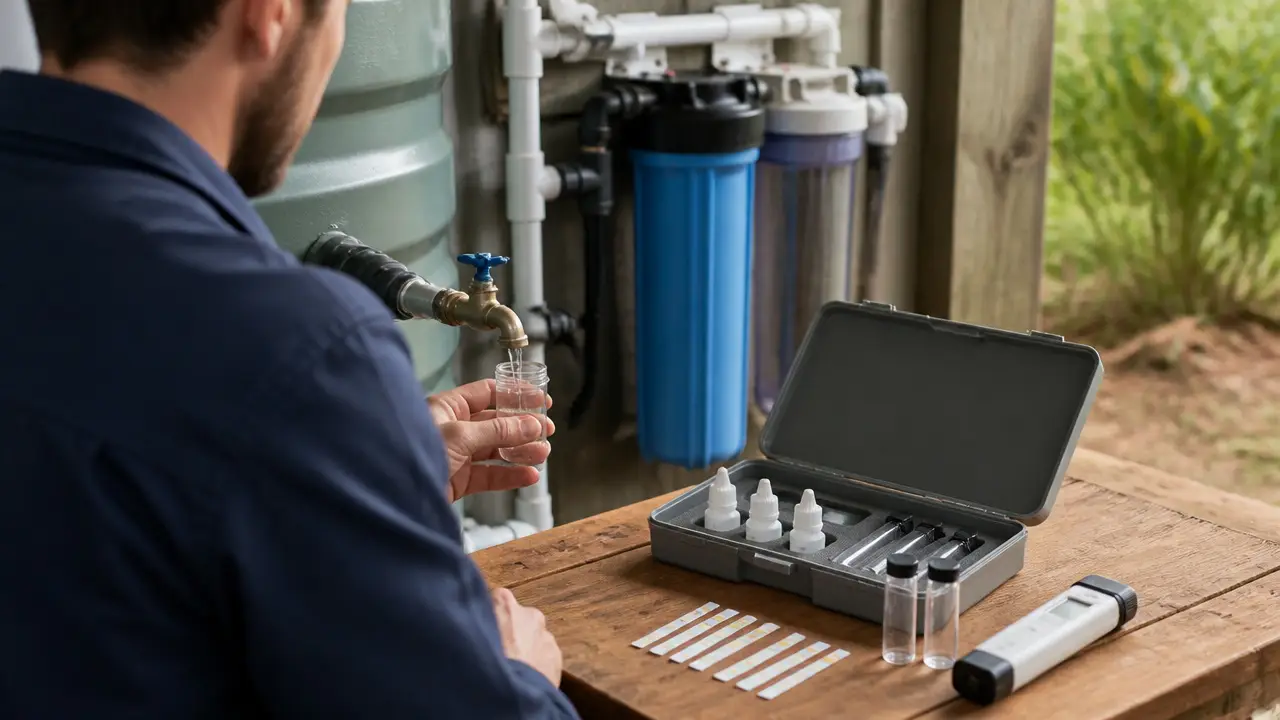
Start with the water source and current laboratory testing. Then choose treatment stages that address the identified risks.
The CDC recommends testing water and selecting treatment based on the specific harmful germs or chemicals of concern.
For collected rainwater, drinking-water planning may involve:
- Suitable roof and collection surfaces
- Debris exclusion
- First-flush management
- Protected storage
- Sediment removal
- Treatment for identified chemicals
- Treatment or disinfection for microorganisms
- Current laboratory testing
- Routine cartridge and equipment maintenance
- Applicable local drinking-water and plumbing requirements
UV treatment, for example, can be useful for controlling microorganisms when properly designed and supplied with suitably prefiltered water. However, UV is a disinfection method, not a filter for dissolved chemicals. The CDC specifically notes that UV treatment does not remove chemicals.
Why Several Filters Are Often Better Than One
Rainwater systems commonly benefit from staged filtration because one filter does not need to do every job.
A system might use:
- A coarse screen to stop leaves.
- A first-flush device to divert dirty initial runoff.
- A sediment filter to catch smaller particles.
- Carbon or another treatment medium for specific chemicals.
- Additional treatment or disinfection if the intended use requires it.
The exact stages should match the water test results and the intended use.
This approach can also protect finer treatment equipment. Catching sand and debris before water reaches a carbon cartridge or RO membrane can reduce premature clogging.
Check Flow Rate and Pressure Before Choosing a Filter
Filtration always creates some resistance to water flow.
This matters with rain barrels and tanks that rely only on gravity.
A filter that works well behind a household pressure pump may provide disappointing flow from a barrel sitting only a short distance above the outlet.
Flow rate is how much water passes through the system during a given period.
Head height is the vertical distance between the water level and the outlet or equipment being supplied. More height generally provides more gravity pressure.
Before adding a filter, check:
- Required flow
- Available pressure
- Filter connection size
- Pump capability, if used
- Maximum filter housing pressure
- Expected pressure drop as the cartridge becomes dirty
Do not assume that matching pipe diameters means two components will perform well together.
Filter Maintenance Matters
Even a suitable filter can become ineffective or create problems when neglected.
The CDC recommends maintaining filters according to the manufacturer's instructions because microorganisms can grow in poorly maintained systems.
Typical maintenance includes:
- Replacing cartridges at the specified interval
- Checking for lower flow or rising pressure drop
- Cleaning reusable screens
- Inspecting housings and seals
- Protecting equipment from freezing where necessary
- Cleaning storage tanks as appropriate
- Keeping replacement dates recorded
Do not wait for drinking water to look dirty before maintaining a filter. Many contaminants cannot be seen.
Frequently Asked Questions
What are the three main types of water filters?
Three especially useful household types are sediment filters, activated carbon filters, and reverse osmosis systems. Sediment filters remove particles, carbon targets certain tastes, odors, and chemicals, while reverse osmosis can reduce a much broader range of dissolved substances.
Is a sediment filter enough for rainwater?
It may be enough for some non-potable uses such as protecting garden irrigation equipment from grit. It should not be assumed to make collected rainwater safe for drinking.
Does a carbon filter remove bacteria?
Typical activated carbon filters are not designed to reliably remove bacteria. Carbon is mainly useful for certain chemicals, tastes, and odors. A treatment system intended to control microorganisms needs technology designed and verified for that purpose.
Is reverse osmosis the best water filter?
RO offers broad contaminant reduction, but it is not automatically the best choice for every system. It requires pressure, maintenance, pretreatment in many cases, and produces reject water. A simple sediment filter may be more suitable for irrigation, while carbon may be better when taste or a specific chemical is the main concern.
What micron filter should I use for rainwater?
There is no single correct micron rating. The choice depends on how dirty the water is, the equipment downstream, the required flow, and the intended use. Coarser filtration is commonly used before finer filtration so the fine cartridge does not clog too quickly.
Can I drink rainwater after running it through a filter?
Do not assume so. Drinking-water use should be treated as a whole-system decision involving suitable collection, protected storage, treatment matched to identified risks, current laboratory testing, ongoing maintenance, and applicable local requirements.
Should carbon come before or after a sediment filter?
Sediment filtration normally comes first when the water contains particles. Removing grit and suspended material can help prevent the carbon media from becoming clogged unnecessarily.