As an affiliate, we may earn a commission from qualifying purchases. We get commissions for purchases made through links on this website from Amazon and other third parties.
Rainwater filters can be grouped into three common types: sediment filters, activated carbon filters, and membrane filters. Each handles a different part of water quality.
A sediment filter catches physical debris. Activated carbon helps with certain chemicals, tastes, and odors. Membrane filters use very small openings to remove finer particles and, depending on the membrane, some germs or dissolved contaminants.
For a rainwater system, the right choice depends on how you plan to use the water. Garden irrigation usually needs much less treatment than water intended for drinking.
1. Sediment Filters
A sediment filter removes solid material from water. This can include:
- Dirt
- Sand
- Rust
- Small leaves
- Roof grit
- Insect parts
- Other suspended particles
Sediment filtration is often one of the first treatment stages in a rainwater system.
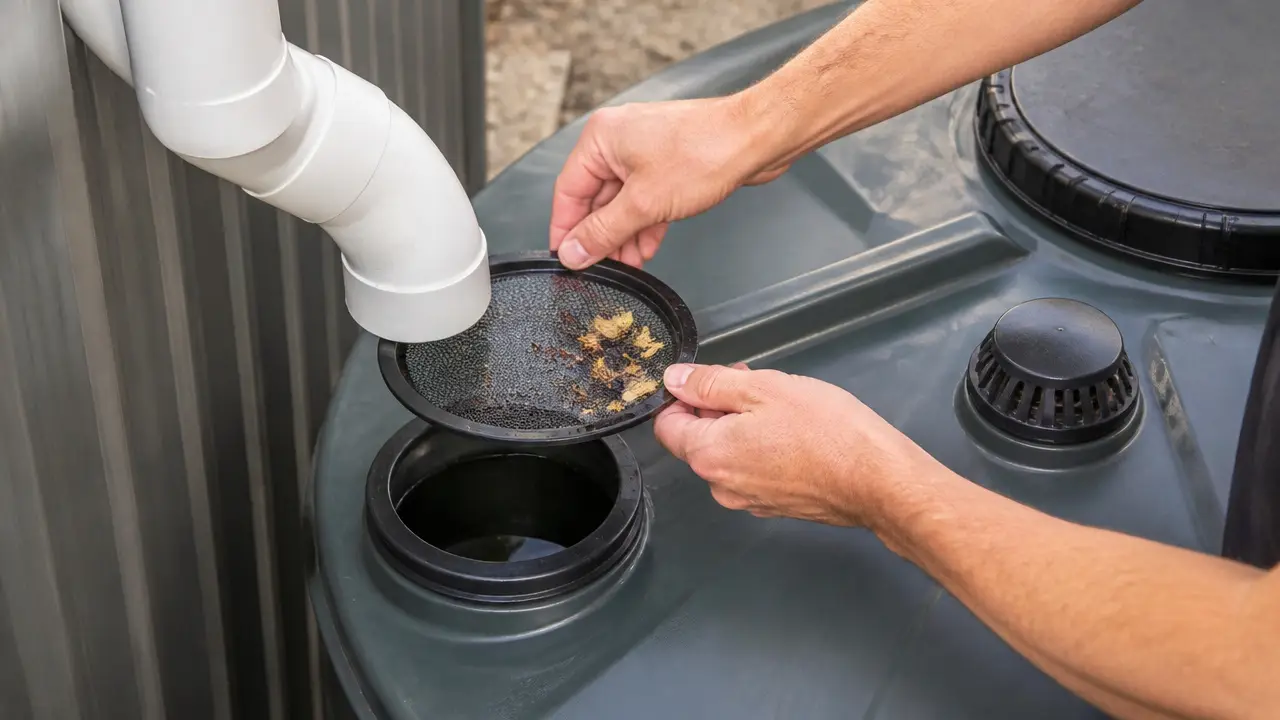
Before water even reaches a cartridge filter, a roof collection system may use gutter guards, inlet screens, or a first-flush diverter. A first-flush diverter sends the first portion of runoff from a storm away from the storage tank. That early runoff can carry a larger amount of dirt, droppings, and other material from the roof. The CDC recommends considering first-flush diversion as one way to improve collected rainwater quality.
Understanding micron ratings
Many sediment filters have a micron rating. A micron is one-thousandth of a millimeter.
A lower micron number means the filter catches smaller particles. For example, a 5-micron filter catches finer material than a 50-micron filter.
That does not mean the finest filter is always best. Putting a very fine cartridge directly after a dirty rainwater tank can make it clog quickly.
A practical system often removes larger debris first and finer sediment later.
For example:
Roof screen → first flush → tank → coarse sediment filter → finer cartridge
The exact arrangement depends on your water use, plumbing, pump, and water quality.
When sediment filtration makes sense
Sediment filters are useful for:
- Drip irrigation systems that have small emitters
- Pumps that need protection from debris
- Toilet-flushing systems
- Washing applications
- Pretreatment before carbon or membrane filters
Sediment filtration alone should not be treated as a way to make rainwater safe to drink. Water that looks clear can still contain germs or chemicals.
2. Activated Carbon Filters
Activated carbon is a porous material that attracts and holds certain substances on its surface. This process is called adsorption.
Carbon filters are commonly used to improve:
- Taste
- Odor
- Some organic chemicals
- Certain other contaminants when the filter has been specifically tested for them
The CDC notes that activated carbon filters commonly found in pitchers and refrigerators are often intended mainly to improve taste and smell rather than establish that water is safe to drink.
That distinction matters with collected rainwater.
A carbon cartridge may make stored water smell or taste better, but it does not automatically remove every chemical or disease-causing organism that could be present.
Carbon filters work better after sediment removal
Rainwater containing a lot of dirt can plug a carbon filter and shorten its useful life.
For that reason, carbon is normally placed after basic debris and sediment removal.
A simple treatment sequence might look like:
Tank → sediment filter → carbon filter
For non-potable uses, that may be enough treatment in some systems. Local plumbing rules or the intended use may require something different.
For drinking-water treatment, the system needs to be selected around actual contaminants rather than simply adding a carbon cartridge.
NSF explains that NSF/ANSI 42 certification commonly covers aesthetic concerns such as taste and odor, while NSF/ANSI 53 covers specific contaminant-reduction claims related to health effects. A certification only applies to the claims for which that particular system was tested.
3. Membrane Filters
Membrane filtration pushes water through material with extremely small openings.
Membranes can remove much smaller material than ordinary sediment filters, but there are several different membrane technologies.
Common examples include:
Microfiltration
Microfiltration removes fine particles and can remove certain larger microorganisms. Its ability to remove germs depends on the membrane's pore size and design.
Ultrafiltration
Ultrafiltration uses smaller openings than typical microfiltration. It can remove a wider range of microorganisms, although its exact performance depends on the specific system.
Reverse osmosis
Reverse osmosis, usually shortened to RO, forces water through a semi-permeable membrane under pressure.
RO can reduce many dissolved substances as well as particles and microorganisms. NSF/ANSI 58 covers residential reverse-osmosis drinking-water systems and includes requirements for total dissolved solids reduction along with optional contaminant-reduction claims.
Total dissolved solids, or TDS, are dissolved minerals, salts, and other substances in water.
An RO membrane is usually not installed as the first filter after a rainwater tank. Sediment and other material can foul the membrane, so pretreatment is normally needed.
A system could therefore include:
Sediment filtration → carbon treatment → membrane treatment
Additional treatment or disinfection may also be required depending on what the water contains and how it will be used.
How the Three Filter Types Compare
| Filter type | Main purpose | Common place in a system | Important limitation |
|---|---|---|---|
| Sediment | Removes dirt and suspended particles | Early treatment stage | Does not reliably remove dissolved chemicals or all germs |
| Activated carbon | Helps reduce certain chemicals, tastes, and odors | After sediment filtration | Performance depends on the specific carbon filter and its tested claims |
| Membrane | Removes very fine particles and specific contaminants depending on membrane type | Later treatment stage | Often needs good pretreatment, pressure, and regular maintenance |
Study practical considerations for there a filter for rainwater to compare testing methods and treatment stages matched to the final use.
These types are not necessarily alternatives to one another. A rainwater system may use two or all three because each stage performs a different job.
Which Filter Is Best for Rainwater?
Start with the intended use of the water, not the filter.
Garden irrigation
For basic garden watering, the main goal may be keeping leaves, grit, and sediment out of the plumbing.
A screened inlet and suitable sediment filtration may be enough for many systems. Drip irrigation usually needs finer filtration because its small emitters can clog.
Toilet flushing or household non-potable use
Indoor non-potable water is water that is not intended for drinking.
These systems may need finer filtration because staining, odors, sediment, pumps, valves, and plumbing fixtures become more important. Local plumbing requirements can also apply.
Rainwater plumbing should remain properly separated from drinking-water plumbing so collected water cannot contaminate the potable supply. The CDC specifically recommends keeping rainwater separate from piped drinking water.
Drinking water
Drinking water needs a much more careful approach.
Collected roof runoff can contain germs and chemicals even when it looks clear. Contaminants can come from the air, roof, gutters, pipes, storage tank, animals, and other parts of the collection system.
No single sediment, carbon, or membrane filter should be assumed to make roof-collected rainwater potable.
Potable means suitable for drinking.
For drinking-water use, consider the entire system:
- Catchment materials
- Roof cleanliness
- First-flush management
- Tank design and maintenance
- Sediment removal
- Treatment for identified chemicals
- Treatment or disinfection for microorganisms
- Current laboratory testing
- Regular filter and system maintenance
- Applicable state and local requirements
The CDC recommends regularly testing rainwater for germs and chemicals when it is used for drinking, cooking, or bathing and getting local health-department guidance about appropriate testing and treatment.
Do Not Confuse Filtration With Disinfection
A filter and a disinfecting system do not necessarily do the same job.
For example, ultraviolet treatment uses UV light to inactivate microorganisms. UV is a treatment method rather than a conventional particle filter.
Good pretreatment is especially important before many UV systems because suspended material can interfere with effective treatment.
Likewise, adding UV does not automatically solve chemical contamination. A treatment train should address the contaminants that are actually present.
Filter Size Also Affects Flow
Water quality is only part of choosing a filter.
The filter must also fit the plumbing and provide enough flow rate.
Flow rate is the amount of water that can pass through the system during a given amount of time, often measured in gallons per minute.
A filter that is too restrictive can cause:
- Weak hose flow
- Poor irrigation performance
- Pump cycling problems
- Low pressure at fixtures
Filters also become more restrictive as they collect debris.
That is why maintenance matters. Check reusable screens regularly and replace or clean cartridges according to the manufacturer's instructions. NSF also emphasizes changing water filters according to their specified maintenance schedule.
A Simple Way to Choose
Think of the three filter types as different tools:
Sediment filters remove the visible and suspended material.
Activated carbon handles certain tastes, odors, and chemicals.
Membranes provide finer separation for specific contaminants.
Do not choose a filter only because it has the smallest micron rating. Match each treatment stage to your water source, intended use, required flow, and contaminants of concern.
For roof-collected rainwater used as drinking water, filtration should be only one part of a properly designed and maintained treatment system.
Frequently Asked Questions
What are the three main types of water filters?
Three common categories are sediment filters, activated carbon filters, and membrane filters. Sediment filters remove suspended particles, carbon filters adsorb certain chemicals and help with taste and odor, and membrane filters remove finer material depending on their design.
What filter should I use for a rain barrel?
For ordinary garden watering, start with a screened inlet that keeps leaves and insects out. Additional sediment filtration may help if you use a pump, hose fittings, or drip irrigation that can clog.
Is a sediment filter enough for rainwater?
It may be enough for some non-potable applications where the main concern is protecting irrigation equipment from debris. It should not be assumed to make collected rainwater safe for drinking.
Does a carbon filter make rainwater safe to drink?
No. Carbon can reduce certain chemicals, tastes, and odors, but it does not automatically remove every harmful chemical or microorganism. Drinking-water treatment should be based on water testing and the needs of the complete collection and treatment system.
Is reverse osmosis a type of filter?
Yes. Reverse osmosis is a membrane treatment process. Water is forced through a semi-permeable membrane that can reduce many dissolved substances and other contaminants. RO systems normally need suitable pretreatment.
Is a lower micron filter always better?
No. A lower micron rating catches smaller particles, but it can also clog more quickly and restrict flow. Coarse filtration is often used before finer filtration.
Do rainwater filters need maintenance?
Yes. Screens need cleaning, cartridges need cleaning or replacement when applicable, and tanks and other system components also need maintenance. Neglected filters can clog, restrict water flow, and reduce treatment performance.