As an affiliate, we may earn a commission from qualifying purchases. We get commissions for purchases made through links on this website from Amazon and other third parties.
The most effective water filter is the one that removes the contaminants actually present in your water. There is no single filter that removes everything.
For broad contaminant reduction, reverse osmosis (RO) is one of the most capable household filtration methods. It can reduce many dissolved salts, metals, and other contaminants that simpler sediment or carbon filters cannot. However, an RO unit is not automatically a complete water-treatment system. The right setup may also need sediment filtration, activated carbon, and a separate disinfection step.
This matters even more with harvested rainwater. Roof runoff can contain dirt, organic matter, microbes, metals, and other contaminants. The most effective approach is usually a series of treatment stages chosen for the intended use and confirmed by water testing, rather than one extra-fine filter.
Which Type of Water Filter Is Most Effective?
For drinking-water applications where several types of contaminants may be present, reverse osmosis usually provides the broadest filtration among common household filter types.
RO pushes water through a very thin membrane. The CDC notes that reverse osmosis can remove parasites, bacteria, and viruses and can reduce several chemicals and dissolved substances. The exact reduction depends on the individual system, so its certification and contaminant claims still matter.
An RO system can potentially reduce contaminants such as:
- Lead
- Copper
- Chromium
- Sodium
- Chloride
- Some arsenic
- Nitrate
- Fluoride
- Sulfate
- Some organic chemicals
- Other dissolved solids
Total dissolved solids, or TDS, means minerals, salts, metals, and other dissolved substances in the water. These substances are too small for ordinary sediment filters to catch.
RO is especially useful when removing dissolved contaminants is important. But it has drawbacks. It requires pressure, needs regular maintenance, produces a reject-water stream, and may not be needed for water that will only irrigate plants or flush toilets.
How the Main Water Filters Compare
| Treatment type | Best used for | Main limitation |
|---|---|---|
| Sediment filter | Dirt, rust, grit, suspended particles | Does not reliably remove dissolved chemicals or disinfect water |
| Activated carbon | Taste, odor, chlorine, and certain organic chemicals | Does not remove every chemical, mineral, or germ |
| Ultrafiltration | Fine particles, parasites, and bacteria | Limited chemical removal |
| Nanofiltration | Very fine particles, germs, and some chemicals | Does not remove everything RO can |
| Reverse osmosis | Broad reduction of dissolved contaminants and very small contaminants | Needs pressure, maintenance, and usually prefiltration |
| UV treatment | Inactivating microbes | Does not remove particles or chemicals |
| Distillation | Many germs, minerals, metals, and chemicals | Slow and energy intensive |
Different technologies solve different problems. The CDC recommends testing the water and choosing treatment based on the harmful chemicals or germs of concern. Multiple treatment methods may be necessary.
Is Reverse Osmosis Better Than a Carbon Filter?
Neither is better for every job.
Choose activated carbon when:
You mainly want to improve taste or odor or reduce specific chemicals that the carbon filter is certified to remove.
Activated carbon works through adsorption. Contaminants stick to the large internal surface of the carbon as water passes through.
Carbon filtration is commonly used as one part of a larger system because it can handle contaminants that a basic sediment filter cannot. NSF/ANSI 42 commonly covers aesthetic effects such as chlorine taste and odor, while NSF/ANSI 53 covers certified reductions of certain contaminants that affect health.
Carbon does not automatically remove bacteria, viruses, nitrate, salts, hardness minerals, or every dissolved contaminant.
Choose reverse osmosis when:
You need broader removal of dissolved contaminants.
RO membranes separate substances that can pass through ordinary filters. NSF/ANSI 58 is the main standard associated with household reverse-osmosis systems. Certification can include specific reduction claims for contaminants such as lead, arsenic, nitrate, fluoride, chromium, and other substances.
Look at the specific contaminant claims, not just the words "reverse osmosis."
An NSF/ANSI certification does not mean a system removes every possible contaminant.
Does a Smaller Micron Filter Clean Water Better?
Not necessarily.
A micron is one-millionth of a meter. A filter's micron rating describes the approximate size of particles it can trap.
For example, a 5-micron sediment filter catches smaller particles than a 50-micron filter.
That does not make the 5-micron filter a complete treatment system.
Dissolved substances can pass through conventional sediment filters regardless of how clean the water looks. Some germs are also much smaller than the pores in ordinary sediment filters.
Trying to make one sediment cartridge extremely fine can also create problems. It may clog quickly and reduce flow.
A better approach is often staged filtration. A coarse filter removes larger debris first. Finer filtration follows later.
What Is the Most Effective Setup for Rainwater?
There is no universal rainwater-treatment system because the required treatment depends on what you intend to do with the water.
Water for trees or garden irrigation normally has very different requirements from water intended for drinking.
A typical rainwater system may involve several separate stages.
1. Keep debris out before storage
Start by preventing as much contamination as practical from reaching the tank.
This can include:
- Clean gutters
- Leaf screens
- Inlet screens
- Suitable tank covers
- Mosquito-resistant openings
- A first-flush device where appropriate
A first flush diverts some of the initial roof runoff away from the tank. This early runoff can carry accumulated dirt and debris from the roof.
A first-flush device is a pretreatment tool. It does not make rainwater potable.
2. Remove larger sediment
Stored rainwater may still contain suspended particles.
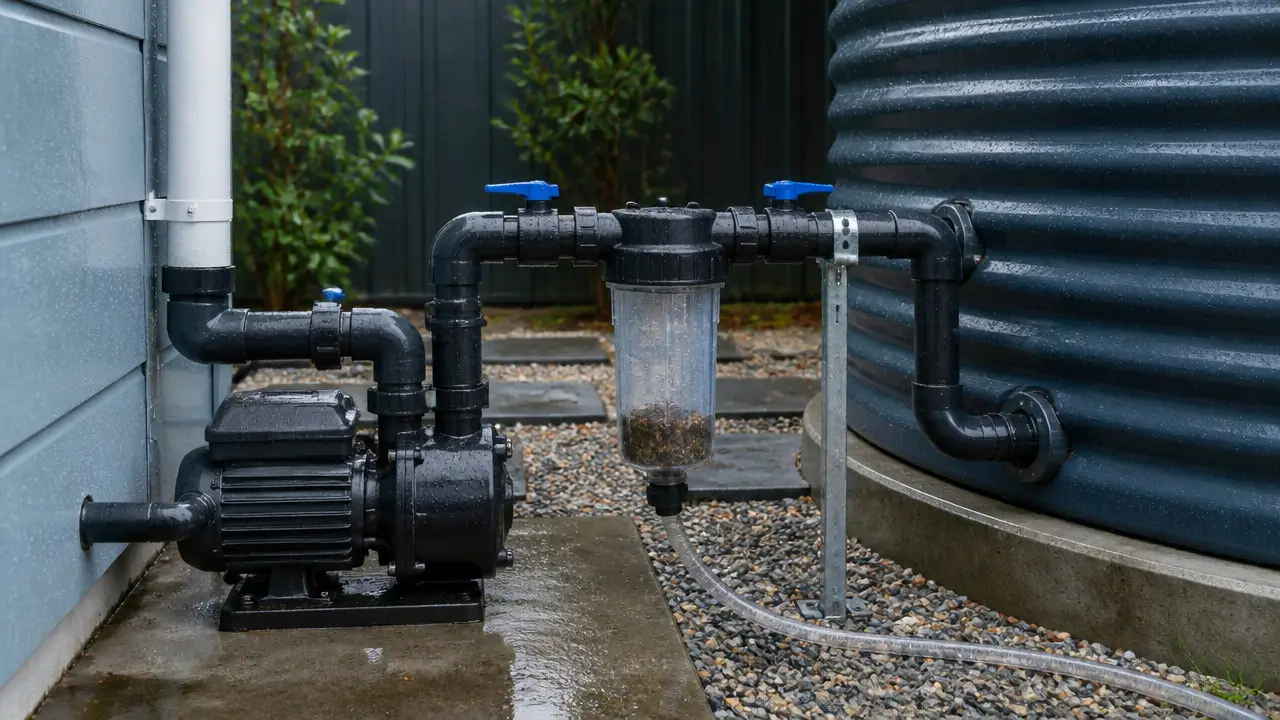
A coarse screen or sediment filter can protect smaller filters, valves, pumps, and treatment equipment farther downstream.
Putting an extremely fine filter first often causes needless clogging.
3. Use finer filtration where needed
A finer sediment filter can remove smaller suspended particles before water reaches carbon, RO, UV, or other treatment equipment.
The correct micron rating depends on the system.
The filter also needs enough flow capacity for the pump and fixtures. A filter that is too restrictive can cause poor flow or excessive pressure loss.
4. Add carbon for the contaminants it can address
Activated carbon may help with taste, odor, and certain organic contaminants.
Carbon should be replaced according to the system's requirements. Once a cartridge reaches the end of its useful life, performance can fall even if water still looks clear.
5. Add RO only when it solves a real problem
RO may make sense when testing shows dissolved contaminants that an appropriate RO system is certified to reduce.
It may also be used as part of a drinking-water treatment train.
Installing RO on every rainwater outlet is often unnecessary. Using RO only at a drinking-water tap can sometimes be more practical than treating irrigation, toilet, and cleaning water to the same level.
6. Address microbes separately
For water intended for drinking, microbial safety needs special attention.
UV can be part of a treatment system because it can inactivate microorganisms. However, UV is not a physical filter and does not remove metals, salts, sediment, or most chemicals. The CDC notes that UV works better when water is filtered before UV treatment.
Cloudy or dirty water can also interfere with effective UV treatment.
A drinking-water system therefore might use several stages rather than choosing between "a filter" and "UV."
A Filter Alone Does Not Make Rainwater Potable
Potable means suitable for drinking. Non-potable water is water that is not intended for drinking.
Alongside key facts about the most effective whole house water filtration system, verify the downstream effects of the current design choice.
Roof-collected rainwater should not be assumed potable just because it has passed through a filter.
Water quality can be affected by:
- Roofing materials
- Gutters
- Animal droppings
- Dust
- Leaves and organic matter
- Smoke and airborne deposits
- Tank conditions
- Plumbing materials
- Poorly maintained filters
- Microbial growth
Even very clear water can contain contaminants that cannot be seen, smelled, or tasted.
If harvested rainwater is intended for drinking, cooking, or other potable uses, treat it as a whole-system water-quality project. That includes suitable collection and storage, appropriate treatment stages, current laboratory testing, routine maintenance, and compliance with applicable local requirements.
A qualified water-treatment professional can be valuable when interpreting test results or designing a potable rainwater system.
What Should You Test Before Choosing a Filter?
The best filter cannot be selected confidently without knowing what needs to be removed.
Municipal water users can start with their water supplier's water-quality information and test for concerns related to their own plumbing when needed.
Private wells and rainwater systems require a different approach because conditions at the individual property matter.
Testing can help determine whether treatment is needed for concerns such as:
- Microbial contamination
- Lead or other metals
- Nitrate
- Dissolved minerals
- Specific chemicals associated with local conditions
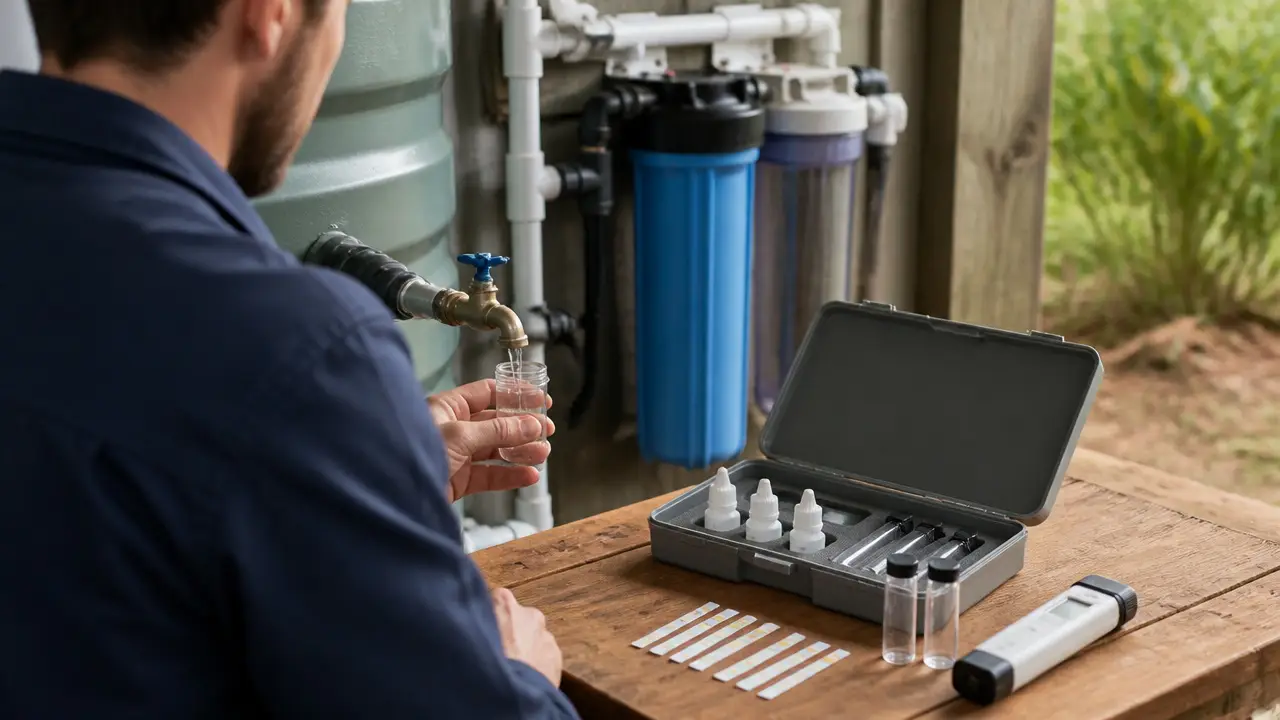
A handheld TDS meter is not a complete water-safety test.
A TDS meter measures the overall ability of dissolved substances in water to conduct electricity and estimates total dissolved solids. It cannot tell you exactly which contaminants are present or prove that water is safe to drink.
Home strips and meters have similar limits. They may be useful for checking certain system conditions, but they should not replace appropriate laboratory testing when drinking-water safety is being evaluated.
Look for Certification for the Specific Contaminant
Do not choose a filter only because its packaging says "advanced," "multi-stage," or "purifying."
Look for independent certification covering the contaminant you want to reduce.
Common NSF/ANSI standards include:
- NSF/ANSI 42: Mainly aesthetic concerns such as chlorine taste and odor
- NSF/ANSI 53: Certain contaminants with health effects
- NSF/ANSI 55: Ultraviolet treatment systems
- NSF/ANSI 58: Reverse-osmosis systems
- NSF/ANSI 62: Distillation systems
- NSF/ANSI 401: Certain emerging contaminants
The standard number is not a performance ranking. A filter meeting Standard 58 is not simply "better" than one meeting Standard 53. They cover different technologies and claims.
Check exactly what the particular system is certified to reduce.
Whole-House or Point-of-Use Filtration?
Treatment location also affects what is most effective.
A point-of-use system treats water at one location, such as a kitchen drinking-water faucet.
A point-of-entry, or whole-house, system treats water before it is distributed through the building.
Point-of-use RO can make sense when only drinking and cooking water requires that level of treatment.
Whole-house sediment filtration may make more sense when stored rainwater feeds toilets, washing equipment, garden lines, or multiple fixtures and sediment needs to be removed before it reaches them.
Trying to run all household water through an unnecessary fine membrane can raise maintenance needs and reduce available flow.
Match the treatment location to the water use.
Flow Rate and Pressure Matter Too
A filter can remove the right contaminant and still be a poor system choice if it cannot supply enough water.
Flow rate tells you how much water can pass through the system over a given time.
Filters create resistance. As cartridges collect sediment, that resistance usually increases.
A rainwater pump must have enough capacity to overcome the pressure losses through:
- Pipe
- Fittings
- Check valves
- Sediment cartridges
- Carbon cartridges
- Membranes
- UV chambers
- Elevation changes
RO systems have additional pressure requirements because the membrane relies on pressure to separate contaminants from the water.
Do not select a pump or filter from horsepower, micron rating, or connection diameter alone. The entire flow path needs to work together.
Maintenance Is Part of Filter Effectiveness
Even a well-designed treatment system will not stay effective without upkeep.
Maintenance may include:
- Cleaning roof collection surfaces and gutters
- Cleaning screens
- Emptying first-flush devices
- Removing tank sediment when necessary
- Changing sediment cartridges
- Replacing carbon media
- Servicing RO membranes
- Checking seals and housings
- Servicing UV equipment
- Retesting water when appropriate
Follow the treatment-system manufacturer's replacement and service requirements rather than waiting for the water to taste or look different.
A clogged cartridge can reduce flow. An exhausted treatment medium may stop providing the reduction you expect without an obvious warning.
So, What Is the Most Effective Water Filter?
For broad household contaminant reduction, reverse osmosis is one of the most effective commonly available filtration technologies.
But that does not mean RO is always the best choice.
For sediment, a sediment filter is simpler and more suitable. For taste and certain chemicals, activated carbon may be enough. For microbes, properly selected filtration and disinfection may be needed. For harvested rainwater intended for drinking, several treatment stages may be necessary.
The best rule is simple:
Test the water, identify the intended use, and choose treatment specifically certified or designed for the contaminants that need to be addressed.
For a rainwater system, think about the whole path from the roof to the tap rather than expecting one cartridge to solve every water-quality problem.
Frequently Asked Questions
What filter removes the most contaminants?
Reverse osmosis removes or reduces a wider range of contaminants than many common household filters, including several dissolved substances that sediment and basic carbon filters cannot handle. Exact performance depends on the individual system and its certified contaminant-reduction claims.
Is reverse osmosis water safe to drink?
An appropriately designed and maintained RO system can be part of a drinking-water treatment setup. However, an RO unit alone does not establish that the source water or finished water is safe. Treatment should be matched to water testing and the risks of the source.
Does a 1-micron filter make rainwater drinkable?
No. A 1-micron filter can remove certain particles and, depending on its absolute pore rating and certification, some larger microorganisms. It does not reliably remove all viruses, dissolved chemicals, metals, or other possible contaminants. Micron size alone cannot establish potability.
Is activated carbon better than reverse osmosis?
Activated carbon is better suited to some problems, including taste, odor, chlorine, and specific organic chemicals. Reverse osmosis can reduce a broader range of dissolved substances. Many treatment systems use carbon and RO together rather than choosing only one.
Do I need UV after filtering rainwater?
UV may be appropriate when microbial treatment is required, but whether it is needed depends on the intended use, water quality, and the rest of the system. UV does not remove chemicals or sediment, so water generally needs suitable pretreatment before it reaches a UV unit.
Can I use filtered rainwater for my garden?
Rainwater used only for irrigation often does not need drinking-water-level treatment. Screens and sediment control may be enough for many irrigation systems, depending on water quality and the equipment being supplied. Fine filtration may be needed to protect small emitters from clogging.
How often should a water filter be replaced?
There is no universal replacement interval. Cartridge life depends on the filter design, water quality, amount of water used, and manufacturer requirements. Dirty rainwater can clog filters much faster than relatively clean water, which is why good pretreatment is important.