As an affiliate, we may earn a commission from qualifying purchases. We get commissions for purchases made through links on this website from Amazon and other third parties.
Reverse osmosis (RO) and ultraviolet (UV) treatment solve different water problems. RO is better when you need to reduce dissolved salts, metals, and certain chemicals. UV is better when the main goal is to disinfect clear water by controlling bacteria, viruses, and parasites.
For a rainwater system, UV is often used as a final disinfection step after good prefiltration. RO may be useful when water testing shows dissolved contaminants that the chosen RO system is certified to reduce. In some drinking-water systems, both may be appropriate.
Neither method should be treated as a stand-alone guarantee that collected rainwater is safe to drink.
RO vs. UV at a Glance
| Feature | Reverse Osmosis (RO) | Ultraviolet (UV) |
|---|---|---|
| Main job | Removes contaminants through a membrane | Disinfects water with UV light |
| Bacteria | Can remove them | Inactivates them |
| Viruses | Can remove them | Inactivates them |
| Parasites | Can remove them | Inactivates them |
| Dissolved salts | Good reduction | Does not remove them |
| Many dissolved chemicals | Can reduce certain chemicals | Does not remove them |
| Sediment | Needs prefiltration | Needs prefiltration |
| Water clarity important | Yes | Especially important |
| Wastewater produced | Yes | No treatment reject stream |
| Needs electricity | Often, depending on design and pressure | Yes |
| Best role in rainwater treatment | Special contaminant reduction or point-of-use treatment | Final microbial disinfection |
The CDC notes that properly selected RO systems can remove germs and reduce certain chemicals, while UV systems with prefiltration can control parasites, bacteria, and viruses but do not remove chemicals.
What Does an RO Water Filter Do?
Reverse osmosis pushes water under pressure through a very thin, semi-permeable membrane. The membrane allows water through while rejecting many substances.
A household RO system normally includes more than the RO membrane itself. It may have sediment and carbon filters before the membrane and another filter after it.
RO can be useful for reducing substances such as:
- Sodium and other dissolved salts
- Lead
- Copper
- Chromium
- Certain forms of arsenic
- Nitrate
- Fluoride
- Some other dissolved contaminants
The exact performance depends on the system. An RO label or certification should state which contaminants that specific unit is designed to reduce. Do not assume every RO membrane removes every chemical.
RO also removes minerals
RO removes many dissolved minerals along with unwanted contaminants. This usually lowers the water's total dissolved solids, or TDS.
TDS is the combined amount of dissolved minerals and salts in water. A TDS reading cannot tell you whether water is safe to drink. Two water samples can have similar TDS readings while containing very different substances.
RO produces a reject-water stream
RO separates incoming water into two streams.
One is treated water. The other carries away contaminants rejected by the membrane. This second stream is often called concentrate, brine, or reject water.
That means RO does not convert every gallon entering the system into usable treated water. Efficiency varies by system and operating conditions.
Water pressure also matters. A membrane needs enough pressure to move water through it. Low pressure can reduce production and may reduce system efficiency.
What Does a UV Water Treatment System Do?
A UV system passes water through a chamber containing an ultraviolet lamp.
The UV light damages microorganisms so they can no longer reproduce normally. Its main purpose is disinfection, not physical filtration.
A suitable UV system can control microorganisms including:
- Bacteria
- Viruses
- Giardia and other parasites
UV does not normally remove those organisms from the water. It inactivates them as the water passes through the chamber.
It also does not remove:
- Dissolved salts
- Lead
- Arsenic
- Nitrate
- Most other chemicals
- Sediment
- Dirt
This is why UV should not be confused with a general water filter. CDC guidance describes UV treatment with prefiltration as effective against germs but not as a method for removing chemicals.
Why UV Needs Clean, Clear Water
UV light has to reach microorganisms to work properly.
Cloudy water, suspended particles, mineral deposits, and other material can interfere with that process. A particle can even shield a microorganism from the light.
For this reason, a rainwater UV system normally needs filtration before the UV chamber.
A basic treatment path might look like:
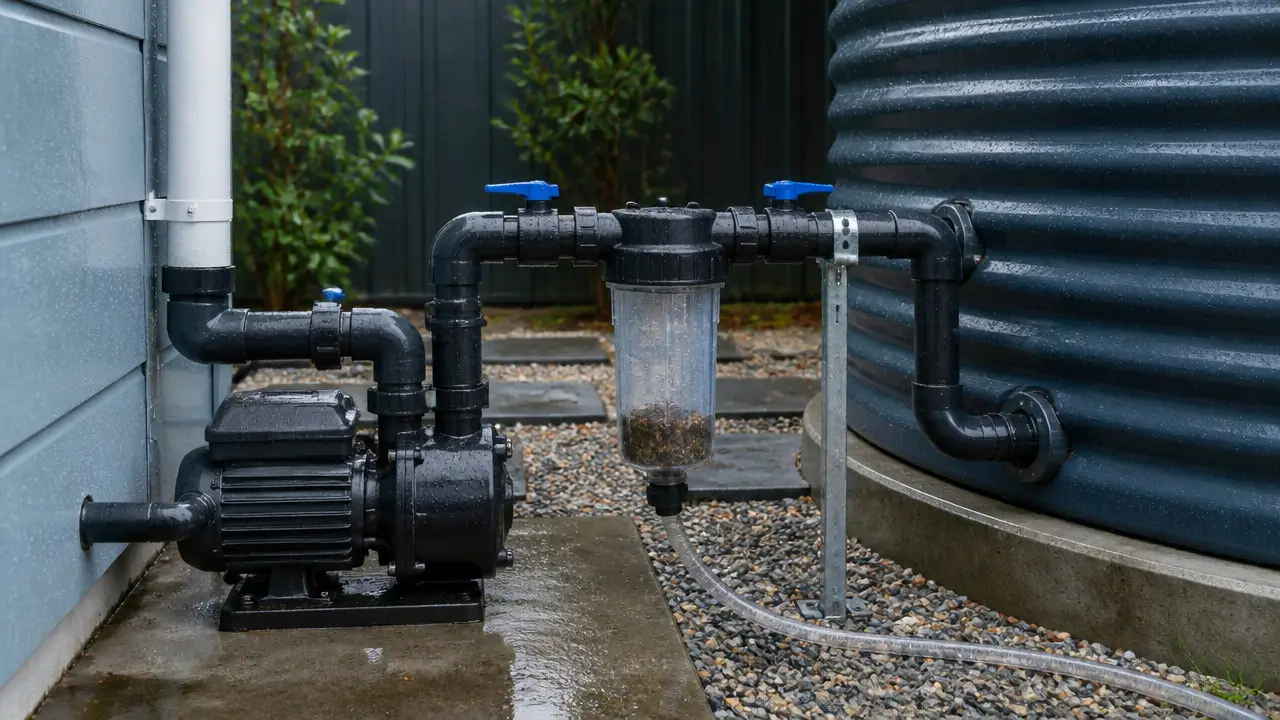
Roof → debris control → first flush → storage tank → sediment filtration → other treatment as needed → UV
A first-flush diverter sends away part of the first roof runoff from a storm. That early runoff can contain more dirt, droppings, and other contamination collected on the roof.
The CDC recommends considering first-flush diversion and notes that rainwater can pick up both germs and chemicals from roofs, gutters, piping, and storage materials.
The exact filters and treatment stages should be chosen from the actual water quality and intended use rather than from a fixed recipe.
Which Is Better for Rainwater: RO or UV?
For many rainwater systems, UV is more directly useful when microbial contamination is the main concern and the water has already been properly filtered.
Roof runoff can collect bacteria and other microorganisms from bird and animal droppings, insects, leaves, and other debris. Even rainwater that looks clear can contain contamination.
RO becomes more useful when testing identifies contaminants that require membrane treatment, or when very low dissolved mineral levels are needed for a particular use.
For garden irrigation
Neither RO nor UV is automatically needed.
Treatment depends on what is in the water, what is being irrigated, how the water is applied, and whether people may come into contact with it.
Using RO for ordinary landscape watering can also be unnecessary because it creates a reject stream and removes dissolved minerals that may not need to be removed.
For toilets or outdoor cleaning
Simple debris control and suitable filtration may be enough in some systems.
Local plumbing requirements and the risk of human contact still matter. Rainwater plumbing should also be kept properly separated from potable plumbing where required so untreated rainwater cannot contaminate drinking-water pipes.
For drinking water
The decision becomes much more serious.
Neither "install RO" nor "install UV" is a complete drinking-water plan.
The CDC advises that roof-collected rainwater is not necessarily safe to drink and recommends regular testing for both germs and chemicals when rainwater is used for drinking, cooking, or bathing.
A drinking-water system may need several stages, such as:
- A suitable roof and collection system
- Screens and debris exclusion
- First-flush management
- Clean, protected storage
- Sediment filtration
- Additional filtration or contaminant-specific treatment
- Disinfection
- Current laboratory testing
- Routine inspection and maintenance
RO might fill one treatment role. UV might fill another. Neither establishes by itself that the final water is potable.
Potable means suitable for drinking. Non-potable means water that is not intended to be consumed.
When RO Is the Better Choice
RO generally makes more sense when your main problem is a dissolved contaminant.
Check whether both ro and UV is necessary to understand routine maintenance needed for dependable operation.
Consider RO when testing or your water source shows a need to reduce substances that a suitable RO system is designed and certified to address.
RO may also make sense when:
- You need low-TDS water for a specific application.
- You need point-of-use treatment at a drinking faucet.
- Dissolved salts are a concern.
- Specific metals or chemicals need treatment.
- Other filtration methods do not address the identified contaminant.
RO should be matched to the contaminant rather than selected simply because its membrane has very small pores.
When UV Is the Better Choice
UV usually makes more sense when the main treatment goal is controlling microorganisms in already clear, filtered water.
It can be a good fit when:
- Stored rainwater has a microbial contamination risk.
- Sediment has already been removed.
- Chemical contamination is not the problem being addressed.
- You want continuous disinfection as water is delivered from storage.
- Adequate electrical power is available.
UV is commonly placed near the end of a treatment train because upstream filters help provide the clear water the UV chamber needs.
When You Might Need Both RO and UV
RO and UV are not competing technologies in every situation.
They can serve different jobs within the same system.
For example, testing might identify both microbial concerns and a dissolved chemical that an appropriate RO system can reduce. The treatment system could then require filtration, RO, and disinfection arranged in a suitable order.
The correct sequence depends on the source water and equipment. Filters, pumps, storage tanks, pressure requirements, and treatment flow rates all have to work together.
A treatment device also needs enough capacity for the required flow rate, which means the amount of water passing through it during a given time.
An undersized UV chamber or RO system can become a bottleneck when several fixtures need water at once.
Maintenance Is Different
Both systems require regular maintenance, but the jobs are different.
RO maintenance
An RO system may require:
- Sediment filter changes
- Carbon filter changes
- RO membrane replacement
- System sanitizing
- Checking for leaks
- Checking pressure
- Inspecting the storage tank
- Monitoring treated-water production
A clogged prefilter can reduce pressure reaching the membrane. A worn membrane may no longer provide the expected contaminant reduction.
Follow the manufacturer's maintenance schedule and any certification requirements that apply to the unit.
UV maintenance
A UV system may require:
- Lamp replacement at the specified interval
- Cleaning or replacing the quartz sleeve around the lamp
- Checking alarms or intensity monitors
- Keeping upstream filters clean
- Inspecting for mineral buildup
- Confirming the required flow rate is not being exceeded
A UV lamp can still appear to be glowing even when its useful germicidal output has declined. Visual inspection alone does not prove that a UV unit is providing its rated treatment.
UV also depends on electricity. If power is lost, the system cannot provide normal UV treatment unless suitable backup provisions are part of the system.
Do RO and UV Improve Taste?
RO can change taste because it removes many dissolved substances from water.
UV normally makes very little difference to taste because it does not remove dissolved minerals or chemicals.
If taste or odor is the main problem, activated carbon may sometimes be more appropriate. But carbon filters also have specific limits and should not be assumed to make contaminated water safe.
The treatment method should match the contaminant you are trying to control.
How to Choose Between RO and UV
Start with the intended use of the water.
For non-potable rainwater, you may not need either system. Garden irrigation, toilet flushing, and cleaning often have different treatment needs from drinking water.
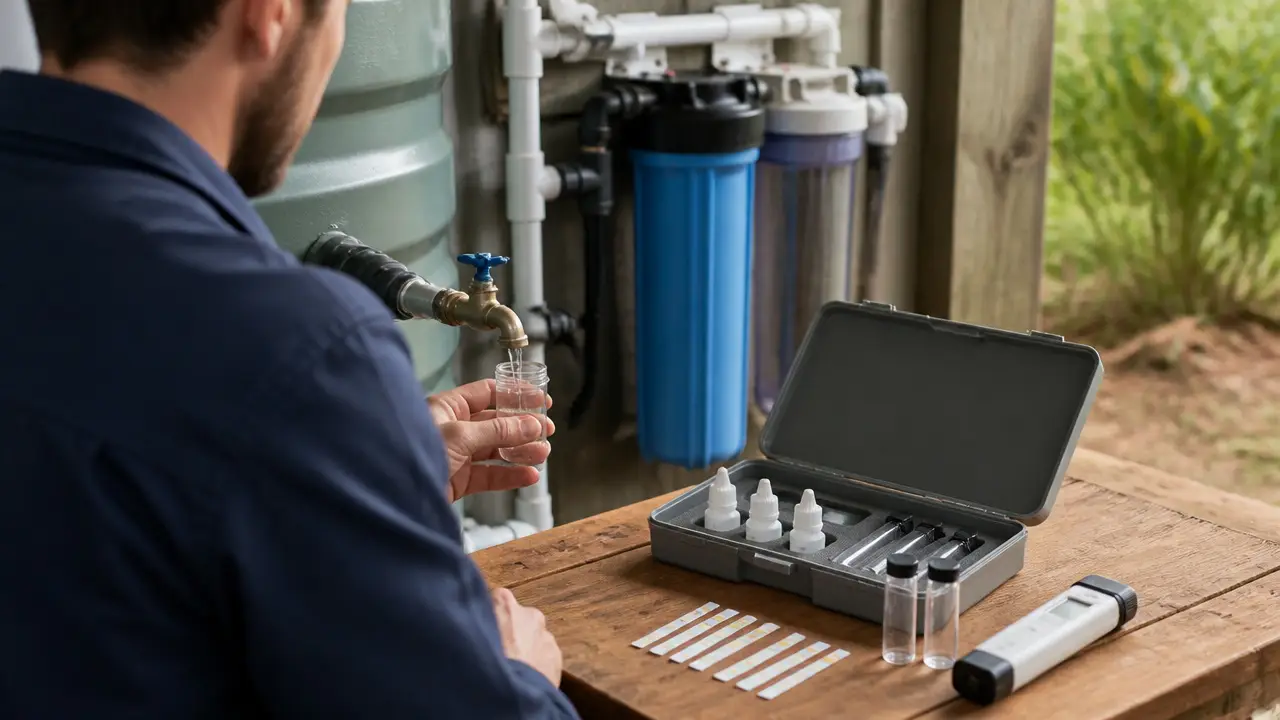
For water that may be consumed, base the treatment system on current laboratory testing rather than appearance, taste, smell, or a TDS meter.
A useful way to think about the choice is:
- Problem is mainly germs: Look closely at suitable filtration followed by UV disinfection.
- Problem is dissolved salts or specific chemicals: Look at an RO system certified for those contaminants.
- Both problems exist: A multi-stage system may need both.
- You do not know what is in the water: Test before choosing treatment.
CDC guidance follows the same basic principle: determine what contaminants are present and choose treatment designed to address those specific germs or chemicals.
The Bottom Line
RO is not simply "better" than UV, and UV is not better than RO for every water system.
Choose RO when dissolved contaminants are the main problem. Choose UV when microbial disinfection is the main problem and the incoming water is already well filtered.
For harvested rainwater intended for drinking, the better answer may be neither one alone. Roof condition, first-flush control, storage, filtration, treatment, pump and flow compatibility, maintenance, laboratory testing, and local health or plumbing requirements all matter.
Frequently Asked Questions
Does UV make rainwater safe to drink?
Not by itself. UV can disinfect properly prepared water, but it does not remove chemicals, dissolved metals, sediment, or salts. Drinking rainwater requires a complete collection and treatment system plus appropriate laboratory testing and maintenance.
Does RO kill bacteria?
RO works mainly by physically separating contaminants with a membrane rather than killing microorganisms. Properly functioning RO systems can remove bacteria, viruses, and parasites, but performance depends on the complete system and its condition.
Can I install UV without a filter?
That is usually a poor setup for collected rainwater. Sediment and cloudy water can interfere with UV treatment. Prefiltration helps provide the clearer water needed for effective UV exposure.
Does UV remove lead or arsenic?
No. Standard UV disinfection does not remove dissolved chemicals such as lead or arsenic. A treatment method specifically designed for the identified chemical is needed.
Does RO remove every contaminant?
No. RO can reduce many contaminants, but performance varies among systems. Check the unit's certified contaminant-reduction claims and match them to your water test results.
Is RO necessary for a rainwater tank?
Not necessarily. Many non-potable uses do not require RO. Even for drinking-water systems, RO should normally be added because a specific water-quality problem calls for it rather than simply because the water came from a rainwater tank.
Is RO plus UV enough for drinking rainwater?
Not automatically. The safety of drinking rainwater depends on the entire system, including the catchment surface, first flush, storage, prefiltration, treatment, plumbing, maintenance, and current laboratory testing. Treatment should also meet applicable local requirements.