As an affiliate, we may earn a commission from qualifying purchases. We get commissions for purchases made through links on this website from Amazon and other third parties.
Gravity water filters can work very well, but gravity itself does not make water safe. Gravity only moves water through the filter. What the system actually removes depends on the filter media, pore size, contaminant claims, condition of the filter, and the quality of the water going into it.
Some gravity filters mainly improve taste and odor. Others can remove sediment, parasites, or bacteria. Very few simple gravity filters reliably handle every possible germ and chemical. For collected rainwater, a gravity filter should be treated as one part of a water-treatment system rather than proof that the water is safe to drink.
How a Gravity Water Filter Works
A gravity filter normally has an upper container for untreated water and a lower container for filtered water. Water moves downward because of gravity instead of being pushed by a pump or household water pressure.
Depending on the system, the water may pass through:
- Activated carbon
- Ceramic
- Hollow-fiber membranes
- Sediment media
- Ion-exchange media
- Several of these materials combined
This makes gravity systems useful where electricity or pressurized plumbing is not available.
However, two filters that look nearly identical can have very different treatment abilities.
What Gravity Filters Can Actually Remove
The answer depends more on the filter element than on the fact that it uses gravity.
Sediment and visible particles
Many gravity filters are good at removing suspended particles such as:
- Dirt
- Rust
- Small debris
- Some sediment
- Fine organic material
This can make cloudy water clearer and protect later treatment stages.
Very dirty rainwater can clog a fine filter quickly. Keeping leaves, roof debris, and larger sediment out of stored water can greatly improve filter life.
Bad taste and odors
Gravity systems containing activated carbon can often improve taste and smell.
Activated carbon works by adsorption, which means certain substances stick to the carbon's large internal surface area.
CDC notes that pitcher and refrigerator filters commonly use activated carbon and are often intended mainly to improve taste and odor rather than make unsafe water safe.
Carbon can also reduce certain chemicals, but performance varies greatly by contaminant and filter design.
Parasites
Fine physical filters can be effective against relatively large organisms such as Giardia and Cryptosporidium.
A micron is one-millionth of a meter. A filter's micron rating describes how small its filtration openings are.
CDC says filters with an absolute pore size of 1 micron or smaller can remove parasites such as Giardia and Cryptosporidium.
"Absolute" matters. It indicates a defined maximum pore size. A nominal micron rating may only describe the approximate percentage of particles the filter captures.
Bacteria
Some gravity filters can remove bacteria, but not all gravity filters do.
CDC says an absolute pore size of about 0.3 micron or smaller can remove bacteria as well as parasites. Ultrafiltration, nanofiltration, and reverse osmosis can also remove bacteria when properly designed and used.
Do not assume that a ceramic or carbon gravity filter removes bacteria merely because the water looks clear afterward.
Viruses
Viruses are a major limitation of many gravity filters.
They are much smaller than bacteria and parasites. Most portable microfilters do not reliably remove viruses. CDC specifically notes that ordinary portable filters commonly remove parasites but may not remove viruses or all bacteria.
A filter intended for untreated water needs a specific validated claim if virus removal is important.
Dissolved chemicals
Physical filtration does not automatically remove dissolved contaminants.
Depending on its media and certification, a filter may reduce specific substances such as:
- Lead
- Chlorine
- Some organic chemicals
- Certain pesticides
- Some PFAS
- Other selected contaminants
But no carbon cartridge should be assumed to remove every chemical.
EPA notes, for example, that granular activated carbon can capture certain organic contaminants and some PFAS, but the filter has a limited treatment capacity and eventually needs replacement.
A filter that removes sediment or bacteria may do almost nothing for a dissolved chemical.
Gravity Is Not the Same as Purification
This is one of the most important differences to understand.
"Gravity filter" describes how the water moves through the unit. It does not describe how thoroughly the water is treated.
A gravity-fed system might be:
- A basic carbon pitcher for treated tap water
- A ceramic countertop filter
- A hollow-fiber camping filter
- A multi-stage system with several treatment media
Their abilities are not interchangeable.
The same applies to the word "filter." A product can legitimately be a water filter while only treating a narrow group of contaminants.
Check the Specific Certification and Claim
Third-party certification is more useful than broad marketing words such as "clean," "pure," or "advanced filtration."
Common standards include:
| Standard | What it generally addresses |
|---|---|
| NSF/ANSI 42 | Aesthetic effects such as chlorine, taste, and odor |
| NSF/ANSI 53 | Specific contaminants with health effects |
| NSF/ANSI 401 | Certain emerging or incidental contaminants |
| NSF P231 | Microbiological water purifier performance |
A certification number alone does not tell you everything.
For example, a filter certified under NSF/ANSI 53 is not automatically certified to remove every contaminant covered by that standard. You must check its specific reduction claims.
NSF advises checking both the standard and the individual contaminant the product is certified to reduce.
Do Gravity Filters Work for Rainwater?
Yes, they can be useful for rainwater, but their role depends on what you plan to do with the water.
For garden and other non-potable uses
Non-potable means water that is not intended for drinking.
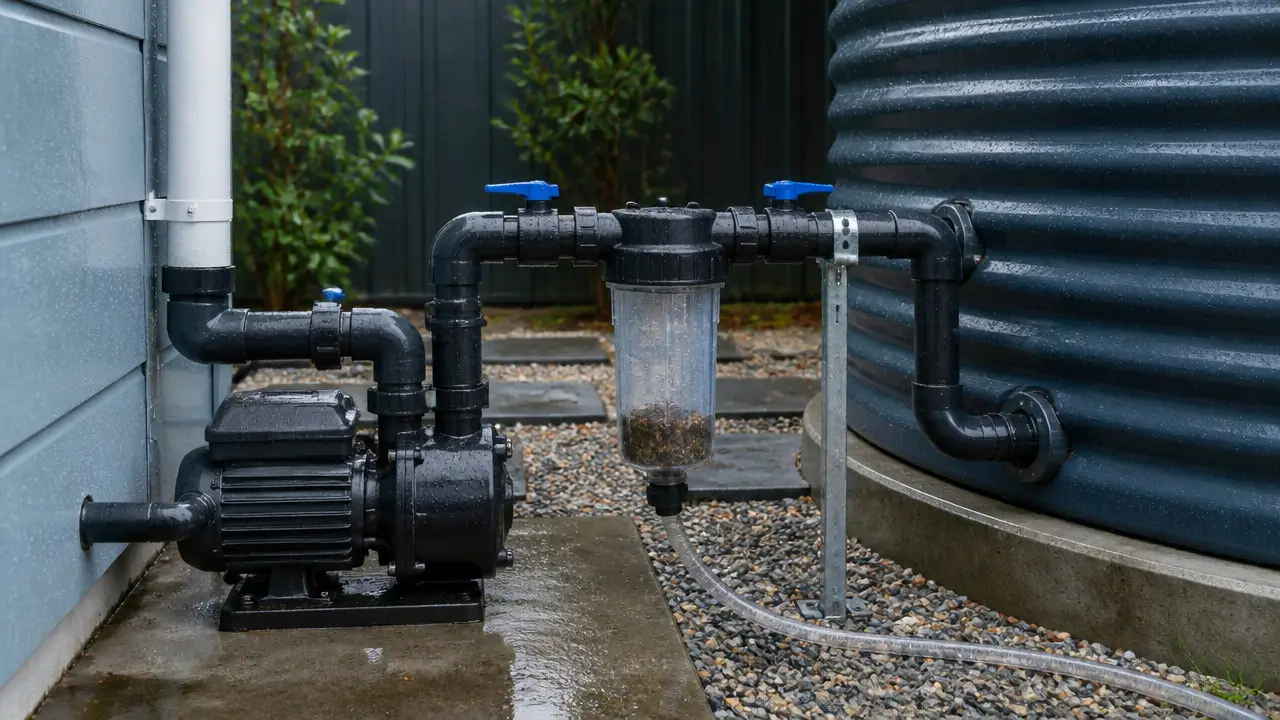
If collected rainwater is being used for suitable garden irrigation or another allowed non-potable use, filtration may mainly be needed to keep debris out of:
- Hose fittings
- Irrigation valves
- Drip emitters
- Pumps
- Small nozzles
A relatively simple sediment filter may be more useful than a slow drinking-water gravity filter.
For cabin or household drinking water
Check practical gravity water filters for rainwater explained to verify home treatment matched to the contaminants of concern.
The requirements are much higher.
Roof runoff can pick up contaminants from roofing materials, bird and animal waste, dust, leaves, insects, airborne pollution, and the storage tank itself. Filtering it until it looks clear does not establish that it is potable.
Potable means suitable for drinking.
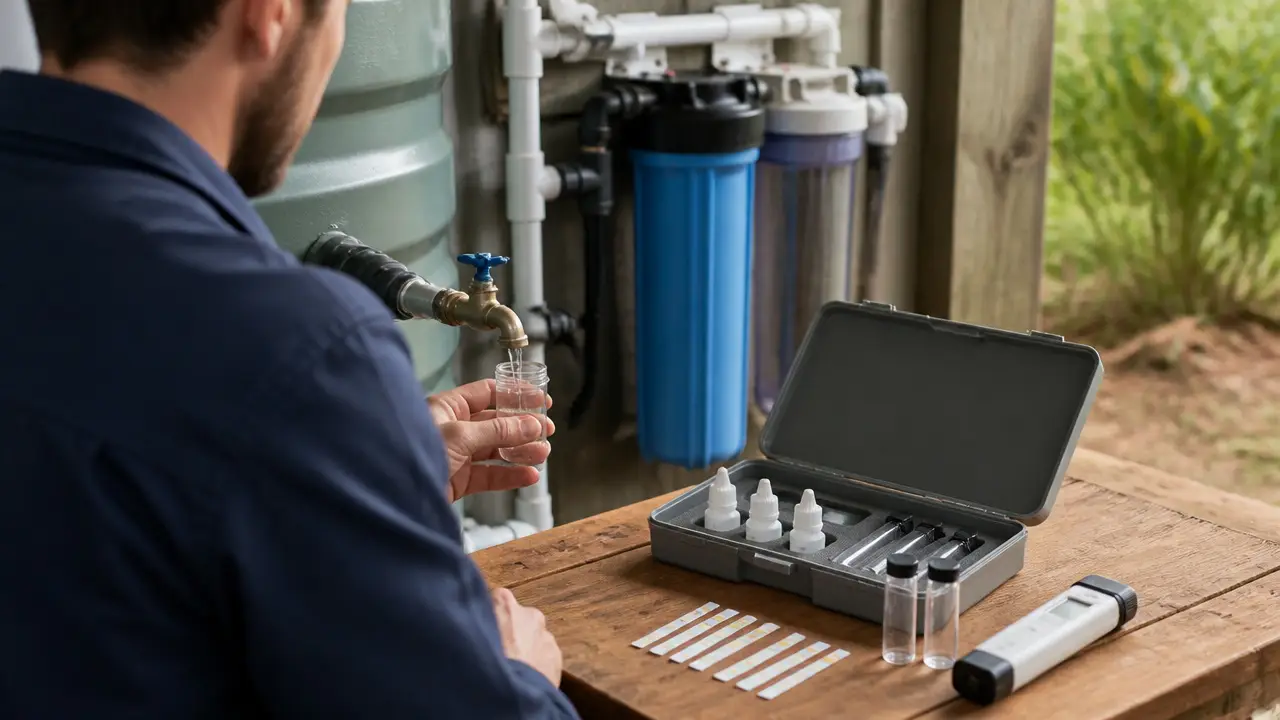
CDC recommends testing rainwater collection systems at least annually for harmful germs and chemicals, with additional testing when the water changes in color, taste, or smell.
Drinking-water treatment therefore needs to be planned as a whole system. Depending on the water and local requirements, that can involve suitable collection surfaces, debris control, first-flush management, protected storage, prefiltration, targeted filtration, disinfection, maintenance, and current laboratory testing.
A first flush is a device or arrangement that diverts the first portion of roof runoff, which can carry a higher amount of dirt and debris from the roof.
One gravity filter should not be treated as proof that roof-collected water is safe to drink.
Why Gravity Filters Sometimes Perform Poorly
Even a capable filter can work badly when the system around it is wrong.
The source water is too dirty
Fine filters clog faster when they receive muddy or heavily sedimented water.
For rainwater systems, keeping leaves and larger debris out before fine filtration usually makes the system easier to maintain.
The filter is overdue for replacement
Activated carbon and other media have limited capacity. Eventually they become exhausted.
EPA stresses that filters need to be maintained and replaced according to the manufacturer's instructions to continue working as intended.
The filter has dried out or become damaged
Some ceramic and membrane filters have specific storage, freezing, cleaning, and drying requirements.
Freezing is especially important. Water trapped inside some filter elements can expand and damage them. Damage may not always be obvious.
Follow the manufacturer's instructions if a gravity filter will be stored in freezing conditions.
The flow becomes very slow
Slow flow does not necessarily mean the filter has stopped removing contaminants. It often means pores are becoming blocked by sediment.
Flow can also vary with:
- Water depth above the filter
- Filter surface area
- Water temperature
- Sediment load
- Filter age
Never modify or pressurize a gravity filter unless its manufacturer specifically allows it.
Germs grow in a poorly maintained filter
A filter stays wet and collects organic material. That environment can support microbial growth if maintenance is neglected.
CDC warns that germs can grow in water filters that are not properly maintained or replaced.
Cleaning the containers and following replacement instructions are therefore part of the treatment process.
Are Gravity Filters Better Than Pump Filters?
Neither design is automatically better.
Gravity filters are attractive because they:
- Need little physical effort
- Can treat water while you do something else
- Usually need no electricity
- Have few moving parts
- Can work well for batch treatment
Pump filters can provide faster delivery or work where hanging or elevating a gravity reservoir is inconvenient.
The deciding factor for water quality should still be the treatment technology and validated contaminant claims, not whether gravity or a pump moves the water.
What to Look for Before Using One
Start with the water rather than the filter.
Ask what you are trying to remove. Then choose treatment that specifically addresses that problem.
For drinking water, check:
- The intended source-water conditions
- Specific contaminant reduction claims
- Absolute pore size when germ removal depends on physical filtration
- Third-party certification where applicable
- Maximum treatment capacity
- Replacement schedule
- Required cleaning
- Whether pretreatment is needed
- Whether disinfection is also required
- Whether the unit can be damaged by freezing
- Whether replacement elements will remain available
CDC recommends testing the source water and choosing treatment for the particular germs or chemicals of concern rather than assuming that one filter handles everything.
The Bottom Line
Gravity water filters do work when they are matched to the right job.
A well-designed gravity filter can remove sediment, improve taste and odor, and, depending on its pore size and treatment media, reduce specific germs or chemicals. The lack of electricity or pressure does not make it ineffective.
The limitation is that no useful conclusion can be drawn from "gravity filter" alone. You need to know what is inside the filter and exactly what it has been tested or certified to remove.
For rainwater used for drinking, do not rely on clear appearance, good taste, a micron number, or a single filter stage as proof of safety. Treat potable rainwater as a complete collection, treatment, testing, and maintenance system.
Frequently Asked Questions
Does a gravity water filter make rainwater safe to drink?
Not by itself. A gravity filter may remove certain particles, germs, or chemicals, but roof runoff can contain several types of contamination. Drinking-water use requires suitable collection, appropriate treatment stages, maintenance, current water testing, and compliance with applicable local requirements.
Can gravity filters remove bacteria?
Some can. A sufficiently fine membrane or other validated filter can remove bacteria. CDC identifies an absolute pore size of about 0.3 micron or smaller as suitable for removing bacteria through physical filtration. Always check the filter's specific claims.
Do gravity water filters remove viruses?
Many ordinary gravity microfilters do not. Viruses are much smaller than bacteria and parasites. If virus removal is needed, use a treatment method specifically validated for that purpose rather than assuming a small micron rating is enough.
Do gravity filters remove chlorine?
Gravity filters containing activated carbon can often reduce chlorine. Look for a specific chlorine-reduction claim or an appropriate certification such as NSF/ANSI 42 rather than assuming every carbon filter performs the same way.
Can a gravity filter remove heavy metals?
Some can reduce specific metals such as lead, but only if the filter media and design are intended for that contaminant. Check for a third-party certified reduction claim for the particular metal you need to address.
Why does my gravity filter get slower over time?
Fine sediment and other material gradually block the filter's pores. The filter may need cleaning or replacement according to its instructions. Heavy sediment in rainwater can make clogging happen much faster.
Do gravity filters need electricity?
Most do not. Gravity supplies the force needed to move water through the filter. Some larger treatment systems may include separate pumps, UV units, monitors, or other powered equipment, but a basic gravity filtration stage can operate without electricity.