As an affiliate, we may earn a commission from qualifying purchases. We get commissions for purchases made through links on this website from Amazon and other third parties.
Portable water filters can be very useful, but only when the filter matches the water source and the job you expect it to do. A good portable filter may remove sediment, parasites, and sometimes bacteria. Most portable filters do not reliably remove viruses, dissolved chemicals, heavy metals, or every other possible contaminant.
That matters with collected rainwater. Roof runoff can pick up bird droppings, dust, roofing chemicals, metals, and other contaminants before it reaches a barrel or tank. A portable filter can be one useful treatment step, but it should not be treated as automatic proof that rainwater is safe to drink.
What Does a Portable Water Filter Actually Do?
A portable water filter forces water through material with very small openings. Larger particles and some germs become trapped while the water passes through.
Exactly what gets removed depends on the filter.
A basic portable filter may help with:
- Dirt and suspended particles
- Giardia and Cryptosporidium parasites
- Some bacteria, if the filter is designed for them
- Bad tastes or odors if activated carbon is included
It may do little or nothing about:
- Viruses
- Dissolved salts
- Many pesticides or other chemicals
- Some metals
- Contaminants that are smaller than the filter's pores
CDC guidance notes that most portable filters remove parasites but do not remove viruses, and many do not reliably remove bacteria either.
This is why the word filter does not automatically mean purifier.
The Micron Rating Matters
A micron is one-millionth of a meter. A filter's micron rating describes the size of particles its pores are intended to block.
Smaller pores can stop smaller contaminants.
Current CDC guidance gives some useful reference points:
| Filter capability | What it can generally address |
|---|---|
| Absolute 1 micron or smaller | Parasites such as Giardia and Cryptosporidium |
| Absolute 0.3 micron or smaller | Bacteria plus parasites |
| Nanofiltration or reverse osmosis | Can remove viruses as well as larger germs |
Pay attention to the word absolute. An absolute rating describes the largest opening the filter is designed to have. A vague or nominal micron rating does not provide the same assurance.
Also check the actual contaminant claims. A tiny micron number by itself does not tell you whether the unit removes chemicals, improves taste, or has been tested for the organisms you care about.
Are Portable Filters Good for Rainwater?
They can be, especially as part of a larger rainwater system.
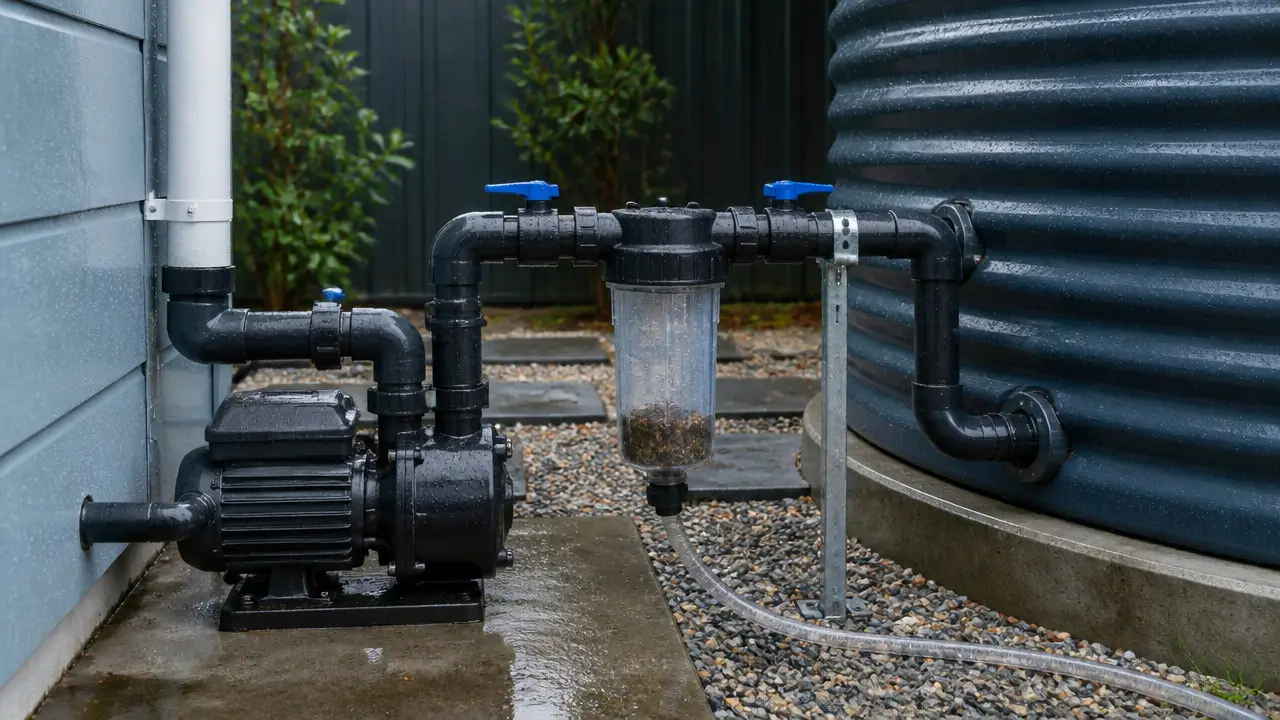
For example, suppose you collect roof water in an IBC tote or cistern. Before the water reaches a small portable filter, you might already have:
- A gutter screen to catch leaves.
- A first-flush diverter.
- A covered storage tank.
- A sediment stage for larger particles.
- The portable filter for finer treatment.
A first-flush diverter sends away the first portion of roof runoff from a storm. That early runoff often carries more dust, droppings, and debris from the roof.
These earlier stages matter because sending dirty water directly through a fine portable filter can clog it quickly.
CDC also warns that collected rainwater can contain both germs and chemicals, even when the water looks clear. Roofing, gutters, piping, storage materials, airborne pollution, and animal droppings can all affect water quality.
Portable Filters Are Very Useful for Non-Potable Water
A portable filter can be especially practical when the water is not meant for drinking.
Non-potable simply means water that is not intended to be consumed.
For example, filtration can help when rainwater is being used for:
- Drip irrigation
- Garden hoses
- Washing tools
- Cleaning outdoor equipment
- Some pumps and spray equipment
Removing sediment can keep small valves, emitters, and spray nozzles from plugging.
The filter does not need to make the water drinkable for these jobs. It just needs to provide water clean enough for the equipment and intended use.
That distinction can save a lot of unnecessary complexity.
What About Portable Filters for Drinking Water?
Use more caution here.
Potable water means water suitable for drinking.
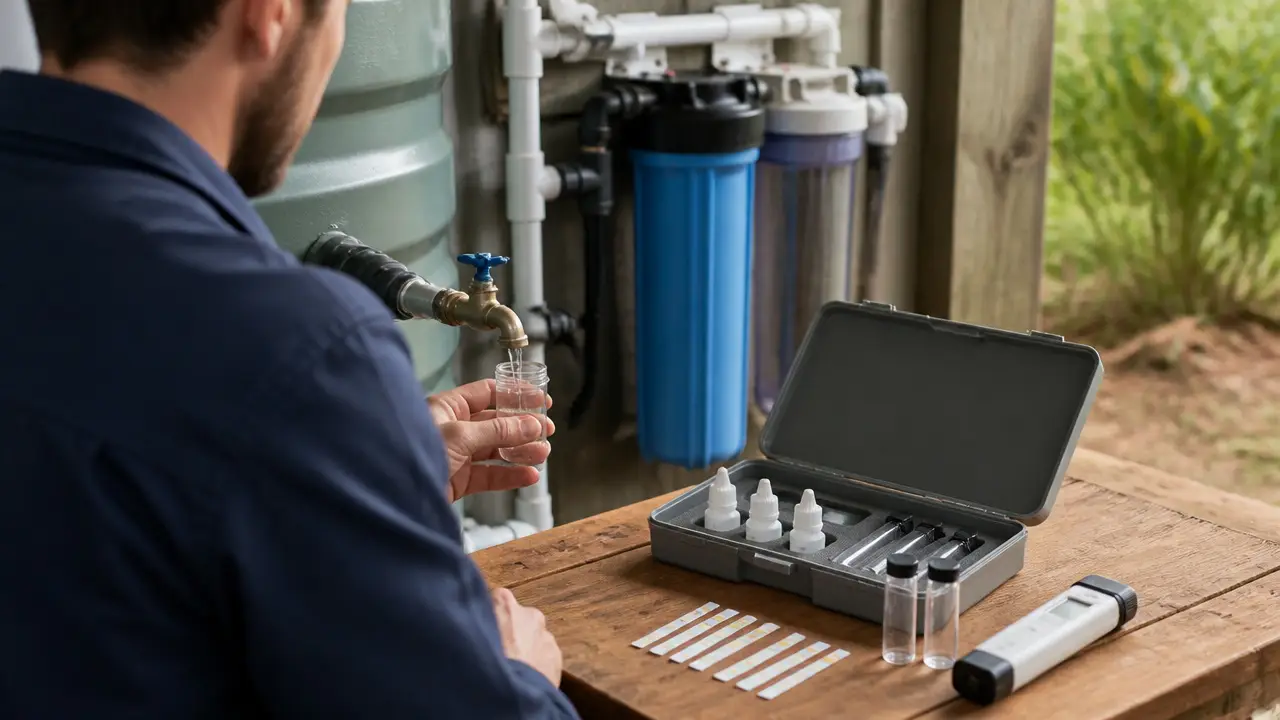
Roof-collected rainwater should not be assumed potable simply because it passes through a portable filter. CDC recommends regularly testing rainwater for harmful germs and chemicals when it is used for drinking, cooking, or bathing.
Drinking-water treatment may need several stages because different treatments handle different problems.
A system might include:
- Debris screening
- First-flush diversion
- Properly protected storage
- Sediment filtration
- Finer microbial filtration
- Treatment for specific chemicals if testing identifies them
- A suitable disinfection stage
- Regular laboratory testing
The exact system depends on the source water and test results.
One small camping-style filter should not be expected to handle every possible problem in roof runoff.
Filtering and Disinfecting Are Different Jobs
Filtration physically removes contaminants from water.
Disinfection is intended to kill or deactivate disease-causing organisms.
Those jobs often need to work together.
For example, a filter may catch parasites and bacteria while allowing much smaller viruses through. CDC therefore recommends additional treatment when portable filtration alone does not address all relevant germs.
Clearer water also helps some disinfection methods work better. EPA notes that cloudy or colored water can interfere with effective disinfection, so settling and filtration may be useful before disinfection.
Do not assume that disinfection solves chemical contamination either. EPA states that boiling or disinfecting water does not remove contaminants such as heavy metals, salts, and many chemicals.
What About Activated Carbon?
Some portable filters include activated carbon.
Carbon can be useful for improving taste and odor and can reduce certain chemicals when the filter is specifically designed and tested to do so.
But carbon does not automatically make questionable water safe.
CDC notes that many common carbon filters are intended mainly to improve water taste and smell rather than remove germs.
If chemical removal matters, check the exact contaminant reduction claim rather than assuming that "carbon filter" covers everything.
Look for Specific Certifications and Claims
Certification can help you understand what a filter has actually been tested to do.
Study drinking properly filtered rainwater to assess the filtration depth required by the proposed use.
NSF explains that its drinking-water standards cover different treatment purposes. For example:
- NSF/ANSI 42 covers certain aesthetic effects such as chlorine, taste, and odor reduction.
- NSF/ANSI 53 covers certain contaminants with health effects.
- NSF/ANSI 58 covers reverse-osmosis systems.
- NSF P231 relates to microbiological water purifiers.
A certification does not mean a device removes every contaminant. You still need to check the exact reduction claims attached to that certification.
For example, "certified to NSF/ANSI 53" is less useful by itself than a statement showing that the particular model is certified for the specific contaminant you need to reduce.
Flow Rate Can Matter as Much as Filtration
Very fine filters usually create resistance.
That can become important in a gravity-fed rain barrel or tote.
If your barrel only has a small amount of water above the outlet, there may not be enough pressure to push water through a restrictive filter at a useful rate.
This pressure from the height of stored water is called head height.
A filter that works well with a hand pump may behave very differently when attached to a gravity-fed garden line.
Before adding a filter to a rainwater system, check:
- Required inlet pressure
- Expected flow rate
- Hose or pipe connection size
- Maximum operating pressure
- Whether gravity flow is supported
Flow rate means how much water passes through the system over a given time, such as gallons per minute.
For watering a few plants, slow flow might be fine. For filling containers or supplying several irrigation lines, it may become frustrating.
Dirty Rainwater Can Plug Fine Filters Quickly
Portable filters have limited surface area. Fine sediment can block those surfaces.
You may notice:
- Flow becoming slower
- More pumping effort
- Longer fill times
- Water bypassing a poorly seated cartridge
- Frequent need for cleaning or replacement
The answer is usually not to remove the fine filter.
Instead, keep larger debris out earlier.
A simple system might progress from coarse to fine:
Roof screen → first flush → tank → sediment filter → fine filter
This lets inexpensive and easy-to-clean stages catch larger material before it reaches the finer treatment equipment.
Portable Filters Need Maintenance
Even a good filter performs poorly when neglected.
Follow the manufacturer's instructions for cleaning, backwashing, cartridge replacement, storage, and maximum service life.
Some filters must stay wet. Others must be dried before storage. Some can be backwashed. Others use replaceable cartridges.
Do not guess.
Contaminants can also build up inside poorly maintained filters. CDC warns that germs can grow in water filters when they are not maintained and replaced properly.
For a rainwater system, also maintain everything upstream of the filter. Keep gutters, screens, first-flush devices, tanks, piping, and tank openings in usable condition.
A clean filter cannot correct every problem caused by a badly maintained collection system.
When a Portable Filter Makes Sense
A portable filter is a strong choice when you need:
- Small-scale water treatment
- A lightweight system
- Sediment control for garden equipment
- Temporary filtration
- A filter that can be moved between containers
- A microbial filtration stage whose exact performance matches your water source
It is less suitable when you need:
- High water flow
- Whole-house treatment
- Treatment of large tanks every day
- Reliable removal of several different chemical contaminants
- A complete drinking-water treatment system by itself
For a large cistern supplying a cabin or home, permanent filtration and treatment equipment will usually be easier to size, maintain, and monitor than relying on a small portable device.
The Bottom Line
Portable water filters are good tools when they are used for the job they were designed to do.
For garden or utility rainwater, a portable sediment or fine filter can keep dirt out of hoses, pumps, and irrigation equipment.
For drinking water, the standard is much higher. A portable filter may remove parasites and, depending on its design, bacteria. Many will not remove viruses or dissolved chemicals. Roof-collected rainwater can contain both microbial and chemical contamination, so drinking-water use should be based on the whole collection and treatment system, current laboratory testing, proper maintenance, and applicable local health guidance.
Frequently Asked Questions
Can you drink rainwater after putting it through a portable filter?
Not automatically. Portable filters differ widely, and many do not remove viruses or dissolved chemicals. Rainwater used for drinking should be evaluated as a complete collection and treatment system and tested for relevant germs and chemicals.
What micron filter is best for drinking water?
There is no single micron rating that makes water safe to drink. CDC says an absolute 1-micron-or-smaller filter can remove parasites, while an absolute 0.3-micron-or-smaller filter can remove bacteria and parasites. Viruses require other filtration or treatment methods.
Will a portable water filter remove bacteria?
Some will. CDC states that an absolute pore size of 0.3 micron or smaller can remove bacteria and parasites. Check the manufacturer's tested claims rather than assuming every portable filter provides bacterial protection.
Will a portable filter remove viruses?
Most common portable filters do not. Nanofiltration, reverse osmosis, or another suitable treatment method may be needed when viruses are a concern.
Can a portable filter remove chemicals from roof runoff?
Some filters can reduce particular chemicals, but no portable filter should be assumed to remove all chemical contamination. Look for verified claims covering the specific contaminant identified by testing.
Can I connect a portable filter directly to a rain barrel?
Sometimes. Check the required pressure, connection size, and flow rate first. A gravity-fed barrel may not provide enough pressure for a restrictive filter, especially as the water level falls.
How often should a portable water filter be replaced?
Follow the manufacturer's service-life and maintenance instructions. Replacement frequency depends on the filter design, water quality, volume treated, and sediment load. A noticeable drop in flow can also indicate clogging, but it should not be the only replacement guide.