As an affiliate, we may earn a commission from qualifying purchases. We get commissions for purchases made through links on this website from Amazon and other third parties.
If you want one gravity water filter maker to start with, Doulton, through its British Berkefeld gravity-filter line, is one of the strongest choices to consider. The main reason is not brand age or marketing. It is that specific British Berkefeld gravity systems have current third-party NSF certification for specific filtration claims.
As of August 2026, NSF lists British Berkefeld gravity systems under NSF/ANSI 42, 53, and 401 for claims including particulate reduction, cyst and turbidity reduction, and microplastics reduction.
That does not make British Berkefeld the best filter for every water source. A gravity filter that works well on treated tap water may not be enough for untreated rainwater, well water, lake water, or other sources where bacteria, viruses, chemicals, or other contaminants may be present.
The better question is: Which gravity filter has verified performance for the water you plan to put through it?
Why British Berkefeld Stands Out
British Berkefeld filters are made by Doulton Water Filters. The company uses ceramic filter elements inside stainless-steel gravity systems.
For someone who wants a countertop gravity filter with independent certification, that is important.
NSF currently lists the British Berkefeld SS2 Ultra Sterasyl gravity system for:
- NSF/ANSI 42 particulate reduction
- NSF/ANSI 53 cyst reduction
- NSF/ANSI 53 turbidity reduction
- NSF/ANSI 401 microplastics reduction
A British Berkefeld Ultra Fluoride gravity configuration also appears in the current NSF listings with similar certified particulate, cyst, turbidity, and microplastics claims.
NSF/ANSI 42 generally covers non-health effects such as taste, odor, chlorine, and particles, depending on the exact certified claim. NSF/ANSI 53 covers specific contaminants that can affect health. NSF/ANSI 401 covers certain emerging contaminants. Certification to one of these standards does not mean a filter removes everything covered by that standard. You have to check the exact contaminant claims for the exact model.
That distinction matters when comparing gravity filters.
A manufacturer saying a filter was "tested to NSF standards" is not necessarily the same as finding the exact system in a current independent certification database.
There Is No Best Gravity Filter for Every Water Source
Gravity filters are simple machines. Water in an upper tank passes through a filter element without a pump. The treated water collects in a lower tank.
The filter media determines what happens during that trip.
A ceramic element may trap small particles and some microorganisms. Activated carbon may reduce chlorine, odors, tastes, and certain chemicals. Other media may target specific contaminants.
But adding more types of media does not automatically make a filter safer or better.
The filter needs to match the water.
For treated city water
A countertop gravity filter can make sense if your main goals are reducing particles, chlorine taste, certain contaminants, or other substances identified in your local water report.
Start with your utility's water-quality report. Then find a filter with a third-party-certified claim for the contaminant you actually want to reduce.
For private well water
Test the well before choosing treatment.
Well-water problems can include bacteria, nitrate, arsenic, iron, manganese, hardness, or other contaminants depending on the location. One gravity filter should not be assumed to handle all of them.
For rainwater
Treat a gravity filter as one possible stage, not as proof that collected rainwater is potable.
Potable simply means suitable for drinking.
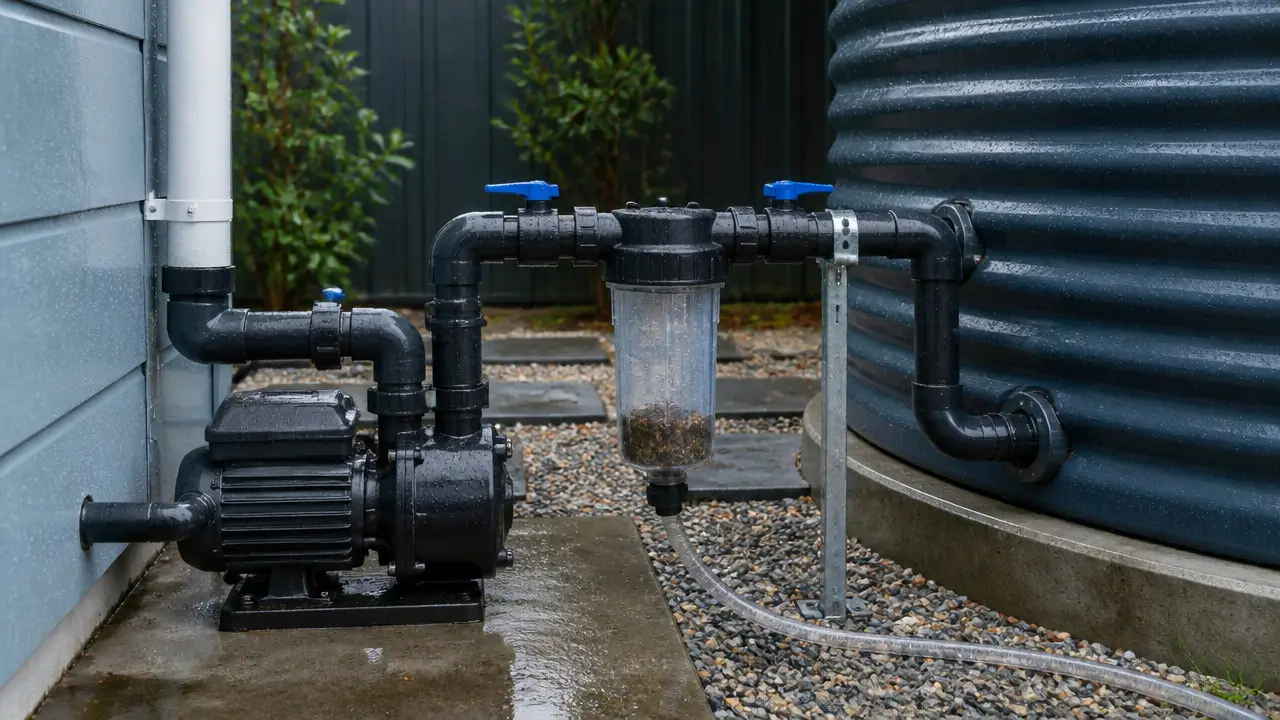
Roof runoff can pick up bird droppings, dust, insects, roofing material residues, microorganisms, and other contamination. The storage tank can introduce additional problems.
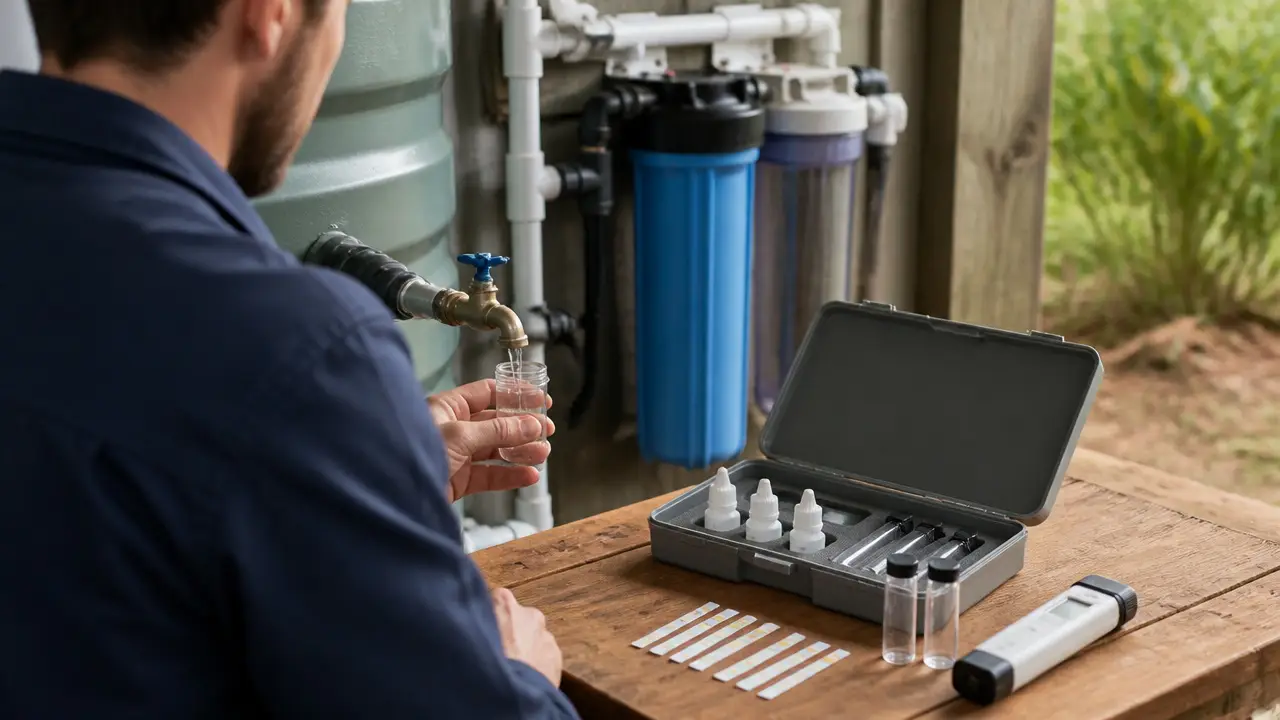
CDC recommends regular testing of rainwater used in or around the home and says people using rainwater collection systems should have their water tested at least annually for harmful germs and chemicals.
Drinking-water use needs to be considered as a complete system. That can include suitable collection surfaces, debris removal, first-flush management, protected storage, prefiltration, appropriate treatment, current laboratory testing, maintenance, and any local requirements.
A countertop gravity filter by itself should not be treated as a complete rainwater-to-drinking-water system.
What Makes a Good Gravity Water Filter Manufacturer?
Brand name matters less than these six things.
1. Independent certification
Look for certification from an established third-party organization such as NSF or another accredited certification body.
Then verify it in the certifier's database.
NSF specifically recommends checking its current listings instead of relying only on a logo printed on packaging or a manufacturer's webpage.
Pay attention to the exact model number.
A company may sell ten filters while only one or two configurations have certification.
2. Useful contaminant claims
A filter is only useful if its tested reductions match your water.
For example:
| Your concern | What to look for |
|---|---|
| Chlorine taste or odor | Certified chlorine/taste-and-odor claim |
| Sediment or visible particles | Particle or turbidity reduction |
| Cryptosporidium or Giardia cysts | Certified cyst reduction |
| Lead | Certified lead-reduction claim |
| Microplastics | Certified microplastics claim |
| Specific chemicals | Certification or verified testing for that exact chemical |
NSF/ANSI 42, 53, and 401 are not quality scores. A filter with "53" is not automatically better than one with "42." Each standard covers different types of claims.
3. Clear replacement instructions
Every filter eventually needs maintenance.
A good manufacturer should clearly state:
- Which replacement element fits the housing
- How often it normally needs replacement
- Whether the element can be cleaned
- How cleaning affects service life
- How to sanitize the housing
- When the element must be discarded rather than cleaned
Filters can become places where microorganisms grow when they are poorly maintained or left overdue for replacement. CDC recommends following the manufacturer's maintenance and replacement instructions.
4. Replacement filters that are easy to identify
The stainless-steel housing may last many years. The filter elements are the part you will keep buying.
Before choosing a system, check that you can clearly identify the correct replacement cartridge.
Avoid assuming that two ceramic candles fit simply because they look alike.
Thread size, gasket shape, element length, mounting hardware, and intended operating method can differ.
5. Enough flow for your household
Gravity filtration is usually slower than a pressurized filter.
That is normal.
Water has only the pressure created by the water sitting above the filter. As the upper chamber empties, that pressure drops.
Flow can also become slower when a ceramic surface collects fine sediment.
Think about how much filtered water you actually need each day.
One person filtering drinking water has very different needs from a family trying to supply drinking, cooking, and cabin use.
A larger tank does not necessarily mean faster filtration. The number and type of filter elements also matter.
6. Claims that are easy to verify
Be cautious when a filter supposedly removes almost every possible contaminant but provides little information about how those claims were established.
Good documentation should tell you:
- What was tested
- Which filter was tested
- Which standard was used
- Whether testing or certification was independent
- Under what conditions the filter was tested
An impressive percentage by itself tells you very little.
What a Micron Rating Does and Does Not Tell You
Explore recommended gravity water filters for rainwater use to interpret a targeted retest before the water is put to its intended use.
You will often see gravity filters described by their micron rating.
A micron is one-millionth of a meter. A micron rating describes the approximate size of particles a filter can trap.
There are two terms worth knowing.
An absolute micron rating describes a much stricter particle-removal level.
A nominal micron rating means the filter removes a stated percentage of particles around that size. The exact definition can depend on the manufacturer or test method.
A smaller micron number does not tell you everything a filter removes.
For example, CDC says filters with an absolute pore size of 1 micron or smaller can remove parasites such as Giardia and Cryptosporidium. An absolute pore size of about 0.3 micron or smaller can remove bacteria, but typical portable filtration does not necessarily remove viruses.
Micron size also tells you little about dissolved chemicals.
Lead, arsenic, nitrate, PFAS, pesticides, and other dissolved substances require suitable treatment media or another treatment process.
This is why certification for a specific contaminant is much more useful than choosing a filter because it has the smallest micron number.
Gravity Filter vs. Water Purifier
Manufacturers sometimes use the words "filter" and "purifier" loosely.
They should not be treated as interchangeable.
A gravity filter may be excellent at reducing particles, sediment, cysts, or certain chemicals while still leaving other contaminants in the water.
CDC notes that filtration methods vary widely in what they remove. Microfiltration, for example, can remove parasites but generally does not remove viruses or dissolved chemicals such as arsenic.
For questionable untreated water, you may need more than filtration.
That could mean combinations of:
- Prefiltration
- Fine filtration
- Activated carbon or specialized media
- Disinfection
- Reverse osmosis
- UV treatment
- Other treatment selected from water-test results
The correct treatment train depends on the source water.
Are Gravity Filters Good for Rainwater Harvesting?
They can be useful, but usually at the point where you need a small amount of treated water rather than as the main filter for an entire rainwater system.
Imagine a cabin with a 500-gallon rainwater tank.
A typical system might already need debris screens, protected storage, sediment management, and treatment suited to the intended use.
Putting all 500 gallons through a countertop gravity filter would not be practical.
Instead, you might use untreated or lightly filtered rainwater for suitable non-potable jobs while treating a much smaller volume at the point where higher water quality is needed.
If drinking is one of those uses, do not decide based on the gravity filter alone.
Roof runoff should be tested, and treatment should address the actual microbiological and chemical risks found in that system.
When a Gravity Filter Is Not the Best Choice
Choose another treatment setup when you need:
High flow
Gravity systems work in batches and normally produce water slowly.
They are poorly suited to whole-house demand, showers, appliances, or irrigation systems that need continuous flow.
Water pressure
A gravity filter does not normally provide useful household plumbing pressure.
If water needs to travel through long pipes, climb uphill, run sprinklers, or supply fixtures, you may need a pump and pressure system.
Treatment for difficult dissolved contaminants
Problems such as nitrate, salinity, arsenic, or some industrial chemicals may require treatment designed specifically for them.
Do not assume a ceramic-and-carbon gravity element removes them.
Reliable virus control
Many common gravity filters should not be counted on to remove viruses from contaminated source water.
CDC notes that portable filtration alone often does not remove viruses.
Whole-house rainwater treatment
A small countertop gravity filter is usually the wrong tool for treating the full output of a cistern.
A properly planned point-of-entry treatment system is generally better suited to that job.
How to Choose Between Gravity Filter Makers
Rather than trying to rank every brand, use this order:
- Identify your water source.
- Decide what the filtered water will be used for.
- Test the water when the source is a well, rainwater system, or another private supply.
- List the contaminants you need to address.
- Find models with current independent certification for those claims where certification is available.
- Check replacement-filter availability and compatibility.
- Check flow rate and storage capacity against your daily needs.
- Read the maintenance instructions before buying the system.
This method is more reliable than choosing the brand with the longest list of claimed contaminant reductions.
So, Who Makes the Best Gravity Water Filter?
For a countertop stainless-steel gravity filter, Doulton's British Berkefeld line deserves a close look because specific gravity systems currently have independently verifiable NSF certifications.
That is a stronger reason to consider the company than reputation alone.
But it should not be treated as a universal winner.
The best gravity filter for treated city water may be very different from the best treatment setup for rainwater, a private well, a cabin supply, or questionable surface water.
Start with the water. Then choose the filter.
Frequently Asked Questions
Is British Berkefeld the same company as Doulton?
British Berkefeld is a gravity-filter brand associated with Doulton Water Filters. Current NSF listings identify Doulton Water Filters as the manufacturer behind certified British Berkefeld gravity systems.
Are gravity water filters safe for drinking water?
They can be suitable for drinking-water applications when the source water and filter are appropriate, but a gravity filter does not automatically make contaminated water safe to drink. Choose treatment based on the contaminants present and the filter's verified performance.
Can a gravity water filter make rainwater drinkable?
Do not assume so. Rainwater can contain microorganisms and chemicals picked up from the roof, gutters, air, tank, and plumbing. Drinking-water use should involve suitable collection and treatment, maintenance, and current laboratory testing.
Do gravity filters remove bacteria?
Some filters can reduce bacteria, but performance varies greatly by filter design. A micron rating or ceramic element alone should not be treated as proof. Check the exact manufacturer's claims and independent certification or testing.
Do gravity water filters remove viruses?
Many common gravity filters do not provide reliable virus removal. CDC notes that portable filters often do not remove viruses, so questionable untreated water may require additional treatment or disinfection.
Is NSF/ANSI 53 better than NSF/ANSI 42?
No. The numbers are not rankings. NSF/ANSI 42 covers specific aesthetic effects, while NSF/ANSI 53 covers specific contaminants with health effects. Check the individual contaminant claim rather than choosing based only on the standard number.
How often should a gravity filter be replaced?
It depends on the exact element, water quality, usage, and manufacturer's instructions. Sediment-heavy water may slow a filter sooner. Follow the stated cleaning and replacement schedule rather than waiting for the water to taste bad or look dirty.