As an affiliate, we may earn a commission from qualifying purchases. We get commissions for purchases made through links on this website from Amazon and other third parties.
A gravity water filter uses the weight of water to push it through a filter. It does not need a pump or electricity. You can build one with two food-grade containers and a filter element made for gravity use.
The important part is choosing the right filter for the water you plan to use. A homemade layer of sand, gravel, or charcoal can catch dirt and improve how water looks, but it should not be treated as a drinking-water purifier. For drinking water, use a treatment device with verified contaminant-reduction claims, and treat the entire water source and system as part of the safety plan.
The Basic Gravity Filter Design
A simple gravity filter has two chambers:
- An upper container holds untreated water.
- Water passes through a filter element.
- Filtered water drips into a clean lower container.
- A spigot near the bottom lets you draw the water out.
The upper container must sit above the lower one. Gravity provides the pressure needed to move water through the filter.
This setup works well where electricity is unavailable or where only small amounts of water need treatment at a time.
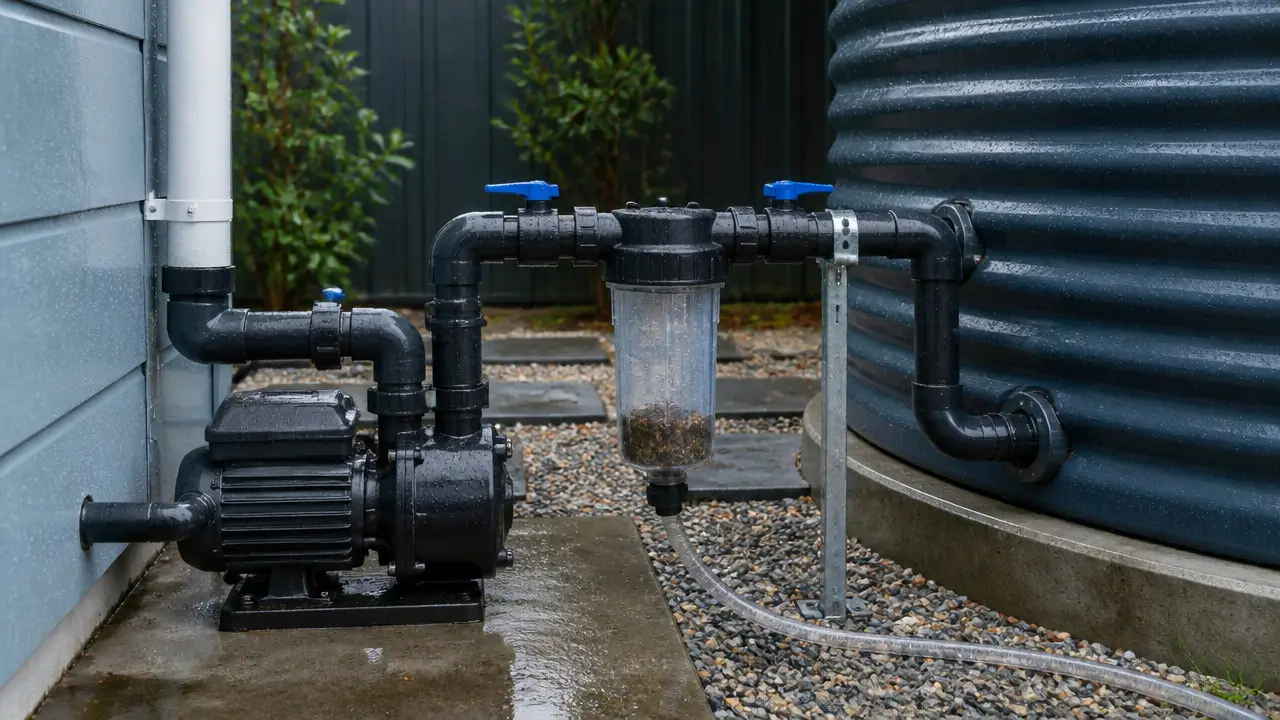
For rainwater systems, it may be used at a cabin, beside a rain barrel, or as a point-of-use treatment stage after water has already gone through basic debris removal.
Decide What You Want the Filter to Do
Do this before buying parts or drilling holes.
A gravity filter can serve very different purposes.
Filtering Water for the Garden
If your main goal is keeping leaves, grit, or sediment out of a drip irrigation line, you may only need a washable sediment screen or cartridge.
You do not need drinking-water treatment for water used only on ornamental plants.
However, the filter still needs enough flow for your irrigation system.
Improving Water for Cleaning or Other Non-Potable Uses
Non-potable means water that is not intended for drinking.
A gravity filter may help remove visible sediment before rainwater is used for jobs such as outdoor cleaning. The exact treatment needed depends on the use and what may be in the collected water.
Treating Water Intended for Drinking
This requires much more care.
Roof runoff can pick up bird droppings, insects, dust, roofing debris, chemicals, and microorganisms before reaching a storage tank.
A filter that makes the water clear does not prove that the water is safe.
CDC notes that many portable filters do not remove viruses and may not remove bacteria. Water contaminated with harmful chemicals also cannot simply be made safe by ordinary filtration or boiling.
Drinking-water use should therefore involve suitable collection, pretreatment, treatment designed for the contaminants of concern, regular maintenance, current laboratory testing when appropriate, and any local health or plumbing requirements that apply.
What You Need for a Simple Two-Container Filter
For a basic gravity-fed setup, you will usually need:
- Two food-grade containers with lids
- A gravity-rated filter element
- A food-safe spigot
- Gaskets and nuts supplied with the fittings
- A drill and correctly sized bit or hole saw
- A clean wrench or suitable hand tools
- Materials for cleaning and sanitizing the containers
Do not use buckets or tanks that previously held pesticides, fuel, solvents, cleaners, or other harmful chemicals.
Food-grade containers are especially important when the filtered water may contact food or be considered for drinking.
Choose the Filter Element Before Drilling Anything
The filter element is the most important part of the system.
Do not choose one only because it has a very small micron number.
A micron is one-thousandth of a millimeter. A micron rating describes the approximate size of particles a filter can catch. But pore size alone does not tell you everything the filter removes.
Different technologies work differently.
For example, activated carbon may reduce certain chemicals, tastes, and odors. Fine membranes can remove very small particles and some microorganisms. Reverse osmosis uses a much tighter membrane and normally requires pressure rather than a simple bucket gravity system.
CDC notes that microfiltration, ultrafiltration, nanofiltration, and reverse osmosis have different abilities to reduce microorganisms and chemicals.
If the water is intended for drinking, look for independent certification covering the specific contaminant reduction you need. A standard number by itself is not enough. Check the actual performance claim.
For example, NSF explains that NSF/ANSI 42 generally covers aesthetic concerns such as taste or chlorine, while NSF/ANSI 53 covers certain contaminants that have health effects.
How to Build a Gravity Water Filter
Step 1: Clean the Containers
Wash both containers thoroughly.
The lower chamber is especially important because filtered water will be stored there.
If this system will handle drinking water, use containers that can be cleaned and sanitized properly. Avoid scratches, dirty hoses, open lids, and fittings that can allow treated water to become contaminated again.
CDC recommends keeping treated water in clean, covered containers.
Step 2: Mark the Filter Location
The filter element normally mounts through the bottom of the upper chamber.
Read the installation instructions for your particular element before making the hole.
Filter stems, washers, and mounting nuts vary in size. An oversized hole may leak or prevent the filter from sealing correctly.
Leave enough space around the filter so the gasket sits on a flat surface.
If you install more than one element, follow the spacing and installation guidance supplied with them.
Step 3: Drill the Upper Chamber
Drill the hole using the size required for the filter fitting.
Remove plastic shavings.
The surface around the opening should be smooth so the gasket can seal evenly.
Do not use glue or sealant unless it is approved for the fitting, compatible with the container, and suitable for the intended water use.
Step 4: Install the Filter Element
Insert the filter stem through the hole.
Install the supplied gasket, washer, and nut in the correct order.
Tighten it enough to make a seal, but do not crush the gasket or crack the container.
Some filter elements must be rinsed, soaked, flushed, or primed before their first use. Follow the manufacturer's instructions for that exact element.
Step 5: Install the Spigot in the Lower Container
Place the spigot near the bottom of the lower chamber while leaving enough room underneath for its inside washer and nut.
Many tank spigots use a bulkhead fitting. A bulkhead fitting passes through the wall of a container and seals the opening with gaskets and a retaining nut.
Again, drill only after confirming the required hole size.
Keep the spigot above the very bottom of the container. This helps prevent any small amount of settled material from being drawn straight into your cup or hose.
Step 6: Stack the Containers
Place the upper chamber securely over the lower one.
The outlet from the filter should drain directly into the clean lower chamber.
Both containers need stable support. A full water container can be heavy, so place the system on a firm and level surface.
Do not balance stacked buckets where they could fall onto a person, child, or pet.
Step 7: Add Water and Check for Leaks
Start with a small amount of water.
Explore practical gravity water filters for rainwater explained to verify testing methods and treatment stages matched to the final use.
Look around:
- The filter fitting
- The container seam
- The lower chamber
- The spigot
If a connection leaks, empty the chamber before adjusting it.
Do not keep tightening a plastic fitting in an attempt to stop every leak. A misplaced gasket, uneven surface, cracked wall, or wrong-size hole may be the real problem.
Step 8: Flush the Filter as Required
Many new filter elements release fine particles during their first use.
Carbon filters, for example, may release dark carbon dust.
Follow the element manufacturer's flushing instructions and discard the initial water if directed.
Do not assume a filter is ready for drinking-water use simply because the outgoing water looks clear.
Why Water May Flow Slowly
Gravity systems usually operate at much lower pressure than household plumbing.
That means filtration can be slow.
Several things affect the flow rate, which is the amount of water that passes through the filter during a certain period.
These include:
- Filter type
- Available filter surface area
- Number of filter elements
- Sediment in the incoming water
- Water depth above the filter
- Filter condition
- Water temperature
- Manufacturer's design limits
Another useful term is head height.
Head height is the vertical height of water supplying the filter. More water above an outlet usually creates more pressure from gravity.
However, you should not modify a filter system to create extra pressure unless the filter and container are designed for it.
If you need much higher flow or pressure, a gravity bucket may simply be the wrong design. A properly sized pump and pressure-rated filtration system may be more suitable.
Should You Make a Sand and Charcoal Gravity Filter?
You can build a demonstration or sediment filter using layers such as gravel, sand, and activated carbon.
A common arrangement places coarse material before progressively finer material so large debris does not immediately clog the finer layer.
Such filters can be useful for learning about filtration or improving the appearance of dirty water before another treatment step.
But there is an important limit:
Do not use a homemade sand-and-charcoal filter as proof that untreated water is safe to drink.
It does not provide dependable control of every possible virus, bacterium, parasite, dissolved chemical, or other contaminant.
CDC specifically warns that most portable filters do not remove bacteria or viruses, while EPA notes that treatment needs depend on the contaminants actually present.
For drinking water, a filter should have verified performance for the job you expect it to perform.
Using a Gravity Filter With Rainwater
A gravity filter works better when it is not expected to handle every part of rainwater treatment by itself.
Start by controlling contamination earlier in the system.
A practical rainwater path may include:
Roof → gutter screen → first-flush or debris control → storage tank → sediment treatment → appropriate final treatment → intended use
A first-flush device diverts some of the earliest roof runoff so dirt and debris that collected on the roof are less likely to enter the storage tank.
It reduces the load on later filters, but it does not disinfect the water.
Likewise, keeping gutters clean, excluding mosquitoes, keeping animals out of the tank, and preventing dirty surface water from entering the system all matter.
The better the incoming water, the easier it is for later filters to do their intended jobs.
Do You Need to Boil Water After Gravity Filtration?
Sometimes.
Filtering and disinfecting are different processes.
If officials issue a boil-water advisory, follow their instructions rather than assuming your household gravity filter replaces the advisory.
CDC states that boiling can kill bacteria, viruses, and parasites when water is microbiologically unsafe, while many portable filters may leave bacteria or viruses behind.
Boiling also does not remove every chemical contaminant. If chemical contamination is suspected, use another known-safe water source until the problem has been identified.
For routine rainwater drinking systems, repeated boiling should not be used as a substitute for designing and maintaining an appropriate whole treatment system.
Maintaining Your Gravity Filter
Maintenance matters as much as installation.
A neglected filter can lose flow and may no longer perform as intended.
Check the system regularly for:
- Slower-than-normal flow
- Cracked containers
- Leaking gaskets
- Dirty spigots
- Algae growth
- Sediment buildup
- Damaged filter elements
- Signs of insects or animals
- Water bypassing the filter
Clean the chambers according to their intended use and the filter manufacturer's instructions.
Replace filter elements according to their service limits rather than waiting for the water to look dirty. NSF also advises following the replacement requirements provided with the treatment system.
Some elements can be cleaned or backwashed. Others cannot.
Do not scrub, bleach, boil, or chemically treat a filter element unless the manufacturer specifically allows it.
When a DIY Gravity Filter Is Not Enough
A simple gravity setup is best when water demand is modest and treatment requirements are clearly understood.
Consider a more complete system or professional help when:
- Rainwater will supply regular household drinking water
- Laboratory testing finds contamination that requires specialized treatment
- You need high water pressure
- Several fixtures must operate at once
- Chemical contamination is possible
- UV, chlorination, reverse osmosis, or other treatment is being added
- The system connects to household plumbing
- Local rules regulate rainwater use or cross-connections
- Someone in the household is especially vulnerable to waterborne illness
A larger treatment system may use several stages because no single filter solves every water-quality problem.
Frequently Asked Questions
Can I make a gravity water filter with two buckets?
Yes. Two food-grade buckets can form the upper and lower chambers of a gravity filter. Install a filter element made for gravity operation in the upper bucket and a food-safe spigot in the lower bucket.
Can I use ordinary charcoal in a homemade water filter?
Ordinary barbecue charcoal is not a substitute for activated carbon made for water treatment. It may contain additives or contaminants and does not have verified water-treatment performance.
Does a gravity filter make rainwater safe to drink?
Not automatically. Roof runoff can contain microorganisms and chemicals. A gravity filter is only one possible treatment stage. Drinking-water safety depends on the collection system, contaminant risks, treatment performance, maintenance, testing, and applicable local requirements.
What micron filter should I use?
Choose based on the contaminant you need to reduce rather than the smallest micron number you can find. Micron rating describes particle size, but it does not prove that a filter removes viruses, bacteria, chemicals, or every other health concern.
Why is my gravity filter dripping very slowly?
The filter may be clogged, improperly primed, dirty, or simply designed for a low flow rate. Low water depth can also reduce gravity pressure. Check the manufacturer's cleaning and troubleshooting instructions before modifying the system.
Can I put sand, gravel, and activated carbon in a bucket?
Yes, if your goal is sediment reduction, experimentation, or pretreatment. Such a homemade media filter should not be considered a complete drinking-water treatment system.
Does filtered water still need testing?
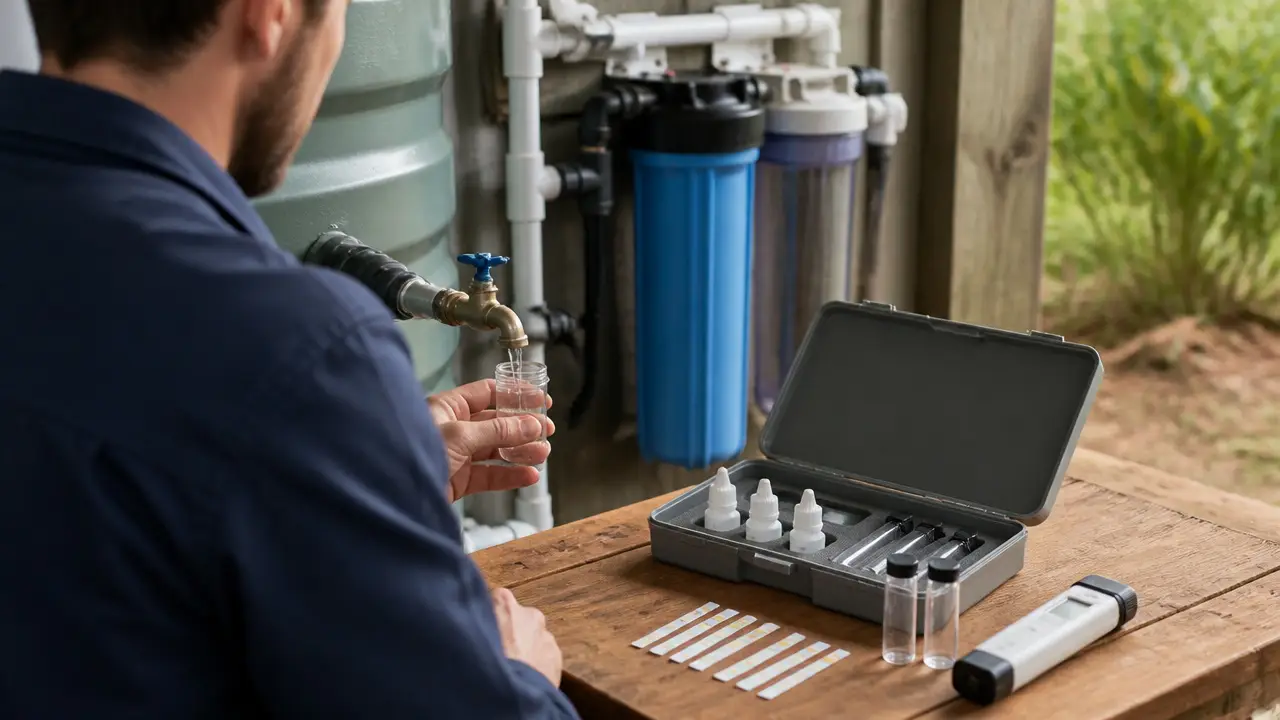
Testing can be important when untreated rainwater, private-source water, or another uncertain supply will be used for drinking. Testing helps identify problems that appearance, taste, smell, and simple home filters cannot reliably reveal.