As an affiliate, we may earn a commission from qualifying purchases. We get commissions for purchases made through links on this website from Amazon and other third parties.
There is no single filter brand that is best for every rainwater system. The better choice is the brand that offers the right filter for your water use, verified contaminant-reduction claims, compatible connections, enough flow, and replacement cartridges you can keep buying.
For simple garden rainwater, a durable sediment filter may be all you need. For household reuse, you may need several treatment stages. If you plan to drink rainwater, choosing a respected filter brand by itself is not enough. Roof runoff can contain germs and chemicals, so drinking-water treatment should be based on the collection system, current water testing, suitable treatment stages, maintenance, and local requirements.
What Makes a Water Filter Brand Good?
A recognizable name can be useful, but the brand name should not be your main test. Look at the actual filter model and what it is designed to do.
A good filter brand should make it easy to find:
- The filter type and intended use
- Its micron rating
- Maximum recommended flow
- Connection or housing size
- Replacement cartridge information
- Maintenance instructions
- Independent certifications when health-related contaminant reduction is claimed
- Performance data showing which contaminants a specific model is certified to reduce
This matters because two filters from the same brand can perform very different jobs.
One cartridge may only catch dirt. Another may contain activated carbon. A third may have a specific certification for reducing lead or another contaminant.
Do not assume that every product from a well-known brand has the same certification.
Choose the Filter by What You Are Doing With the Water
Start with the water's intended use. This usually tells you more than the logo on the filter housing.
| Rainwater use | Typical filtration need | Main thing to look for |
|---|---|---|
| Garden watering | Screen or sediment filtration | Debris control and adequate flow |
| Drip irrigation | Finer sediment filtration | Protection against emitter clogging |
| Toilet flushing | Sediment filtration, with treatment as required by the system | Reliable flow and easy maintenance |
| Laundry or other household reuse | Often multiple treatment stages | Water quality, flow, and system compatibility |
| Drinking or cooking | A complete treatment plan | Testing, verified treatment performance, maintenance, and local requirements |
A filter that works well on a rain barrel feeding a garden hose may be completely unsuitable for a pump supplying a house.
For Rainwater, Sediment Filtration Usually Comes First
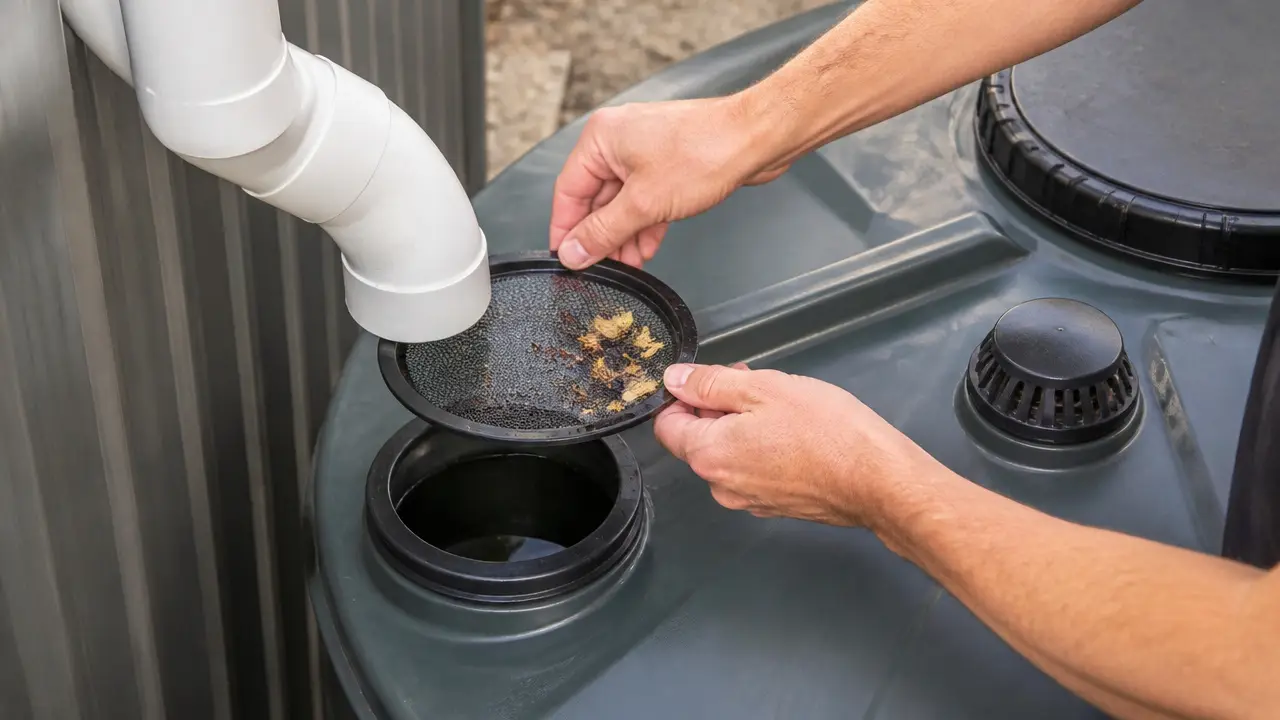
Roof runoff often carries leaves, grit, dirt, insects, and other debris. Keeping this material out of later treatment stages can reduce clogging and make the rest of the system easier to maintain.
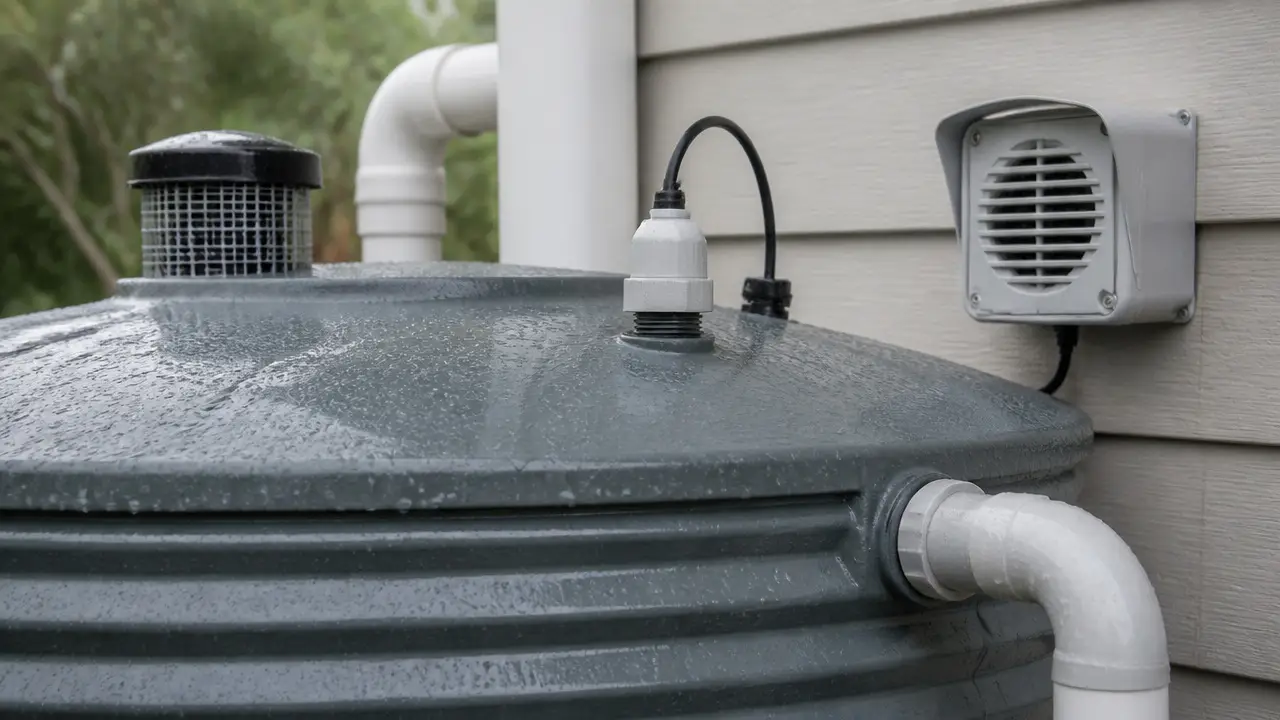
Good rainwater systems may use several barriers before the water reaches a fine cartridge. These can include gutter guards, inlet screens, and a first-flush diverter.
A first-flush diverter sends some of the first roof runoff from a storm away from the storage tank. That early runoff can carry a higher amount of material that accumulated on the roof between rains. CDC recommends considering first-flush diversion as one way to improve collected rainwater quality.
The exact setup depends on the roof, storage system, intended use, and local conditions.
Pay Attention to Micron Ratings
A micron rating describes the approximate size of particles a filter can capture. One micron is one-millionth of a meter.
Smaller numbers generally mean finer filtration.
But the number alone does not tell you everything.
There is also an important difference between nominal and absolute ratings. A nominal rating describes general particle-removal performance. An absolute rating provides a much tighter limit on the size of particles that can pass.
CDC notes that a filter with an absolute pore size of 1 micron is not equivalent to one that merely has an average pore size of 1 micron.
Do not choose the smallest micron number simply because it sounds better. Very fine filters can restrict flow and clog quickly when dirty rainwater reaches them without adequate prefiltration.
Look for Independent Certification When Health Claims Matter
For water intended for drinking, cooking, or other uses where water quality directly affects health, independent certification is more useful than general claims such as "premium," "advanced," or "high-performance."
NSF explains that different NSF/ANSI standards cover different types of treatment and claims.
Some common standards include:
NSF/ANSI 42
This standard can cover aesthetic effects such as chlorine taste and odor and certain particulate claims.
It does not mean that every filter carrying a Standard 42 certification removes health-related contaminants.
NSF/ANSI 53
This standard covers specific contaminant-reduction claims related to health effects.
You still need to check the exact claim. A Standard 53 certification does not mean that a filter removes every contaminant covered by the standard. NSF explains that manufacturers select the contaminant-reduction claims for which individual products are evaluated.
NSF/ANSI 58
This standard applies to reverse-osmosis treatment systems.
Reverse osmosis, often called RO, pushes water through a very fine membrane. It can address contaminants that basic sediment filters cannot, but RO has its own feed-water, pressure, flow, maintenance, and wastewater requirements.
NSF/ANSI 55
This standard applies to ultraviolet microbiological treatment systems.
UV treatment is different from normal filtration. It uses ultraviolet light rather than a filter cartridge to address microorganisms under specified operating conditions. It also depends on proper pretreatment, flow, lamp performance, and maintenance.
The key rule is simple: check the certification for the exact model and the exact reduction claim you need, rather than assuming a brand is certified as a whole.
Standard Replacement Filters Can Be a Big Advantage
For a rainwater system you expect to use for years, replacement availability matters almost as much as initial performance.
Before committing to a brand, check whether cartridges are:
- Easy to identify
- Available in common sizes
- Clearly labeled with their filtration type
- Likely to remain obtainable
- Simple to replace without changing the entire housing
A proprietary cartridge is not automatically bad. Some treatment systems require specialized cartridges.
The problem comes when a system depends on one unusual replacement that becomes hard to find. A perfectly good filter housing does little for you if you cannot obtain the correct cartridge.
For basic sediment filtration, common housing and cartridge formats can make long-term maintenance much easier.
Flow Rate Matters More Than Many Buyers Expect
Every filter creates resistance as water passes through it. Finer filtration often creates more resistance, especially after the cartridge begins collecting sediment.
That can cause problems in rainwater systems using pumps.
A filter that is too restrictive may reduce:
- Hose flow
- Irrigation performance
- Pump efficiency
- Pressure at fixtures
- Flow through later treatment stages
Check the filter's recommended flow against the flow your pump and plumbing need.
Also consider what happens as the filter gets dirty. A system that barely produces enough flow with a clean cartridge may perform poorly well before the cartridge reaches the end of its useful life.
Review considerations before using a 1 micron or 5 micron sediment filter to interpret the conclusions that reliable screening measurements justify.
A larger filter or staged filtration can sometimes provide a better result than forcing all the water through one very fine cartridge.
Carbon Filters and Sediment Filters Do Different Jobs
A common mistake is treating "water filter" as one type of equipment.
It is not.
Sediment filters
These primarily catch suspended particles such as dirt, rust, and grit.
They can protect pumps, valves, irrigation equipment, carbon filters, and other treatment stages.
Activated-carbon filters
Carbon can adsorb certain chemicals and improve some taste and odor problems. Adsorption means substances attach to the carbon's surface.
The exact contaminants reduced depend on the cartridge and its verified performance claims.
Carbon is not a substitute for every other treatment stage.
Membrane filtration
Membranes use very small openings or other separation processes to remove certain contaminants. Different membrane systems have very different capabilities.
UV treatment
UV is a disinfection technology rather than a normal particle filter. It should not be treated as a replacement for sediment removal or chemical treatment.
The best rainwater systems use treatment stages because each stage has a clear purpose, not because more filters automatically make the water safer.
Do Not Pick a Drinking-Water Filter Before Testing the Water
CDC recommends testing rainwater used for drinking, cooking, or bathing for germs and chemicals. It also recommends regular testing for people relying on rainwater collection systems.
Testing matters because you cannot choose treatment intelligently without knowing what you are trying to address.
Clear water can still contain contaminants.
Taste and smell are also unreliable measures of safety.
If a laboratory result identifies a particular contaminant, look for a treatment system independently certified or otherwise appropriately validated for that specific problem.
For drinking-water use, also consider the whole collection path:
roof → gutters → first flush and screening → storage → pump → filtration → treatment → plumbing → tap
Materials in that path matter too. NSF has a separate P151 protocol for components that contact collected rainwater intended for drinking-water applications, while NSF/ANSI/CAN 61 covers certain drinking-water system components.
A high-quality final filter cannot undo every problem caused by unsuitable collection or storage materials.
Maintenance Can Make a Good Filter Perform Badly
Even a properly selected filter will eventually collect material or exhaust its treatment media.
EPA notes that filter maintenance and replacement are important to maintaining contaminant-reduction performance.
Before choosing a brand, read its maintenance instructions.
Check:
- How you know when a cartridge needs replacement
- Whether pressure loss can be monitored
- Whether the housing can be cleaned
- Whether replacement seals are available
- Whether cartridges have storage or shelf-life requirements
- How the system is sanitized when required
A washable sediment screen may be useful where the water carries a lot of debris. Disposable cartridges may make sense at later, finer stages.
Ignoring maintenance can turn an otherwise well-designed filtration system into a source of poor flow or water-quality problems.
So Which Filter Brand Should You Choose?
For most rainwater users, the best choice is not a particular brand name. Choose a manufacturer that provides clear specifications, readily available replacement parts, suitable flow capacity, and independently verified performance where health claims are involved.
For garden and irrigation water, concentrate on debris removal, micron size, pressure loss, connection compatibility, and cleaning.
For household non-potable use, consider the complete system and any local plumbing or treatment requirements.
For potable water—water intended for drinking—do not choose a brand first and try to make it fit afterward. Start with your collection system, laboratory results, required treatment targets, expected flow, and local requirements. Then choose certified or appropriately validated equipment that fits those needs.
That approach is far more dependable than trying to identify one "best" filter company.
Frequently Asked Questions
Is one water filter brand better than all the others?
No. Different brands and models are designed for different jobs. The best choice depends on the contaminants or particles you need to address, required flow, connection size, replacement availability, and verified performance claims.
What micron filter should I use for rainwater?
There is no single micron rating that fits every rainwater system. Coarser filtration is normally used earlier to catch larger debris, while finer filtration may be used farther downstream. Choosing a filter that is too fine too early can cause rapid clogging and reduced flow.
Is a carbon filter enough for rainwater?
Not for every use. Carbon can reduce certain chemicals, tastes, and odors, depending on the cartridge, but it does not perform every treatment job. Rainwater systems may also require debris removal, sediment filtration, microbiological treatment, or other treatment based on the intended use and water quality.
Does NSF certification mean a filter makes rainwater safe to drink?
No. NSF certifications apply to specific products, standards, and performance claims. A certified filter may address only certain contaminants. Drinking rainwater safely is a whole-system issue involving collection, storage, treatment, testing, maintenance, and applicable local requirements.
Should I buy a proprietary filter cartridge?
A proprietary cartridge can be appropriate when a treatment system needs it. Before buying, make sure replacements are readily available and that you understand how often they need to be changed. Common cartridge formats may be easier to maintain for basic sediment filtration.
Can I use the same filter for garden irrigation and household water?
Sometimes, but the requirements can be very different. Garden systems mainly need enough filtration to protect hoses, valves, or emitters. Household systems may need finer filtration and additional treatment depending on how the water will be used.
How do I know when my rainwater filter needs changing?
Follow the manufacturer's instructions. Reduced flow or increasing pressure loss can indicate clogging in some systems, but not every treatment cartridge gives an obvious warning when its media is exhausted. Replacement schedules should be based on the specific cartridge and operating conditions.