As an affiliate, we may earn a commission from qualifying purchases. We get commissions for purchases made through links on this website from Amazon and other third parties.
The best gutter filter for rainwater harvesting is the one that removes the debris common on your roof without restricting water flow too much. For most homes, a coarse gutter screen combined with a downspout filter or rain head gives a practical balance of debris control, flow, and easy cleaning.
Very fine gutter filters can catch smaller material, but they also clog faster. A good rainwater system usually removes debris in stages instead of expecting one filter to do everything.
What a Gutter Filter Does
A gutter filter keeps leaves, twigs, seed pods, insects, and other roof debris from traveling toward your rain barrel or tank.
This matters because organic material can:
- Block downspouts and pipes.
- Build up as sludge inside a tank.
- Add color or odor to stored water.
- Make pumps and irrigation equipment harder to maintain.
- Increase the amount of cleaning needed later.
A gutter filter is mainly a prefilter. It does not make collected rainwater safe to drink.
Which Type of Gutter Filter Is Best?
There is no single best type for every roof. The right choice depends on the debris around your home and how the collected water will be used.
| Filter type | Best suited for | Main drawback |
|---|---|---|
| Coarse gutter screen | Large leaves and general debris | Small debris can pass through |
| Fine mesh gutter screen | Pine needles and smaller particles | Can clog quickly |
| Gutter basket or outlet strainer | Protecting individual downspout openings | Needs frequent cleaning |
| Downspout rain head | Rainwater harvesting systems | Requires space in the downspout |
| Downspout filter | Tanks and larger collection systems | Needs routine cleaning |
| Leaf diverter | Areas with heavy leaf fall | Does not remove fine particles |
Coarse Gutter Screens
For many rainwater systems, a coarse screen is the most practical gutter filter.
It keeps larger debris out while still allowing heavy rainfall to move through the gutter. It is also usually easier to inspect and clean than very fine mesh.
Coarse screening works especially well when another filter is installed farther down the system.
A typical arrangement is:
For roof runoff, compare downspout filters designed for rainwater harvesting before selecting a gutter stage filter.
Roof → gutter screen → rain head or downspout filter → first-flush diverter → tank
Each stage handles a different part of the debris load.
Fine Mesh Gutter Screens
Fine mesh can be useful where the roof receives lots of small debris, such as:
- Pine needles.
- Small seeds.
- Flower material.
- Roof grit.
- Tiny leaves.
The tradeoff is reduced tolerance for dirt.
A very fine screen may look better because it stops more material, but that benefit disappears if the screen becomes covered and rainwater flows over the gutter instead of entering the collection system.
Fine mesh makes the most sense when you can inspect it regularly.
Gutter Outlet Baskets
Basket strainers fit around or inside the gutter outlet leading to a downspout.
They are simple and useful for stopping large material from entering the pipe. They can be especially helpful on small rain barrel systems.
Their weakness is capacity.
Leaves can collect around the basket and block the outlet during a storm. A basket that works well on a clear roof may become overwhelmed during fall leaf season.
Treat these as easily accessible debris traps rather than maintenance-free filters.
Rain Heads
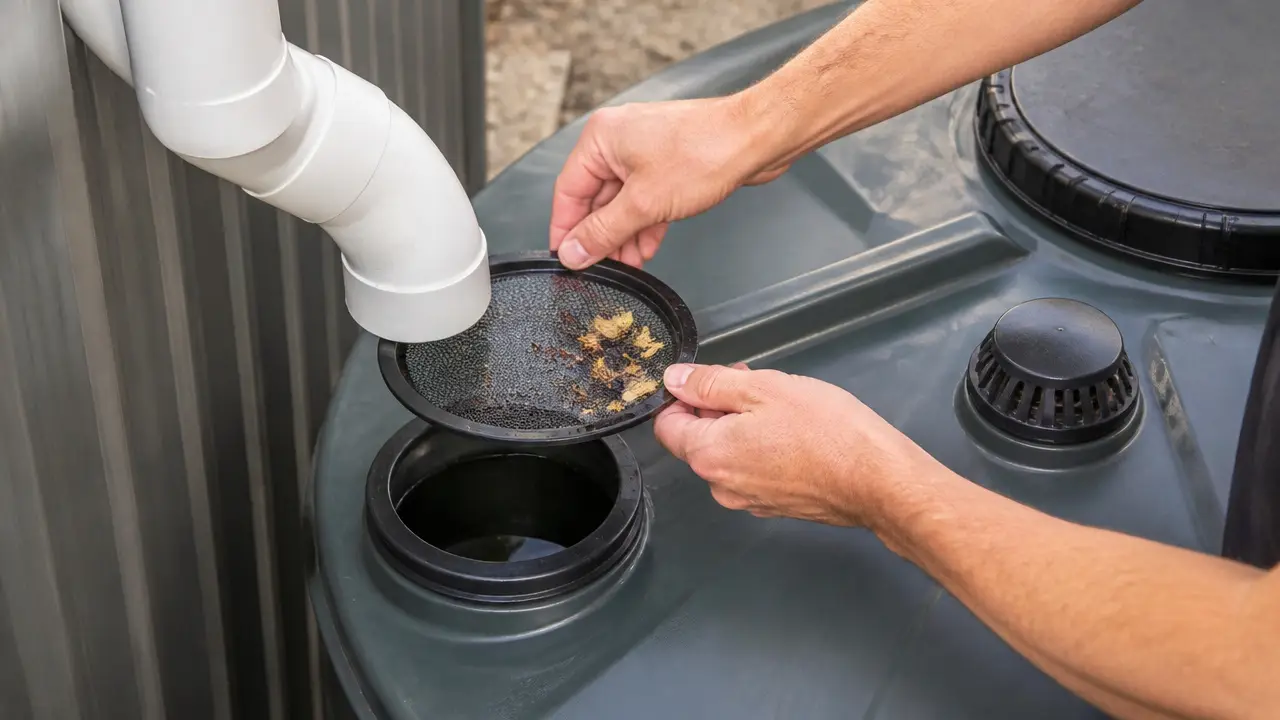
A rain head is installed in the vertical pipe below the gutter. Water passes through a screen while leaves and larger debris are directed away.
For dedicated rainwater harvesting systems, rain heads are often more useful than trying to catch every piece of debris inside the gutter.
They have several advantages:
- The filter can be installed where it is easy to reach.
- Debris does not remain sitting in the gutter filter.
- The screen can protect pipes farther downstream.
- Some designs allow debris to fall away rather than collecting on the screen.
The rain head still needs inspection. Small debris and biological growth can eventually restrict the screen.
Downspout Filters
Larger rainwater systems may use a filter installed directly in the downpipe.
These can handle more water than a small gutter basket and may have a larger filtering surface.
They are useful when water is being directed toward:
- An IBC tote.
- A large above-ground tank.
- An underground cistern.
- A pump-fed irrigation system.
Before choosing one, check its connection size and rated flow capacity. A filter that cannot handle the amount of water coming from the roof can cause overflow during heavy rain.
Best Choice for a Rain Barrel
For a basic rain barrel, you usually do not need extremely fine gutter filtration.
A practical system might use:
- A basic gutter screen or leaf guard.
- A basket or rain head before the barrel.
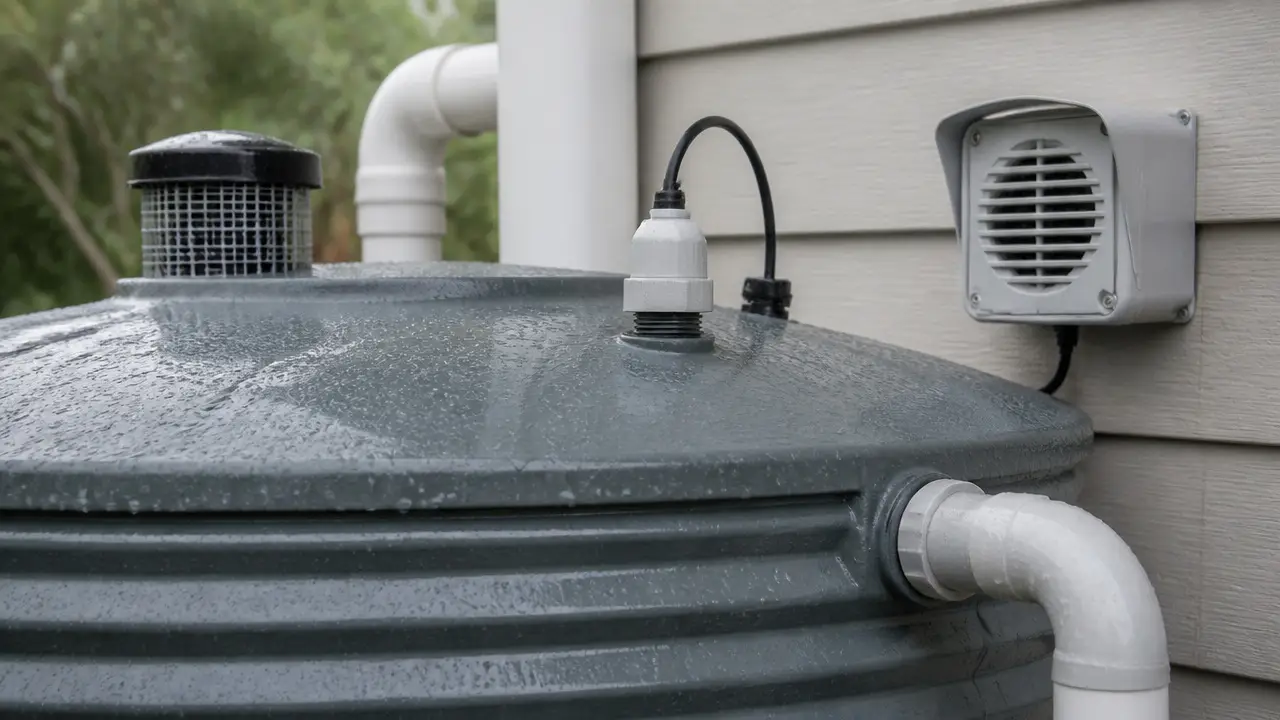
- A screened inlet on the barrel.
The inlet screen is especially important because openings should not provide easy access for mosquitoes and larger debris.
Fine sediment may still enter the barrel. That is normal for many non-potable rainwater systems and is one reason barrels need periodic cleaning.
Non-potable means water that is not intended for drinking.
Best Choice for an IBC Tote or Large Tank
Larger storage systems benefit from staged filtration.
A useful arrangement is:
Roof debris screen → rain head → first-flush diverter → tank inlet screen
A first-flush diverter directs some of the first runoff from a roof away from the storage tank. The first runoff can carry concentrated dust, pollen, droppings, and other material that accumulated between rains.
A first-flush device is not a substitute for gutter filtration. The two perform different jobs.
The gutter filter handles solid debris.
The first-flush system manages the dirtier initial runoff.
Best Choice Around Pine Trees
Pine needles can be particularly difficult because they slip through many coarse screens.
A finer mesh may work better, but only if it can be kept clean.
Another practical solution is to use more than one debris-removal stage:
- Gutter screening for larger material.
- A screened rain head below the gutter.
- A tank inlet screen.
This reduces the amount of material any one filter has to handle.
Best Choice Around Large Deciduous Trees
Where large leaves are the main problem, coarse filtering is usually preferable to very fine mesh.
Large leaves are easy to stop. The challenge is preventing them from covering the filter.
Look for a setup that lets leaves fall away or that provides enough open screen area that a few leaves will not stop water flow.
During heavy autumn leaf fall, even a good system may need frequent inspection.
Flow Capacity Matters as Much as Mesh Size
A gutter filter must pass enough water during rainfall.
The amount of runoff reaching the gutter depends mainly on:
- Roof area.
- Rainfall intensity.
- Roof layout.
- Number of downspouts.
- Gutter and pipe dimensions.
With routing gutter water into a rainwater tank, you can assess the drainage capacity needed for roof runoff.
A small filter placed on a large roof section can become a bottleneck.
For example, a filter that works well on a garden shed may be poorly suited to a large house roof feeding one downspout.
Check the manufacturer's stated flow capacity where available and compare it with the roof area feeding that location.
Do not reduce a large downspout to a small filter opening unless the system has been designed to handle that restriction.
Should You Use the Finest Filter Available?
Usually not.
Very fine filtration at the gutter can create more problems than it solves.
Fine screens:
- Trap material quickly.
- Need more cleaning.
- May restrict water during intense rain.
- Can develop biological buildup.
- May cause water to bypass the collection system.
Rainwater filtration works better when debris is removed gradually.
Large material should normally be stopped first. Finer filtration, when needed, can happen later.
What Mesh Size Is Best?
There is no universal mesh size that works best for every rainwater system.
Instead, choose according to the job.
A relatively coarse screen works well for leaves and large debris. Finer mesh becomes useful when needles, seeds, insects, or small material are creating problems.
For tank openings, screen size may also be affected by local mosquito-control requirements. Check local public health or rainwater-storage rules where they apply.
Avoid assuming that a particular mesh size provides water treatment. Mesh screens only remove particles larger than their openings.
They do not reliably remove dissolved contaminants or microorganisms.
Gutter Filters and Drinking Water
A gutter filter alone cannot make roof runoff potable.
Potable means suitable for drinking.
Water collected from roofs may contain microorganisms, animal waste, airborne pollution, roofing material residues, and other contaminants that gutter screens cannot remove.
If rainwater will be used for drinking, cooking, brushing teeth, or another potable purpose, treat it as a complete water-safety system.
That can involve:
- Suitable roof and collection materials.
- Debris removal.
- First-flush management.
- Appropriate storage.
- Sediment filtration.
- Additional treatment appropriate to the water quality.
- Current laboratory testing.
- Regular inspection and maintenance.
- Compliance with applicable local requirements.
A single screen, cartridge filter, UV device, purifier, test strip, or water-quality meter does not by itself establish that stored rainwater is safe to drink.
Look for Easy Maintenance
A filter that removes slightly less debris but gets cleaned regularly can work better than a high-efficiency filter that is difficult to reach.
Before installing a gutter filter, ask:
- Can I see whether it is clogged?
- Can I clean it without unsafe roof access?
- Can debris be removed without taking apart the system?
- Will water have a safe overflow path if the screen blocks?
- Can I reach the filter during leaf season?
Filters installed high on roofs can create maintenance problems. Whenever possible, locate serviceable filtration where it can be reached safely from the ground or another stable location.
Do Gutter Guards Replace Rainwater Filters?
Not necessarily.
Gutter guards are mainly intended to keep debris from building up inside gutters. Their design goals may be different from those of rainwater-harvesting filters.
A gutter guard may still allow:
- Small leaves.
- Roof grit.
- Seeds.
- Pollen.
- Fine organic material.
That means a rainwater system may still benefit from a rain head, downspout filter, or tank inlet screen even when the gutters already have guards.
What Can Go Wrong With Gutter Filters?
The Screen Clogs
Leaves, pollen, moss, roof grit, and other material can cover the screen.
Clean it and check whether the filtering area is large enough for the roof section feeding it.
Water Spills Over the Gutter
The filter may be clogged, undersized, or restricting flow.
Also inspect the gutter slope, outlets, and downspouts because the filter may not be the only problem.
Too Much Sediment Reaches the Tank
The screen may be too coarse for the debris involved.
Adding another filtration stage is often better than replacing the first screen with extremely fine mesh.
Filters Need Constant Cleaning
Heavy tree cover may simply produce more debris than one small filter can handle.
Increasing screen area or using a self-shedding rain head can reduce how quickly debris accumulates, although no system eliminates maintenance entirely.
A Practical Way to Choose
For most rainwater harvesting systems, start by identifying the largest recurring debris problem.
Choose:
- Coarse screening for large leaves.
- Finer mesh where pine needles and small debris are the main issue.
- Outlet baskets for simple rain barrels and small systems.
- Rain heads when you want accessible downspout filtration.
- Larger downspout filters for tanks receiving significant roof runoff.
Then make sure the filter can handle the expected water flow and can be cleaned safely.
The best system is often not one exceptionally fine filter. It is several simple stages that keep debris out without creating one easy-to-clog restriction.
Frequently Asked Questions
Do gutter filters make rainwater clean?
They reduce leaves and other solid debris, but they do not make rainwater automatically clean or safe for drinking. Microorganisms, chemicals, dissolved contaminants, and very small particles can remain.
Are fine-mesh gutter guards better for rainwater collection?
They can remove smaller debris, but they also clog more easily. Fine mesh is useful when small debris is a persistent problem and the screen can be cleaned regularly.
Do I need a first-flush diverter if I have a gutter filter?
The two perform different jobs. A gutter filter removes solid debris, while a first-flush diverter directs some of the dirtier initial roof runoff away from storage. Depending on the system and intended water use, both may be useful.
Can I put a filter directly on a rain barrel?
Yes. A screened barrel inlet is a useful final debris barrier. Make sure the inlet is securely covered and that the barrel has a properly planned overflow.
How often should gutter filters be cleaned?
There is no fixed interval that works everywhere. Inspect them regularly and more often during periods of heavy leaf, flower, seed, or pine-needle fall. Check the system after storms until you understand how quickly debris accumulates at your property.
Can gutter guards replace a downspout filter?
Sometimes they reduce the amount of filtration needed, but they rarely catch everything. A separate rain head or downspout filter can provide another useful debris-removal stage before water reaches storage.
What is the best gutter filter for heavy leaves?
A coarse, high-flow screen or leaf-shedding system is usually more practical than very fine mesh. The goal is to stop leaves without creating a surface that becomes blocked during rainfall.