As an affiliate, we may earn a commission from qualifying purchases. We get commissions for purchases made through links on this website from Amazon and other third parties.
The most effective roof for collecting rainwater is usually a smooth, non-porous metal roof, especially standing-seam metal. Water runs off quickly, the surface holds less debris than rough roofing, and it is easy to connect to gutters.
That does not mean every metal roof is suitable for every use. Roof coatings, fasteners, nearby trees, bird activity, and the intended use of the water all matter. If the collected water may be used for drinking, the roof is only one part of a much larger collection and treatment system.
Why Metal Roofs Work Well for Rainwater Collection
A good rainwater collection roof should let water move into the gutters instead of soaking into the roofing or getting trapped in its surface texture.
Smooth metal roofing has several advantages:
- Water runs off quickly.
- Little water is absorbed by the roofing material.
- Leaves and loose debris are easier to remove.
- Moss has fewer rough surfaces to hold onto.
- The roof can often be inspected and cleaned more easily.
- Gutters can capture a large share of the runoff.
Standing-seam metal is especially useful because it has relatively few exposed fasteners and creates clear channels for water to flow toward the gutter.
Corrugated metal can also collect rainwater effectively. Its ridges help direct water downhill, although debris can sometimes collect around overlaps, fasteners, and roof penetrations.
The roof should still be made from materials appropriate for the planned water use. Paints, coatings, sealants, corrosion, and previous treatments can affect water quality.
How Common Roof Materials Compare
| Roof type | Rainwater collection effectiveness | Main consideration |
|---|---|---|
| Smooth metal | Excellent | Check coatings and roof condition |
| Corrugated metal | Excellent | Inspect fasteners, seams, and corrosion |
| Asphalt shingles | Good | Rough surface holds more dirt and small particles |
| Clay or concrete tile | Good | More surface texture, joints, and water retention |
| Slate | Good to excellent | Smooth slate can shed water well |
| Wood shingles or shakes | Fair | Porous and difficult to keep clean |
| Green or planted roof | Poor for simple collection | Plants and growing media retain and change the water |
These ratings describe how effectively the roof sheds water. They do not indicate whether runoff is safe to drink.
Asphalt Shingle Roofs Can Still Collect Rainwater
You do not need a metal roof to use a rainwater harvesting system.
Asphalt shingles are common, and they can provide plenty of water for uses such as landscape irrigation. However, their rough surface tends to catch more:
- dust
- pollen
- leaves
- moss
- bird droppings
- small roofing particles
Some rain is also held on the shingle surface instead of immediately reaching the gutter.
For garden watering and other non-potable uses, a well-maintained asphalt roof can still be practical. Good gutter screens and a suitable first-flush or prefiltration setup become especially helpful.
A first-flush device diverts some of the initial roof runoff at the start of a rain event. That first runoff often carries a higher amount of loose dirt and debris from the roof.
What About Tile Roofs?
Clay and concrete tile roofs can work well for rainwater collection, but they are generally less efficient than smooth metal.
Tiles have many joints and a more complex surface. Some water can remain on or between the tiles rather than immediately reaching the gutter. Their surface texture can also collect dust, moss, and organic material.
Glazed tiles tend to shed water more easily than rough, porous tiles.
Tile roofs can still support a useful rainwater system when the gutters, screens, storage, and maintenance plan are designed around them.
Wood Roofs Are Less Suitable
Wood shingles and shakes are usually not the first choice for rainwater harvesting.
Wood is porous and has a rough surface. It can hold moisture, dirt, moss, and other organic material. Some wood roofs are also treated with preservatives or other chemicals.
If you already have a wood roof and want to collect water, its suitability depends heavily on the roof material, treatments, condition, and intended water use.
For simple landscape irrigation, collection may still be possible. Drinking-water applications require much more careful assessment.
Green Roofs Work Differently
A planted or green roof is designed to retain some rainfall rather than shed all of it immediately.
Water passes through or around:
- plants
- soil or growing media
- drainage layers
- organic material
That makes green roofs useful for reducing stormwater runoff, but less effective when the goal is to collect the largest possible amount of rainwater.
The water that does drain from a green roof may also contain more dissolved material and organic matter than runoff from a clean, smooth roof.
Roof Material Is Only Part of Collection Efficiency
Even an excellent roof can perform poorly if the rest of the system is not designed correctly.
Roof slope
A sloped roof moves water toward the gutters quickly. Very low-slope roofs may retain more water in small depressions or behind debris.
You do not need an unusually steep roof. You simply need reliable drainage toward properly placed gutters.
Gutter capacity
The gutters must be able to handle water coming from the roof during heavier rain.
Undersized, clogged, or poorly pitched gutters can overflow before the water reaches your tank.
Downspout placement
Downspouts should carry water from the gutters to the collection system without unnecessary restrictions.
Large roof sections may need several downspouts.
Trees and nearby sources of debris
A metal roof under heavy tree cover may collect dirtier water than an asphalt roof in a clear, open location.
Overhanging branches can contribute:
- leaves
- pollen
- seeds
- insects
- animal droppings
Keeping branches away from the roof where practical can reduce maintenance.
Roof cleanliness
Dust and debris build up during dry periods. The first rain after a long dry spell may wash a significant amount of material into the gutters.
Roof and gutter maintenance therefore affects both collection performance and water quality.
Avoid Assuming a Roof Is Safe Because of Its Material
The words "metal roof" alone do not tell you whether runoff is suitable for a particular use.
Evaluating selecting among roofing materials are safe for rainwater harvesting helps assess drainage performance under peak roof flow.
Consider the entire roof assembly, including:
- paints
- protective coatings
- sealants
- flashing
- fasteners
- repairs
- roof treatments
- nearby chimneys or exhaust vents
- signs of corrosion or deterioration
Older roofs may contain materials that would not be chosen for a new rainwater collection system.
Copper, lead-containing materials, treated roofing products, and unknown coatings deserve particular caution when water quality matters.
If the water is only being used for ornamental plants, the requirements may be different from those for household plumbing or drinking water.
Best Roof for Garden Rainwater Collection
For a garden system, a smooth metal roof is usually the easiest surface to work with.
However, most sound residential roofs can provide useful irrigation water when paired with:
- Clean gutters.
- Leaf screens or gutter guards suited to the system.
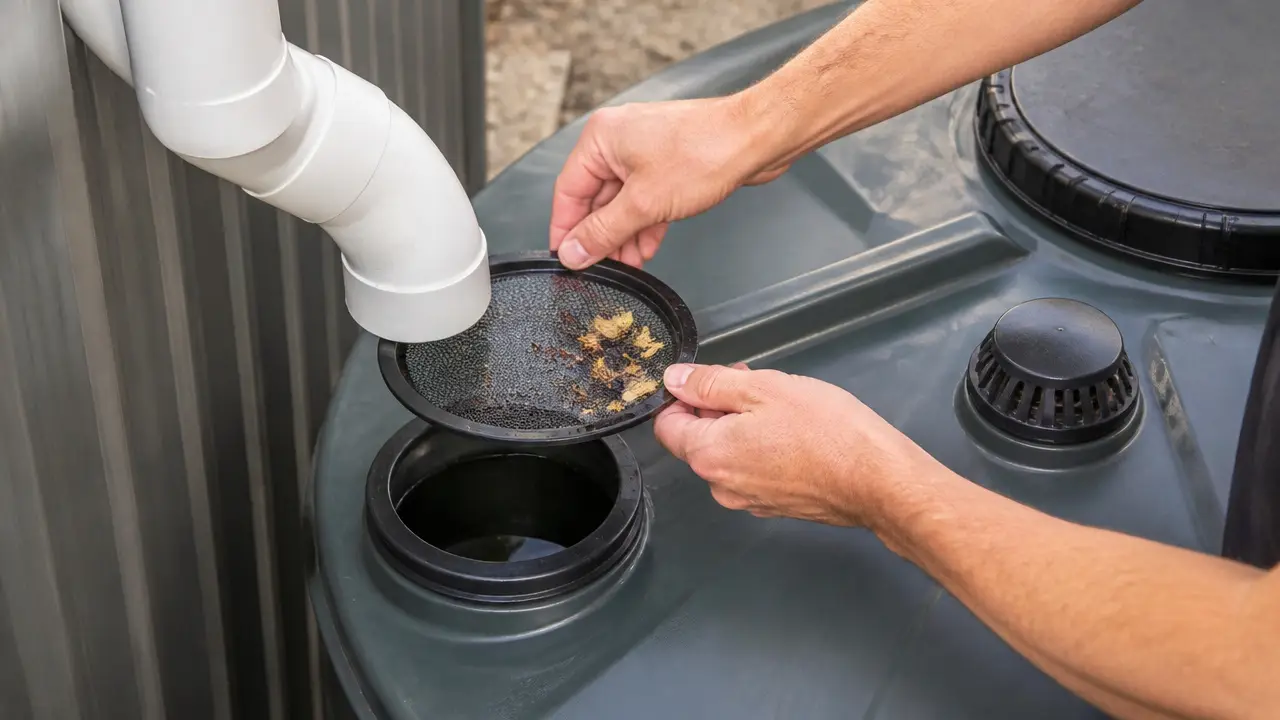
- A debris screen before the tank.
- A covered storage tank.
- An overflow route.
- Regular maintenance.
An existing asphalt or tile roof does not normally need to be replaced just to start collecting water for a garden.
Improving the gutters, screening, and storage system is often more practical.
Best Roof for a Shed or Dedicated Collection Structure
If you are building a shed, greenhouse shelter, carport, or other structure specifically to catch rainwater, smooth metal roofing is usually a practical choice.
A dedicated catchment roof can also make system planning easier because you can choose:
- roof size
- roof slope
- gutter location
- downspout location
- tank position
- roofing material
This can be useful when the main house roof is difficult to access or has materials you do not want in your collection system.
Roof Area Matters More Than Roof Material for Total Supply
Roof material affects how efficiently rainfall reaches your tank, but roof area and rainfall determine how much water is potentially available.
A simple theoretical estimate is:
Collected water = roof catchment area × rainfall depth
Real systems collect less than the theoretical amount because of losses from:
- roof wetting
- evaporation
- first-flush diversion
- gutter overflow
- leaks
- splash
- filtration
- tank overflow
Do not assume every drop that lands on the roof will reach storage.
A larger asphalt roof can therefore collect far more water overall than a small metal roof, even though metal is usually the more efficient surface.
If You Plan to Drink the Rainwater
Do not choose a roof material and assume that makes the water potable.
Potable means suitable for drinking.
Roof runoff can pick up microorganisms, animal waste, airborne contaminants, roofing material, and other pollutants before it reaches the tank.
A drinking-water system needs to be considered as a complete system. Depending on the location and setup, that may include appropriate catchment materials, debris control, first-flush management, protected storage, treatment stages, routine maintenance, and current laboratory testing.
Local plumbing and public-health requirements may also apply.
If rainwater will supply drinking water for a home or cabin, get guidance from the appropriate local health authority and a qualified water-treatment professional rather than relying on the roof material or a single filter.
Which Roof Should You Choose?
If you are installing a roof specifically for rainwater collection, smooth, appropriately finished metal roofing is generally the most effective choice.
If you already have a usable roof, replacement is rarely necessary just to begin collecting rainwater for non-potable uses. Asphalt shingles, tile, and slate can all feed a practical rainwater system.
Focus on the complete path the water follows:
roof → gutter → debris control → downspout → storage → intended use
A clean roof with properly sized gutters and well-maintained storage will usually be more useful than choosing an ideal roofing material while ignoring the rest of the system.
Frequently Asked Questions
What roof material collects the most rainwater?
Smooth metal roofing is generally one of the most efficient options because it absorbs very little water and allows rainfall to run quickly into the gutters.
Is a metal roof best for rainwater harvesting?
Metal is often the best practical choice when designing a new collection roof. However, coatings, corrosion, flashing, fasteners, and the intended use of the water still need to be considered.
Can I collect rainwater from asphalt shingles?
Yes. Asphalt roofs can be used for many non-potable rainwater systems, including garden irrigation. Their rough surface tends to collect more dirt and particles than smooth metal, so good prefiltration and maintenance are important.
Can I collect rainwater from a tile roof?
Yes. Clay and concrete tile roofs can provide useful runoff. Their joints and textured surfaces may retain more water and debris than smooth metal roofing.
Is rainwater from a metal roof safe to drink?
Not automatically. Roof runoff can contain biological and chemical contaminants regardless of the roof material. Drinking-water use requires a suitable whole-system approach, treatment, maintenance, testing, and compliance with applicable local requirements.
Does roof pitch affect rainwater collection?
Yes, but normally less than roof area, rainfall, and gutter design. A roof needs enough slope to drain reliably toward the gutters without leaving standing water.
Do I need to replace my roof before installing a rain barrel?
Usually not. A sound existing roof can often supply a rain barrel for garden use. Inspect the roof and gutters, consider the roof materials and treatments, and add suitable debris screening.
Is a bigger roof better for collecting rainwater?
A larger catchment area can collect more water from the same amount of rainfall. Roof material affects runoff efficiency, but roof area and local rainfall have a much greater effect on the total water potentially available.