As an affiliate, we may earn a commission from qualifying purchases. We get commissions for purchases made through links on this website from Amazon and other third parties.
No single company makes the best whole-house water treatment system for every home. The better choice is the manufacturer that has the right treatment method for your actual water problem, enough flow for the house, and clear third-party certification for the contaminant you need to reduce.
For a serious shortlist, Culligan stands out for professionally designed and serviced systems, Pentair for flexible whole-house filtration equipment, Aquasana and SpringWell for packaged homeowner-oriented systems, and specialist UV makers such as UV Pure or Puretec when certified microbial treatment is needed. The right answer changes a lot between municipal water, well water, and collected rainwater.
Which Companies Make Good Whole-House Water Treatment Systems?
Here is a practical way to separate the major choices.
| Manufacturer | Strongest Fit | What to Check |
|---|---|---|
| Culligan | Custom treatment, well water, homes needing dealer service | Exact model certification, service requirements, treatment media |
| Pentair | Flexible systems built around specific filtration needs | Exact contaminant claims and flow capacity |
| Aquasana | Packaged whole-house filtration, especially municipal water | Whether the selected system targets your contaminants |
| SpringWell | Direct-purchase whole-house systems and relatively simple installations | Independent certification for the exact model and claim |
| UV Pure / Puretec and other certified UV specialists | Microbial treatment where an NSF/ANSI 55 Class A UV stage is appropriate | Required pretreatment, certified flow rate, lamp and sensor maintenance |
These are better viewed as different approaches rather than a first-through-fifth ranking.
Culligan: Strong for Custom Treatment and Service
Culligan is one of the stronger choices when you want someone to test the water, design the treatment train, install it, and continue servicing it.
Its whole-house lineup addresses problems such as sediment, chlorine, iron, sulfur odors, hardness, and other water-quality concerns. Culligan also offers ultraviolet treatment equipment.
That broad range matters with well water because one tank or cartridge often cannot solve every problem.
Current NSF listings also include Culligan point-of-entry UV systems certified under NSF/ANSI 55, with both Class A and Class B models.
Culligan makes the most sense when service and system design matter more than building the system yourself.
Pentair: Strong for Flexible Whole-House Equipment
Pentair is worth considering when a plumber or water-treatment professional is putting together a system around the conditions in your home.
Its residential lineup includes whole-home filtration designed for issues such as chlorine, taste, odor, and sediment, with equipment sized around connection and flow requirements.
Pentair also makes a wide range of water-treatment components. That can be useful when a system needs several stages rather than one packaged filter.
The important point is that the Pentair name alone does not establish what a system removes. Check the certification and contaminant-reduction claim for the exact filter, media, or system being installed.
Aquasana: Strong for Packaged Whole-House Filtration
Aquasana is aimed more directly at homeowners looking for a packaged whole-house setup rather than a custom treatment plant built one component at a time.
Its systems cover municipal-water filtration and configurations that can include sediment filtration, carbon treatment, and UV.
There is an important detail if you are considering Aquasana for untreated water. Current NSF listings show Aquasana point-of-entry UV units certified to NSF/ANSI 55 Class B.
Class B does not mean the same thing as Class A. NSF explains that Class A systems are designed to inactivate bacteria, viruses, and cysts in contaminated water. Class B systems are intended to reduce non-disease-causing bacteria in water that has already been disinfected.
That distinction matters greatly for wells and rainwater.
SpringWell: Strong for Direct-Purchase Systems
SpringWell is another common choice for homeowners who want to buy a complete whole-house system directly rather than work through a dealer.
Brand comparisons should account for where whole house carbon water filters fit within sediment and disinfection treatment.
Its current lineup includes carbon-based whole-house filtration, sediment filtration, and optional treatment stages aimed at contaminants such as chlorine, chloramine, PFAS, and other specific concerns.
However, do not choose any system simply because a manufacturer publishes a long contaminant list. Look for third-party certification covering the exact model and exact reduction claim that matters to you.
That rule applies to SpringWell and every other manufacturer.
Certification Matters More Than the Logo
One of the easiest mistakes is assuming that an "NSF-certified brand" means every filter the company sells removes the same contaminants.
It does not.
NSF certification applies to specific products and specific claims. NSF also warns that certification to one standard does not mean the product removes every possible contaminant.
Some common standards are:
| Standard | What It Commonly Covers |
|---|---|
| NSF/ANSI 42 | Chlorine, taste, odor, and other aesthetic effects |
| NSF/ANSI 53 | Contaminants with health effects |
| NSF/ANSI 44 | Cation-exchange water softeners |
| NSF/ANSI 55 | Ultraviolet microbiological treatment |
| NSF/ANSI 401 | Certain emerging contaminants |
The numbers are not quality scores. NSF specifically notes that they are standard numbers, not rankings.
A system certified under NSF/ANSI 42 for chlorine reduction should not automatically be treated as a system certified to reduce lead, arsenic, PFAS, bacteria, or viruses.
Start With the Water, Not the Manufacturer
Before choosing a whole-house system, determine what is actually entering the house.
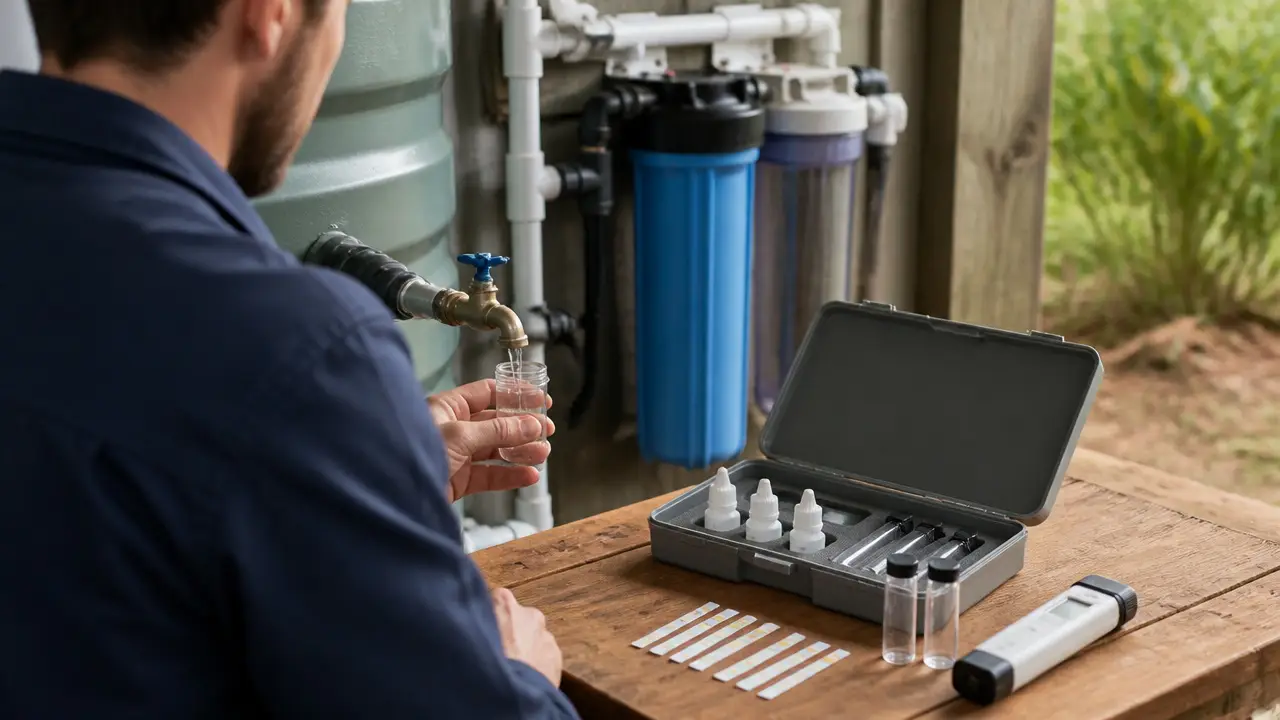
For municipal water, start with your utility's current water-quality report. Additional testing may make sense when you are concerned about plumbing-related contamination or a particular contaminant.
For a private well, laboratory testing becomes much more important because the homeowner is responsible for the water supply.
For rainwater, the treatment decision is even more dependent on how the water will be used.
The CDC recommends testing water and choosing treatment that specifically addresses the harmful chemicals or germs found in it. Different treatment methods remove different things, and several methods may sometimes be needed.
A salesperson who recommends a system before understanding the water is working backwards.
Whole-House Filters Do Different Jobs
"Whole-house filter" is a broad term.
NSF calls these point-of-entry, or POE, systems because they treat water where it enters the home. They can include sediment filters, carbon filters, water softeners, UV systems, and other treatment equipment.
A sediment filter mainly deals with suspended particles.
Carbon can be useful for chlorine, odors, tastes, and certain chemicals, depending on the media and certification.
A water softener deals mainly with hardness minerals. It is not a general-purpose contaminant filter.
UV uses ultraviolet light to control microorganisms. It does not remove sediment, salts, metals, or most dissolved chemicals.
That is why a good whole-house installation may look more like a sequence of treatment stages than one large filter.
Flow Rate Can Make a Good Filter a Bad Choice
Whole-house equipment has to treat water while several fixtures may be operating at once.
Planning around choosing household treatment from water-test results helps interpret testing and treatment requirements for the planned water use.
The relevant number is the system's flow rate, normally expressed in gallons per minute. Flow rate tells you how much water can pass through the treatment equipment over a given time.
If treatment equipment cannot handle the home's peak demand, pressure may fall when showers, faucets, appliances, or irrigation lines run at the same time.
The treatment equipment also needs enough contact time to do its job. Simply installing an oversized pipe around an undersized filter does not fix that problem.
Compare the home's expected peak water use with the treatment system's rated operating flow, not just the number of bathrooms printed on a marketing page.
Consider Maintenance Before Buying
Whole-house treatment is not maintenance-free.
Sediment cartridges eventually load with debris. Carbon media becomes exhausted. Softener resin systems require regeneration and salt or potassium when that type of softener is used. UV systems require lamp, sleeve, sensor, and related maintenance according to their design.
Filters that are not maintained can lose performance. CDC also notes that germs can grow in filters and treatment equipment when systems are not maintained properly.
Before choosing a manufacturer, make sure replacement parts, cartridges, lamps, seals, and service information will remain practical for you to obtain.
A slightly simpler system that you can maintain reliably can be a better choice than a complicated system that gets neglected.
What Is Best for City Water?
For ordinary municipal water, the starting conditions are quite different from those of an untreated well or rainwater tank.
Public water has already been treated. A whole-house system may therefore be used mainly for things such as chlorine, chloramine, sediment, hardness, taste, odor, or a specific contaminant identified in the water.
Packaged systems from companies such as Aquasana and SpringWell may fit this type of installation well. Pentair equipment also makes sense when you want a more component-based setup. Culligan may suit homeowners who prefer testing, installation, and ongoing service through one provider.
Do not remove disinfectant from the water merely because chlorine has a noticeable smell. Once disinfectant has been removed, the plumbing downstream no longer has that residual protection. Treatment and maintenance should be planned accordingly.
What Is Best for Well Water?
Well water normally deserves a more customized approach.
Iron, manganese, hardness, acidity, sediment, sulfur odors, nitrate, arsenic, bacteria, and other problems require different treatment methods. One property can have a very different water chemistry from another property nearby.
That makes dealer-supported or professionally designed systems from companies such as Culligan particularly useful. Pentair equipment can also work well as part of a system designed around laboratory results.
If microbial contamination is a concern, look carefully at UV certification. NSF identifies Class A UV systems as the class intended for contaminated water.
UV still should not be treated as a cure-all. Dirty or cloudy water can interfere with UV treatment, and UV does nothing about harmful dissolved chemicals.
What Is Best for Whole-House Rainwater Treatment?
Rainwater should not be treated like ordinary municipal water.
Roof runoff can collect dirt, bird and animal waste, microorganisms, metals, chemicals from roofing materials, and pollutants from the air. CDC states plainly that collected rainwater is not necessarily safe to drink without treatment for germs and chemicals.
A rainwater system intended for indoor or drinking-water use therefore needs to be considered as a complete system.
Collection surface, gutter condition, debris screening, first-flush control, storage, sediment removal, chemical treatment where needed, microbial treatment, plumbing separation, laboratory testing, and ongoing maintenance can all matter.
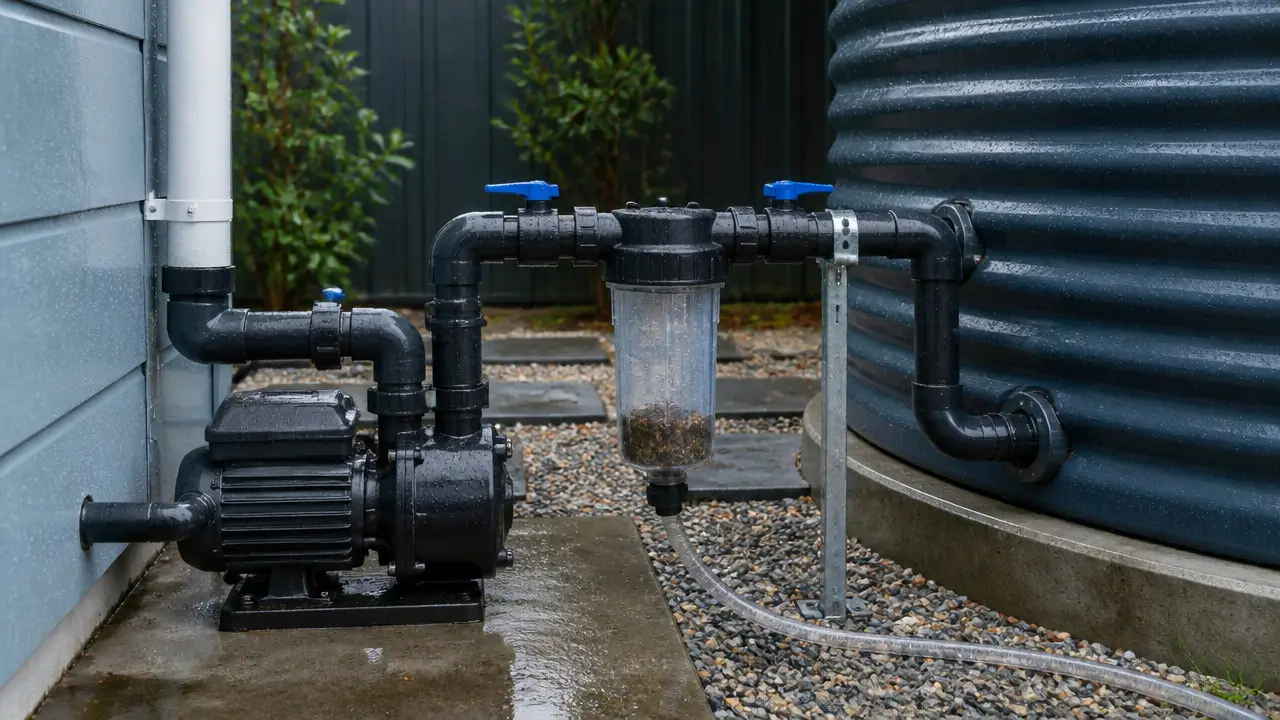
A first-flush diverter sends away the first portion of runoff from a storm, which often carries a higher load of dirt and contaminants from the roof. It improves source-water quality but does not make the remaining rainwater potable.
For rainwater intended for drinking, cooking, bathing, or other higher-contact uses, CDC recommends regular testing for germs and chemicals and consultation with the local health department about appropriate testing and treatment.
A carbon whole-house filter by itself should never be assumed to make collected rainwater safe to drink.
If UV is part of a potable rainwater treatment system, an NSF/ANSI 55 Class A unit is much more relevant than a Class B unit. Current NSF listings include point-of-entry Class A equipment from manufacturers such as Applied Membranes and Puretec, among others.
The complete treatment design still needs to address chemical contaminants and the quality of the water reaching the UV chamber.
How I Would Choose a Manufacturer
Start by choosing the treatment process, then choose the company.
A homeowner with chlorinated city water who mainly wants chlorine and sediment reduction may reasonably choose a packaged carbon system.
Someone with difficult well water may be better served by Culligan or a qualified local water-treatment professional who can assemble several treatment stages.
Someone designing a rainwater system may be better off using components from several manufacturers rather than searching for one box labeled "whole-house rainwater purifier."
The manufacturer matters, but the system design matters more.
Look for model-specific third-party certification, adequate peak flow, standard plumbing connections, available replacement parts, realistic maintenance requirements, and treatment stages that directly match your laboratory results or documented water problem.
As of September 1, 2026, NSF's certification databases remain one of the most useful places to verify whether a particular treatment model actually carries the certification being claimed.
Frequently Asked Questions
Who makes the best whole-house water filtration system?
There is no single best manufacturer. Culligan is a strong choice for professionally designed and serviced treatment, Pentair for flexible equipment, and Aquasana or SpringWell for packaged homeowner-oriented filtration. For microbial treatment, consider the certification and UV class of the individual unit rather than choosing by brand alone.
Is Culligan better than Aquasana?
They serve somewhat different buyers. Culligan is more focused on dealer-supported testing, installation, and service. Aquasana is more oriented toward packaged systems homeowners can select for common whole-house treatment needs. The better choice depends on the water problem and how much professional support you want.
Is a whole-house carbon filter enough?
Sometimes, but only for the problems it is designed to treat. Carbon may help with chlorine, taste, odor, and certain chemicals. It should not automatically be expected to remove hardness, salts, nitrate, arsenic, bacteria, viruses, or every other contaminant.
What NSF certification should a whole-house filter have?
It depends on what you are trying to reduce. NSF/ANSI 42 commonly covers aesthetic effects such as chlorine and taste, while NSF/ANSI 53 covers certain contaminants with health effects. NSF/ANSI 44 covers softeners and NSF/ANSI 55 covers UV microbiological treatment. Always check the exact contaminant claim for the exact model.
Does a whole-house filter make rainwater safe to drink?
Not by itself. Rainwater can contain microorganisms and chemicals from the air, roof, gutters, plumbing, and storage system. Drinking-water use requires suitable collection, treatment matched to the contaminants, laboratory testing, maintenance, and compliance with applicable local requirements.
Is UV enough to make untreated water drinkable?
Not necessarily. UV addresses microorganisms when the equipment and water conditions are suitable. It does not remove most dissolved chemicals, salts, or metals. Water may also need pretreatment so particles do not interfere with UV exposure.
What is the difference between NSF Class A and Class B UV?
Under NSF/ANSI 55, Class A systems are intended to inactivate bacteria, viruses, and cysts in contaminated water. Class B systems are intended to reduce non-disease-causing bacteria in water that has already been disinfected.