As an affiliate, we may earn a commission from qualifying purchases. We get commissions for purchases made through links on this website from Amazon and other third parties.
White vinegar can kill or weaken green algae on hard surfaces, but it is not a good treatment for algae growing inside stored rainwater. Vinegar contains acetic acid, which lowers pH and can damage algae cells. Its effect depends on how much vinegar reaches the algae, how long it stays in contact, and what surface or water it is mixed with.
If green algae is growing in a rain barrel, tank, or cistern, the better fix is usually to remove the algae, clean the container, and stop enough light from reaching the stored water.
How White Vinegar Affects Green Algae
Common household white vinegar contains acetic acid. The acid can damage algae when it comes into direct contact with it.
This makes vinegar more useful for algae growing on things such as:
- Empty rain barrels
- Barrel lids
- Screens
- Gutters
- Downspout parts
- Some non-sensitive outdoor surfaces
It is much less useful when poured into a full rainwater tank. The vinegar becomes diluted through the water, and dirt and other material can reduce its effect.
Trying to add enough vinegar to kill algae throughout a tank can also change the water chemistry more than you want.
Should You Put Vinegar in a Rain Barrel to Kill Algae?
Usually, no.
Adding vinegar directly to stored rainwater does not solve the reason algae started growing. It may also lower the water's pH.
That matters if the water will later be used for plants. Strongly acidic water can injure some plants and affect soil conditions.
Acidic water can also be harder on certain metals, fittings, pumps, seals, and other system parts. Compatibility depends on the material.
Instead of treating a full barrel with vinegar, deal with the algae and its growing conditions.
Why Green Algae Grows in Rain Barrels
Algae mainly needs light, water, and nutrients.
Rainwater storage systems can provide all three. Small amounts of leaves, pollen, roof debris, bird droppings, dust, and other organic material can enter with runoff. Sunlight entering a translucent barrel or an uncovered opening then gives algae the energy it needs to grow.
A green barrel does not always mean the tank itself is green. Sometimes the water is clear while algae forms only on the walls where light reaches it.
Light is often the main problem
An opaque container blocks much more light than a clear or translucent one.
Algae problems are therefore more common when:
- The barrel lets sunlight through
- The lid does not fully cover the water
- Openings allow light inside
- A translucent IBC tote is stored in full sun
Covering an IBC tote or shading a barrel can help, but the cover needs to withstand outdoor conditions without blocking vents, screens, or safe access.
How to Use Vinegar When Cleaning an Empty Rain Barrel
Vinegar can be useful as part of cleaning after the water has been drained.
Start by removing loose algae, sediment, and debris. Physical scrubbing is important because a cleaner works poorly when a thick layer of slime or sediment remains on the surface.
Follow the tank manufacturer's cleaning instructions if they are available. Some tank materials, seals, coatings, pumps, and fittings may have specific chemical restrictions.
After cleaning:
- Remove loose debris and sediment.
- Scrub algae from accessible surfaces using equipment that will not damage the tank.
- Use an appropriate cleaner for the tank material.
- Rinse away loosened algae and cleaner.
- Make sure cleaning residue is removed before returning the system to normal use.
Do not climb inside a cistern or large tank to clean it. Tanks can create confined-space hazards. Large systems may require professional cleaning.
Vinegar Does Not Prevent Algae From Coming Back
Killing existing algae is only part of the job.
If sunlight and nutrients are still entering the tank, algae may return.
Prevention usually works better than repeatedly adding a chemical.
Block light
Use an opaque storage container when possible. Keep the lid closed and cover openings that admit unnecessary light.
A translucent IBC tote may need a suitable opaque cover or enclosure.
Keep roof debris out
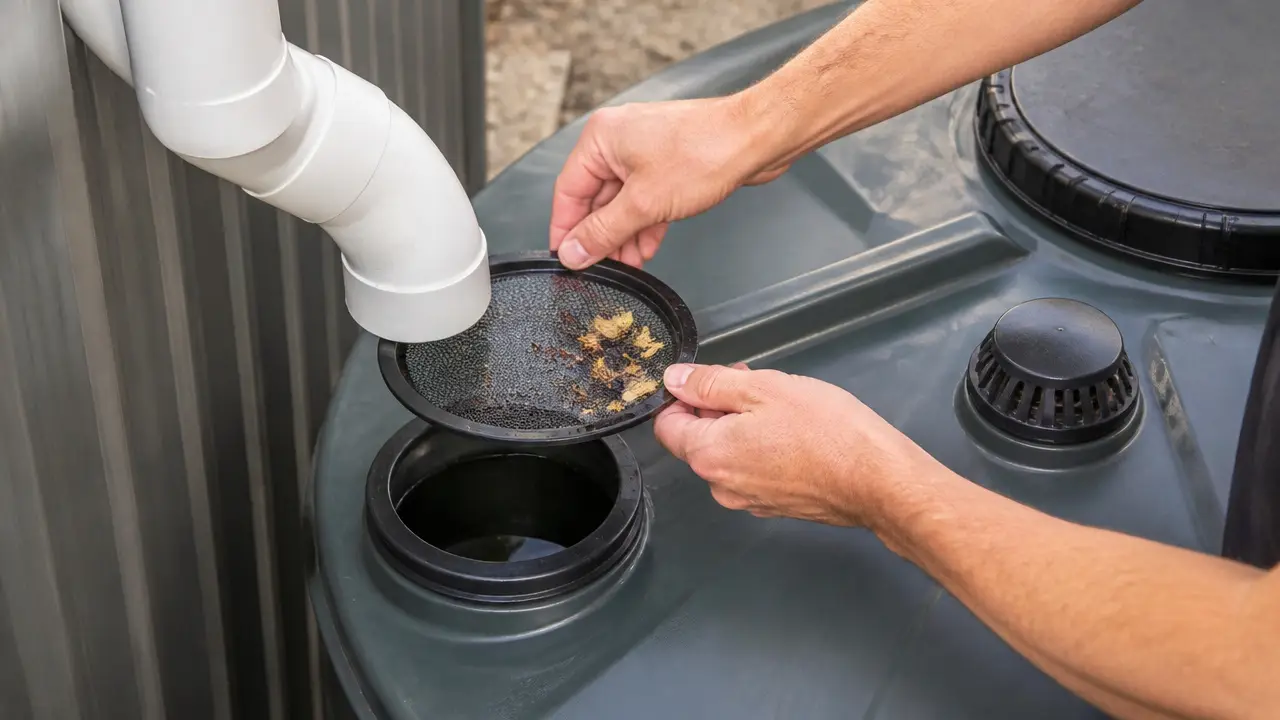
Screens and prefilters can reduce leaves and larger debris before they reach storage.
Check a suitable color for a rain barrel to assess stored supply required between realistic refill opportunities.
A first-flush diverter can also help with some systems. A first-flush device diverts an initial portion of roof runoff so some of the dirt collected on the roof does not immediately enter the tank.
It does not remove every contaminant, and it does not make rainwater safe to drink.
Clean sediment when needed
Organic material can settle at the bottom of a barrel or tank. That material may provide nutrients for algae and other microorganisms.
Inspect and clean the storage container as needed rather than waiting until there is a thick buildup.
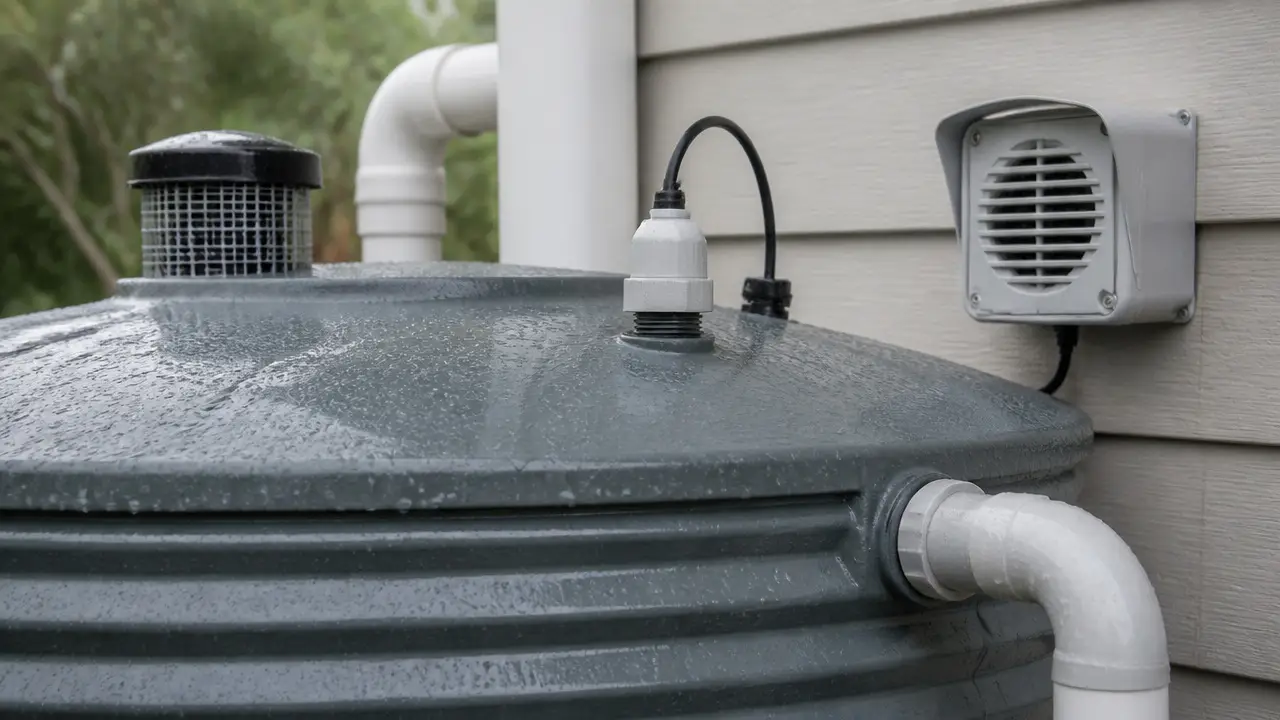
Keep openings screened
Screens help keep leaves, insects, and other debris out. They should fit securely and remain intact.
For mosquito control, openings need suitable screening rather than relying on vinegar.
What If the Rainwater Is Used for the Garden?
A small amount of algae in non-potable irrigation water is not automatically a reason to discard an entire tank.
Non-potable means water that is not intended for drinking.
The bigger practical problem is often the system itself. Algae can create slime and debris that clog:
- Small irrigation emitters
- Filters
- Screens
- Valves
- Pump strainers
- Narrow hoses
If the water has heavy algae growth, remove as much material as practical and clean the tank before running it through fine irrigation equipment.
Avoid trying to solve the problem by repeatedly adding vinegar. Changing the water's acidity may create a new problem for plants or equipment without fixing the light and debris that caused the algae.
What If the Rainwater Is Used Inside the House?
Algae in a rainwater tank deserves more attention when the water feeds toilets, laundry, or other household systems.
The tank may need cleaning, and filters or other treatment components may need inspection.
Do not assume that killing visible algae makes the water microbiologically safe. Roof runoff can contain microorganisms and contaminants that cannot be judged by color, smell, or the presence of algae.
If collected rainwater is intended for drinking, vinegar is not a drinking-water treatment system. Potable use requires suitable collection, treatment, ongoing maintenance, current water testing, and compliance with applicable local requirements.
Potable means suitable for drinking.
Vinegar Versus Removing the Cause
For a small patch of algae on an accessible, compatible surface, vinegar may help.
For algae inside a rainwater storage system, concentrate on the conditions that allowed it to grow.
| Situation | Is vinegar useful? | Better long-term approach |
|---|---|---|
| Algae on an empty barrel wall | Sometimes | Scrub, clean, rinse, and block light |
| Green water in a full rain barrel | Poor choice | Drain or manage the water, clean the barrel, reduce light and debris |
| Algae in a translucent IBC tote | Temporary at best | Use an opaque cover and improve prefiltration |
| Algae clogging irrigation parts | Does not solve the cause | Clean the tank, filters, and irrigation components |
| Drinking-water treatment | No | Use a complete, appropriate treatment and testing plan |
Frequently Asked Questions
Does white vinegar kill algae instantly?
Not necessarily. Vinegar can damage algae when it has enough direct contact, but results depend on concentration, contact time, surface conditions, and how much organic material is present. It should not be treated as an instant or guaranteed algae treatment.
Can I pour a gallon of vinegar into my rain barrel?
It is better not to choose an amount by guesswork. Adding vinegar to stored rainwater can significantly change its pH and may affect plants, metals, fittings, seals, pumps, or other equipment. Cleaning the barrel and blocking light are usually better approaches.
Will vinegar keep algae from growing in a rain barrel?
Not reliably. Algae can return while sunlight and nutrients continue entering the barrel. An opaque container, secure lid, debris screening, suitable prefiltration, and regular cleaning provide better long-term control.
Why is my rain barrel water turning green?
Green water commonly indicates algae growth. Sunlight entering the barrel and nutrients from roof debris can encourage it. Translucent barrels and IBC totes are especially likely to develop algae when exposed to sunlight.
Is green rain barrel water safe for plants?
Light algae growth in non-potable irrigation water is not automatically harmful to every plant, but water quality cannot be judged from algae alone. Heavy algae can also clog irrigation equipment. Avoid changing the water's pH with large amounts of vinegar without considering the plants and system.
Can vinegar make rainwater safe to drink?
No. Vinegar does not provide a complete drinking-water treatment process. Rainwater intended for drinking requires appropriate collection, treatment, maintenance, current testing, and compliance with local requirements.
Do I have to empty a rain barrel if it has algae?
Not in every case. A thin film may be manageable, especially when the water is only used for suitable non-potable purposes. Heavy growth, thick slime, odors, or clogged equipment are good reasons to inspect and clean the system rather than simply adding vinegar.