As an affiliate, we may earn a commission from qualifying purchases. We get commissions for purchases made through links on this website from Amazon and other third parties.
What Type of Pump Is Most Commonly Used for Irrigation?
The centrifugal pump is the most commonly used type of pump for irrigation.
Centrifugal pumps use a spinning part called an impeller to move water. They work well because they can move a steady amount of water through hoses, pipes, sprinklers, and drip irrigation systems.
They are common on farms, gardens, rainwater tanks, ponds, shallow wells, and household irrigation systems.
However, the best pump depends on where the water comes from and how much pressure you need.
Why Centrifugal Pumps Are Common for Irrigation
A centrifugal pump is well suited to irrigation because irrigation usually needs continuous water flow rather than small bursts of water.
These pumps can provide:
- Steady flow for sprinklers
- Enough pressure for many garden systems
- High flow for larger irrigation zones
- Simple connections to common pipe sizes
- Easy installation when the water source is nearby
Many irrigation pumps sold for above-ground use are simply centrifugal pumps designed for outdoor water systems.
Some are self-priming, which makes them easier to use with tanks, ponds, and other water sources below the pump.
Common Irrigation Pump Types
Several pump designs are used for irrigation. The water source usually determines which one makes sense.
| Pump type | Common use | Main advantage |
|---|---|---|
| Centrifugal surface pump | Tanks, ponds, shallow water sources | Good flow and pressure |
| Self-priming centrifugal pump | Rain tanks and ponds | Easier to restart after losing prime |
| Submersible pump | Wells, cisterns, deep tanks | Pushes water from inside the water source |
| Jet pump | Shallow or moderately deep wells | Can lift water from below ground |
| Booster pump | Pressurized irrigation systems | Raises existing water pressure |
| Small utility pump | Light garden watering | Simple for low-demand systems |
A pump's label does not always tell you its basic pump design. For example, an "irrigation pump" or "sprinkler pump" may still be a centrifugal pump.
Centrifugal Surface Pumps
A surface pump sits outside the water source. A suction pipe runs from the pump to the water.
This setup is common when drawing water from:
- Rainwater tanks
- Cisterns
- Ponds
- Streams where permitted
- Shallow wells
- Large storage tanks
Surface pumps work best when the pump is fairly close to the water level.
A pump has limits on how far it can lift water on its suction side. Long suction lines, air leaks, and excessive vertical lift can reduce performance considerably.
For that reason, placing a surface pump close to the water source usually works better than trying to pull water through a long pipe.
What Is a Self-Priming Pump?
A self-priming centrifugal pump is designed to remove some air from its suction line and restore normal pumping after the pump housing has been filled correctly.
It does not mean the pump can always start completely dry.
Running a pump dry can damage seals and other parts. Follow the manufacturer's priming and dry-run instructions.
Self-priming models are especially useful for irrigation systems where the pump sits above the water level.
Submersible Pumps
A submersible pump operates underwater.
Instead of pulling water toward itself, it pushes water up the discharge pipe. This makes submersible pumps useful for deeper water sources.
They are commonly installed in:
- Water wells
- Underground cisterns
- Deep rainwater tanks
- Large storage tanks
A submersible pump can also be a good choice when noise is a concern because the pump operates inside the water.
For irrigation from a rainwater cistern, either a surface centrifugal pump or a submersible pump may work. The better choice depends on tank design, required pressure, service access, and piping layout.
What Pump Is Commonly Used for Sprinklers?
Centrifugal pumps are widely used for sprinkler irrigation.
Sprinklers need both adequate flow and adequate pressure. A pump that can move plenty of water but cannot develop enough pressure may produce weak sprinkler coverage.
For example, several sprinklers operating at the same time may require much more flow than one garden sprinkler.
Before choosing a pump, find the total flow required by the irrigation zone and the pressure required at the sprinklers.
Do not choose a pump based only on its maximum flow number. Maximum flow is normally measured under conditions with very little resistance.
Actual flow drops as the pump has to produce more pressure.
What Pump Is Best for Drip Irrigation?
Drip irrigation usually needs less pressure than sprinkler irrigation.
A centrifugal pump can still work, but the system may need:
- A pressure regulator
- A filter
- Appropriate valves
- A backflow device where required
- Properly sized tubing
Some pumps produce far more pressure than drip tubing should receive.
The pressure regulator reduces the pressure to a level suitable for the drip system. Check the requirements of the emitters and tubing rather than assuming one pressure works for every drip system.
Choosing an Irrigation Pump for a Rainwater Tank
For rainwater irrigation, both surface and submersible pumps are common.
A self-priming centrifugal surface pump is often practical when the tank outlet and pump are easy to reach.
A submersible pump may make more sense when the pump can be safely installed inside a cistern or tank and sufficient pressure is needed at the irrigation system.
Before choosing either one, check several factors.
Required Flow Rate
Flow rate describes how much water the pump can move over time.
It may be listed in gallons per minute, liters per minute, or another unit.
Add together the water demand of everything operating in the irrigation zone at the same time.
A pump should be selected for that operating flow, not simply for the largest number printed on the pump.
Required Pressure
Sprinklers and drip equipment need water within certain pressure ranges.
Pressure must also overcome resistance from:
- Pipes
- Hoses
- Filters
- Valves
- Fittings
- Elevation changes
Reviewing comparing leading irrigation pumps brands helps assess delivery pressure needed after pipe losses.
Long or narrow pipes create more resistance.
Head Height
Head height describes the amount of vertical lift and system resistance a pump must overcome.
If irrigation lines run uphill from the tank, the pump must overcome that elevation in addition to pipe and fitting losses.
Pump manufacturers normally provide a pump curve showing how much water the pump can deliver at different head levels.
Use that curve rather than relying only on the advertised maximum flow.
Pump Size Matters More Than Pump Type Alone
Buying a centrifugal pump does not automatically mean it will work well for your irrigation system.
A pump that is too small may cause:
- Weak sprinklers
- Uneven irrigation
- Poor coverage
- Low flow at distant outlets
A pump that is much larger than necessary can also cause problems.
It may create excessive pressure, cycle frequently, use unnecessary electricity, or require additional controls.
The goal is to match the pump's operating range to the irrigation system.
Consider the Pipe Size
Pipe size has a major effect on irrigation performance.
A pump may be capable of moving a large amount of water, but a narrow hose can restrict that flow.
Long garden hoses can create especially noticeable pressure losses when high flow is required.
Whenever possible, size the main irrigation pipe for the required flow and distance. Smaller tubing can then branch from the main line where appropriate.
Also check the inlet and outlet connection sizes on the pump before buying fittings.
Keep Debris Out of the Pump
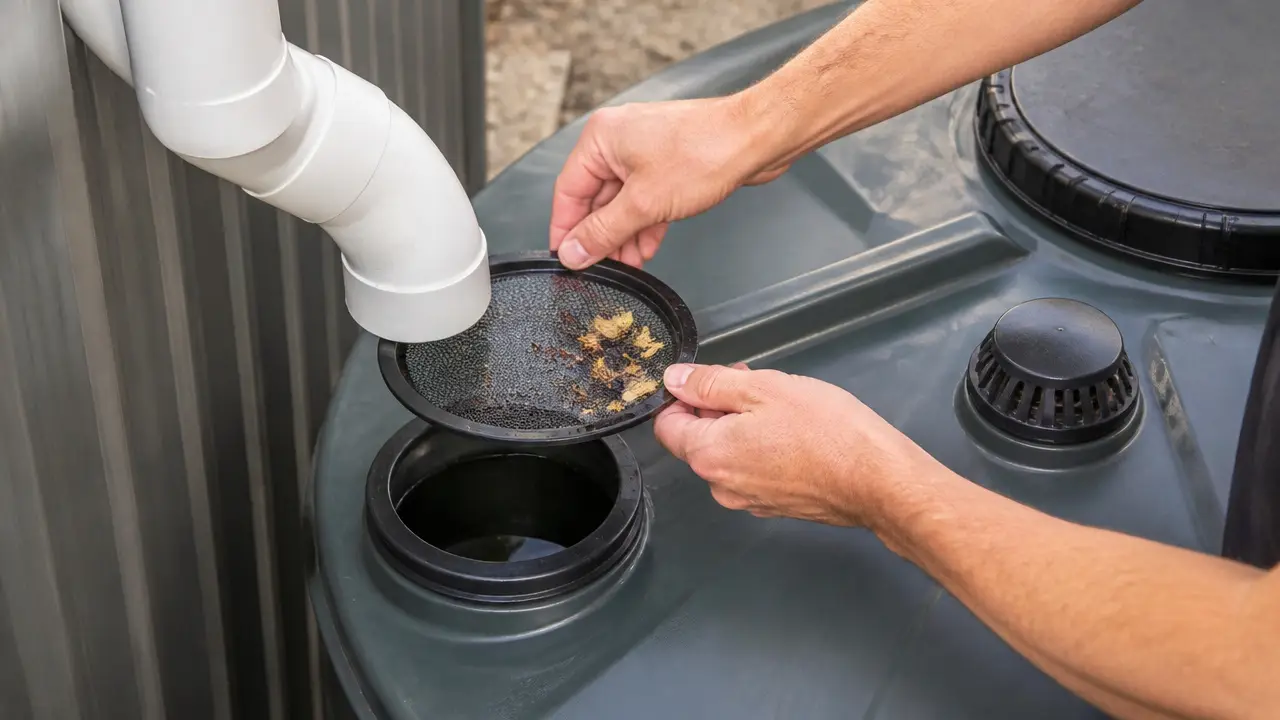
Irrigation water from ponds, rainwater tanks, and cisterns may contain leaves, sediment, insects, or other debris.
A suitable screen or prefilter can help protect pumps, valves, sprinklers, and drip emitters.
Rainwater systems often benefit from controlling debris before water reaches storage as well. Gutter screens, inlet screens, and first-flush devices can reduce some material entering the tank.
A first-flush device diverts the first portion of roof runoff, which may carry more dirt and debris from the roof.
It does not make stored rainwater clean or safe for drinking.
Filters also need regular cleaning. A clogged filter can reduce pump flow and pressure.
Protect the Pump From Running Dry
Many irrigation pumps can be damaged if they continue operating without water.
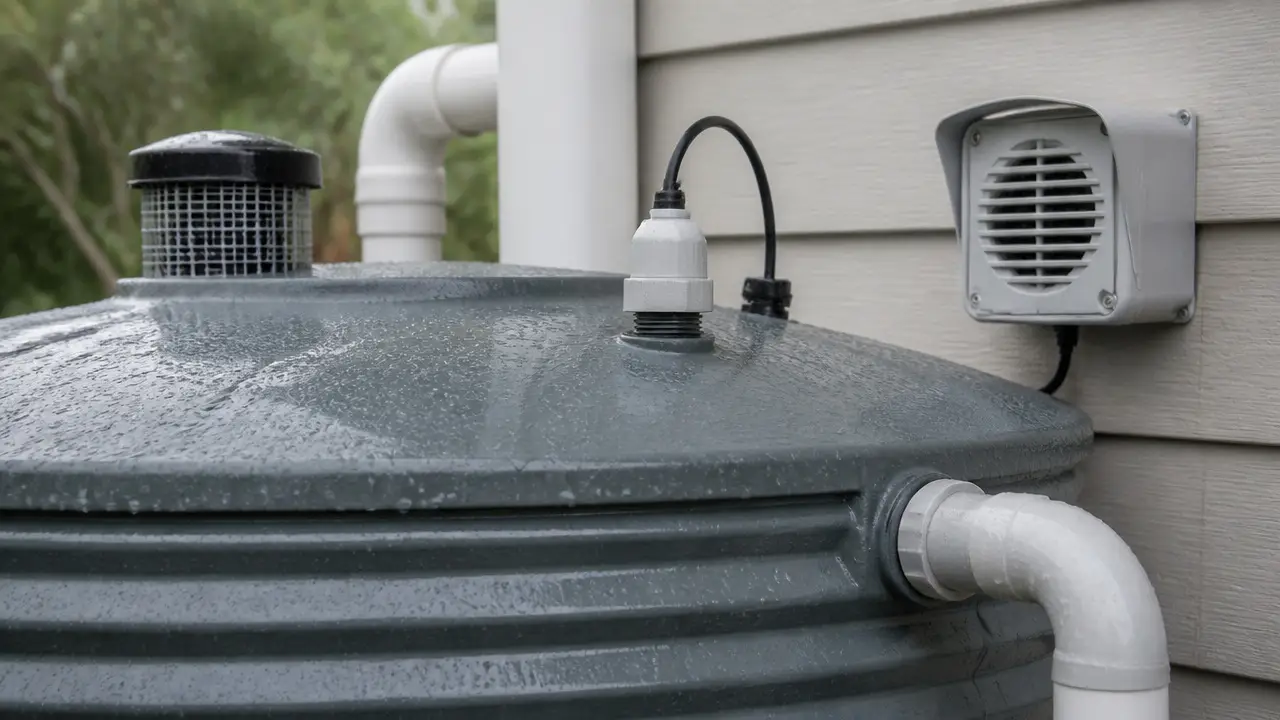
A rain tank can run empty during dry weather, so dry-run protection is especially useful.
Depending on the pump system, protection may use:
- A float switch
- A tank level control
- A pump controller
- Another manufacturer-approved dry-run protection device
Make sure any controller is compatible with the pump's voltage, motor size, and electrical requirements.
Outdoor electrical equipment should be installed and protected according to applicable electrical requirements. Have a qualified electrician handle wiring when the installation is beyond a simple plug-in setup.
What About a Pressure Tank?
Some automatic irrigation systems use a pressure tank with the pump.
The tank stores a small amount of pressurized water. This can reduce unnecessary pump starts when only a small amount of water is being used.
A pressure tank is not always required for a dedicated irrigation pump that runs continuously while a zone is active.
Whether one helps depends on how the pump is controlled and how the irrigation system operates.
Frequent starting and stopping can shorten pump life, so follow the pump manufacturer's requirements for minimum flow, controls, and cycling.
The Best Pump Depends on the Water Source
Although centrifugal pumps are the most common general irrigation pump, the right version depends mainly on where the water is located.
For a shallow tank or pond, a surface centrifugal pump may be the simplest option.
For a deep well or underground cistern, a submersible pump is often more practical.
For a sprinkler system that already has water but lacks pressure, a booster pump may be appropriate.
The important part is matching the pump to the required flow, pressure, lift, piping, power supply, and water source rather than choosing by pump type alone.
Frequently Asked Questions
What is the most common irrigation pump?
The centrifugal pump is the most commonly used general type of irrigation pump. It provides steady flow and can supply the pressure needed by many sprinkler and garden systems.
Is a centrifugal pump good for a rainwater tank?
Yes. A centrifugal surface pump can work well with a rainwater tank when the suction lift and piping are within the pump's limits. A submersible pump may be better for some deep tanks or cisterns.
Should I use a submersible or surface pump for irrigation?
Use a surface pump when the water source is shallow and the pump can be located nearby. Consider a submersible pump when the water source is deeper or when pushing water from inside a tank or well is more practical.
What size pump do I need for garden irrigation?
Size the pump according to the flow and pressure required by the irrigation zone. Also account for elevation, pipe length, pipe diameter, filters, fittings, and other sources of pressure loss.
Can I use a sump pump for irrigation?
Some sump pumps can move water, but many are designed mainly for drainage rather than producing the steady pressure required by sprinklers. Check the pump curve and irrigation pressure requirement before using one.
Does drip irrigation need a powerful pump?
Usually not. Drip irrigation often operates at relatively low pressure. The important factors are sufficient flow and controlled pressure. A pressure regulator may be needed if the pump produces more pressure than the drip equipment can handle.
Can an irrigation pump run directly from a rain barrel?
It can if the pump is designed for the available water source and can meet the required flow and pressure. Small rain barrels have limited storage, however, so dry-run protection can be important if the pump can empty the barrel quickly.