As an affiliate, we may earn a commission from qualifying purchases. We get commissions for purchases made through links on this website from Amazon and other third parties.
There is no single best water storage tank maker for every job. The right manufacturer depends on whether you need a tank for rainwater, drinking-water storage, irrigation, underground use, or a large whole-property system.
For a typical residential above-ground polyethylene tank, Norwesco, Bushman, Enduraplas, and Snyder Industries are strong manufacturers to compare. Bushman is especially useful when you want a tank already set up for rainwater collection. Norwesco and Snyder offer very broad water-storage lines. Enduraplas focuses heavily on reinforced above-ground tanks. For very large storage systems, Pioneer Water Tanks and Aquamate make lined steel tanks that can hold far more water than most residential polyethylene tanks.
The important part is not choosing the most famous name. It is choosing the tank that fits the water use, installation site, connections, and treatment system.
Water Tank Manufacturers Worth Comparing
| Manufacturer | Strong fit | What stands out |
|---|---|---|
| Norwesco | General water storage and cisterns | Large range of polyethylene tanks and NSF-certified options |
| Bushman | Residential rainwater harvesting | Rainwater-ready tanks, slimline designs, screened inlets and overflows |
| Enduraplas | Heavy-duty above-ground storage | Reinforced polyethylene designs and large capacities |
| Snyder Industries | Above-ground and underground storage | Broad range of water tanks and cisterns |
| Pioneer Water Tanks | Large residential, farm, and commercial storage | Large lined steel tanks assembled on site |
| Aquamate | Large rainwater and fire-water systems | Lined galvanized steel tanks for high-capacity storage |
These manufacturers serve somewhat different parts of the market. Comparing them only by tank capacity can lead to the wrong choice.
Norwesco: A Strong All-Around Polyethylene Tank Maker
Norwesco is one of the better places to start when you need a conventional polyethylene water tank.
Its liquid-storage range includes many shapes and sizes, and the company also makes underground cisterns. Its above-ground tanks use linear high-density polyethylene, commonly called HDPE. HDPE is a tough plastic that resists corrosion and is widely used for water storage.
Norwesco also offers potable-water tanks with NSF/ANSI 61 certification where applicable. Certification depends partly on the tank and manufacturing facility, so do not assume every Norwesco tank carries the same certification.
Potable means suitable for contact with water intended for drinking. NSF/ANSI/CAN 61 evaluates whether materials and components that touch drinking water meet health-effects requirements. It does not mean that untreated rainwater placed inside the tank automatically becomes safe to drink.
Norwesco is especially worth considering when you need:
- A conventional vertical water tank
- A large above-ground tank
- An underground cistern
- Standard bulkhead connections
- A tank that will be easy to match with common plumbing parts
A bulkhead fitting is a sealed fitting installed through the tank wall. It gives you a threaded connection for an outlet, valve, pipe, or pump line.
Check the exact tank model before buying. A tank designed only for above-ground installation should never be buried simply because it fits the hole.
Bushman: A Good Fit for Rainwater Harvesting
Bushman stands out because many of its tanks are specifically configured for rainwater collection rather than being plain storage tanks that require additional fittings.
Its rainwater tanks can include inlet screens, screened overflow fittings, and lower bulkhead connections. These features reduce the amount of extra plumbing needed when connecting gutters and downspouts. Bushman also offers round, slimline, underground, and specialty tanks.
Slimline tanks can be useful beside houses where a wide round tank would block a walkway or driveway. Bushman's rainwater versions and water-storage versions are not identical. Its rainwater tanks include collection fittings, while its water-storage versions use a more conventional vented lid and fittings. Bushman states that its water-storage tanks in this line are NSF/ANSI 61 certified for potable-water storage.
That makes Bushman particularly useful for:
- Backyard rainwater systems
- Narrow side yards
- Garden irrigation
- Residential collection systems where screened openings are important
Even with screens, a rainwater tank still needs maintenance. Leaves, roof dirt, pollen, bird droppings, insects, and sediment can enter the collection system.
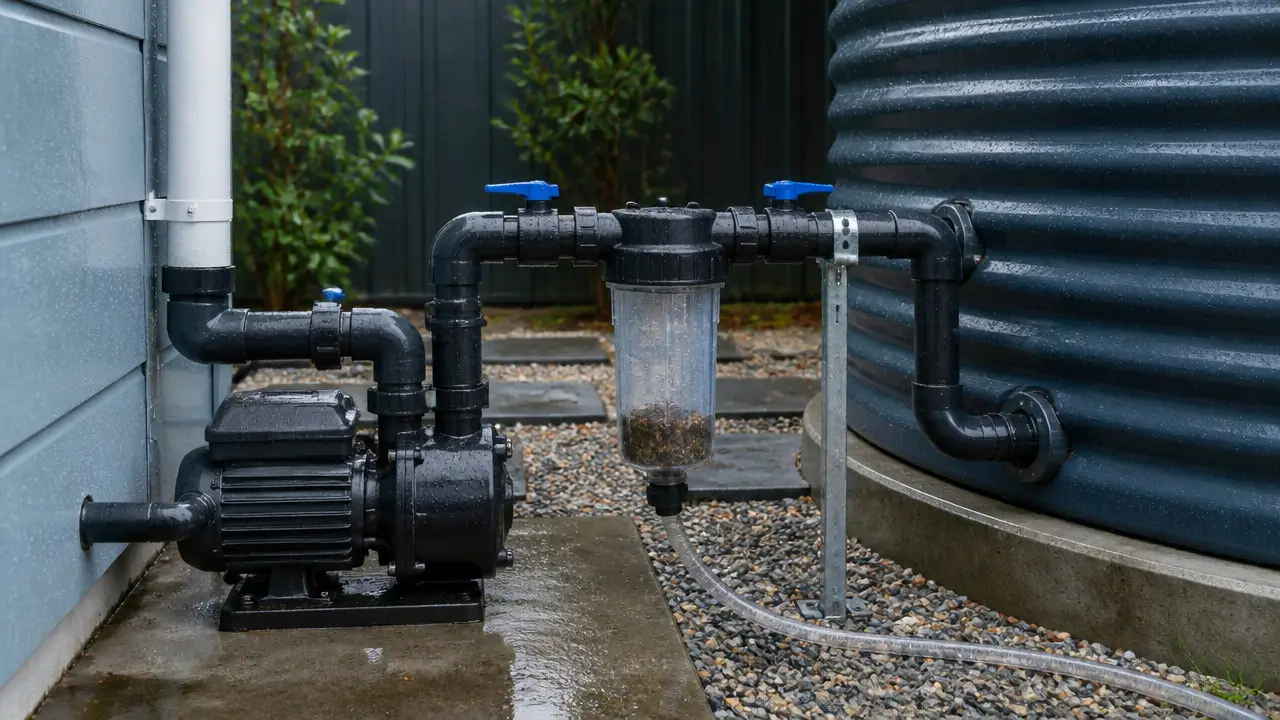
A first-flush diverter can help. It sends the first portion of runoff from a storm away from the tank because this water often carries more roof debris and contamination. CDC also recommends measures such as first-flush diversion and screened openings as ways to improve collected rainwater quality.
Enduraplas: A Strong Choice for Heavy-Duty Above-Ground Tanks
Enduraplas is another manufacturer worth comparing when you want a large polyethylene tank.
Its current water-storage range includes reinforced above-ground tanks in capacities ranging from small residential sizes into the thousands of gallons. The company uses ribbed tank designs intended to reduce wall bulging.
Enduraplas documentation also lists water tanks evaluated to NSF/ANSI 61 and NSF/ANSI 372 standards. As with any manufacturer, verify the certification for the exact tank you plan to order rather than assuming it applies to every product or configuration.
Enduraplas can make sense for:
- Large above-ground rainwater storage
- Farm or homestead water
- Irrigation reserves
- Sites where a reinforced polyethylene tank is preferred
The company offers tanks over 10,000 gallons, but larger is not automatically better. A very large tank requires much more room and a carefully prepared base.
One gallon of water weighs about 8.34 pounds. A 5,000-gallon tank therefore holds more than 41,000 pounds of water before adding the weight of the tank itself.
That load needs proper ground support.
Snyder Industries: Worth Considering for Cisterns and Larger Systems
Snyder Industries makes a wide range of polyethylene water-storage products, including vertical tanks, horizontal tanks, and underground cisterns.
Its water tanks use linear polyethylene, and the company offers drinking-water tanks that can be supplied with NSF/ANSI 61 certification when specified. That last point matters. The certification should be confirmed on the actual tank being ordered.
Snyder is especially useful to compare when the project involves:
- Underground storage
- Large cisterns
- Above-ground vertical storage
- Unusual tank shapes
- Water systems being designed by a contractor
Some Snyder underground cistern designs reach very large capacities. The company lists models intended for rainwater harvesting and drinking-water storage applications.
Buried tanks require more planning than normal above-ground tanks. Soil conditions, groundwater, backfill, traffic loads, burial depth, flotation, access openings, and installation instructions all matter.
Do not substitute an above-ground polyethylene tank for a real underground cistern.
Pioneer Water Tanks: Better Suited to Very Large Storage
Once storage requirements move into many thousands of gallons, large lined steel tanks become another option.
Pioneer Water Tanks makes corrugated steel tanks with an internal liner that actually holds the water. Its U.S. range extends from roughly 5,000 gallons into very large commercial capacities. Pioneer offers NSF/ANSI 61-certified liner options for drinking-water storage.
These tanks can make more sense than one-piece polyethylene tanks when you need very large storage because the tank components can be transported to the property and assembled on site.
Typical uses include:
- Large rainwater harvesting systems
- Farms and ranches
- Whole-property water reserves
- Fire-water storage
- Commercial systems
Installation is more involved than setting a small poly tank on a prepared pad. Foundation design, wind loading, snow loading, seismic requirements, fire-system requirements, and local permits may become important.
Aquamate: Another Large Lined Steel Tank Manufacturer
Aquamate also specializes in large steel tanks with internal liners.
Its rainwater-storage range starts around 5,000 gallons and extends well beyond normal residential poly-tank capacities. Aquamate lists NSF/ANSI 61-certified liner options and produces systems for rainwater, well water, and fire-water storage.
Aquamate and Pioneer therefore compete in a different category from a typical 500- or 1,500-gallon polyethylene tank.
If you only want water for a garden, a large steel system may add unnecessary complexity. If you need tens of thousands of gallons, however, comparing large steel systems becomes much more reasonable.
Which Manufacturer Is Best for Rainwater Harvesting?
For a normal residential rainwater system, Bushman is one of the easiest manufacturers to consider first because it offers tanks already configured around rainwater collection.
Norwesco, Enduraplas, and Snyder can also work very well. You may simply need to add more of the rainwater-specific plumbing yourself.
A useful rainwater tank should have provision for:
- A screened inlet
- A properly sized overflow
- Mosquito protection
- A lower outlet
- Tank ventilation
- Cleaning or inspection access
- Connections that match your pipe sizes
The overflow deserves special attention.
Alongside choosing a suitable water tank, assess tank footprint, connections, and site constraints.
During a heavy storm, water may enter the tank faster than you expect. An undersized or badly placed overflow can cause water to back up through the collection plumbing or spill around the tank base.
Which Manufacturer Is Best for Drinking-Water Storage?
For drinking-water storage, manufacturer reputation alone is not enough.
Look for the exact tank or water-contact material to have the appropriate drinking-water certification required for your project, such as NSF/ANSI/CAN 61 where applicable. NSF explains that this standard evaluates the health effects of materials and products that contact drinking water.
Norwesco, Snyder, Bushman, Enduraplas, Pioneer, and Aquamate all have drinking-water storage options or certified configurations within parts of their ranges. The certification may not cover every tank each company makes.
More importantly, a potable-rated tank does not turn roof runoff into potable water.
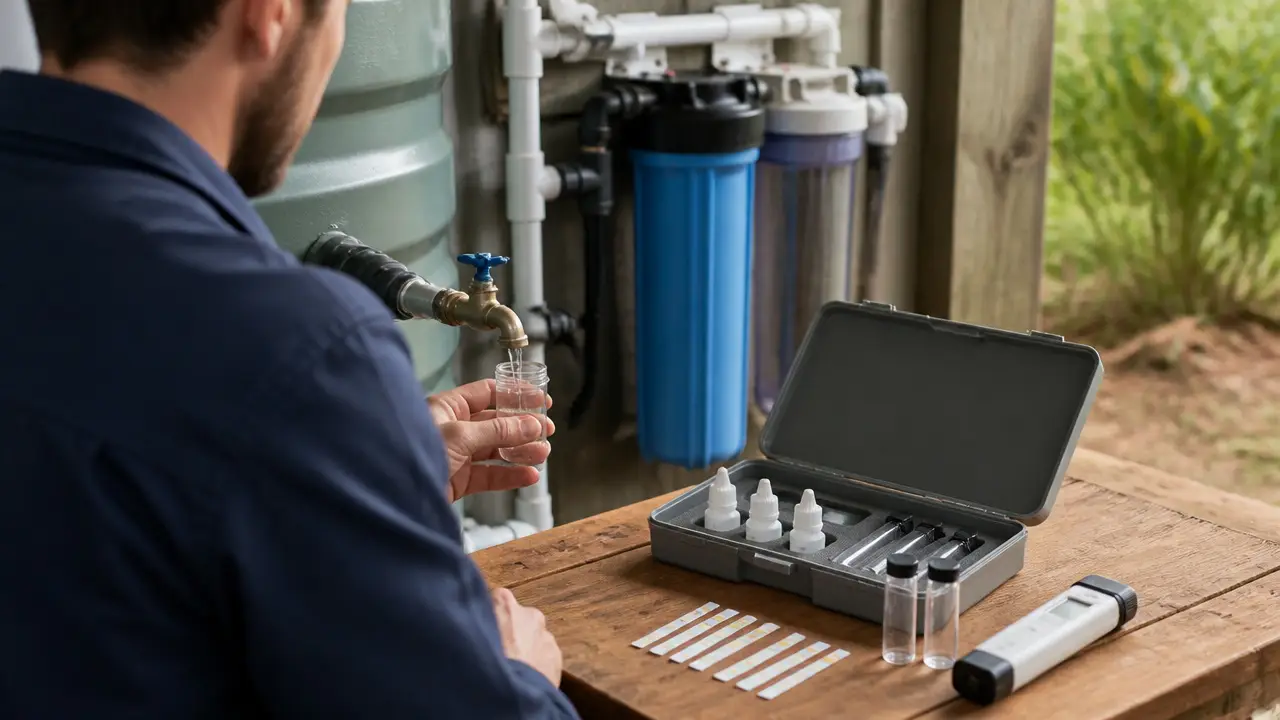
Rainwater can collect germs and chemicals from air pollution, roofing materials, gutters, animal droppings, and other surfaces. CDC says collected rainwater is not necessarily safe to drink and recommends regular testing when it is used for drinking, cooking, or bathing.
A drinking-water rainwater system should be treated as a complete system involving suitable collection surfaces, debris control, first-flush management, storage, treatment, current laboratory testing, maintenance, and local requirements.
Choose the Tank Before Choosing the Brand
The easiest way to narrow the manufacturers is to first define what the tank must do.
Start With the Intended Water Use
Garden irrigation usually has different requirements from household drinking water.
A simple garden system may only need protected storage, a screened inlet, an overflow, and an outlet.
A household system can involve pumps, pressure controls, treatment equipment, backflow protection, and separate plumbing.
Decide Between Above Ground and Underground
Above-ground polyethylene tanks are usually simpler.
You can inspect them easily, reach the fittings, detect leaks, and avoid excavation.
Underground tanks save surface space but require tanks specifically engineered for burial. Installation requirements can be strict.
Check the Tank Dimensions
Capacity alone does not tell you whether a tank fits.
Check:
- Diameter
- Height
- Door and gate clearance
- Roof or gutter clearance
- Access for delivery equipment
- Space around the tank for plumbing and maintenance
A 2,500-gallon tank that cannot pass through the property entrance is not a useful tank.
Check the Fittings
Find the inlet, outlet, overflow, and access-opening sizes before ordering.
This can prevent an awkward mix of adapters later.
If a pump will draw from the tank, make sure the outlet and pipe can supply the pump's required flow rate. Flow rate means the amount of water moving through the system over time, usually stated in gallons per minute.
Check the Base Requirements
Most large water tanks require a flat, stable, fully supported base prepared according to the tank manufacturer's instructions.
Do not place a large tank on loose soil, isolated blocks, or an uneven surface unless the manufacturer specifically approves that installation.
Water is heavy enough to expose small foundation problems quickly.
Think About Sunlight
Opaque storage helps limit light inside the tank. Less light makes conditions less favorable for algae.
However, an opaque tank does not eliminate water-quality problems. Sediment, organic matter, microbes, and chemicals can still enter through the collection system.
The Best Tank Is the One That Fits the Whole System
There are several reputable water-storage tank manufacturers, but their strengths differ.
For straightforward polyethylene storage, Norwesco and Snyder provide broad ranges. For a residential rainwater system, Bushman deserves particular attention because of its rainwater-ready configurations. For reinforced above-ground polyethylene storage, Enduraplas is another strong option. When capacities become very large, Pioneer and Aquamate offer lined steel systems that may make more sense than one-piece plastic tanks.
Do not choose by brand name alone.
Choose based on the intended water use, certification needs, installation location, capacity, dimensions, fittings, overflow, access, foundation requirements, and future maintenance.
That approach usually matters more than the logo molded or bolted to the side of the tank.
Frequently Asked Questions
What is the best brand of water storage tank?
There is no single best brand. Norwesco, Bushman, Enduraplas, and Snyder are strong manufacturers to compare for polyethylene tanks. Pioneer and Aquamate are better suited to many large steel-tank installations. The best choice depends on the tank's use, size, installation method, fittings, and certification requirements.
What type of tank is best for rainwater harvesting?
An opaque, UV-resistant tank with a screened inlet, screened overflow, suitable outlet, secure lid, and cleaning access works well for many residential rainwater systems. Purpose-built rainwater tanks may already include several of these parts.
Are polyethylene water tanks safe for drinking water?
Some are designed and certified for potable-water storage, while others are not. Check the exact tank and certification rather than relying only on the material name. A potable-rated storage tank also does not make untreated rainwater safe to drink.
Is a black water tank better than a white tank?
Color by itself does not determine tank quality. Reducing light penetration can help limit algae growth, so opaque tanks are useful outdoors. Tank material, UV stabilization, wall design, fittings, installation, and intended use are also important.
Can an above-ground tank be buried?
Usually not. A tank must be specifically designed for underground installation. Soil and groundwater can place forces on a buried tank that an ordinary above-ground tank was never designed to withstand.
How long do water storage tanks last?
There is no useful lifespan that applies to every tank. Material, UV exposure, foundation quality, climate, installation, stored liquid, maintenance, and physical damage all affect service life. Manufacturer warranty length is also not the same thing as guaranteed tank life.
Does an NSF-certified tank make rainwater safe to drink?
No. NSF/ANSI/CAN 61 certification concerns materials and components that contact drinking water. It does not remove germs, chemicals, or other contaminants from collected rainwater. Drinking-water use requires suitable collection, treatment, testing, maintenance, and compliance with applicable local requirements.