As an affiliate, we may earn a commission from qualifying purchases. We get commissions for purchases made through links on this website from Amazon and other third parties.
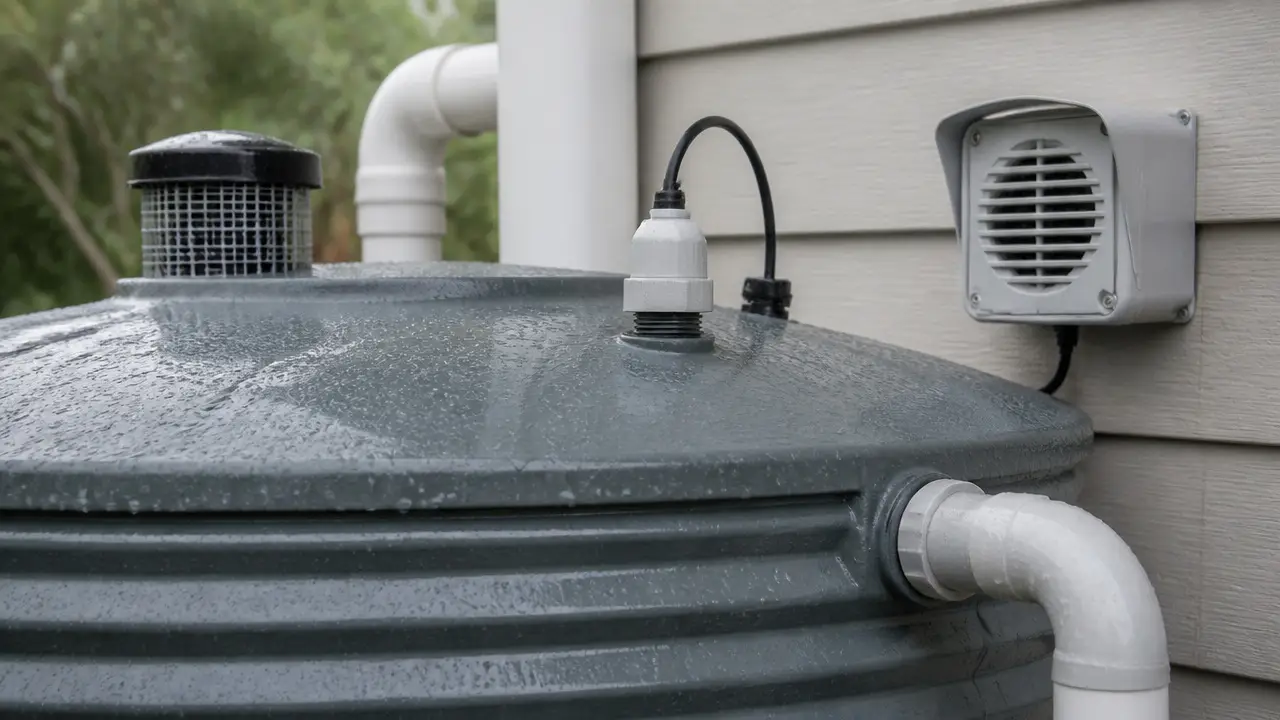
Connecting rain barrels with PVC pipe is a good way to increase storage without building a complicated water system. The basic idea is simple: install watertight fittings in each barrel, then join those fittings with PVC pipe.
For most setups, connect the barrels near the bottom if you want them to fill and drain together. Connect them near the top if you mainly want overflow from one barrel to move into the next.
The important parts are using suitable barrels, keeping them level, making watertight connections, and providing a safe overflow path.
Decide How You Want the Barrels to Work
There are two common ways to connect rain barrels.
Bottom-connected barrels
With bottom connections, PVC pipe joins the barrels close to their bases. Water can move between the barrels until the water level is about the same in all of them.
This arrangement works well when you want several barrels to act more like one larger tank.
For example, if three barrels are connected near their bottoms, water entering the first barrel can gradually spread through all three.
Advantages include:
- More even filling
- One outlet can often serve several barrels
- More of the total stored water is accessible
- Water levels tend to equalize naturally
The main drawback is that a leak or failed fitting near the bottom can drain much of the stored water.
Top-connected barrels
Another option is to connect the barrels near their tops. The first barrel fills before excess water flows through PVC into the next barrel.
This is often called a cascading or overflow arrangement.
It can be simpler to install because the fittings do not normally remain under full water pressure when the barrels are partly filled. However, the barrels do not necessarily drain together.
For most homeowners who want several barrels to behave as one storage system, bottom connections are usually more useful.
What You Need
A basic PVC barrel connection normally requires:
- Rain barrels or suitable water-storage containers
- PVC pipe
- PVC fittings
- Bulkhead fittings or another suitable tank-wall fitting
- PVC adapters that match the bulkhead fittings
- PVC primer and cement where permanent PVC joints are appropriate
- Pipe supports or clamps
- A level, stable barrel base
- An overflow outlet with screening
A bulkhead fitting is a fitting designed to pass through the wall of a tank or barrel while creating a watertight seal.
Do not simply push PVC pipe through a drilled hole and seal around it with caulk. The connection may leak as the barrel moves, fills, empties, or changes shape with temperature.
Make Sure the Barrels Are Suitable
Before cutting holes, check what the barrels previously contained.
For irrigation and other non-potable uses, use containers that are appropriate for water storage and have a known history. Avoid containers that previously held unknown chemicals, pesticides, fuels, or other hazardous materials.
Non-potable means water that is not intended for drinking.
Connecting several barrels does not improve the quality of the water. Roof runoff can contain dirt, animal waste, roofing debris, metals, microorganisms, and other contaminants.
If the water will be used for drinking, cooking, or other potable purposes, the collection and treatment system requires much more than connected barrels. Suitable collection materials, prefiltration, treatment, current laboratory testing, maintenance, and applicable local requirements all need to be considered.
Build a Level, Strong Base
Set the barrels in their final positions before installing the PVC connections.
Water is heavy. A full barrel can place a large load on the surface below it, so use a stable base designed for the expected weight.
The barrels should also sit at roughly the same height when using bottom connections.
If one barrel is much higher than another, the plumbing may be stressed and the usable water levels may not behave as expected.
Avoid relying on the PVC pipe to hold barrels in position. The pipe should carry water, not structural loads.
Choose the Connection Height
For a bottom-connected system, position the fittings low enough to access most of the stored water but high enough that you can install and service them.
Leaving some space above the barrel floor can also help keep settled debris from constantly entering the connecting pipe.
Before drilling, check both sides of the barrel wall. Make sure the fitting will not interfere with:
- Molded ribs
- Curved sections
- Barrel frames
- Existing outlets
- Internal obstructions
A flat section of barrel wall usually gives a bulkhead fitting the best chance of sealing properly.
Choose a Practical PVC Pipe Size
The connecting pipe must allow water to move between barrels fast enough for the expected inflow.
A very small pipe may become a bottleneck during heavy rain. The first barrel can rise faster than water moves into the others.
Larger pipe generally allows faster equalization and is less likely to clog with small debris, but it also requires larger holes and fittings.
There is no single correct PVC size for every installation. Consider:
- Roof collection area
- Expected rainfall intensity
- Downspout flow
- Number of barrels
- Distance between barrels
- Fitting sizes
- Whether the pipe is transferring normal flow or handling overflow
Keep the pipe diameter reasonably consistent through the connection. A large pipe provides little benefit if water must pass through a much smaller fitting.
How to Connect Rain Barrels With PVC
1. Position and level the barrels
Place every barrel on its permanent base.
Leave enough room between them to access the fittings and plumbing. Make sure the barrels cannot shift enough to pull on the PVC connections.
2. Mark the fitting locations
Measure from the base and mark the same connection height on each barrel.
Use the bulkhead fitting manufacturer's required hole size rather than guessing from the nominal pipe size.
The hole required for a fitting is usually larger than the pipe itself.
3. Cut the barrel openings
Cut each opening according to the fitting instructions.
Keep the hole clean and round. Remove loose plastic and sharp burrs without damaging the sealing surface.
Do not make the opening larger than required. An oversized hole can prevent the gasket from sealing correctly.
4. Install the bulkhead fittings
Install each bulkhead according to its design and manufacturer instructions.
The gasket placement matters. Different fittings are assembled differently, so do not assume every bulkhead uses the same gasket arrangement.
Tighten enough to form a seal without severely crushing or deforming the plastic barrel wall.
5. Attach PVC adapters
Use adapters that match both the bulkhead threads and your PVC pipe.
Be careful when combining threaded plastic fittings. Excessive tightening can crack fittings or deform the tank connection.
Use thread sealant only where it is appropriate for the fitting and intended water use.
6. Measure the connecting pipe
Measure the distance between the installed fittings instead of estimating it beforehand.
Barrels, fittings, and bases rarely line up perfectly.
Plan the PVC layout so the pipe does not have to force the barrels into alignment.
7. Dry-fit everything first
Assemble the PVC without cement and check the alignment.
A dry fit lets you confirm that:
- Pipes reach correctly
- Barrels remain level
- Fittings are not under sideways stress
- Valves remain accessible
- Plumbing can be supported
Make adjustments before making permanent joints.
8. Cement permanent PVC joints
Where permanent PVC joints are appropriate, prepare and join the pipe according to the PVC pipe and cement manufacturer's instructions.
PVC cement chemically joins compatible PVC surfaces. It is different from ordinary glue.
Do not cement threaded connections.
Also consider whether you may eventually need to separate the barrels. Unions or other removable fittings can make maintenance much easier than an entirely permanent pipe assembly.
9. Support the PVC pipe
Long sections of water-filled PVC can become heavy.
Support horizontal plumbing so its weight is not hanging from the barrel walls. Allow for small movements caused by filling, draining, temperature changes, and ground settlement.
10. Test the system gradually
Add a small amount of water before filling all the barrels.
Guidance on practical steps for attaching PVC pipe to rain barrel helps evaluate maintenance access for controlling sediment and odors.
Check every bulkhead and PVC connection for moisture.
Then raise the water level gradually and inspect again.
A fitting that stays dry with two inches of water may leak when the barrel is nearly full and the water pressure against the fitting is greater.
Consider Adding Isolation Valves
Valves can make a multi-barrel system easier to maintain.
For example, placing a valve where each barrel joins a common PVC line can allow one barrel to be isolated while the others remain in service.
This can help when you need to:
- Clean a barrel
- Repair a fitting
- Replace a container
- Inspect sediment
- Disconnect part of the system
Valves add fittings and possible leak points, so keep the design as simple as your maintenance needs allow.
Do Not Forget the Overflow
Connecting barrels together does not eliminate the need for an overflow.
Eventually, every barrel can become full.
Your system needs a controlled path for excess rainwater to leave without damaging the barrels, foundations, walls, walkways, or surrounding soil.
The overflow should be able to handle incoming water after the storage system reaches capacity.
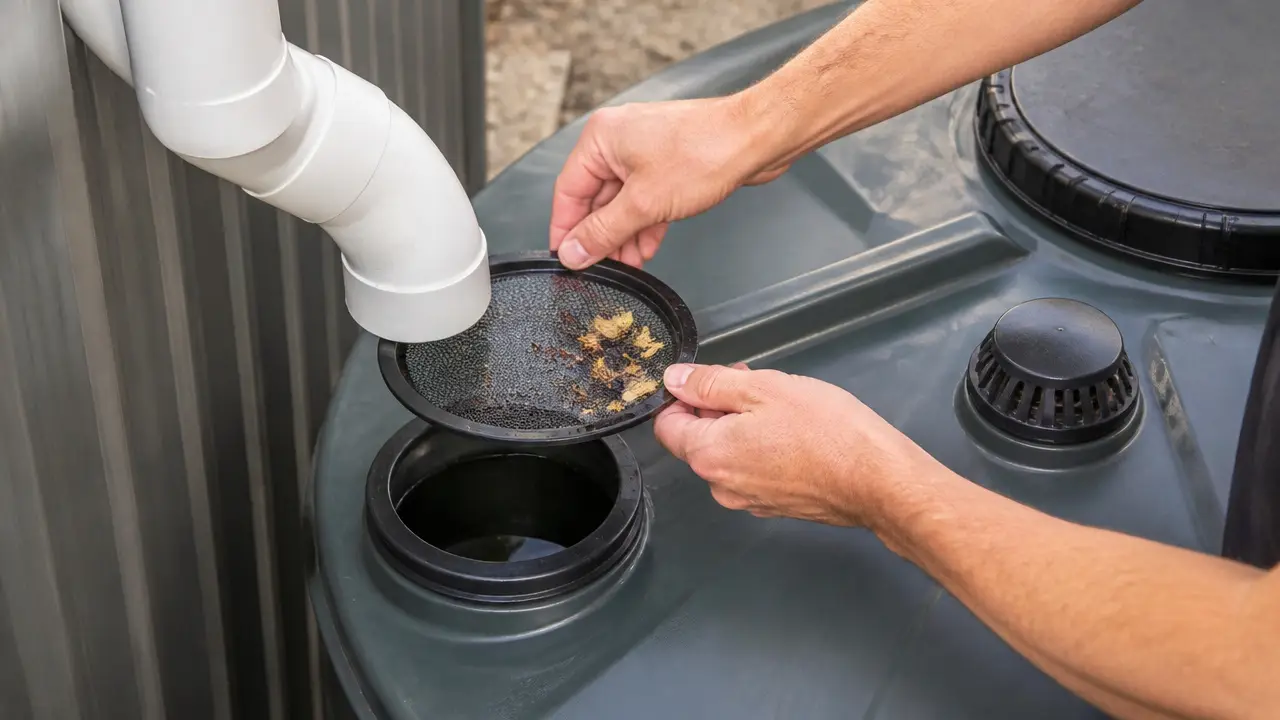
Route overflow to a suitable drainage location allowed by local rules. Avoid sending large amounts of water toward a building foundation or neighboring property.
Screen openings where appropriate to help keep mosquitoes, leaves, and animals out.
Keep Debris Out of the PVC Connections
Leaves and roof debris can clog connecting pipes, especially near low barrel outlets.
Good upstream debris control reduces this problem.
Depending on the system, that may include:
- Gutter guards
- Downspout screens
- Inlet screens
- Sediment traps
- First-flush components
A first flush device diverts some of the initial roof runoff at the start of a rain event. That first runoff can carry a higher concentration of loose dirt and debris from the roof.
A first flush does not make rainwater safe to drink. It is simply one possible prefiltration step.
One Straight Pipe or a Manifold?
Two barrels can often be connected directly with one section of PVC.
Larger systems may work better with a manifold.
A manifold is a main pipe that several barrels connect to through individual branches.
For example:
Barrel 1 → branch fitting Barrel 2 → branch fitting Barrel 3 → branch fitting Barrel 4 → branch fitting
All four branches connect to one common PVC line.
This arrangement can make isolation valves, drainage, expansion, and maintenance easier.
Try to keep the system layout simple. Every elbow, valve, adapter, and threaded connection adds another place that can clog or leak.
Avoid Rigid Plumbing Between Unstable Barrels
PVC is relatively rigid.
If two barrels sit on separate blocks that settle differently, the barrels can move while the connecting pipe tries to stay fixed. That can place significant stress on bulkhead fittings.
Prevent this by building a stable shared foundation and properly supporting the plumbing.
In installations where movement is difficult to avoid, a short suitable flexible connection between the tank fitting and rigid plumbing may help isolate movement. Any flexible material should be suitable for the water being stored, expected pressure, outdoor exposure, and local conditions.
Plan for Cleaning
Rain barrels eventually collect sediment.
Bottom-connected barrels can also allow sediment and small debris to enter the common pipe.
Design the plumbing so you can inspect and flush important sections.
Useful features can include:
- Removable unions
- Drain valves
- Accessible cleanout points
- Isolation valves
- Adequate space around fittings
Avoid permanently installing plumbing where reaching a fitting later would require moving a full barrel.
Protect the System From Freezing
PVC connections and water-filled fittings can be damaged by freezing.
In freezing climates, exposed pipes, valves, bulkheads, and barrels may require seasonal draining or another appropriate winterization plan.
Simply insulating a pipe does not guarantee that standing water inside it will not freeze.
Follow the barrel and plumbing component manufacturers' cold-weather recommendations and design the system so trapped water can be drained where freezing is expected.
Common Problems With PVC-Connected Rain Barrels
The first barrel fills but the others stay low
The connecting line may be too small, blocked, installed at different heights, or restricted by a valve or fitting.
Check for debris and confirm that the water path between barrels is open.
A bulkhead fitting leaks
Possible causes include:
- Incorrect gasket placement
- Damaged gasket
- Rough sealing surface
- Oversized hole
- Loose fitting
- Overtightened fitting
- Sideways pressure from the PVC pipe
Supporting and realigning the plumbing may solve a leak caused by pipe stress.
Water remains in one barrel
Check whether the barrel outlets and connecting pipe are at the same elevation.
Sediment or debris may also be restricting the line.
PVC joints crack
Rigid plumbing may be carrying the weight of the barrels or moving as the supports settle.
Check the barrel base and pipe supports before simply replacing the cracked fitting.
A Simple Two-Barrel Layout
A practical bottom-connected system can look like this:
Downspout → screened inlet → Barrel 1 → low PVC connection → Barrel 2 → outlet
A separate overflow near the top carries excess water away once both barrels are full.
This arrangement lets water move between the barrels while keeping the system fairly simple.
For three or more barrels, you can continue the same pattern or connect each barrel to a common PVC manifold.
Frequently Asked Questions
Can I connect two rain barrels with PVC pipe?
Yes. Install suitable tank-wall fittings in both barrels and connect them with PVC pipe. A low connection allows the water levels to equalize, while a high connection can transfer overflow from one barrel to another.
Should rain barrels be connected at the top or bottom?
Connect them near the bottom if you want the barrels to fill and drain together. Connect them near the top if you want one barrel to overflow into the next. Bottom connections usually provide access to more of the combined stored water.
Do connected rain barrels need to be the same size?
Not necessarily. Different-sized barrels can share a low connection as long as the fittings and water levels are arranged correctly. Their tops do not have to be the same height, but overflow planning becomes especially important when container heights differ.
Do rain barrels have to be level with each other?
For bottom-connected barrels, keeping the connection points at approximately the same height makes installation and water movement easier. The barrels should also sit on stable, level supports so movement does not strain the PVC plumbing.
Can I use PVC glue on the rain barrel itself?
PVC cement is intended for compatible PVC pipe and fittings, not for sealing a PVC pipe directly into a hole in a barrel. Use a suitable bulkhead or tank fitting to create the connection through the barrel wall.
Why are my connected rain barrels not filling evenly?
The connecting pipe may be restricted, clogged, too small for the incoming flow, or installed at different heights. Closed valves and poorly aligned fittings can also limit water movement.
Do connected rain barrels still need an overflow pipe?
Yes. Once all connected barrels are full, incoming rainwater still needs somewhere to go. Provide a screened overflow that carries excess water safely away from structures and other sensitive areas.
Can connected rain barrels provide drinking water?
Connecting barrels only increases storage capacity. It does not make roof runoff potable. Drinking-water use requires an appropriate collection system, treatment stages, current laboratory testing, maintenance, and compliance with applicable local requirements.