
As an affiliate, we may earn a commission from qualifying purchases. We get commissions for purchases made through links on this website from Amazon and other third parties.
Best Overall
Best 30/50 PSI
Best 40/60 Replacement
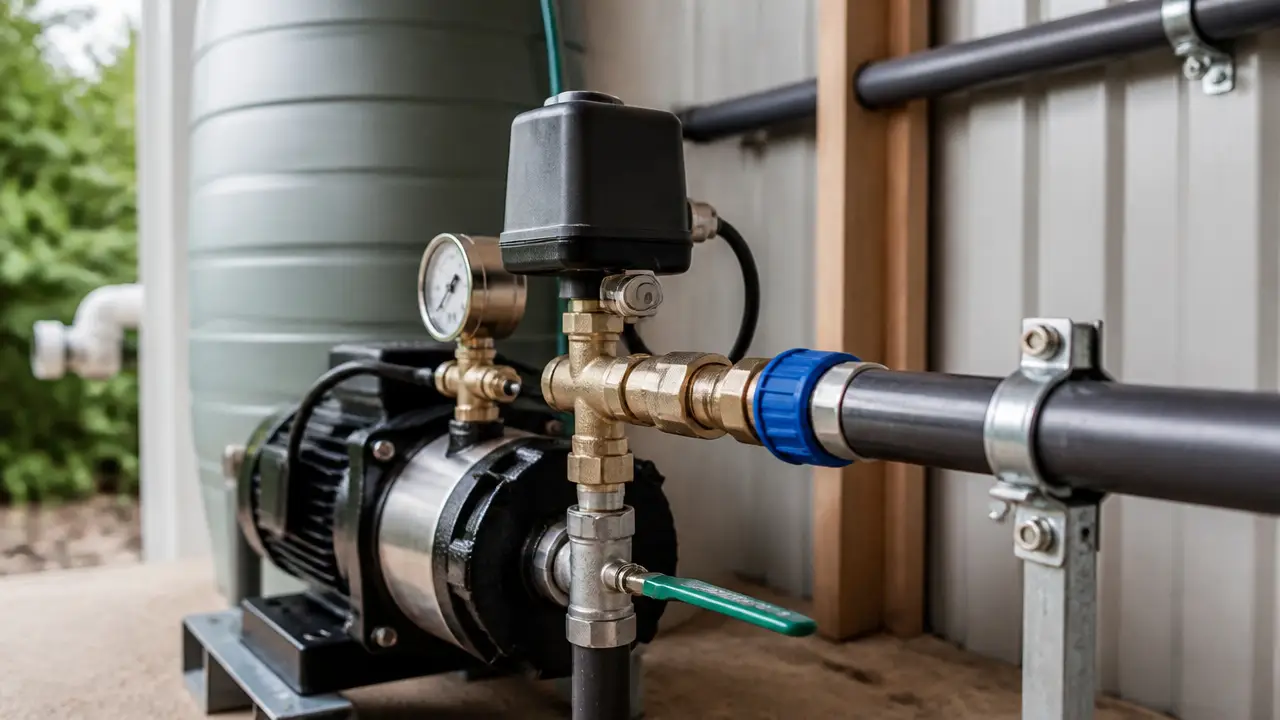
A pump pressure switch is a simple part with an important job: it starts the pump when system pressure falls to the cut-in point and stops it when pressure reaches the cut-out point. For a rainwater system with a pressure tank, the right switch needs to match the desired pressure range, the pump circuit, the pressure-tank setup, and the small threaded connection where the switch senses water pressure.
The products here mainly split into 30/50 PSI and 40/60 PSI ranges. A 30/50 switch starts at a lower pressure and can suit systems that do not need as much outlet pressure. A 40/60 switch gives a higher operating band, but the pump, tank precharge, filters, hoses, fixtures, and irrigation equipment all need to be appropriate for that pressure.
Electrical ratings matter, but several prepared voltage fields conflict across these product records. Where the electrical information is not consistent, this guide does not use a voltage value as the reason to choose the switch. Match the exact switch markings to the pump motor and circuit before wiring. If you are not comfortable working inside a pump circuit, use a qualified electrician or pump technician.
Pump Pressure Switches at a Glance
| Product | Best For | Key Strength | Main Tradeoff |
|---|---|---|---|
| Square D FSG2J24CP | Established 40/60 replacement | 40/60 PSI operation, 1/4-inch fluid connection, listed safety certifications | Some supplied identity and voltage details are inconsistent, so exact unit markings matter |
| WHK 30/50 PSI | Lower-pressure systems | Pre-set 30/50 operating range with 1/4-inch female NPT | Electrical and material fields conflict |
| WHK 40/60 PSI | Straight 40/60 replacement | 1/4-inch NPT connection and common 40/60 range | Voltage information is inconsistent |
| FanWayer 40/60 PSI 2-Pack | Keeping a matching spare | Two switches with 1/4-18 NPT female connections | Adjustment behavior has been inconsistent on some units |
| YSD 40/60 PSI | Clearly labeled 220V setup | 40/60 pressure range and 1/4-inch female NPT | Short service-life reports make it the weakest durability bet here |
Best Overall: Square D FSG2J24CP 40/60 PSI Pressure Switch
1 / 5
Square D FSG2J24CP 40/60 PSI Water Pump Pressure Switch

Pressure Range
40/60 PSI
Fluid Connection
1/4 in internal
Enclosure
NEMA 1
The Square D FSG2J24CP is the strongest all-around choice for a conventional pressure-tank system that calls for a 40/60 PSI switch. It is built around a 40 PSI cut-in and 60 PSI cut-out operating range, with a small internal fluid connection for sensing system pressure. That familiar setup makes it suitable for many jet, submersible, and other electrically driven water-pump installations when the pump and tank are designed for the same pressure band.
Its NEMA 1 enclosure is intended for a protected indoor-style location rather than direct outdoor weather exposure. Screw-clamp terminals support a conventional hard-wired installation. The product is also presented with UL and CSA listings, which is useful for a component that directly controls a pump motor circuit.
Long-service replacement experiences are the strongest practical reason it ranks first. It has been used as a replacement for pressure switches that had been in service for decades, and the factory 40/60 setup can reduce adjustment work when the rest of the system already uses that range. The product record contains conflicting voltage information and some identity complaints, so use the markings on the exact received switch for electrical matching rather than relying on a broad product-family description.
Why It Works
- The 40/60 PSI range fits a common pressure-tank setup.
- A 1/4-inch fluid connection is standard for many pump-switch manifolds.
- Screw terminals and a compact enclosure suit a conventional permanent installation.
- UL and CSA listing information adds a useful electrical-safety reference for the exact model.
What To Keep In Mind
- Use the exact unit markings for voltage and motor-load matching because the prepared voltage fields conflict.
- NEMA 1 is not an exposed-weather enclosure.
- It does not include an Auto/Start/Off lever in the form represented here.
- Pressure-tank precharge needs to match the chosen switch range for the system to behave correctly.
Best 30/50 PSI: WHK Water Pump Pressure Switch
2 / 5
WHK 30/50 PSI Water Pump Pressure Switch

Cut-In
30 PSI
Cut-Out
50 PSI
Connection
1/4 in female NPT
The WHK 30/50 switch is the natural choice when a lower pressure band fits the pump and intended water use. It starts the pump around 30 PSI and stops it around 50 PSI, which can work well for garden, cabin, or other pressure systems that do not need a 60 PSI upper setting.
The 1/4-inch female NPT connection is useful because it matches common pressure-switch nipples and tank tees. The switch is intended as an automatic electrical control, with an adjustable differential around its basic 30/50 setup. For a replacement job, the cleanest installation is one where the old switch used the same pressure range and connection size.
The product data contains both material and voltage conflicts, so those details should not be generalized across every unit. One more important caution comes from pump behavior: a pressure switch that fails to cut out can keep a pump running and create a serious system problem. Watch the first full pressure cycle after installation and shut the system down if the pump does not stop at the intended pressure.
Why It Works
- The 30/50 PSI range is clearly defined and useful for lower-pressure systems.
- A 1/4-inch female NPT port fits many standard pump manifolds.
- It can be a straightforward replacement when the old switch used the same range.
- The differential can be adjusted when the pump and tank design allow it.
What To Keep In Mind
- Electrical supply information is inconsistent, so use the exact switch markings for wiring decisions.
- The pressure tank needs the correct precharge for a 30 PSI cut-in system.
- Observe the first several start-and-stop cycles after installation.
- If the pump continues running past the intended cut-out pressure, shut it off and correct the control problem before further use.
Best 40/60 Replacement: WHK Water Pump Pressure Switch
3 / 5
WHK 40/60 PSI Water Pump Pressure Switch
Cut-In
40 PSI
Cut-Out
60 PSI
Connection
1/4 in NPT
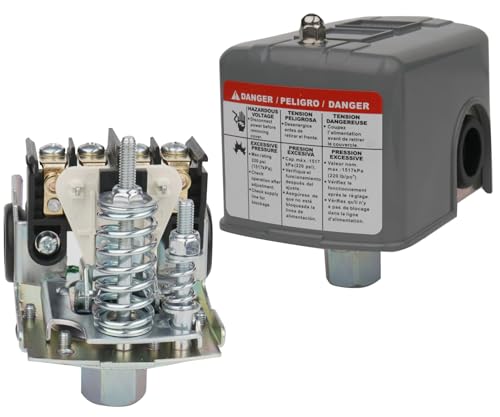
The 40/60 WHK switch is aimed at the same common pressure band as the Square D option but in a basic replacement format. It uses a 1/4-inch NPT pressure connection and is designed to start the pump near 40 PSI and stop it near 60 PSI.
That makes it most useful when the existing rainwater pressure system already works well at 40/60 and the old switch has failed mechanically, developed a leak, or suffered contact wear. Keeping the pressure range unchanged avoids turning a simple control replacement into a full pressure-system redesign.
The switch has a protective cover and large electrical contacts. Product-specific use has included successful direct replacement of older leaking switches. Voltage information in the prepared fields is inconsistent, so the exact received switch needs to be matched to the motor circuit before installation.
Why It Works
- It provides a straightforward 40/60 PSI operating band.
- The 1/4-inch NPT connection suits common water-pump pressure manifolds.
- It is well suited to replacing an existing switch without changing system pressure targets.
- The covered contact assembly keeps the mechanism enclosed in a protected installation area.
What To Keep In Mind
- Do not assume voltage compatibility from a generic product description.
- Keep the switch out of direct rain and persistent moisture.
- A leak at the pressure connection can affect both the plumbing and the switch mechanism.
- Match pressure-tank precharge to the cut-in setting.
Best Two-Pack: FanWayer 40/60 PSI Pressure Switches
4 / 5
FanWayer 40/60 PSI Pressure Switches

Pressure Range
40/60 PSI
Connection
1/4-18 NPT female
Pack
2
The FanWayer set is useful when you want two matching 40/60 PSI switches for separate pumps or one installed switch plus a spare. Each unit uses a 1/4-18 NPT female pressure connection and is intended to control an electrically driven water pump.
Keeping a matching spare can be practical on a remote rainwater system where a failed pressure switch would stop normal water service. It also avoids trying to source a replacement with different threads or pressure settings during a breakdown.
The tradeoff is consistency. Some units have operated and adjusted normally, while others have restarted too close to the cut-out pressure and resisted adjustment. That makes first-cycle observation especially important. A spare is only useful if both switches operate correctly in the intended range.
Why It Works
- Two switches can cover two systems or provide a ready spare.
- The 40/60 PSI range matches many conventional pressure-tank setups.
- A 1/4-18 NPT female port suits common pressure-switch plumbing.
What To Keep In Mind
- Observe the actual cut-in and cut-out behavior before leaving the system unattended.
- Adjustment may not be equally consistent across every unit.
- Electrical power should be isolated before any wiring work.
- Keep the spare dry and protected until it is needed.
Best Clearly Labeled 220V Option: YSD 40/60 PSI Pressure Switch
5 / 5
YSD 40/60 PSI Well Pump Pressure Switch

Pressure Range
40/60 PSI
Connection
1/4 in female NPT
Operating Voltage
220 VAC
The YSD switch is the only option here with a clear 220 VAC operating-voltage field and no separate voltage conflict attached to that value. It also uses a 1/4-inch female NPT port and a 40/60 PSI pressure range, so its basic plumbing layout is familiar.
That does not mean it should be chosen from voltage alone. A pressure switch also needs suitable contact ratings for the pump motor and circuit. The 220 VAC label is simply the clearest electrical distinction in this group, not permission to connect it to any 220-volt pump.
Durability is the reason it ranks last. Several product-specific experiences describe switches that needed repeated adjustment or failed after only weeks or a few months. For a system where water service matters, that short-life pattern outweighs the convenience of the clearly labeled voltage.
Why It Works
- The prepared operating-voltage field clearly identifies 220 VAC.
- It uses a common 40/60 PSI pressure range.
- The 1/4-inch female NPT port fits many pressure-switch manifolds.
What To Keep In Mind
- Short service-life reports make it a weaker reliability choice than the higher-ranked options.
- Motor current and contact ratings still need to match the pump.
- Do not keep readjusting a failing switch as a substitute for replacement.
- Keep the enclosure protected from direct weather and water spray.
How to Choose a Pump Pressure Switch
Pick the Pressure Range First
The switch range should match the pump, pressure tank, and intended water use. A 30/50 system starts sooner and stops at a lower pressure. A 40/60 system gives more outlet pressure but asks the pump and every downstream component to operate at a higher upper limit.
Changing from 30/50 to 40/60 is not just a switch swap. The pressure tank precharge, pump capability, pipe ratings, filter housings, regulators, and fixtures all need to suit the new range.
Match the Pressure-Tank Precharge
A bladder-style pressure tank usually needs its air precharge set relative to the switch cut-in pressure while the water side is depressurized. The exact setting should follow the tank and pump instructions.
If the precharge is wrong, the pump can short-cycle, water delivery can feel uneven, and the pressure tank may not provide the intended drawdown between pump starts.
Match the Fluid Connection
Many switches here use a 1/4-inch female NPT pressure connection. That still needs a clean matching male fitting, often on a tank tee or short nipple. Corrosion, scale, thread damage, or debris in the small pressure passage can prevent the switch from sensing system pressure correctly.
Do not force mismatched threads. A leaking pressure port puts water close to electrical contacts and can also give unstable pressure behavior.
Match the Electrical Load
The switch contacts have to handle the pump motor circuit or control a separate contactor sized for the motor. Supply voltage by itself is not enough information.
Motor starting current, horsepower, phase, and the wiring method all matter. If the switch is not a direct electrical match for the pump, a qualified professional can select the proper control arrangement.
Protect the Switch From Water and Weather
A pressure switch belongs in a dry, accessible location appropriate to its enclosure rating. Leaking plumbing, condensation, outdoor rain, and corrosion can shorten its life and create an electrical hazard.
Do not wrap a wet switch in an improvised cover that traps condensation. Use a proper enclosure or protected pump location designed for the installation.
Common Pressure-Switch Problems
The Pump Will Not Stop
Turn the pump off if system pressure continues rising past the intended cut-out point. Possible causes include a bad switch, blocked pressure-sensing port, incorrect adjustment, a wiring fault, or another control problem.
Do not keep the pump running while trying random adjustments. Excess pressure can damage plumbing and equipment.
The Pump Starts and Stops Too Often
Rapid cycling often involves more than the switch. Pressure-tank precharge, tank size, small leaks, low-flow demand, and pump sizing can all contribute.
A new switch will not fix a waterlogged or incorrectly precharged pressure tank.
The Switch Does Not Sense Pressure Correctly
A clogged 1/4-inch nipple or sensing passage can isolate the switch from real system pressure. Corrosion or sediment is especially relevant in untreated-water systems.
Service the pressure connection only after electrical power is isolated and water pressure is safely relieved.
Frequently Asked Questions
What is the difference between a 30/50 and 40/60 pressure switch?
A 30/50 switch starts the pump near 30 PSI and stops it near 50 PSI. A 40/60 switch starts and stops about 10 PSI higher. The correct range depends on the pump, pressure tank, and equipment served.
Can I replace a 30/50 switch with a 40/60 switch?
Only when the pump and every connected component can safely operate at the higher pressure and the pressure-tank precharge is adjusted for the new range. It is not always a direct swap.
What size connection do pump pressure switches use?
Many residential switches use a 1/4-inch female NPT pressure connection, including several models here. Measure the existing manifold before ordering a replacement.
Does a pressure switch control pump flow?
No. It responds to pressure. Pump flow depends on the pump curve, suction conditions, pipe size, restrictions, and outlet demand.
Why does my pump keep short-cycling with a new switch?
The pressure tank may have incorrect precharge, insufficient drawdown, or another system problem. Small leaks and low-flow demand can also cause frequent cycling.
Can I wire a pump pressure switch myself?
Only if you have the required electrical knowledge and the switch is properly matched to the pump circuit. Pump circuits can involve hazardous voltage and high motor starting current, so professional installation is appropriate when there is any uncertainty.
For a digital alternative to a mechanical switch, automatic pump controllers add electronic start-and-stop logic. If the project is still at the pump-selection stage, battery-powered water transfer pumps suit portable transfer rather than fixed pressure service. For manual backup without a motor circuit, hand pumps for water barrels keep water movement simple.