As an affiliate, we may earn a commission from qualifying purchases. We get commissions for purchases made through links on this website from Amazon and other third parties.
For many homes, 10 gallons per minute (GPM) is enough water flow for normal household use. It can usually handle a shower, a faucet, and another small water use at the same time.
But 10 GPM is not automatically enough for every house. What matters is how many fixtures may run together, the pressure they need, and whether the water source can keep supplying that flow.
What Does 10 GPM Mean?
GPM means gallons per minute. It tells you how much water can move through a pipe, pump, well system, or other part of the water system each minute.
A system delivering 10 GPM can move:
- 10 gallons in one minute
- 100 gallons in 10 minutes
- 600 gallons in one hour if it could run continuously at that rate
That does not mean your home uses 600 gallons every hour. Most fixtures turn on only for short periods.
The main question is whether your system can supply enough water when several fixtures are running at once.
Is 10 GPM Good for a House?
For a typical small or medium home, 10 GPM is often a practical flow rate.
A house might have several fixtures operating at the same time. For example:
| Fixture or use | Typical flow range |
|---|---|
| Shower | About 1.5-2.5 GPM |
| Bathroom faucet | About 0.5-1.5 GPM |
| Kitchen faucet | About 1.5-2.2 GPM |
| Washing machine | Often several GPM while filling |
| Dishwasher | Usually draws water in short cycles |
| Toilet refill | Often around 1-3 GPM |
Actual flow depends on the fixture, pressure, plumbing, and local efficiency requirements.
Consider a house running:
- One shower at 2 GPM
- One kitchen faucet at 2 GPM
- One toilet refilling at 2 GPM
That is about 6 GPM.
A 10 GPM supply would normally have some capacity left for another fixture.
Problems are more likely when several high-flow uses happen together.
When 10 GPM May Not Be Enough
Ten GPM can feel limited in a larger household with many simultaneous water demands.
For example, you might have:
- Two showers running
- A washing machine filling
- A kitchen faucet running
- A toilet refilling
- Outdoor irrigation operating
Together, those loads can approach or exceed 10 GPM.
When demand becomes greater than the available supply, you may notice:
- Lower shower pressure
- Slower faucet flow
- Pressure changes when toilets refill
- Pumps running continuously
- Irrigation performing poorly
The problem may not be the total amount of water available. It may simply be that the system cannot move water fast enough during peak demand.
Flow Rate and Water Pressure Are Not the Same
A common mistake is to treat GPM and pressure as the same thing.
They are related, but they measure different things.
Flow rate is how much water moves each minute.
Pressure is the force pushing that water through the pipes.
A pump might be capable of 10 GPM, but that does not mean it will provide 10 GPM everywhere in the house.
Actual flow can fall because of:
- Long pipe runs
- Small pipes
- Filters
- Valves
- Elevation changes
- Plumbing fittings
- Pressure tanks
- Pump operating limits
A pump specification should also be checked at the pressure and lift required by your system.
A 10 GPM Pump Does Not Always Deliver 10 GPM
Pump ratings need context.
A pump may be advertised or described as having a maximum flow near 10 GPM. That maximum may occur when the pump has very little resistance to work against.
Once the pump has to push water uphill or build pressure inside household plumbing, its available flow usually falls.
This is where head height matters.
Head height is a way of describing how much resistance a pump must overcome. It includes the vertical lift from the water source and other pressure losses in the system.
For example, a pump pulling from a ground-level cistern and supplying a second-floor bathroom has more work to do than a pump moving water between two nearby tanks.
When choosing a pump, look at its pump curve rather than only its maximum GPM number. The curve shows how much water the pump can move at different head levels.
What About a Well That Produces 10 GPM?
A well producing 10 GPM is a different situation from a household pipe delivering 10 GPM.
The well's production or recovery rate tells you how quickly groundwater enters the well.
A 10 GPM recovery rate can be plenty for many homes because household water demand is not usually continuous.
A pressure tank and the water stored in the well can help cover short periods when demand is high.
For example, the house might briefly use 12 GPM even though the well produces 10 GPM. Stored water can supply part of the difference.
Long periods of demand above the well's recovery rate are a different matter. They can lower the water level and may eventually cause the pump to lose access to water.
Well depth, available storage, pump placement, pressure tank size, and recovery rate all matter.
What About a Rainwater Harvesting System?
For a rainwater system supplying household fixtures, 10 GPM may also be enough, depending on what the water will serve.
The pump still needs to provide enough flow at the required pressure.
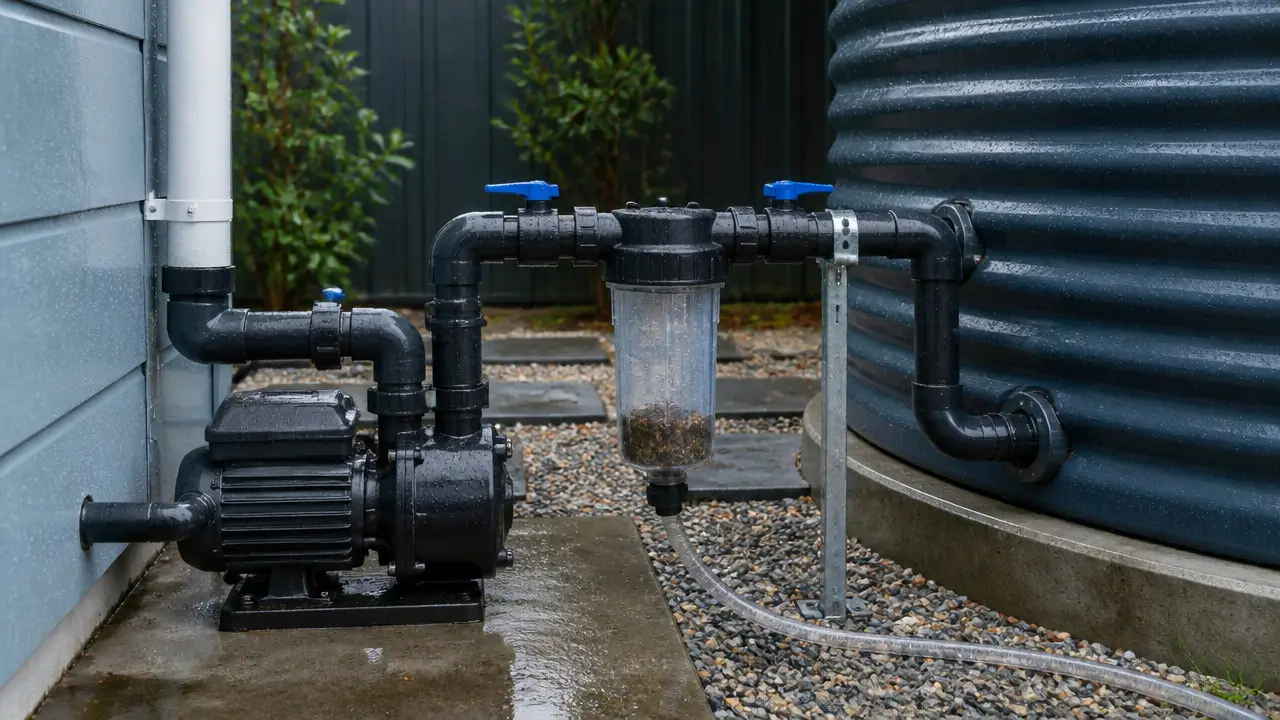
A rainwater system may also include:
- Tank outlet fittings
- Suction lines
- Pump strainers
- Sediment filters
- Treatment equipment
- Check valves
- Pressure tanks
- Distribution pipes
Every part of that path can restrict flow.
A pump capable of 10 GPM cannot deliver 10 GPM to the house if a small outlet, clogged filter, undersized pipe, or other restriction limits the system to less.
For non-potable uses such as toilet flushing, laundry where permitted, and irrigation, 10 GPM may cover many normal setups.
If rainwater will enter household plumbing, follow applicable plumbing and cross-connection rules.
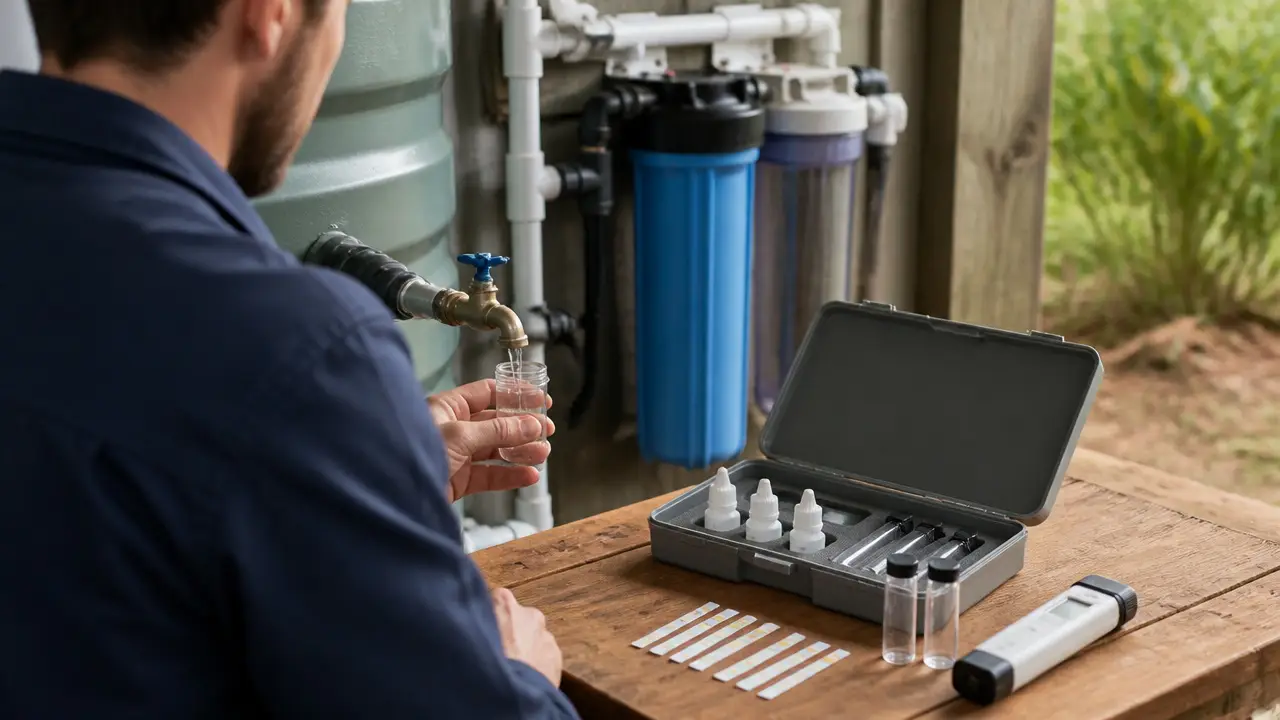
For drinking-water use, flow rate is only one part of the system. Roof runoff should not be assumed safe to drink. Potable use requires suitable collection, treatment, maintenance, water-quality testing, and compliance with applicable local requirements.
How Many Fixtures Can 10 GPM Support?
There is no exact fixture count that works for every home because fixtures have different flow rates.
A better method is to estimate which fixtures are likely to run together.
For example:
Light demand
- One 2 GPM shower
- One 1 GPM bathroom faucet
Planning around typical water-pump flow rates helps verify flow capacity after accounting for total lift.
Total: about 3 GPM
A 10 GPM supply has plenty of room.
Moderate demand
- Two 2 GPM showers
- One 2 GPM kitchen faucet
- One 2 GPM toilet refill
Total: about 8 GPM
Ten GPM may still work well.
Heavy demand
- Two 2.5 GPM showers
- One 2 GPM kitchen faucet
- Washing machine drawing 4 GPM
Total: about 11 GPM
A 10 GPM system may show a noticeable drop in flow or pressure while everything runs together.
These examples are only estimates. Check the actual fixtures in your house when sizing a system.
Household Size Matters Less Than Peak Use
A five-person household does not necessarily need five times the flow of a one-person household.
Daily water use and peak flow are different measurements.
A family may use hundreds of gallons over a day while never using more than 8 GPM at once.
Another household may use less water overall but regularly run two showers and several appliances together.
For pump and plumbing sizing, peak simultaneous demand is usually more useful than total daily consumption.
Outdoor Water Use Can Change the Answer
Irrigation can use a large share of a home's available flow.
A garden hose, sprinkler zone, or irrigation system running while people are using water indoors can push demand above 10 GPM.
If your water system supplies both household fixtures and irrigation, calculate them together.
You can also reduce peak demand by running irrigation when showers, washing machines, and other major indoor uses are less likely to operate.
For a rainwater system, irrigation flow should also be matched to the pump and available tank storage. A pump that meets indoor needs may not provide the flow or pressure required by a large sprinkler system.
Pipe Size Can Limit a 10 GPM System
Even if your water source and pump can provide 10 GPM, the plumbing must be able to carry it without excessive pressure loss.
Long, narrow pipes create more resistance than short, larger pipes.
Other restrictions include:
- Small tank outlets
- Partly closed valves
- Too many tight fittings
- Clogged sediment filters
- Dirty screens
- Undersized hoses
- Restrictive treatment equipment
If a system performs well close to the pump but poorly at distant fixtures, pipe resistance may be part of the problem.
How to Tell If Your Current Flow Is Enough
The simplest test is to use the house normally during a busy period.
Try running the fixtures that are commonly used together.
Watch for:
- Shower flow dropping sharply
- Pressure changing when another faucet opens
- A pump that cannot maintain pressure
- Irrigation zones performing unevenly
- Pressure switches cycling rapidly
- Filters causing large pressure losses
If the system handles normal peak use without major pressure changes, its flow capacity may already be adequate.
For wells, pumps, and pressure systems, repeated pressure problems can have several causes. Do not assume you need a larger pump until the pressure tank, filters, pipe sizing, pump settings, water level, and other parts of the system have been checked.
Should You Size a Pump Larger Than 10 GPM?
Sometimes.
A larger house or system with heavy simultaneous demand may benefit from more available flow. But installing a much larger pump is not always the right fix.
An oversized pump can cause other problems if it does not match:
- The well or tank supply
- The pressure tank
- Pipe sizes
- Filters
- Electrical service
- Irrigation equipment
- Treatment equipment
With a rainwater tank, also make sure the outlet and suction plumbing can feed the pump properly. A larger pump cannot compensate for a restricted inlet.
The best pump is one that can provide the required flow at the required pressure while staying within the operating limits of the entire system.
The Bottom Line
Ten GPM is enough for many houses. It can often support normal use in a small or medium home, including several fixtures running at once.
It may not be enough when a home regularly has several showers, appliances, and irrigation loads running at the same time.
Do not judge a water system by GPM alone. Also consider pressure, pump head, pipe size, storage, well recovery, filters, and expected peak demand.
If you are sizing a pump or whole-house rainwater system, work backward from the fixtures that may run together. Then make sure every part of the system can provide that flow at the pressure you need.
Frequently Asked Questions
Is 10 GPM considered a good well flow rate?
A 10 GPM well recovery rate can support many homes. Whether it is enough depends on household demand, available well storage, pump setup, and how long high water use continues.
Can 10 GPM run two showers at once?
Usually, yes. Two typical showers may use roughly 3-5 GPM combined. Other fixtures operating at the same time will add to the total demand.
How many people can a 10 GPM system support?
There is no fixed number. Peak simultaneous use matters more than household size. A larger family that spreads water use through the day may have less peak demand than a smaller household that runs many fixtures together.
Is 10 GPM enough for a three-bedroom house?
It often is. The number of bedrooms does not directly determine required flow. Bathrooms, appliances, irrigation, fixture flow rates, and simultaneous use matter more.
Is 10 GPM enough for irrigation?
It may be enough for a small irrigation zone, drip irrigation, or modest garden watering. Larger sprinkler systems may need more flow. Check the required GPM and pressure for each irrigation zone.
Does a 10 GPM pump give 10 GPM at every faucet?
No. Pump flow usually decreases as pressure and head increase. Pipes, filters, valves, elevation, and other restrictions can reduce the flow that reaches a fixture.
Can I use a 10 GPM pump with a rainwater tank?
Possibly. The tank outlet, suction pipe, filters, pressure requirements, and pump curve must all match. Make sure the tank can supply water to the pump without starving its inlet.