As an affiliate, we may earn a commission from qualifying purchases. We get commissions for purchases made through links on this website from Amazon and other third parties.
A TDS reading of 150 ppm is generally a reasonable level for drinking water, but the number alone does not tell you whether the water is safe to drink.
TDS stands for total dissolved solids. It is a measure of dissolved minerals, salts, metals, and other substances in water. A reading of 150 ppm usually means roughly 150 milligrams of dissolved material per liter of water.
The U.S. Environmental Protection Agency lists 500 mg/L as its secondary standard for TDS. This is mainly an aesthetic guideline related to taste, staining, deposits, and scaling. It is not a health-based safety limit.
So, 150 TDS can be perfectly normal drinking water. But you still need to know what is dissolved in the water and whether harmful germs or chemicals are present.
What Does 150 TDS Mean?
A TDS level of 150 means the water contains a moderate amount of dissolved material.
Those dissolved solids might include:
- Calcium
- Magnesium
- Sodium
- Bicarbonate
- Chloride
- Sulfate
- Small amounts of other minerals or metals
Many of these substances occur naturally in groundwater and treated tap water.
A TDS meter cannot tell them apart. It gives you one combined number.
That is why two water samples can both measure 150 ppm TDS but have very different water quality.
One could contain mostly calcium and magnesium. Another could contain substances that need more careful testing.
Is 150 TDS Safe to Drink?
150 TDS is not unusually high, and the TDS level itself would not normally be a reason to avoid the water.
For comparison, the EPA's secondary TDS standard is 500 mg/L. Secondary standards deal mainly with things such as taste, color, staining, and mineral deposits rather than direct health effects.
But a reading below 500 does not make water potable. Potable means suitable for drinking.
TDS cannot tell you whether water contains:
- E. coli or other harmful microorganisms
- Nitrates
- Lead
- Arsenic
- Pesticides
- PFAS
- Other harmful chemicals
Some of these can occur at important levels without causing a large change in TDS.
Water can therefore have a TDS of 150 and still require treatment or be unsafe to drink.
Is Lower TDS Always Better?
No.
A lower TDS number does not automatically mean cleaner or safer water.
For example, water with 50 ppm TDS is not automatically safer than water with 150 ppm. The 150 ppm water might simply contain more harmless calcium and magnesium.
Very low-TDS water can also have a different taste because it contains fewer dissolved minerals.
The useful question is not:
"How low is the TDS?"
It is:
"What is in the water, and is it suitable for the way I plan to use it?"
What Can a TDS Meter Actually Tell You?
Most handheld TDS meters do not directly weigh all the dissolved solids in the water.
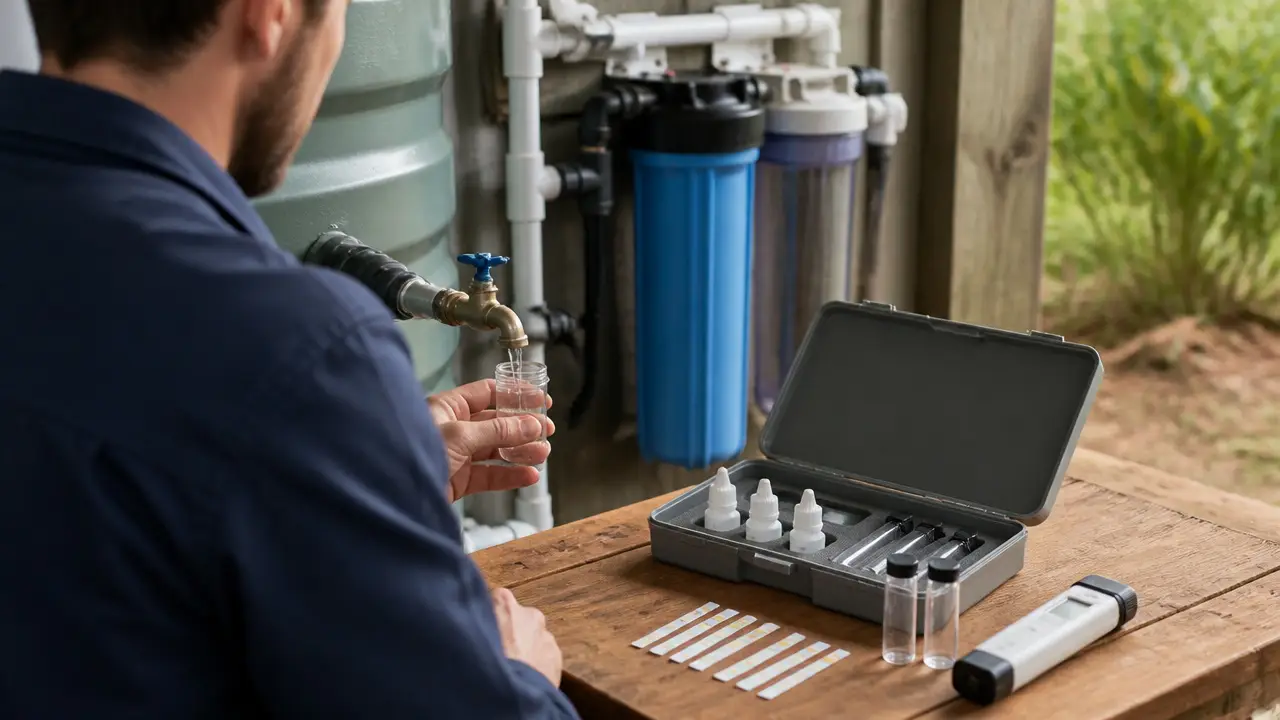
Instead, they measure electrical conductivity. Water conducts electricity more easily when it contains dissolved ions such as calcium, sodium, and chloride. The meter uses that conductivity reading to estimate TDS.
Because different meters use different conversion factors, a meter reading of 150 ppm should be treated as an estimate rather than a complete laboratory analysis.
A TDS meter is useful for:
- Comparing water before and after some treatment systems
- Watching for sudden changes in a water source
- Checking whether reverse osmosis is reducing dissolved solids
- Tracking general mineral levels over time
It is not a complete drinking-water test.
What If 150 TDS Is From Tap Water?
If the reading comes from a regulated public water supply, 150 ppm by itself is usually not concerning.
Your water utility tests for many contaminants that a handheld TDS meter cannot detect. In the United States, you can review the utility's annual water quality report for more useful information about your drinking water.
Pay attention to official water advisories as well. A normal TDS reading should never be used to ignore a boil-water notice or other public-health warning.
What If 150 TDS Is From Well Water?
Private well water needs more attention because it is generally the homeowner's responsibility to test it.
CDC recommends testing private well water at least once each year for total coliform bacteria, nitrates, TDS, and pH, along with other contaminants that may be important in your area. It recommends using a certified laboratory.
A well with 150 TDS might have excellent mineral quality while still containing bacteria, nitrate, arsenic, or another contaminant that a TDS meter cannot identify.
With drinking water with high TDS, you can compare which component needs attention based on the measured change.
Testing is especially important after:
- Flooding
- Repairs to the well
- Changes in taste, smell, or color
- Nearby contamination events
- Long periods when the well was not used
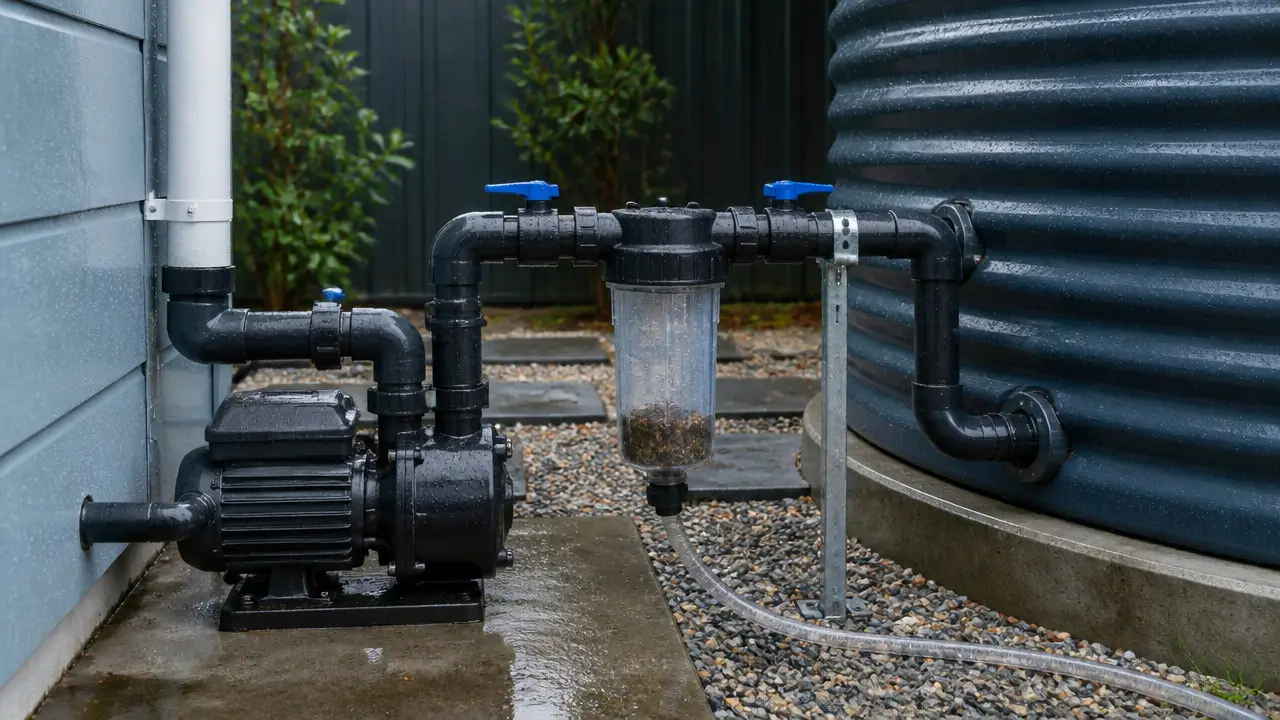
What If 150 TDS Is From Collected Rainwater?
Do not use a 150 TDS reading as proof that collected rainwater is safe to drink.
Rainwater can pick up contaminants from the air, roof, gutters, pipes, and storage tank. Bird droppings, dust, roofing materials, metals, and other contaminants can enter the system.
CDC states that collected rainwater is not necessarily safe to drink without appropriate testing and treatment. It recommends regular testing for germs and chemicals when rainwater is used for drinking, cooking, or bathing.
A first flush diverter can help improve collected water quality. A first flush diverter sends the first runoff from a storm away from the storage tank. That early runoff often carries more dirt and contamination from the roof.
But first flush diversion does not make rainwater potable on its own.
For drinking-water use, think about the whole system:
Roof and gutters → debris screening → first flush → storage → prefiltration → appropriate treatment → laboratory testing → ongoing maintenance.
The treatment stages needed depend on the actual contaminants in your water.
Can a Filter Change TDS?
It depends on the filter.
Ordinary sediment filters usually remove particles such as dirt and rust but do little to lower dissolved solids.
Many carbon filters can improve taste or remove certain chemicals while leaving much of the TDS unchanged.
Reverse osmosis can remove a large share of dissolved ions, so TDS meters are often useful for checking changes across an RO membrane.
However, even a large TDS reduction does not prove that every possible contaminant has been removed.
CDC notes that no single home water treatment method protects against every water-quality problem. Treatment should be selected for the specific germs or chemicals found in the water.
Should You Try to Lower 150 TDS?
Usually, there is no reason to treat water simply because its TDS is 150 ppm.
Treatment may make sense if laboratory testing finds a contaminant that needs removal, or if the water has another problem such as:
- Unpleasant taste
- Excessive hardness
- Corrosion
- Staining
- Scale buildup
- A specific chemical contaminant
Choose treatment based on the problem rather than trying to reach an arbitrary TDS number.
A water softener, for example, deals with hardness but may not lower TDS. Reverse osmosis lowers many dissolved solids but requires maintenance and is not automatically the correct treatment for every water source.
The Bottom Line
150 TDS is generally a normal and acceptable TDS level for drinking water. It is well below the EPA's 500 mg/L secondary guideline for TDS.
But TDS is mainly a measure of how much dissolved material is present. It does not tell you exactly what that material is, and it does not detect many important germs or contaminants.
For public tap water, review your utility's water quality information.
For private wells and rainwater systems, use appropriate laboratory testing and choose treatment based on what the testing finds. For collected rainwater intended for drinking, safe use requires suitable collection, treatment, testing, and maintenance rather than a target TDS number alone.
Frequently Asked Questions
Is 150 ppm TDS too high for drinking water?
No. A TDS level of 150 ppm is well below the EPA's 500 mg/L secondary guideline. However, TDS alone cannot show whether the water is microbiologically or chemically safe to drink.
Is 150 TDS better than 300 TDS?
Not necessarily. Both can contain normal dissolved minerals. The lower number does not prove that the water is safer because TDS does not identify individual contaminants.
What is a good TDS level for drinking water?
There is no single TDS number that proves drinking-water safety. The EPA lists 500 mg/L as a secondary standard related mainly to aesthetic issues such as taste and deposits. Drinking-water safety depends on the specific germs and chemicals present.
Can I drink rainwater if its TDS is 150?
Not based on that reading alone. Roof-collected rainwater can contain germs and chemicals even when its TDS is low. If rainwater will be consumed, it needs suitable collection, treatment, regular testing, and maintenance.
Does boiling water lower TDS?
Usually not. Boiling kills many microorganisms, but dissolved minerals and salts generally remain in the water. As water evaporates, their concentration can actually increase.
Does a carbon filter lower TDS?
Usually not by much. Carbon filters can remove certain chemicals and improve taste or odor, but most dissolved mineral ions pass through them.
Can a TDS meter detect lead or bacteria?
No. A TDS meter cannot identify lead, bacteria, arsenic, nitrates, or other individual contaminants. Laboratory testing is needed when you need to know whether those contaminants are present.