As an affiliate, we may earn a commission from qualifying purchases. We get commissions for purchases made through links on this website from Amazon and other third parties.
A TDS level of 400 ppm does not, by itself, tell you whether water is safe to drink.
For most fresh water, 400 ppm is roughly the same as 400 mg/L. That level is below the U.S. Environmental Protection Agency's secondary guideline of 500 mg/L for total dissolved solids. The World Health Organization also says water below about 600 mg/L TDS is generally considered good in terms of taste. However, neither number is a health-based safety limit.
The important question is what makes up those 400 ppm of dissolved material. A TDS meter cannot tell you that.
What Does 400 TDS Mean?
TDS stands for total dissolved solids. It is an estimate of the amount of dissolved material in water.
That material may include minerals and salts such as:
- Calcium
- Magnesium
- Sodium
- Chloride
- Bicarbonate
- Sulfate
A reading of 400 ppm means there are roughly 400 milligrams of dissolved material in each liter of water.
Many of those dissolved minerals can occur naturally. That is why a TDS reading of 400 ppm is not automatically a problem.
But TDS only gives you the total amount. It does not identify each substance.
Two water samples can both read 400 ppm while having very different water quality.
Is 400 TDS Within Drinking-Water Guidelines?
For taste and general household use, 400 ppm is within commonly used guidance.
The EPA lists 500 mg/L as its Secondary Maximum Contaminant Level for TDS. Secondary standards mainly address issues such as taste, staining, deposits, hardness, and other noticeable water-quality problems. The federal TDS secondary standard is not a health-based maximum contaminant level.
WHO's current drinking-water guidance states that water with TDS below about 600 mg/L is generally considered good in terms of palatability, while water above about 1,000 mg/L becomes increasingly unpleasant to drink. WHO does not set a health-based guideline value for TDS itself.
So a 400 ppm result can be summarized like this:
| TDS reading | What it tells you |
|---|---|
| 400 ppm | Moderate amount of dissolved material |
| Below EPA's 500 mg/L secondary guideline | Yes |
| Within WHO's generally good taste range | Yes |
| Proves the water is safe to drink | No |
| Identifies contaminants | No |
These points reflect EPA and WHO guidance available as of August 2026.
Why a TDS Meter Cannot Confirm Safe Drinking Water
Most handheld TDS meters do not directly weigh everything dissolved in the water.
They measure electrical conductivity and use that reading to estimate TDS. Water containing more dissolved ions usually conducts electricity more easily. The relationship between conductivity and actual TDS can vary with the types of dissolved substances present.
This makes a TDS meter useful for watching changes.
For example, it can help you notice that:
- A water source has changed.
- Mineral levels are rising.
- A reverse-osmosis system is removing fewer dissolved ions than before.
- Two water sources have very different dissolved-mineral levels.
It cannot tell you whether the water contains a specific harmful germ or chemical.
A TDS meter also cannot provide a complete safety assessment for:
- E. coli or other harmful germs
- Lead
- Arsenic
- Nitrate
- Pesticides
- Fuel or solvents
- Other individual contaminants
Some harmful contaminants can be present without producing an unusual TDS reading. CDC also warns that water's taste, smell, and appearance are not reliable ways to determine whether it is safe.
What If the 400 TDS Reading Comes From Tap Water?
If the water comes from a regulated public water system, the TDS meter should not be your main tool for deciding whether the water is safe.
Check your water utility's current water-quality report instead. Public systems test for regulated contaminants and provide water-quality information to customers.
A TDS reading around 400 ppm may simply reflect the mineral content of the source water.
If the TDS suddenly becomes much higher than normal, or the water changes in color, smell, or taste, contact the water supplier. A change is often more useful for troubleshooting than one isolated TDS number.
What If 400 TDS Comes From a Private Well?
A private well needs a different approach.
CDC recommends testing private well water at least once each year for harmful germs and chemicals. The exact tests should depend on local geology, nearby land use, possible contamination sources, and advice from your health department or drinking-water laboratory.
A 400 ppm TDS result may be caused mostly by naturally occurring minerals. It could also contain substances that need individual testing.
Do not assume that staying below 500 ppm means a well has passed a drinking-water test. The 500 mg/L TDS figure does not replace laboratory testing.
What If 400 TDS Comes From Collected Rainwater?
For a suitable TDS range for drinking water, first verify the next measurement needed before choosing treatment.
Be more cautious with rainwater intended for drinking.
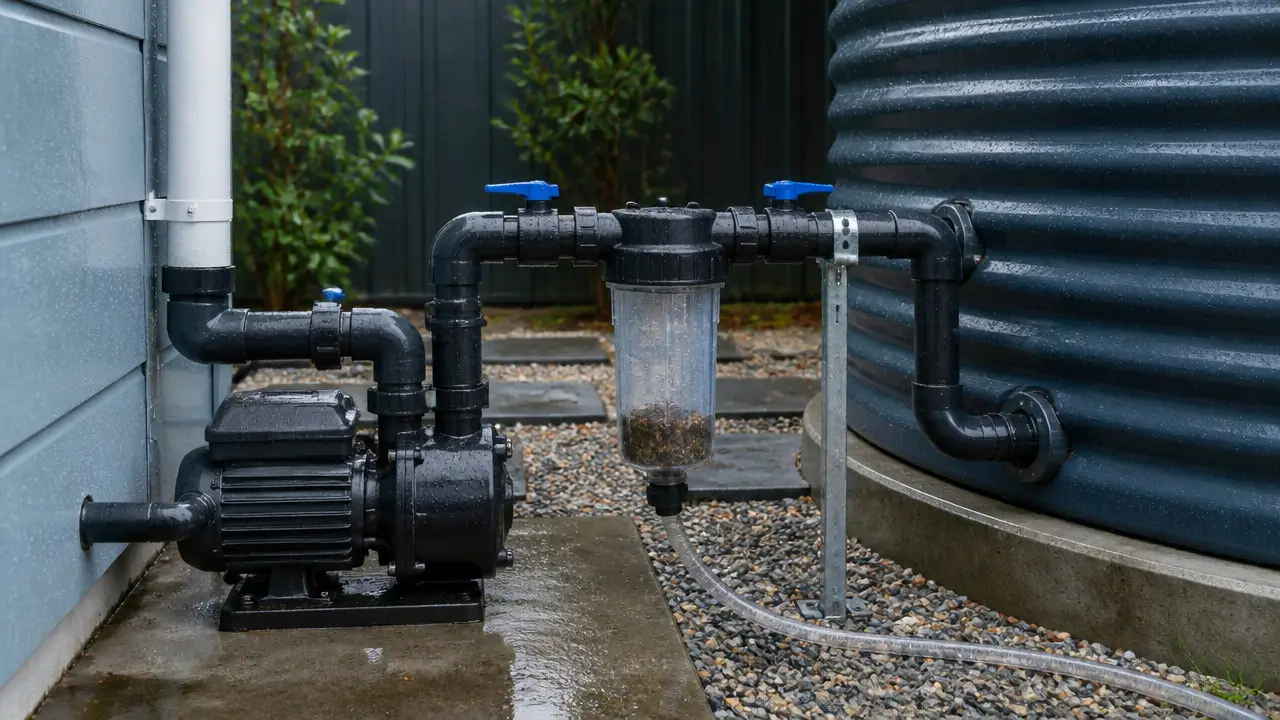
Collected rainwater is not automatically potable, meaning safe for drinking. Water can pick up contaminants from the air, roof, gutters, pipes, storage tank, animals, and other parts of the collection system. CDC notes that even rainwater that looks clean can contain harmful germs or chemicals.
A TDS reading of 400 ppm therefore cannot make collected rainwater safe to drink.
If rainwater will be used for drinking or cooking, think about the entire system:
- Collection surface: Roofing and gutter materials should be suitable for the intended water use.
- Debris control: Screens can keep leaves, insects, and larger debris out.
- First flush: A first-flush diverter sends away some of the first roof runoff, which often carries more dirt and contamination.
- Storage: The tank should be protected from animals, insects, debris, and unwanted surface water.
- Treatment: Treatment stages must match the actual contaminants present.
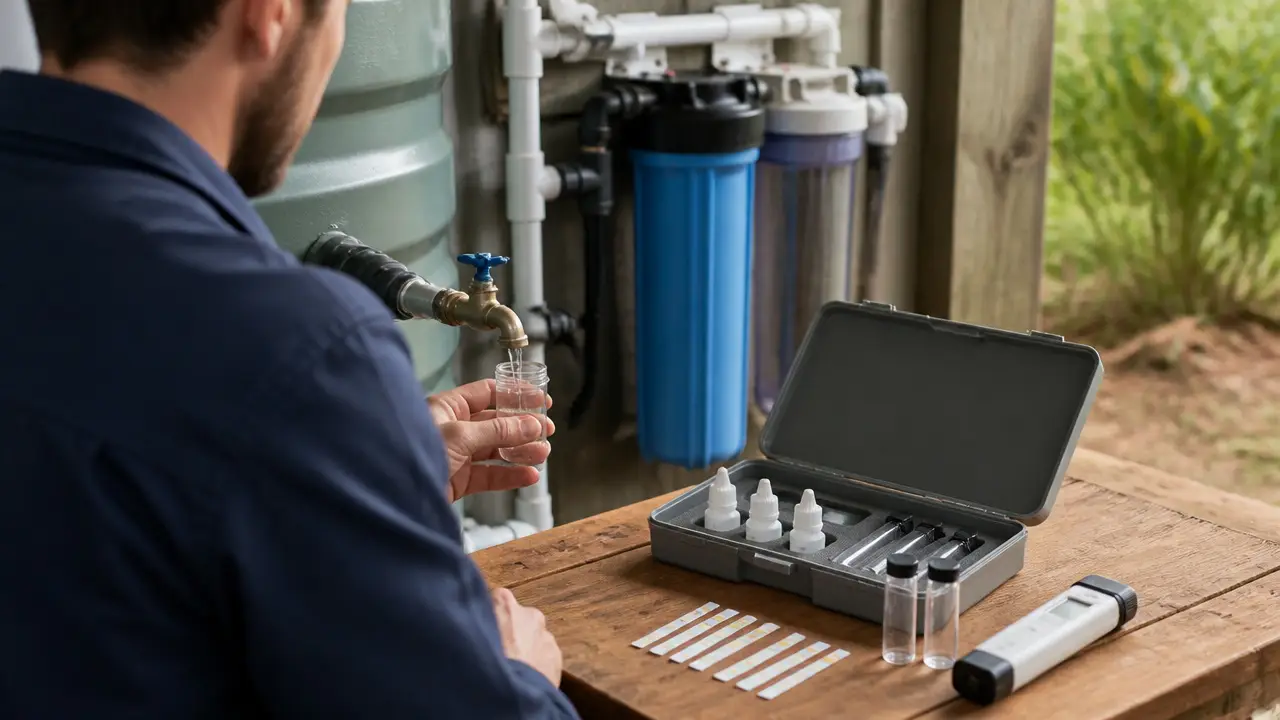
- Testing: Current laboratory testing is needed to check for relevant germs and chemicals.
- Maintenance: Filters, tanks, treatment equipment, and collection surfaces need continued upkeep.
CDC recommends regular testing when collected rainwater is used for drinking, cooking, or bathing. Your local health department can help determine which tests are appropriate.
A sediment filter, carbon filter, UV unit, reverse-osmosis system, or other single treatment stage should not be assumed to make untreated roof runoff safe on its own.
Should You Try to Lower a TDS of 400?
Not simply because the meter says 400.
Treatment should solve a known water-quality problem rather than chase a particular TDS number.
For example, if laboratory testing shows the water is suitable for drinking and the 400 ppm comes mostly from normal minerals, reducing TDS may provide little health benefit.
If a specific contaminant is present, treatment should be selected for that contaminant.
This matters because different treatments do different jobs. A sediment filter may catch particles but will not remove all dissolved substances. Carbon can reduce certain chemicals but does not remove everything. UV treatment can inactivate certain microorganisms when properly designed and maintained, but it does not remove dissolved salts or most chemicals.
Testing first gives you a much better basis for choosing treatment.
What Should You Do With a 400 TDS Reading?
If you only have a handheld meter result, treat 400 ppm as a water-quality clue, not a drinking-water approval.
For public tap water, review the utility's current water-quality report if you have concerns.
For a private well, use an appropriate certified laboratory and follow local health department guidance. CDC recommends testing private wells at least annually and whenever you suspect contamination or notice meaningful changes.
For drinking-water rainwater systems, use regular laboratory testing along with suitable collection, prefiltration, treatment, storage, and maintenance. CDC specifically recommends testing collected rainwater for germs and chemicals when it is used for drinking or cooking.
If your meter normally reads much lower than 400 and suddenly jumps to 400, that change is also worth investigating. Confirm the reading with a clean container and properly maintained meter before assuming the water itself has changed.
Frequently Asked Questions
Is 400 ppm TDS too high to drink?
Not necessarily. A TDS of 400 ppm is below the EPA's 500 mg/L secondary guideline and within WHO's generally good palatability range. But TDS alone cannot confirm that water is safe to drink because it does not identify individual contaminants.
What is a good TDS level for drinking water?
There is no single TDS number that proves water is safe. WHO does not establish a health-based guideline for TDS. Water below about 600 mg/L is generally considered good in terms of taste, but actual drinking-water safety depends on the substances and microorganisms present.
Is 500 TDS the maximum safe level?
No. The EPA's 500 mg/L TDS level is a secondary drinking-water standard related mainly to qualities such as taste, deposits, staining, and hardness. It should not be treated as a complete health-safety cutoff.
Can a TDS meter detect harmful contaminants?
A TDS meter cannot identify specific contaminants. It mainly estimates dissolved-ion concentration from electrical conductivity. Laboratory testing is needed when you need to know which germs or chemicals are present.
Does low TDS mean water is safe?
No. Water can have a low TDS reading and still contain harmful germs or chemicals. TDS should not replace appropriate drinking-water testing.
Is 400 TDS normal for well water?
It can occur because groundwater commonly picks up dissolved minerals from soil and rock. Whether that particular water is safe still depends on its individual chemical and microbiological results. CDC recommends testing private well water at least once each year.
Is rainwater with 400 TDS safe to drink?
The TDS reading cannot answer that question. Roof-collected rainwater can contain germs and chemicals from the air, roof, gutters, piping, animals, and storage system. Drinking-water use requires suitable collection and treatment plus current testing for relevant germs and chemicals.