As an affiliate, we may earn a commission from qualifying purchases. We get commissions for purchases made through links on this website from Amazon and other third parties.
A good total dissolved solids (TDS) level for drinking water is generally below 500 mg/L, which is about 500 parts per million (ppm) in typical freshwater. In the United States, the EPA lists 500 mg/L as a secondary drinking-water standard. This standard mainly deals with taste, deposits, staining, and other nuisance problems rather than health risk.
The World Health Organization says water with TDS below about 600 mg/L is generally considered good for taste. Above about 1,000 mg/L, water becomes increasingly unpleasant to drink. WHO does not set a health-based limit for TDS itself.
The important point is that a good TDS number does not prove that water is safe to drink. TDS tells you roughly how much dissolved material is in the water. It does not tell you exactly what that material is.
What TDS Means
TDS stands for total dissolved solids. These are substances dissolved in the water rather than particles floating in it.
Common dissolved solids include:
- Calcium
- Magnesium
- Sodium
- Potassium
- Bicarbonate
- Chloride
- Sulfate
Some dissolved minerals are naturally present in groundwater. Other dissolved substances can enter water from runoff, plumbing, treatment chemicals, road salt, sewage, or other sources. WHO describes TDS as a mixture of inorganic salts and small amounts of dissolved organic matter.
TDS is normally reported in milligrams per liter (mg/L). For the concentrations normally found in freshwater, mg/L and ppm are close enough that household TDS meters commonly display them as if they were equivalent.
What Is a Good TDS Range?
There is no single ideal TDS level for health. A practical way to interpret a reading is:
| TDS reading | Practical meaning |
|---|---|
| Below 500 mg/L | Within the EPA secondary guideline for TDS |
| 500–600 mg/L | Above the EPA secondary level but still within the range WHO describes as generally good for taste |
| 600–1,000 mg/L | Mineral taste and scaling may become more noticeable |
| Above 1,000 mg/L | WHO says drinking water becomes increasingly unpalatable |
The EPA's 500 mg/L value is a secondary standard, not a health-based maximum contaminant level. Secondary standards mainly address things such as taste, color, staining, hardness, and deposits.
WHO's current drinking-water guidance also says there is no health-based guideline value for TDS. High levels can affect taste and cause scaling, but the TDS number alone does not describe the health risk.
This means there is little reason to chase a specific number such as 50, 100, or 200 ppm simply because somebody calls it the "perfect" TDS.
Lower TDS Does Not Automatically Mean Better Water
A low TDS reading can look reassuring, but it should not be treated as a drinking-water safety test.
For example, a meter might show 50 ppm. That means the total concentration of electrically conductive dissolved substances is low. It does not establish that the water is free of harmful germs or specific chemicals.
A TDS reading also cannot tell you which dissolved substances make up the total. Two water samples could both read 300 ppm while having very different mineral and chemical compositions.
WHO's latest drinking-water guidance specifically treats TDS mainly as an acceptability issue rather than a health-based measure.
What Does a TDS Meter Actually Measure?
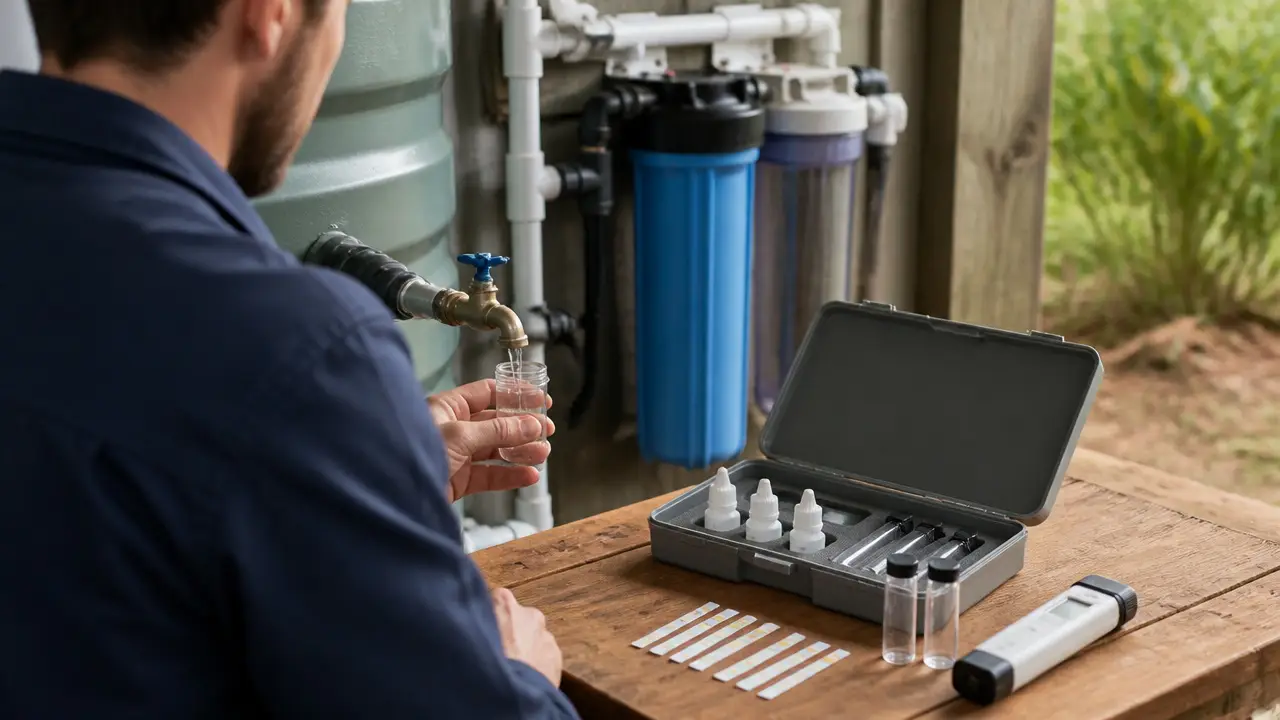
Most handheld TDS meters do not directly weigh everything dissolved in the water. They measure electrical conductivity, meaning how easily electricity passes through the water, and then estimate TDS from that reading.
Water containing more dissolved ions usually conducts electricity more easily. However, the conversion from conductivity to TDS depends on which minerals and salts are present. USGS notes that the common conversion used by handheld meters can give inaccurate estimates because the relationship changes with water chemistry.
That makes a TDS meter useful for tracking changes.
For example, it can help you notice that:
- A reverse-osmosis system is no longer reducing dissolved solids as much as before.
- Well-water mineral levels have changed.
- Stored water has developed an unexpected increase in conductivity.
- Two water sources have very different dissolved-mineral levels.
It is much less useful for deciding whether unknown water is safe to drink.
Why a TDS Reading Cannot Confirm Drinking-Water Safety
Drinking-water safety depends on what contaminants are present and at what concentration, not just their combined TDS.
A TDS meter does not provide a complete test for things such as harmful microorganisms or individual chemical contaminants. It also cannot tell you whether a particular ion contributing to the reading is calcium, sodium, nitrate, or something else.
This is why laboratory testing matters for private drinking-water sources.
For private wells, the EPA recommends annual testing for total coliform bacteria, nitrate, TDS, and pH, along with additional contaminants that may be relevant to local conditions.
TDS is therefore best thought of as one water-quality measurement, not a pass-or-fail drinking-water test.
What About Very Low TDS Water?
Very low TDS is not automatically a problem either.
Reverse-osmosis water, distilled water, and rainwater can have relatively little dissolved mineral content. Low-TDS water may taste flat to some people because it contains fewer minerals.
The more important question is whether the water is chemically and microbiologically suitable for drinking and whether the water chemistry is compatible with the plumbing and treatment system.
There is no WHO requirement that drinking water contain a minimum TDS value simply to be considered safe. WHO's guidance focuses instead on controlling specific health hazards throughout the water supply.
TDS Is Especially Misleading With Rainwater
Examine health and taste considerations for high-TDS water to understand the maintenance response that the measured values warrant.
Rainwater deserves extra care because naturally low mineral content can produce a low TDS reading even when the collected water is not suitable for drinking.
Roof-collected rainwater can pick up contamination from:
- Bird and animal droppings
- Dust and debris
- Roofing materials
- Gutters and flashing
- Pipes
- Storage tanks
- Airborne contaminants
The CDC states that rainwater is not necessarily safe to drink without appropriate treatment. If collected rainwater is used for drinking, cooking, or bathing, CDC recommends regular testing for germs and chemicals.
A reading of 20 or 50 ppm from a rainwater tank therefore should not be interpreted as proof that the water is clean.
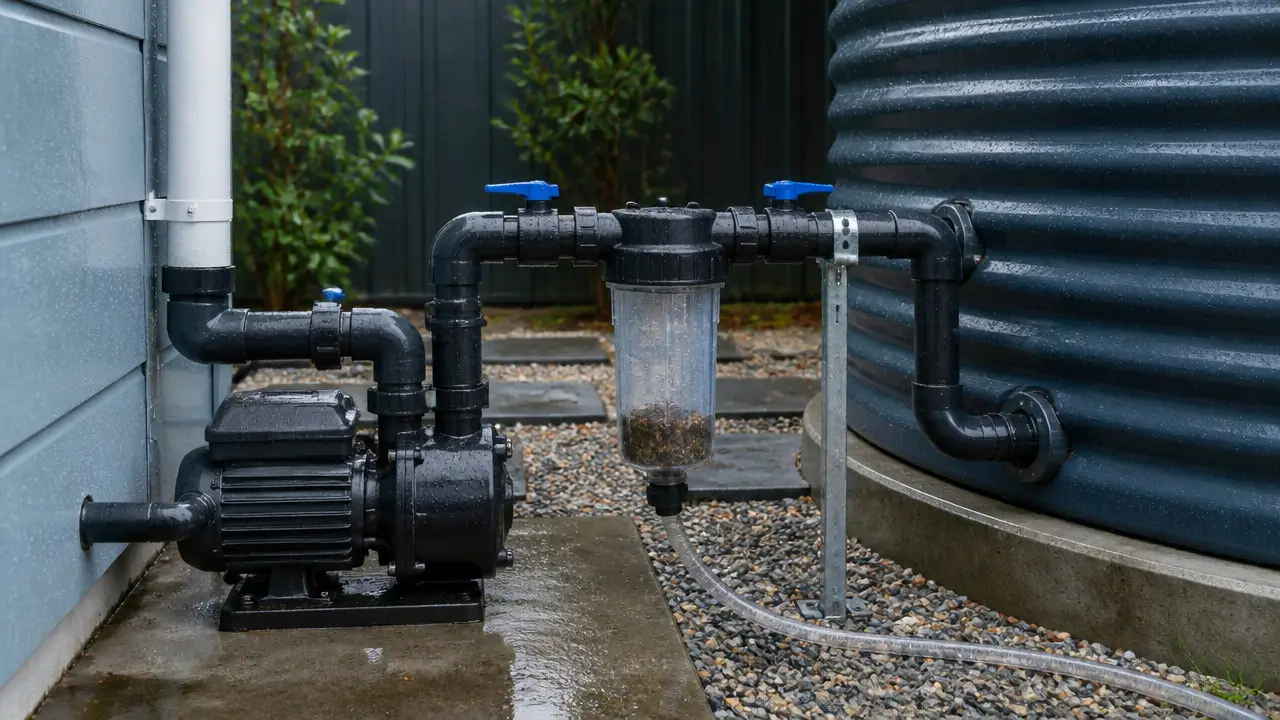
For drinking-water use, think of the whole system: suitable collection surfaces, debris control, first-flush management where appropriate, clean storage, treatment matched to actual hazards, routine maintenance, and current laboratory testing.
A first flush is the first portion of roof runoff during a storm. A first-flush diverter sends some of this initial water away from the tank because it can carry concentrated dirt, germs, and chemicals from the roof. CDC recommends considering this type of device as part of improving collected rainwater quality.
Should You Treat Water Just Because TDS Is High?
Not necessarily.
If your TDS is above 500 mg/L, first find out what is producing the reading. High TDS may come largely from common minerals, but it could also reflect elevated concentrations of substances that need separate evaluation.
Treatment should match the actual water chemistry.
For example, treatment intended to reduce dissolved minerals is different from treatment intended to control microorganisms. A sediment filter that catches visible particles is not the same thing as a system designed to remove dissolved salts.
If the water is from a private well, cistern, or rainwater collection system and will be used for drinking, laboratory results provide a much better basis for choosing treatment than a TDS meter alone.
When a Changing TDS Reading Matters
A change in TDS can sometimes be more useful than the exact number.
Suppose your well normally measures around 250 ppm but suddenly reads 600 ppm. The higher reading does not identify the cause, but the change gives you a reason to investigate.
The same applies to a treatment system. If water after a reverse-osmosis unit has always had much lower conductivity than the incoming water and the difference suddenly becomes small, something in the system may need inspection or service.
Unexpected changes in taste, odor, color, or TDS should not be fixed simply by installing a filter without identifying the cause.
The Bottom Line
For everyday drinking water, below 500 mg/L TDS is a useful practical benchmark, especially in the United States. WHO considers water below about 600 mg/L generally good in terms of taste and notes that water above about 1,000 mg/L becomes increasingly unpalatable.
But there is no health-based "perfect TDS" number.
A reading of 100 ppm is not automatically safer than 400 ppm. And a low-TDS reading from a well, rainwater tank, or other private source does not prove that the water is potable.
Potable means suitable for drinking. Determining that requires looking at the actual contaminants that may be present, using appropriate laboratory testing and treatment rather than relying on TDS alone.
Frequently Asked Questions
Is 100 ppm TDS good for drinking water?
A TDS reading of 100 ppm is relatively low and is well below the EPA's 500 mg/L secondary standard. However, the reading alone does not prove the water is safe because TDS does not identify individual contaminants or harmful germs.
Is 300 ppm TDS safe to drink?
A reading of 300 ppm is below the EPA's 500 mg/L secondary guideline and below the WHO level of about 600 mg/L that is generally considered good for taste. Safety still depends on the specific substances and microorganisms in the water.
Is 500 ppm TDS too high?
Not necessarily. The EPA uses 500 mg/L as a secondary standard mainly for aesthetic and nuisance effects. A reading around this level may be associated with more mineral taste or deposits, but TDS itself does not have a WHO health-based guideline value.
Is zero TDS water safe to drink?
A very low TDS reading does not establish safety. Water can have little dissolved mineral content while still requiring evaluation for other hazards. Drinking-water safety should be based on appropriate water-quality testing rather than the TDS number alone.
Can a TDS meter tell if my water is contaminated?
No. A handheld meter mainly estimates total dissolved solids from electrical conductivity. It cannot identify which dissolved substances are present, and its conversion from conductivity to TDS can vary with water composition.
What should the TDS of rainwater be?
There is no target TDS that makes collected rainwater safe to drink. Rainwater often contains relatively little dissolved mineral material, but roof runoff can contain germs and chemicals. CDC recommends regular testing when collected rainwater is used for drinking, cooking, or bathing.
Should I install a filter if my TDS is above 500 ppm?
First determine what is causing the high TDS. Different dissolved substances require different treatment methods, and some water-quality risks are unrelated to TDS. For drinking water from a private source, laboratory testing should guide the treatment choice.