As an affiliate, we may earn a commission from qualifying purchases. We get commissions for purchases made through links on this website from Amazon and other third parties.
Tap water does not have one fixed pH. In many public water systems, it is kept close to neutral or slightly alkaline.
In the United States, the Environmental Protection Agency recommends a pH of 6.5 to 8.5 for drinking water. This is a secondary drinking-water standard, which means it mainly addresses issues such as corrosion, taste, staining, and mineral deposits rather than setting a health-based limit.
A tap-water pH within that range does not prove the water is safe to drink. pH is only one water-quality measurement.
What Does Tap-Water pH Mean?
pH tells you how acidic or alkaline water is.
The pH scale normally runs from 0 to 14:
- Below 7: acidic
- 7: neutral
- Above 7: alkaline, also called basic
The scale is logarithmic. A change of one pH unit represents a tenfold change in hydrogen-ion concentration. For normal household use, you usually do not need to calculate this. The important point is that a change from pH 7 to pH 6 is more significant than the numbers may make it look.
Pure water can have a pH near 7 under certain conditions. Tap water is different because it contains dissolved minerals, treatment chemicals, gases, and other substances.
What Is a Normal pH for Tap Water?
A practical reference range for U.S. public drinking water is 6.5 to 8.5.
The EPA currently lists this range as a secondary standard. Water below this range can contribute to corrosion. Water above it can contribute to deposits and an unusual taste or slippery feel.
The World Health Organization does not establish a health-based guideline value for pH because pH itself is generally not considered a direct health concern at levels normally found in drinking water. It is still an important operating measurement because it affects treatment and the way water interacts with plumbing.
Actual tap-water pH can differ from one water system to another. Your water supplier may intentionally adjust it as part of corrosion control or treatment.
Why Does Tap-Water pH Vary?
Several things can change the pH of the water reaching your faucet.
The original water source
Groundwater often contains dissolved minerals picked up from soil and rock. Surface water from reservoirs, rivers, or lakes can have a different mineral balance.
These differences affect both pH and alkalinity.
Alkalinity is not the same thing as pH. It describes the water's ability to resist changes in pH. Water with enough alkalinity may stay at a fairly stable pH even when conditions change.
Water treatment
A utility may adjust pH during treatment. Proper pH control can help treatment processes work correctly and can reduce unwanted reactions inside pipes.
Treatment practices vary by water source and water system.
Your home's plumbing
Water continues interacting with pipes, fixtures, and deposits after it leaves the treatment plant.
Water chemistry that encourages corrosion can increase the chance of plumbing materials entering the water. This is one reason utilities pay attention to corrosion control rather than looking at pH alone.
Dissolved carbon dioxide
Carbon dioxide dissolves in water and affects its acidity.
When a water sample sits exposed to air, carbon dioxide can enter or leave it. Its measured pH may therefore change after collection.
This is one reason a fresh pH reading can differ from a reading taken from the same glass later.
Is Low-pH Tap Water a Problem?
Low pH generally means the water is more acidic.
The main household concern is often corrosion, rather than the pH number by itself. The EPA notes that low pH can be associated with corrosion and a bitter or metallic taste.
Corrosive water can interact with metal plumbing. The actual risk depends on much more than pH, including:
- alkalinity
- mineral content
- temperature
- disinfectant chemistry
- pipe materials
- how long water remains in the plumbing
This means a pH reading of 6.4, for example, does not tell you by itself whether your pipes are releasing metals.
If you are concerned about lead, copper, or another plumbing contaminant, test for that contaminant directly rather than trying to judge the risk from pH alone.
Is High-pH Tap Water a Problem?
Higher-pH water is more alkaline.
The EPA notes that water above its recommended secondary range can have a soda-like taste, feel slippery, or contribute to deposits.
High pH can also affect some water-treatment processes.
It should not be confused with hardness, however.
Hardness mainly describes dissolved calcium and magnesium. Hard water often forms scale, but pH and hardness are separate measurements. You can have relatively high-pH water without extremely hard water, or hard water without an unusually high pH.
Can You Drink Tap Water With a pH of 6.5 to 8.5?
The pH number alone cannot answer that question.
A reading between 6.5 and 8.5 is consistent with the EPA's secondary pH guidance, but it does not show whether the water contains bacteria, lead, arsenic, nitrate, PFAS, or other contaminants.
WHO likewise treats drinking-water safety as a broader risk-management issue rather than something established by pH alone.
For water supplied by a public utility, check the utility's current water-quality report if you have questions about your supply.
For a private well or another independently managed drinking-water source, appropriate laboratory testing becomes especially important.
How to Test the pH of Tap Water
Review accepted ranges for common water-quality tests to compare service needs that influence lifecycle performance.
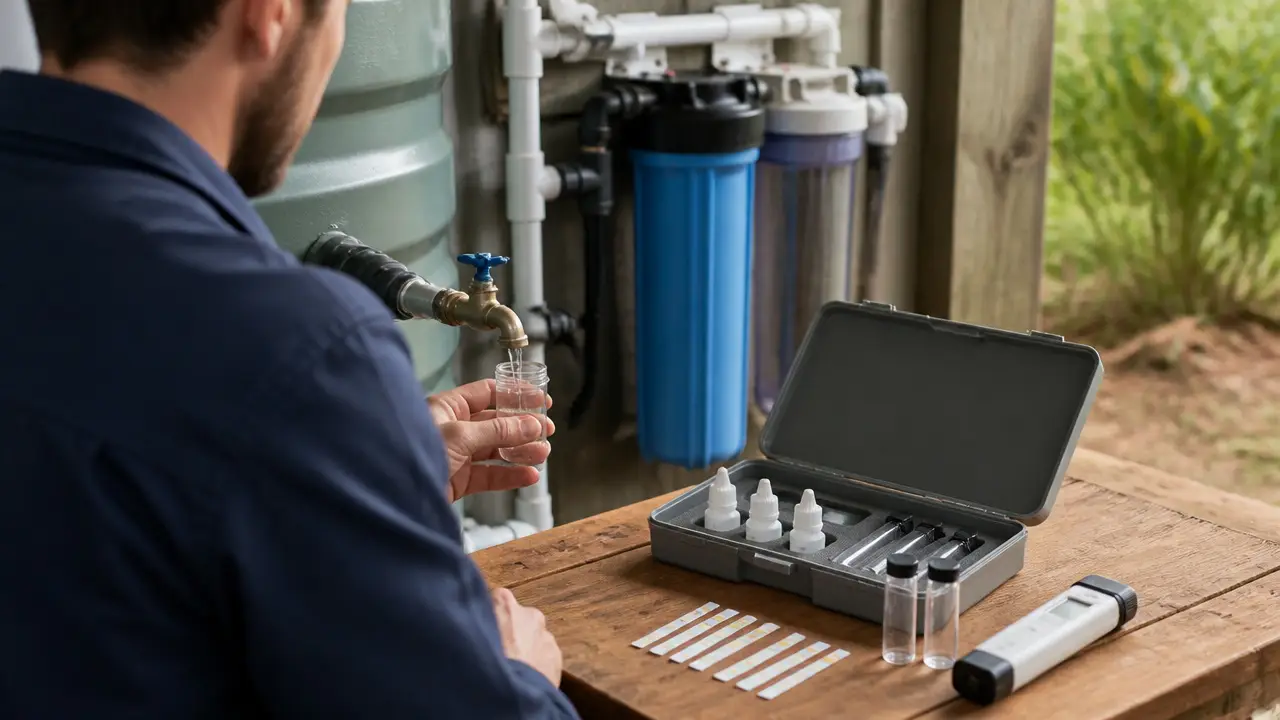
For a basic household check, you can use pH test strips or a digital pH meter.
pH test strips
Strips are simple and useful when you only need an approximate reading.
You dip the strip into the water and compare the resulting color with the supplied chart.
The limitation is precision. Similar colors can be difficult to distinguish, and old or poorly stored strips may give unreliable results.
Digital pH meters
A digital meter can provide a more precise reading, but it requires more care.
The meter normally needs regular calibration with the correct calibration solutions. The probe also needs to be cleaned and stored according to its instructions.
A digital display with several decimal places does not guarantee that the measurement is accurate if the meter has not been calibrated correctly.
Take more than one measurement
If a result seems unusual, repeat the test before drawing conclusions.
You can also compare:
- Cold water directly from the tap.
- Water after it has run for a while.
- Another faucet in the house.
Large or consistent differences may justify further investigation.
For a drinking-water problem, a certified or otherwise appropriately qualified laboratory is more useful than relying only on a home pH meter.
Why Your Tap-Water pH May Change After Filtration
Some treatment systems can change water chemistry, but the amount depends on the treatment process and the original water.
A sediment filter, for example, is designed mainly to capture particles. It normally should not be selected as a way to control pH.
Activated carbon is mainly used for particular chemicals, tastes, odors, or disinfectant-related compounds depending on the filter and application. It should not be assumed to correct an unsuitable pH.
Reverse osmosis is different. It removes many dissolved substances, including minerals that help buffer water. As a result, the treated water can sometimes have a different pH from the incoming tap water.
If pH adjustment is required for a household treatment system, it should be designed around the complete water analysis rather than the pH reading alone.
Tap Water and Rainwater Have Different pH Concerns
Tap water from a public system has already gone through a managed treatment and distribution process.
Collected rainwater is different.
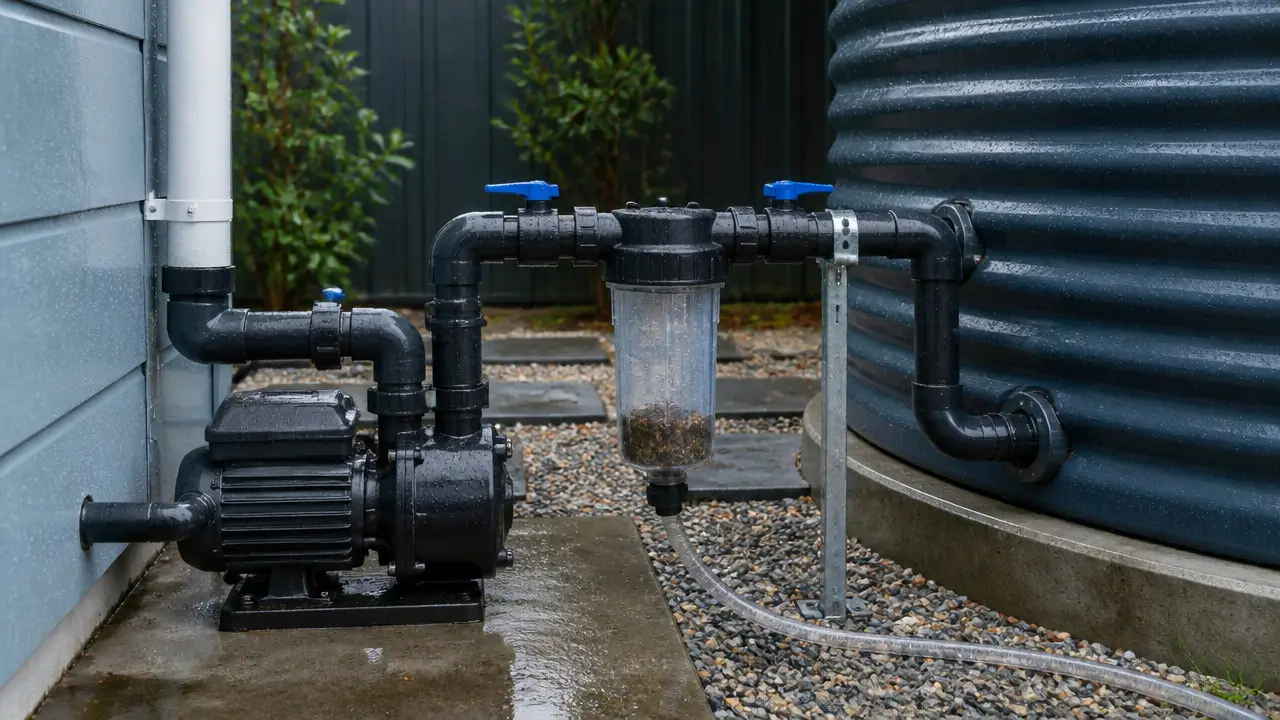
Rain can absorb carbon dioxide and other substances from the air. Roof runoff can then pick up additional material from roofing, dust, leaves, animal waste, metals, and storage-system components.
A rainwater pH test can help identify unusual water chemistry, but it cannot establish whether stored rainwater is potable.
Potable means suitable for drinking.
If collected rainwater is intended for drinking, safety needs to be considered across the whole system, including suitable collection surfaces, debris control, first-flush management where appropriate, storage, treatment, current laboratory testing, maintenance, and applicable local requirements.
A pH meter or test strip cannot replace those steps.
What to Do if Your Tap-Water pH Seems Unusual
Do not immediately add chemicals to household drinking water based on one home test.
First, confirm the measurement.
Then check your water supplier's current water-quality information if you use municipal water. If the result is substantially different from the supplier's reported water chemistry, contact the utility.
For private supplies, persistent abnormal pH may justify a broader laboratory water analysis. Parameters such as alkalinity, hardness, dissolved metals, and other contaminants may be needed to understand what is actually happening.
Water-treatment equipment should then be selected from those results. Trying to correct one number without understanding the rest of the water chemistry can create new problems.
Frequently Asked Questions
Is pH 7 tap water good?
A pH of 7 is neutral and is within the EPA's recommended secondary range of 6.5 to 8.5. However, pH 7 does not prove that the water is safe to drink. Other contaminants must be evaluated separately.
Is pH 8 tap water safe to drink?
A pH of 8 falls within the EPA's secondary drinking-water range. Whether the water is safe to drink depends on its complete water quality, not pH alone.
Why is my tap water pH above 8?
The water source, dissolved minerals, alkalinity, and treatment methods can all result in slightly alkaline tap water. Some utilities also manage water chemistry to reduce corrosion in the distribution system.
Why is my tap-water pH below 7?
Mineral content, dissolved carbon dioxide, the source water, and treatment conditions can all contribute to acidic water. If the reading is consistently low, confirm it with a reliable test and consider checking corrosion-related water-quality parameters.
Does boiling tap water change its pH?
It can. Heating drives dissolved gases such as carbon dioxide out of water and can also change the concentration or form of some dissolved substances. The exact pH change depends on the water chemistry. Boiling should not be used as a method for correcting pH.
Does a water filter change tap-water pH?
Some treatment systems can, while others have little effect. A sediment filter mainly removes particles and should not be expected to adjust pH. Systems that significantly change dissolved mineral content can have a larger effect.
Can a pH test tell me whether tap water is safe?
No. A pH test measures acidity or alkalinity. It does not determine whether water contains harmful microorganisms, metals, nitrate, PFAS, pesticides, or many other contaminants.