As an affiliate, we may earn a commission from qualifying purchases. We get commissions for purchases made through links on this website from Amazon and other third parties.
Rainwater does not usually have a pH of 7 because it reacts with gases and particles in the air before it reaches the ground.
A pH of 7 is called neutral. But falling rain absorbs carbon dioxide from the atmosphere. The carbon dioxide reacts with water and forms a small amount of carbonic acid. Because of this, rain in relatively clean air is normally a little acidic rather than perfectly neutral.
Rainwater can also pick up pollution, dust, smoke, sea salt, pollen, and other material. Once it lands on a roof and enters a tank or rain barrel, the roof, gutters, debris, storage tank, and even standing time can change its pH again.
Why Fresh Rainwater Is Naturally Slightly Acidic
Water in a laboratory can have a pH close to 7 under certain conditions. Rainwater is different because it falls through the atmosphere.
One of the main gases it absorbs is carbon dioxide. When carbon dioxide dissolves in water, a small amount turns into carbonic acid.
This natural process can bring rainwater to a pH of about 5.6 under typical clean-air conditions.
That does not mean all rain has a pH of exactly 5.6. Actual pH can vary by location, weather, air quality, and the way the water is collected.
What Does pH Measure?
pH tells you how acidic or alkaline a liquid is.
The pH scale commonly runs from 0 to 14:
- Below 7 is acidic.
- 7 is neutral.
- Above 7 is alkaline, sometimes called basic.
The scale is logarithmic. This means a change of one whole pH number is a much larger chemical change than it may appear.
For most rainwater-system owners, the important point is simpler: a pH reading tells you about acidity or alkalinity. It does not tell you whether the water is clean or safe to drink.
Air Pollution Can Lower Rainwater pH
Carbon dioxide is not the only gas that can affect rain.
Sulfur dioxide and nitrogen oxides can react with atmospheric water and form stronger acids. These pollutants can come from sources such as fuel combustion, power generation, vehicles, and some industrial activity.
When enough of these compounds are present, rain can become more acidic than it would be from carbon dioxide alone. This is the process commonly associated with acid rain.
Local conditions matter. Rainwater chemistry can be different near a busy city, industrial area, coastline, wildfire smoke plume, or remote rural site.
Rainwater Can Also Have a pH Above 7
Rain is not always acidic.
Airborne dust and other alkaline particles can raise its pH. Some areas have mineral-rich dust containing compounds that partly neutralize natural acidity.
Ammonia and other substances in the atmosphere can also affect rainwater chemistry.
This is why there is no single pH value that applies to every rainstorm.
Your Roof Can Change Rainwater pH
The water that falls directly from the sky may not have the same pH as the water inside your rain barrel or cistern.
Once rain reaches a roof, it can interact with:
- Roofing materials
- Dust
- Leaves and pollen
- Bird and animal waste
- Moss or organic matter
- Metal gutters and flashing
- Deposited air pollution
Some surfaces may have little effect. Others can change the water chemistry more noticeably.
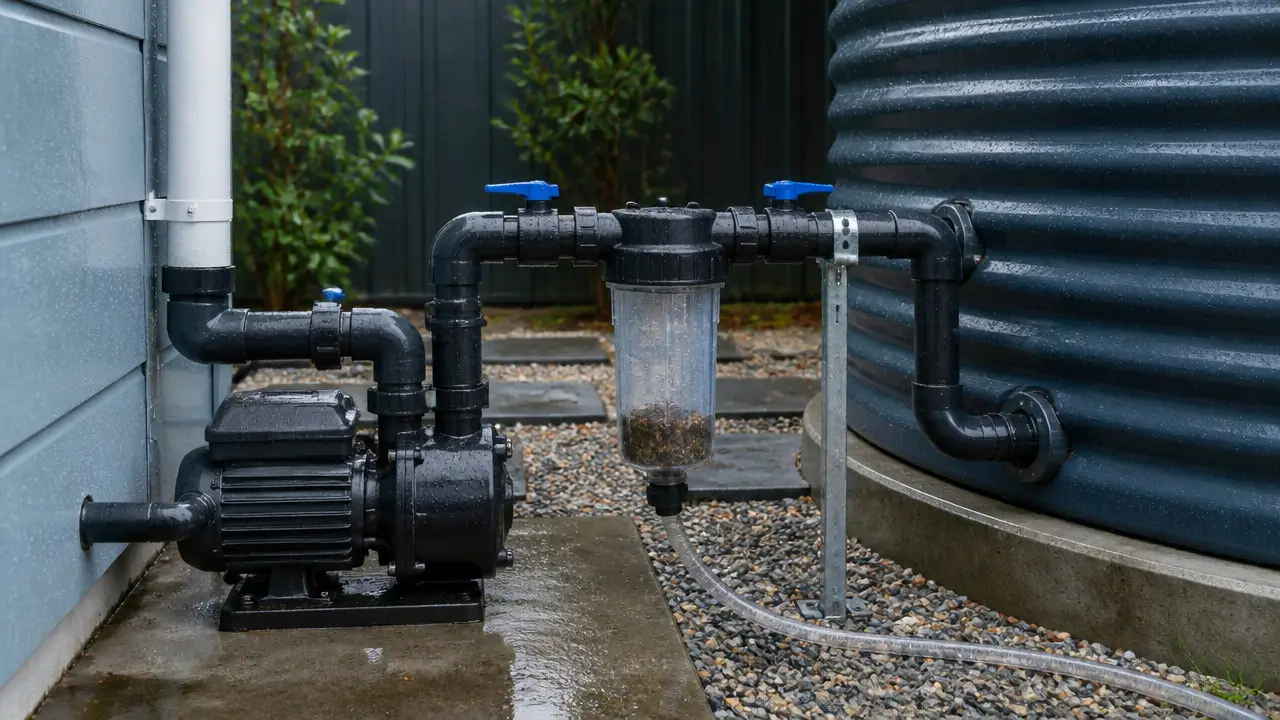
The first water coming off a roof after a dry period usually carries the highest load of loose dirt and debris. A first-flush system diverts some of this initial runoff away from the storage tank.
A first flush can reduce some contaminants entering storage, but it does not make the remaining rainwater safe to drink.
Storage Can Change pH Too
Rainwater may continue changing after it enters a tank.
For example, pH can be affected by sediment, organic matter, tank materials, biological activity, and contact with minerals.
Concrete storage is a good example. Water contacting cement-based materials may become more alkaline, especially when the concrete is new.
Water stored in a plastic rain barrel may behave differently because the tank itself usually contributes fewer minerals.
Mixing also matters. A large cistern may contain water collected during many different storms, so a single sample may represent a blend rather than the most recent rainfall.
Why pH Matters in a Rainwater System
A slightly acidic pH is not automatically a problem for every use.
If you collect rainwater for garden irrigation, the plants, soil, and existing water chemistry all matter. Soil often buffers, or resists, changes in pH.
For plumbing and household reuse systems, water chemistry deserves more attention. Acidic water can sometimes contribute to corrosion of certain metals. Very different water chemistry can also affect treatment equipment and other system parts.
Details about causes of acidic rainwater help interpret household filtration suited to the way the water will be used.
Do not choose pipe materials, treatment equipment, or chemical adjustments based only on one pH reading. The rest of the water chemistry and the intended use matter too.
Does a Normal pH Mean Rainwater Is Safe to Drink?
No.
A rainwater sample could have a pH near 7 and still contain contaminants such as bacteria, parasites, metals, chemicals, or material washed from a roof.
The opposite is also true. A pH reading that is somewhat below 7 does not tell you what contaminants are present.
pH is only one water-quality measurement.
For drinking-water use, treat the entire rainwater system as one connected process. That includes suitable collection surfaces, debris control, prefiltration, storage, treatment, ongoing maintenance, and current laboratory testing appropriate to the intended use and local requirements.
A home pH meter or test strip cannot provide a complete drinking-water safety assessment.
How to Test Rainwater pH
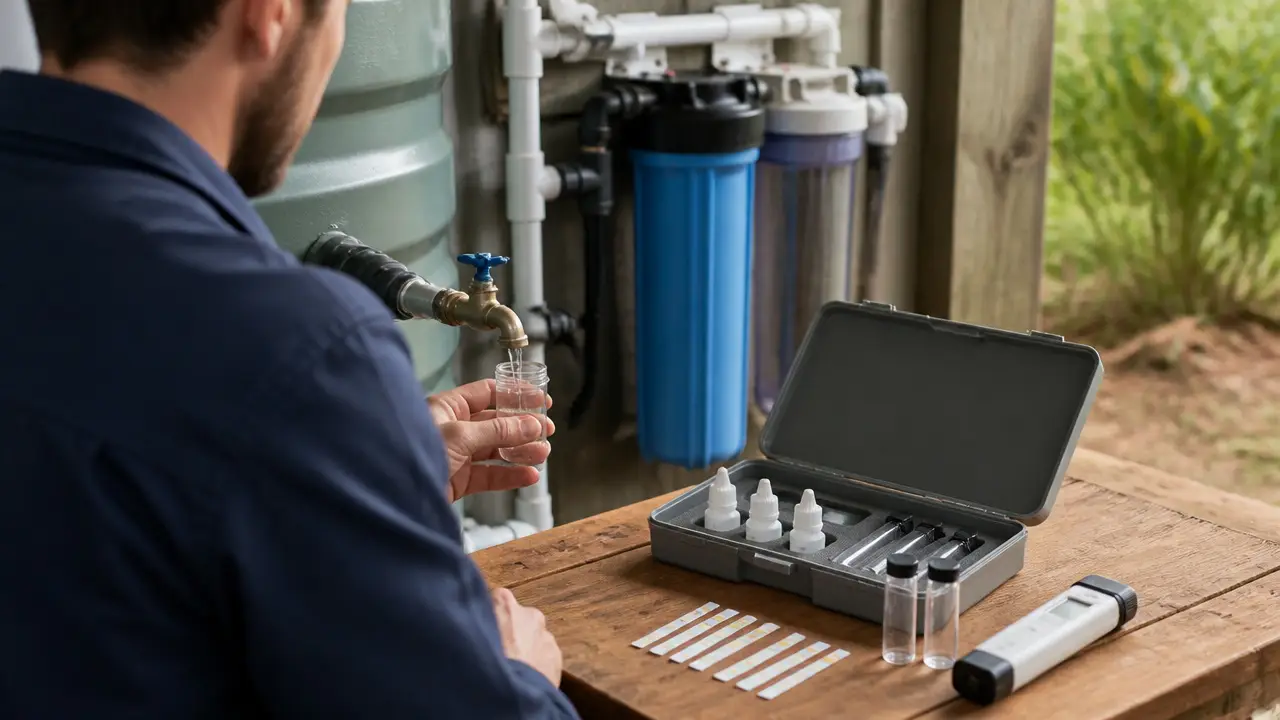
For basic system monitoring, you can measure pH with a suitable pH meter or test product.
A digital meter can provide a numerical reading, but it must be maintained and calibrated according to its instructions. Poor calibration, dirty probes, improper storage, or old calibration solutions can give misleading readings.
Test strips are simpler but usually provide a less precise result.
When comparing readings, try to collect samples in the same way each time. Water taken directly from rainfall may differ from roof runoff, and both may differ from water that has been sitting in a tank.
If a result is unexpected, repeat the test before making changes to the system.
Do You Need to Adjust Rainwater pH?
Not always.
Do not automatically add chemicals just because rainwater has a pH below 7. Natural rain is expected to be somewhat acidic.
Whether adjustment is useful depends on:
- How you plan to use the water
- The actual pH
- Other parts of the water chemistry
- Your pipes and equipment
- Treatment requirements
- Local plumbing or drinking-water rules
Chemical treatment can create new problems when done incorrectly. For drinking-water systems, significant water-chemistry adjustment is best based on proper testing and qualified guidance.
The Main Point
Rainwater is not normally pH 7 because it does not fall through an empty atmosphere. It absorbs carbon dioxide, which forms weak carbonic acid, and it can collect many other gases and particles along the way.
After the rain reaches your roof, its pH can change again because of roofing materials, dirt, gutters, storage tanks, sediment, and biological activity.
A pH measurement can be useful for understanding your rainwater system, but it is only one part of water quality. It cannot tell you by itself whether collected rainwater is suitable for drinking, irrigation, plumbing, or another use.
Frequently Asked Questions
Is rainwater supposed to have a pH of 7?
No. Rainwater in relatively clean air is naturally somewhat acidic because it absorbs carbon dioxide and forms a small amount of carbonic acid.
What is the normal pH of rainwater?
Rain in clean atmospheric conditions is often described as having a pH around 5.6. Real rain can be higher or lower because of local air pollution, dust, weather, and other environmental conditions.
Why is rainwater acidic even without pollution?
Carbon dioxide naturally present in the atmosphere dissolves into falling rain. Some of it forms carbonic acid, which lowers the water's pH below 7.
Can rainwater have a pH above 7?
Yes. Mineral dust and other alkaline materials can raise rainwater pH. Roof and storage materials can also make collected rainwater more alkaline.
Does acidic rainwater damage a rainwater tank?
That depends on the water chemistry and the tank and plumbing materials. Slightly acidic rainwater is common, but ongoing contact with some metals may contribute to corrosion. Consider the whole system rather than pH alone.
Does a pH of 7 mean rainwater is safe to drink?
No. pH does not measure bacteria, parasites, metals, roof contaminants, or many chemicals. Drinking-water use requires suitable collection, treatment, maintenance, and appropriate laboratory testing.
Can a roof change the pH of collected rainwater?
Yes. Roofing materials, dust, organic debris, deposited pollution, and other substances can change water chemistry as rain flows into gutters and storage.
Should I raise the pH of my rainwater?
Not automatically. The need for pH adjustment depends on the intended use, water chemistry, system materials, and treatment requirements. Avoid adding chemicals based on one pH reading alone.