As an affiliate, we may earn a commission from qualifying purchases. We get commissions for purchases made through links on this website from Amazon and other third parties.
Yes, you can run a drip irrigation system from a rain barrel. The main challenge is pressure.
A rain barrel feeding by gravity produces much less pressure than a household faucet. A simple system can work well for a small garden if the barrel is raised, the tubing is kept reasonably short, and the drip parts are designed to work at low pressure. Larger gardens or standard pressure-dependent drip systems may need a pump.
How a Rain Barrel Drip System Works
A basic setup follows this path:
Rain barrel → shutoff valve → filter → main tubing → drip lines or emitters
Water leaves the barrel and moves through the irrigation tubing by gravity. The higher the water surface is above the emitters, the more pressure the system has.
This difference in elevation is called head height. Head height is measured from the water level inside the barrel, not from the barrel's spigot.
About 2.31 feet of water height produces 1 psi of pressure. Another useful way to look at it is:
1 foot of water height ≈ 0.43 psi
So even a barrel raised several feet above a garden produces only a few pounds per square inch of pressure. A typical household water connection provides much more.
That does not mean gravity drip irrigation will not work. It means the system needs to be designed around low pressure.
Choose Drip Parts Made for Low Pressure
One of the biggest mistakes is connecting an ordinary drip irrigation kit to a rain barrel and expecting it to perform the same way it does on a faucet.
Some emitters need substantial pressure to deliver their intended flow. At very low pressure, they may:
- Drip much more slowly than expected
- Water unevenly
- Stop flowing near the end of a long line
- Work when the barrel is full but stop as the water level falls
Look for irrigation tubing, drip tape, or emitters specifically intended for gravity-fed or very-low-pressure use.
Be Careful With Pressure-Compensating Emitters
Pressure-compensating emitters are designed to maintain a more consistent flow over a specified pressure range. That is useful in many pressurized irrigation systems.
However, they may not operate correctly below their required minimum pressure.
For a gravity-fed rain barrel, verify the emitter's operating pressure before using it. Do not assume that an emitter labeled for drip irrigation will work from a barrel.
Raise the Rain Barrel When Practical
Increasing the height of the barrel can improve gravity flow.
For example, raising the barrel changes the vertical distance between the water surface and the garden. More distance creates more pressure.
However, raising a rain barrel also creates a structural concern.
Water is heavy. One U.S. gallon weighs about 8.34 pounds. A full 55-gallon barrel contains roughly 459 pounds of water before adding the weight of the barrel and fittings.
Use a stable stand designed for the expected load. The barrel should not wobble, lean, or sit on loose blocks that could shift.
Do not raise a large tank simply to gain irrigation pressure without considering the weight of the full container.
Install a Filter Before the Drip Tubing
A filter is especially useful with rainwater irrigation.
Roof runoff can carry small pieces of:
- Leaves
- Shingles or roofing debris
- Pollen
- Insects
- Sediment
- Organic material
Even if a barrel has an inlet screen, smaller material may enter the stored water.
Drip emitters have small openings that clog easily. Installing a filter between the barrel and irrigation tubing helps protect them.
The appropriate micron rating depends on the irrigation equipment. A micron is one-thousandth of a millimeter, and the rating describes the approximate size of particles the filter is intended to capture.
Follow the emitter or drip-tubing manufacturer's filtration requirements rather than choosing a filter rating at random.
Remember that this filter is for protecting irrigation equipment. It does not make roof runoff safe to drink.
Avoid Unnecessary Pressure Regulators
Many faucet-fed drip systems include a pressure regulator. Its job is to reduce high household water pressure to a level suitable for drip irrigation.
A gravity-fed rain barrel usually has the opposite problem: too little pressure.
A regulator can create additional resistance and may prevent a low-pressure system from working properly.
Only use one if the irrigation equipment specifically requires it and there is enough incoming pressure for the regulator to operate correctly.
Keep the Irrigation Layout Simple
Gravity systems work best when water does not have to travel through an unnecessarily complicated network.
For a small garden, try to:
- Keep the main supply tubing fairly short.
- Avoid unnecessary fittings and sharp restrictions.
- Use appropriately sized main tubing.
- Divide large gardens into smaller watering zones.
- Keep emitters reasonably close in elevation.
- Use low-pressure irrigation components.
Every pipe, fitting, valve, filter, and emitter adds resistance to water movement.
Long tubing runs and large numbers of emitters can make the pressure problem more noticeable.
Watch What Happens as the Barrel Empties
Rain barrel pressure is not constant.
When the barrel is full, the water surface is higher and the system has more head height. As the water level drops, pressure decreases.
Suppose the emitters are near ground level. The difference between a full barrel and an almost-empty barrel can noticeably change the available pressure.
This is why a gravity system that waters well at the start may become slower toward the end.
When testing your setup, do not test it only with a completely full barrel. Check how it performs when the water level is lower too.
Do You Need a Pump?
Reviewing using rain barrels for irrigation helps assess tank venting and overflow control during extended storage.
Not always.
A gravity-fed system is often the simplest choice for:
- A few raised beds
- Patio plants
- A short garden row
- A small greenhouse
- A small group of containers
A pump becomes more useful when the system needs more pressure or flow than gravity can provide.
Consider a pump if you need to:
- Water a much larger area
- Run long irrigation lines
- Use equipment with a minimum pressure requirement
- Move water uphill
- Operate several irrigation zones
- Supply enough emitters that gravity flow becomes inadequate
Flow rate is the amount of water moving through the system over time, usually expressed in gallons per minute or gallons per hour. A pump needs enough flow as well as enough pressure for the irrigation layout.
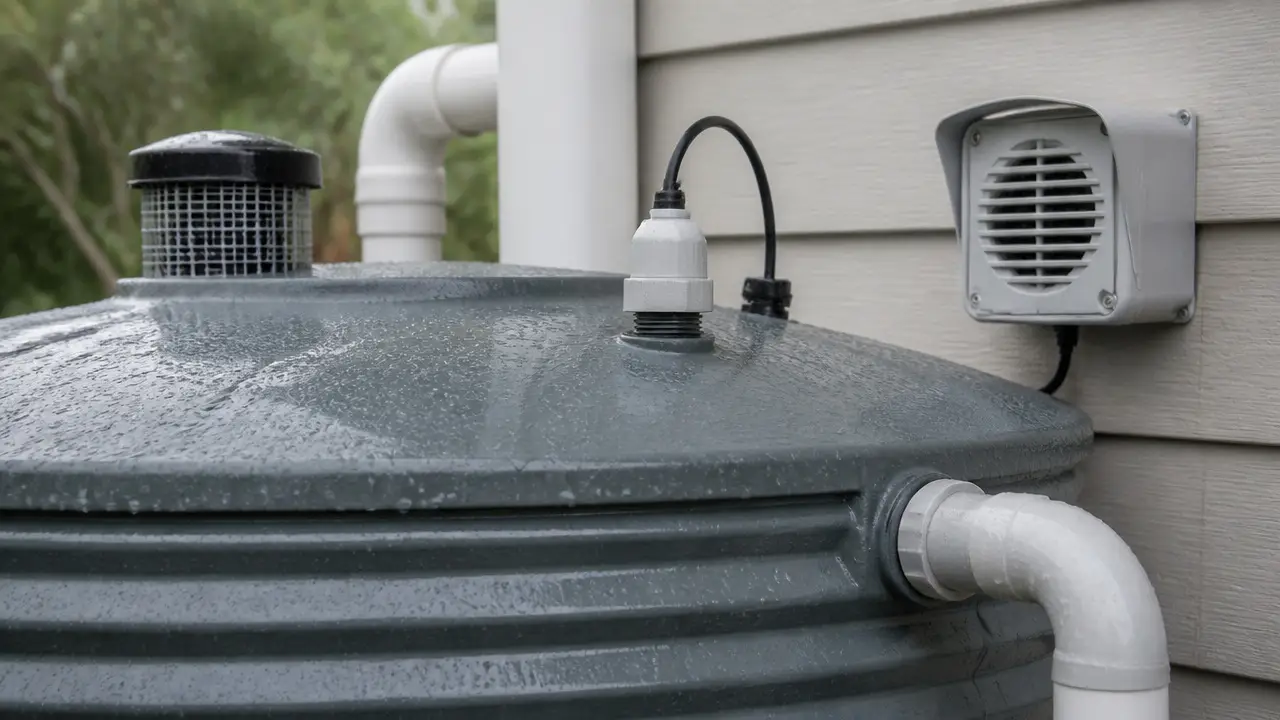
If you add a pump, make sure it is suitable for the water source and intended duty. The system may also need a filter, suitable controls, and dry-run protection so the pump does not continue operating after the barrel is empty.
Outdoor electrical equipment should be installed and protected appropriately for wet locations. Electrical work that goes beyond a plug-in system should be handled according to applicable local requirements.
Can You Use a Timer?
Possibly, but a timer must work with the pressure available from the barrel.
Some irrigation timers depend on normal household water pressure to open and close properly. They may not work reliably with a gravity system.
Look for a valve or timer specifically rated for gravity-fed or very-low-pressure operation.
A timer also cannot solve a lack of water. If the barrel empties during a watering cycle, the irrigation system will stop supplying water.
Make Sure the Barrel Has Enough Water
Pressure is only part of the problem. You also need enough stored water to complete the watering cycle.
A rain barrel can empty surprisingly quickly when it feeds many emitters.
You can estimate demand by adding the expected flow from the emitters and multiplying it by watering time.
For example, if the irrigation layout uses emitters with known rated flow, calculate:
Total emitter flow × watering time = approximate water needed
Keep in mind that an emitter's published flow may assume a particular operating pressure. A gravity-fed system below that pressure may deliver a different amount.
The usable water in the barrel can also be less than its labeled capacity because the outlet is usually above the very bottom of the container.
Test the System Before Relying on It
After installation, open the valve and watch every section of the garden.
Check whether:
- Water reaches the end of each line.
- Emitters near the barrel and far from the barrel behave similarly.
- The filter is restricting flow because it is dirty.
- Tubing connections leak.
- The system still works as the barrel level falls.
- Plants actually receive enough water during the planned run time.
You can place small containers beneath several emitters for the same amount of time and compare the amount collected. Large differences indicate uneven water delivery.
This simple check is often more useful than assuming the system works because water is coming from every emitter.
Keep the System Clean
Rainwater irrigation still needs maintenance.
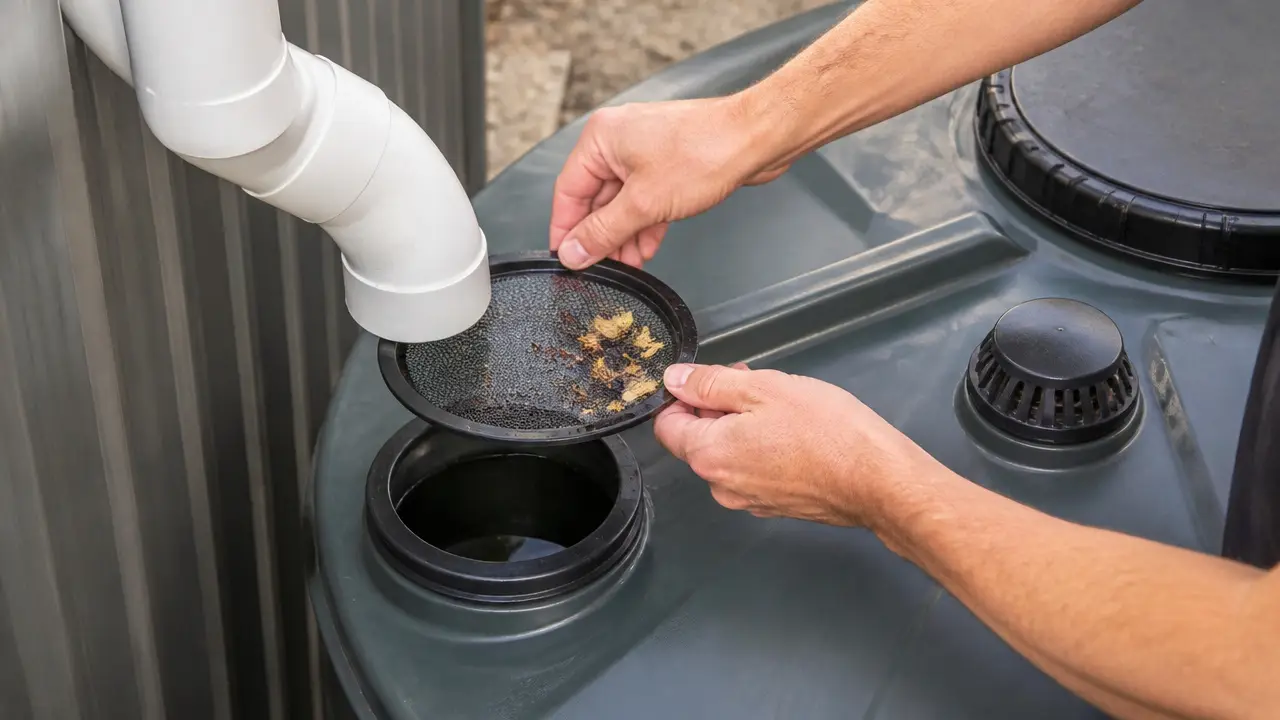
Inspect and clean the barrel's inlet screen, prefilters, and irrigation filter regularly. Flush irrigation lines when needed according to the tubing manufacturer's instructions.
Also check the barrel for accumulated sediment.
Keep openings screened so mosquitoes cannot easily enter the stored water. Make sure the overflow sends excess water to an appropriate location away from foundations or areas prone to erosion.
If the system is exposed to freezing weather, drain or protect components as appropriate for the local climate. Water trapped in tubing, filters, valves, and fittings can expand when frozen and damage them.
A Simple Gravity-Fed Layout
For a small garden, a practical arrangement may be:
Roof runoff → screened inlet → rain barrel → barrel outlet → shutoff valve → irrigation filter → main tubing → low-pressure drip lines
The key is matching every irrigation component to the small amount of pressure gravity can provide.
If the garden requires more pressure than the available head height can produce, adding more fittings or changing emitters will not necessarily solve the problem. At that point, dividing the system into smaller zones, changing the layout, or using a suitable pump may be more practical.
Frequently Asked Questions
How high should a rain barrel be for drip irrigation?
There is no single required height because the answer depends on the irrigation equipment. Each foot of vertical water height provides about 0.43 psi. Check the minimum operating pressure of the emitters or drip tubing, then compare it with the available head height. Any barrel stand must also safely support the full weight of the container.
Can I connect a regular drip irrigation kit to a rain barrel?
Sometimes, but many kits are designed for pressurized household water. Check the required operating pressure for the emitters, valves, timer, and other components. A kit intended for very-low-pressure or gravity-fed use is generally easier to match to a rain barrel.
Do I need a pump for rain barrel drip irrigation?
Not necessarily. A small, low-pressure irrigation system can often run by gravity. A pump may be needed for long lines, large gardens, uphill watering, or irrigation equipment that requires more pressure than gravity can provide.
Should I put a filter on a rain barrel drip system?
Yes, filtration is usually helpful because small debris and sediment can clog drip emitters. Choose a filter that meets the filtration requirements of your irrigation equipment and clean it regularly.
Can I use a pressure regulator with a rain barrel?
A gravity-fed barrel usually does not need a pressure regulator because pressure is already low. A regulator can add resistance and reduce flow further. Use one only when required by the irrigation equipment and when sufficient upstream pressure is available.
Will drip irrigation work when the rain barrel is almost empty?
It may work more slowly or unevenly. Pressure falls as the water level drops because the available head height decreases. Test the system at several barrel levels rather than judging performance only when the barrel is full.
Can a rain barrel water a large garden with drip irrigation?
It can contribute water to a larger garden, but storage capacity, available pressure, line length, and total emitter demand may become limiting factors. Larger systems often work better when divided into zones or supplied by a properly sized pump.