As an affiliate, we may earn a commission from qualifying purchases. We get commissions for purchases made through links on this website from Amazon and other third parties.
Float switches are simple devices, but they can cause pump, tank, and alarm problems when they stick, become blocked, lose electrical contact, or are installed in the wrong position.
The most common float switch problems are mechanical sticking, debris around the float, damaged wiring, incorrect mounting, water getting into the switch, and a float that cannot move through its full range. Some problems are easy to check. Electrical faults and switches controlling higher-voltage pumps should be handled more carefully.
How a Float Switch Works
A float switch senses the water level in a tank, sump, cistern, or other container.
As the water rises or falls, the float moves. That movement opens or closes an electrical circuit. The switch can then tell a pump, valve, alarm, or controller to turn on or off.
For example, a float switch may:
- Stop a transfer pump when a rainwater tank is full.
- Start a sump pump when water rises.
- Stop a pump before a tank runs dry.
- Trigger a high-water alarm.
- Control a fill valve or water-transfer system.
Because the switch depends on both free movement and a reliable electrical signal, problems can be mechanical, electrical, or related to installation.
1. The Float Gets Stuck
A stuck float is one of the most common problems.
The float may become trapped against:
- The side of the tank.
- A pump.
- A pipe.
- A hose.
- A tank fitting.
- A filter or intake screen.
- Other wiring or float cords.
A tethered float switch needs enough open space to swing. If its movement is restricted, it may never reach the angle needed to change switch position.
A vertical float can also bind on its guide rod if dirt or buildup prevents smooth movement.
What to check
With the equipment safely turned off, inspect whether the float can move through its full intended range without touching anything.
Repositioning the float or nearby pipes may solve the problem. Do not shorten, tie, or modify a float cord unless the switch manufacturer allows it.
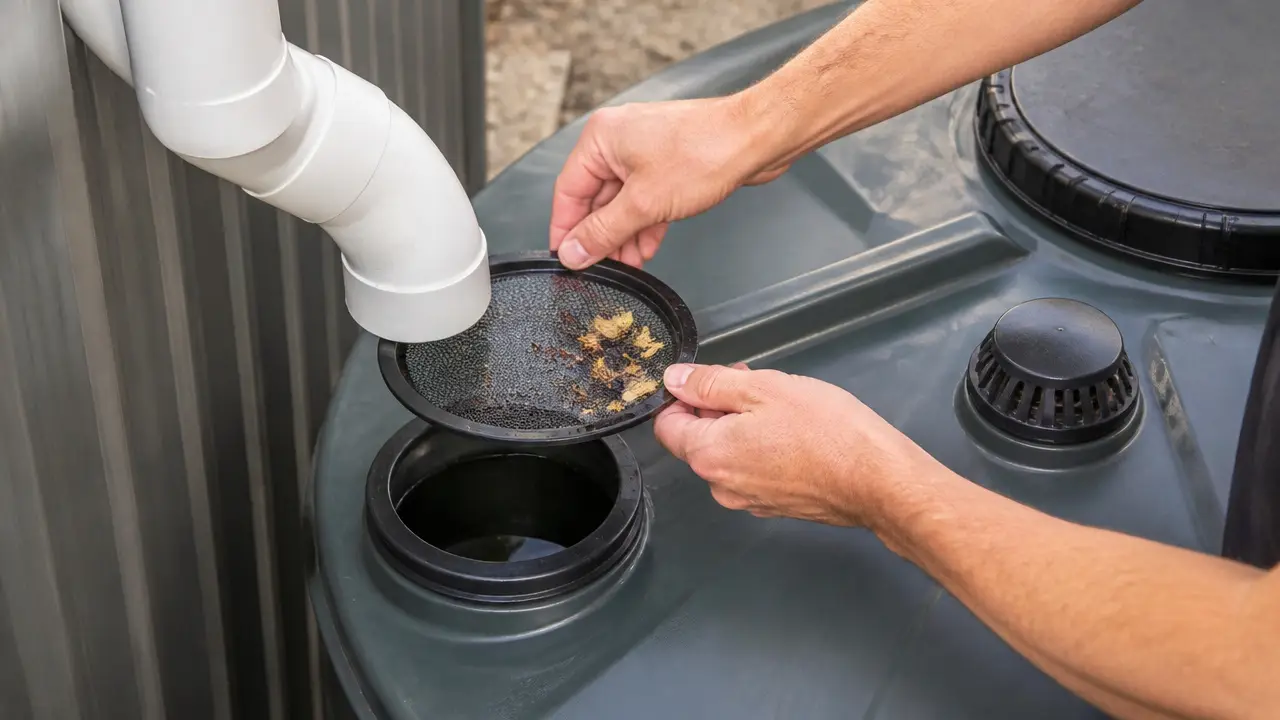
2. Dirt and Debris Block Float Movement
Rainwater tanks and sumps can collect material such as:
- Leaves.
- Sediment.
- Insects.
- Algae.
- Roof debris.
- Sludge.
- Small pieces of organic matter.
This material can collect around a float hinge, guide rod, or tether.
A float switch used in untreated rainwater may need more cleaning than one operating in clean water.
Good inlet screening and sediment control can reduce the problem, but they do not remove the need for inspection.
3. The Float Switch Is Mounted at the Wrong Height
A float can work correctly and still control the system poorly if it is installed at the wrong level.
For example, a pump shutoff float placed too low may allow the pump to draw the tank down farther than intended. One placed too high may leave a large amount of water unused.
A high-level switch positioned too close to an overflow may not provide enough warning before water reaches the overflow point.
Check the switch position against the purpose of the system rather than choosing a height simply because it is easy to mount.
4. A Tethered Float Does Not Have Enough Cord Length
Tethered float switches need a certain amount of free cable between the anchor point and the float.
If the free length is too short, the float may not tilt far enough to operate. If it is too long, the float may move over a wider area and become tangled or hit equipment.
The correct tether length depends on the switch design. Follow the manufacturer's allowed mounting range rather than guessing.
5. The Float Has Filled With Water
Many floats depend on a sealed hollow body for buoyancy.
If the housing cracks or the seal fails, water can enter the float. A waterlogged float may become too heavy to rise properly.
Possible signs include:
- The float sits unusually low in the water.
- The switch works only when lifted by hand.
- Water can be heard moving inside the float.
- The float no longer rises with the water level.
A damaged sealed float normally needs replacement rather than repair.
6. The Electrical Contacts Have Failed
Inside many float switches is a small electrical switching mechanism.
Over time, contacts can wear, corrode, or fail. The float may move normally while the connected pump or alarm does nothing.
Contact damage can occur faster when a switch is controlling an electrical load beyond what it was designed to handle.
A float switch should not automatically be assumed capable of carrying the full current of a pump motor. Some systems use the float only as a control signal for a relay or pump controller.
Always check the electrical rating of the switch and the requirements of the equipment it controls.
7. Wiring Is Damaged
Float switch cables may fail because of:
- Cuts.
- Abrasion.
- Rodent damage.
- Loose terminals.
- Corroded connections.
- Repeated pulling on the cable.
- Poorly sealed junctions.
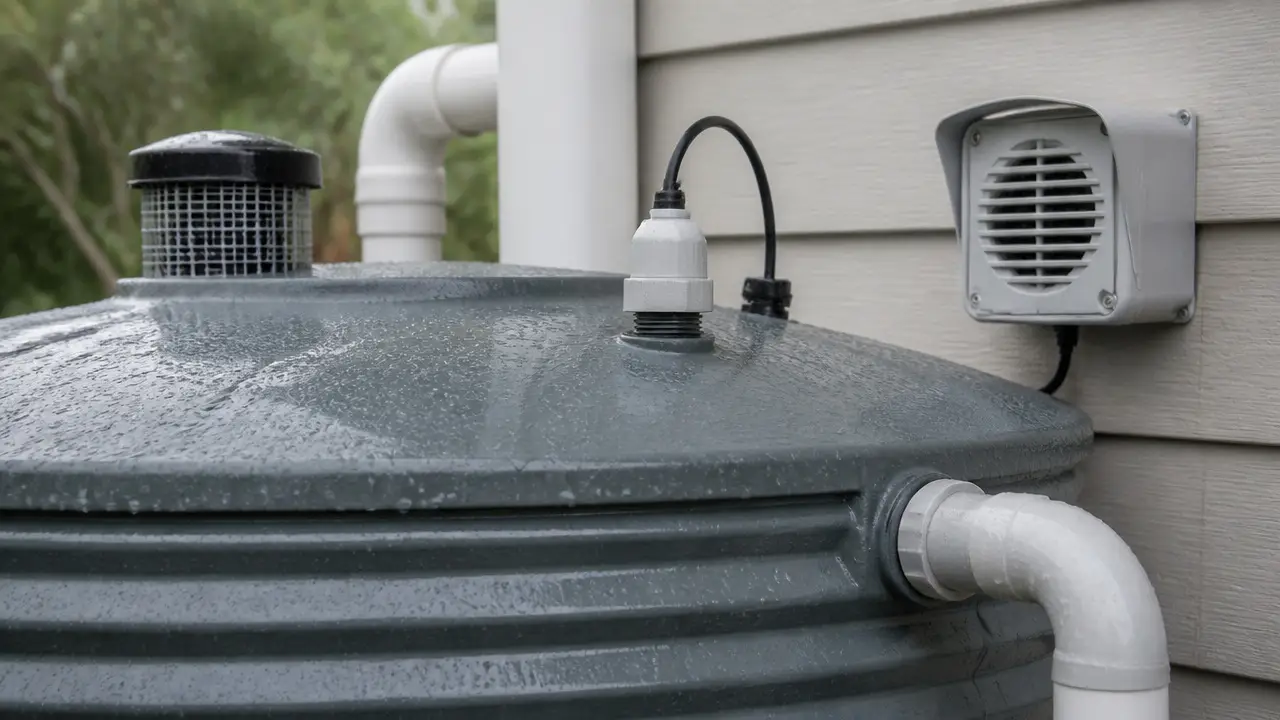
Damage is especially important in outdoor rainwater systems where wiring may be exposed to moisture, sunlight, pests, and temperature changes.
Do not use ordinary indoor wiring connections in wet locations. Electrical connections should be made using methods suitable for the environment and applicable electrical requirements.
If mains-voltage wiring is involved, use a qualified electrician where required or whenever you are not comfortable safely diagnosing the circuit.
8. Moisture Reaches an Electrical Connection
The float itself may be designed for wet use while its cable connection is not meant to sit underwater.
Water entering a junction box, splice, controller, or connector can cause:
- Corrosion.
- Intermittent operation.
- Short circuits.
- Tripped protection devices.
- Complete switch failure.
Keep electrical connections in locations and enclosures suitable for the installation.
Never assume that a connector is waterproof simply because the float switch is submersible.
9. The Switch Logic Is Reversed
Float switches may be wired or configured to behave differently depending on the system.
A switch can be used to make a circuit when the water rises or break a circuit when the water rises. This is sometimes described using terms such as normally open and normally closed.
If the wrong contacts or controller setting are used, the system may appear to work backward.
For example:
- A pump starts when the tank is empty instead of stopping.
- An alarm activates at normal water level.
- A fill pump shuts off when water drops.
If a new installation behaves backward from the beginning, check the wiring diagram and controller settings before assuming the float is defective.
10. The Float Switch Cycles Too Often
A pump that starts and stops repeatedly may have a float with too little difference between its start and stop levels.
This can happen when:
- The float has too little travel.
- The tether length is wrong.
- The tank is narrow.
- Water enters the tank almost as quickly as the pump removes it.
- Waves or turbulence keep moving the float across its switching point.
Frequent cycling can increase wear on pumps, relays, and switches.
Increasing the usable difference between the start and stop water levels may help, but any adjustment needs to remain within the safe operating range of the tank and pump.
11. Turbulence Causes False Switching
Water entering a tank can create waves around the float.
A large inlet flow near the switch may repeatedly lift and drop it even though the average tank level has barely changed.
This is especially possible in narrow tanks or pump chambers.
Moving the float away from the inlet may improve operation. Some installations use a stilling tube or protected float chamber, but it must be designed so water can enter and leave freely without trapping debris.
12. The Float Becomes Tangled
Tethered floats can sometimes wrap around:
- Pump cords.
- Suction lines.
- Discharge pipes.
- Other float cables.
- Tank supports.
Regarding the role of a tank float switch, verify thread size and material compatibility before purchase.
This is more likely when several components are crowded into a small tank.
Keep the float's operating area as clear as possible. Securing unrelated cables and pipes can reduce the chance of interference.
13. Sediment Changes the Effective Water Level
A float mounted near the bottom of a rainwater tank may eventually sit close to accumulated sediment.
The float can still be at the same physical height, but the usable clear-water depth below it may change as sludge builds up.
Sediment may also restrict a bottom-mounted float or interfere with a pump intake.
Periodic tank inspection and cleaning, when needed, are part of maintaining the entire water-storage system rather than just the float switch.
14. Freezing Prevents the Float From Moving
Outdoor systems in freezing climates need extra attention.
Ice can trap a float in one position or damage the switch, cable, mounting hardware, or surrounding plumbing.
A float switch should not be relied on to operate normally when it is frozen in ice.
If the system is used during freezing weather, the tank, piping, switch location, and pump arrangement all need appropriate freeze protection. Simply insulating the float itself does not guarantee reliable operation.
15. The Switch Is Not Suitable for the Liquid or Environment
Not every float switch is suitable for every application.
A switch intended for relatively clean water may perform poorly in:
- Dirty sump water.
- Heavy sediment.
- Wastewater.
- Water with oils or chemicals.
- Very hot liquids.
For rainwater systems, check whether the switch is suitable for the expected water conditions, installation depth, temperature, and electrical load.
16. The Float Switch Works but the Pump Does Not
A float problem and a pump problem can look very similar.
If the float reaches its operating position but the pump does not respond, the problem could also be:
- A failed pump.
- Loss of power.
- A tripped breaker or protection device.
- A failed relay.
- A faulty pump controller.
- A damaged capacitor or motor component.
- A disconnected wire.
- Dry-run protection preventing operation.
The switch is only one part of the control path.
Avoid repeatedly forcing a pump to run until you know why it stopped. A dry pump, blocked discharge, electrical fault, or other problem may be present.
How to Troubleshoot a Float Switch Safely
Start with the mechanical checks before assuming there is an electrical failure.
1. Turn off the equipment
Disconnect power before reaching into a tank, sump, or pump chamber.
Water and electrical equipment require extra care.
2. Inspect the float
Look for cracks, water inside the float, heavy buildup, or obvious physical damage.
3. Check its movement
Move the float gently through its normal range while the power remains safely isolated.
It should move freely without hitting pipes, cables, walls, or the pump.
4. Check the mounting position
Confirm that the switch is mounted at the level needed for its job.
Also check that a tethered float has the permitted amount of free cord.
5. Clean accessible buildup
Remove dirt or debris that is interfering with movement.
Avoid harsh chemicals unless they are suitable for the switch materials and the intended water use.
6. Inspect visible wiring
Look for cuts, loose connections, damaged insulation, corrosion, or wet electrical enclosures.
Do not open or repair energized electrical connections.
7. Test the control circuit if appropriate
Electrical testing may be needed to determine whether the switch changes state correctly.
Low-voltage control circuits may be straightforward for an experienced DIY user. Mains-voltage pump controls should be treated more cautiously. If you are unsure, have a qualified electrician or pump technician test the system.
When Should a Float Switch Be Replaced?
Replacement often makes more sense when the switch has:
- A cracked float.
- Water inside a sealed float.
- A damaged cable.
- Unreliable internal contacts.
- Severe corrosion.
- Repeated intermittent operation.
- Physical damage that affects movement.
A switch that repeatedly sticks because of poor placement may not need replacement. The installation may need to be changed instead.
Before installing a new switch, determine why the old one failed. Otherwise, the same problem may damage or disable the replacement.
How to Reduce Future Float Switch Problems
Good system layout can prevent many failures.
Keep the float away from inlet turbulence, pump cords, pipes, and tank walls. Provide enough room for its full movement.
For rainwater systems, maintain roof screening, inlet filters, and sediment control so large debris does not continually enter the tank.
Inspect the float as part of normal tank and pump maintenance. A quick movement check can reveal buildup or obstruction before the switch stops working completely.
For important systems, such as a cistern supplying household non-potable water, consider whether a separate high-level alarm, low-level protection device, or other backup control is appropriate. One float switch should not always be the only protection against overflow or dry-running damage.
Frequently Asked Questions
Why does my float switch work only when I move it by hand?
The float may be sticking, blocked by debris, rubbing against the tank wall, or unable to travel far enough. A waterlogged float can also be too heavy to move correctly. Check its movement with the power safely disconnected.
Can a float switch go bad even if it still moves?
Yes. The mechanical float can move normally while the internal electrical contacts have failed. Wiring, relays, and pump controllers can also cause the same symptoms.
Why does my float switch keep turning the pump on and off?
The float may have too little travel between its on and off positions. Waves, inlet turbulence, incorrect tether length, or rapid changes in water level can also cause frequent cycling.
Can sediment damage a float switch?
Sediment can interfere with movement and collect around hinges, rods, or low-mounted switches. It may not damage the switch immediately, but heavy buildup can eventually stop reliable operation.
Should a float switch touch the side of the tank?
Normally, it should have enough clearance to move freely without rubbing or becoming trapped against the wall. The exact mounting arrangement depends on the type of float switch.
Can I connect a pump directly to any float switch?
No. The switch must be electrically suitable for the load it controls. Some float switches are intended only to send a control signal to a relay or controller rather than carry the full pump motor current.
How often should I check a float switch in a rainwater tank?
There is no single inspection interval for every system. Check it as part of routine tank and pump maintenance, and inspect it sooner if the pump cycles strangely, fails to start or stop, or the tank overflows unexpectedly.
What should I do if the float switch controls mains electricity?
Do mechanical checks only after safely isolating power. Electrical testing, rewiring, or repairs should be handled by a qualified electrician when required by local rules or when you are not trained to work safely on the circuit.