As an affiliate, we may earn a commission from qualifying purchases. We get commissions for purchases made through links on this website from Amazon and other third parties.
Electronic rain gauges can be very good for tracking rainfall around a home, garden, rainwater system, or small property. They record rain automatically, and many models can show storm totals, daily totals, rainfall rate, and past records without you walking outside to read a gauge.
But an electronic gauge is not automatically more accurate than a simple manual rain gauge. Placement, leveling, debris, wind, heavy rain, freezing weather, and maintenance can all affect the reading. Most home electronic gauges work well when installed correctly and checked from time to time.
How Electronic Rain Gauges Work
Many electronic rain gauges use a tipping-bucket mechanism.
Rain enters a funnel and flows into a small two-sided bucket. When one side fills with a set amount of water, it tips. The other side then starts filling.
For automated records, smart rain gauges with app based tracking can make rainfall trends easier to review.
The gauge counts each tip and converts the number of tips into a rainfall total.
The outdoor sensor usually sends the reading to:
- an indoor display
- a weather station console
- a phone app
- or an online weather service
The main advantage is automatic recording. You do not have to empty and read the gauge after every storm.
Other electronic precipitation sensors use different methods, including weighing systems. However, tipping buckets are common in home weather stations.
Are Electronic Rain Gauges Accurate?
A properly installed electronic rain gauge can give useful rainfall measurements. For garden planning and everyday rainwater tracking, it can be more than adequate.
However, there is no single accuracy level that applies to every electronic gauge.
The sensor design, calibration, rainfall intensity, installation, and maintenance all matter.
Even professional precipitation measurements can be affected by wind, freezing precipitation, poor siting, and equipment condition. The National Weather Service also notes that tipping-bucket gauges can under-measure rainfall during high-intensity storms.
This does not make electronic gauges useless. It means you should treat the reading as a measurement from an instrument rather than an exact count of every drop that fell on your property.
Where Electronic Rain Gauges Work Best
Electronic gauges are especially useful when you want to follow rainfall over time.
Garden and irrigation planning
Knowing how much rain actually fell can help you decide whether irrigation is needed.
A forecast saying that your area received rain is less useful than knowing what happened at your property. Thunderstorms can produce very different rainfall totals only a short distance apart.
An electronic gauge can make this easy because it keeps a running record.
Rainwater harvesting
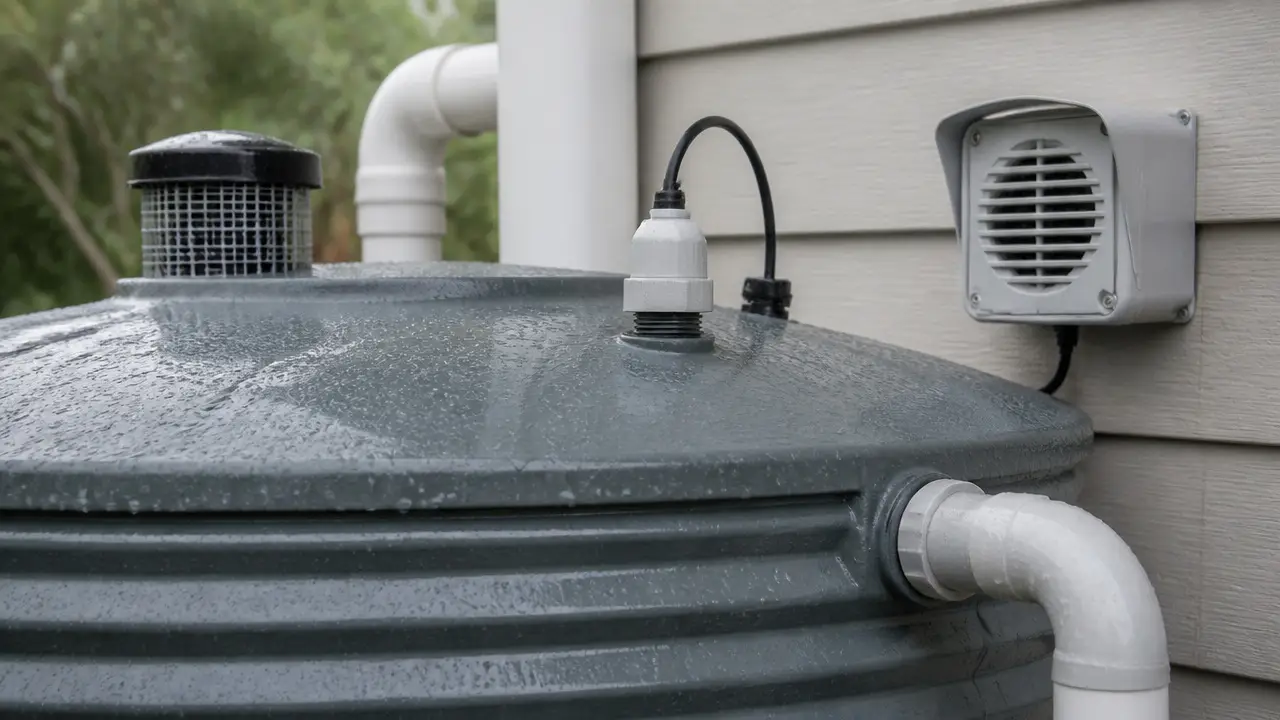
Rainfall measurements can help you understand how often your rain barrel, IBC tote, or cistern is likely to receive water.
The gauge should not be used as a direct tank-level measurement. Your collected amount also depends on:
- roof area
- actual rainfall over the roof
- gutter losses
- overflow
- first-flush diversion
- leaks
- tank capacity
Still, having local rainfall records can help you compare expected collection with what your system actually captures.
Home weather stations
Electronic gauges make sense when rainfall is one part of a larger weather station.
A system may record temperature, humidity, wind, pressure, and rain without requiring manual observations.
Automatic history is often one of the biggest reasons to choose electronic equipment.
Why Electronic Rain Gauges Sometimes Give Wrong Readings
Most problems come from a few predictable causes.
The gauge is not level
Leveling is particularly important with tipping-bucket gauges.
If the mechanism is tilted, the bucket may tip too early or too late. Guidance used for automated weather observations warns that tipping-bucket accuracy can degrade when the gauge is not level.
Check the level when installing the gauge and again if the mounting post or surface moves.
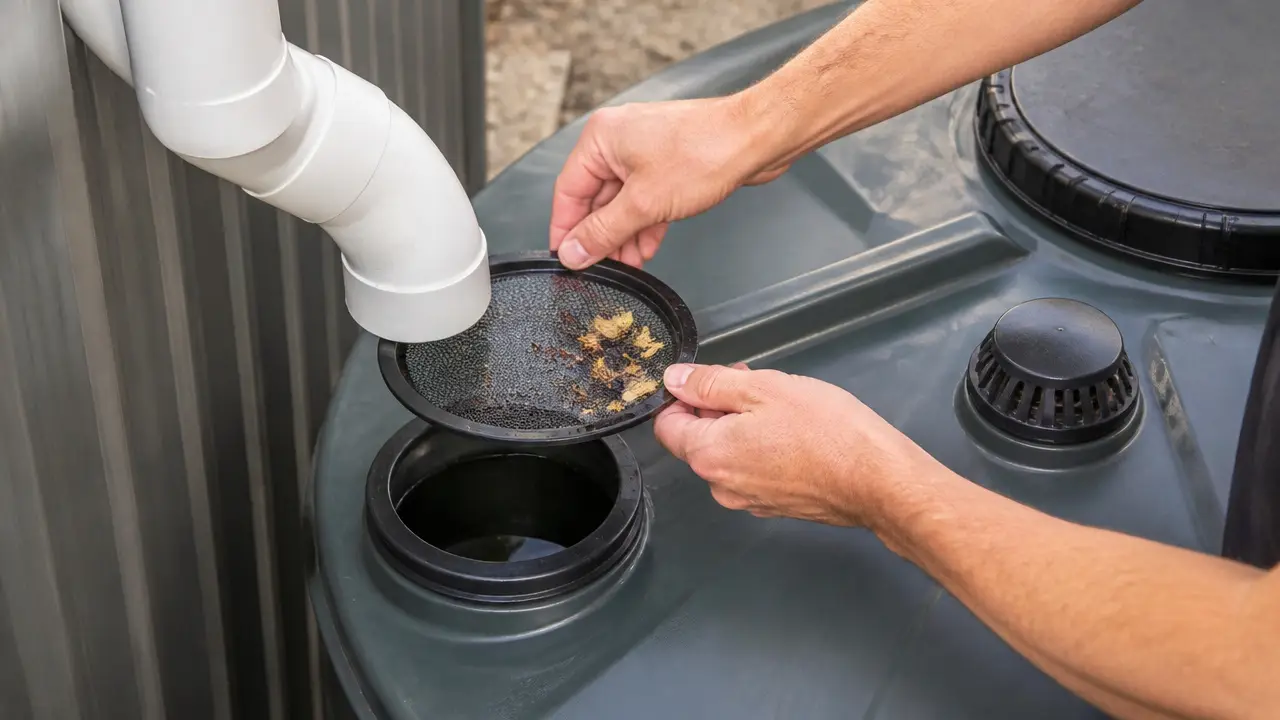
The funnel gets clogged
Leaves, insects, pollen, dirt, and other debris can partially block the inlet.
Water may then drain too slowly into the tipping mechanism or miss being measured properly.
A screen can reduce larger debris, but the funnel still needs inspection.
Routine maintenance guidance for tipping-bucket instruments includes cleaning the funnel and buckets and checking that the gauge remains level.
Heavy rain overwhelms the tipping mechanism
During very intense rain, water continues entering while the bucket is physically tipping.
Some water can pass through without being counted correctly.
The National Weather Service describes this as a known source of error in tipping-bucket gauges. Professional systems may even apply corrections to account for losses during very heavy rainfall.
For a homeowner, the practical result is simple: a severe storm may produce a somewhat different total from a nearby manual gauge.
Wind affects the catch
Rain rarely falls perfectly straight down.
Wind can carry droplets across or around the gauge opening. Nearby buildings and trees can also create turbulence that changes how much rain enters the funnel.
The National Weather Service recommends avoiding locations where nearby obstructions distort precipitation, while also noting that highly exposed and elevated locations can create wind-related errors.
Freezing weather causes problems
An ordinary tipping-bucket gauge may not measure snow, ice, or freezing rain correctly.
Water can freeze in the funnel or moving mechanism. Snow may also accumulate without producing normal bucket tips.
Professional heated gauges exist, but even heated precipitation instruments have limitations.
If you live where temperatures regularly fall below freezing, check what types of precipitation the gauge is designed to measure rather than assuming it works year-round.
Batteries or wireless communication fail
The rain sensor may be measuring correctly while the indoor console receives nothing.
Possible causes include:
- weak batteries
- excessive distance
- walls or metal structures
- radio interference
- sensor resets
- connection problems
Planning around comparing rain gauge options helps compare compatible materials across the planned assembly.
Check whether the system stores rainfall internally when communication is interrupted. Some systems may lose readings that were never transmitted.
Placement Matters More Than Many People Expect
A good rain gauge in a bad location can give poor results.
Avoid placing it directly:
- below a tree
- beside a wall
- under a roof edge
- next to a fence that changes airflow
- where sprinklers can enter it
- where roof runoff can splash into it
A roof may seem convenient for a wireless weather station, but elevated locations can be windier and may not provide the best rainfall catch.
The National Weather Service emphasizes that precipitation-gauge exposure is important and that wind and nearby obstructions can create measurement errors.
Use the installation guidance supplied with the gauge while choosing a location that represents the rainfall you actually want to measure.
For rainwater harvesting, that normally means measuring natural rainfall rather than installing the gauge where water from your roof or gutters can reach it.
Electronic vs Manual Rain Gauges
Neither type is automatically better.
| Electronic gauge | Manual gauge |
|---|---|
| Records rain automatically | Must be read manually |
| Can track rainfall rate | Usually shows accumulated rain only |
| May store daily and storm history | Records depend on you writing readings down |
| Convenient during overnight storms | Simple design |
| Requires batteries or electronics | Usually requires no power |
| Moving parts may need cleaning | Few or no moving parts |
| Tipping mechanisms can have heavy-rain errors | Can provide a useful comparison measurement |
For many homeowners, the best arrangement is an electronic gauge for everyday tracking and a simple manual gauge nearby for occasional comparison.
The two gauges will not necessarily match perfectly. Rainfall varies across short distances, and the gauges may respond differently to wind and intense rain.
But repeated large differences can tell you that something needs attention.
How to Check Whether Your Electronic Gauge Is Working Properly
Do not judge it from one storm.
Instead, compare readings over several normal rain events.
Place a reliable manual gauge reasonably close to the electronic unit while making sure neither interferes with the other.
Then compare accumulated totals.
Small differences are not unusual. Look for a pattern.
For example, investigate if the electronic gauge repeatedly:
- records no rain when rain clearly occurred
- reports much less than the manual gauge
- reports rain on dry days
- suddenly changes after months of consistent readings
- produces impossible storm totals
Check the funnel, mounting, level, batteries, moving mechanism, and wireless connection before assuming the sensor itself has failed.
If the manufacturer provides a calibration procedure, follow that procedure rather than bending, filing, or adjusting the tipping mechanism at random.
How Much Maintenance Does an Electronic Gauge Need?
Electronic rain gauges are fairly low-maintenance, but they are not maintenance-free.
Inspect the outdoor collector periodically and after severe weather.
Look for:
- leaves
- insect nests
- dirt
- algae or organic buildup
- blocked drain paths
- loose mounting hardware
- an out-of-level sensor
- corrosion
- battery problems
Clean the collector according to its instructions.
Do not coat the inside with oils, soaps, or other substances unless the manufacturer specifically calls for them. Changing how water flows through the funnel can affect measurements.
A quick inspection can prevent months of misleading rainfall records.
Are Electronic Rain Gauges Worth It for Rainwater Harvesting?
Usually, yes, if you enjoy tracking your system.
An electronic rain gauge is especially helpful when you want to know how much rainfall occurred without checking a manual gauge after every storm.
It can help you:
- compare storms
- follow dry periods
- plan garden watering
- estimate when tanks may refill
- compare rainfall with tank-level changes
- keep seasonal rainfall records
But you do not need an electronic rain gauge to operate a basic rain barrel.
For sizing storage, use appropriate rainfall records for your location along with roof catchment area and realistic system losses. A backyard gauge tells you what happened at your property after installation. It does not replace long-term rainfall records when planning storage capacity.
When a Manual Gauge May Be the Better Choice
Choose a simple manual gauge if your main goal is just knowing how much rain fell.
It may make more sense when:
- you do not need automatic records
- you prefer equipment without batteries
- wireless reception is poor
- you want a simple comparison instrument
- you enjoy keeping rainfall records manually
An electronic gauge becomes more valuable when convenience, automatic history, storm timing, or integration with a weather station matters.
Bottom Line
Electronic rain gauges are good tools for homeowners, gardeners, and rainwater-system users. Their biggest advantage is convenient automatic recording rather than perfect accuracy.
A well-sited, level, clean electronic gauge can provide useful local rainfall data for years. Poor installation or neglected maintenance can make even a good sensor misleading.
For the most confidence in your readings, keep the electronic gauge clean and level and occasionally compare its totals with a simple manual rain gauge.
Frequently Asked Questions
Are digital rain gauges more accurate than manual rain gauges?
Not necessarily. A good electronic gauge can provide useful readings, but tipping mechanisms, leveling, wind, debris, and heavy rainfall can introduce errors. A simple manual gauge can also be very accurate when correctly installed and read.
Do electronic rain gauges work in heavy rain?
They generally continue working, but some tipping-bucket gauges can under-measure very intense rainfall because water continues flowing while the bucket tips. This is a known limitation of tipping-bucket technology.
Can an electronic rain gauge measure snow?
Do not assume that it can. Standard tipping-bucket gauges may freeze or fail to measure frozen precipitation correctly. Some specialized systems use heating or different measurement methods. Check the gauge's stated operating conditions.
Why does my electronic rain gauge show less rain than my manual gauge?
Possible causes include wind, poor placement, a clogged funnel, an unlevel sensor, heavy-rain losses, calibration differences, or normal differences between the two instruments. Compare several storms before deciding that either gauge is wrong.
Can I put an electronic rain gauge on my roof?
A roof may provide convenient wireless exposure, but it can also be windy and turbulent. Elevated sites may increase rainfall measurement errors. A properly chosen ground-level location is often better for measuring representative rainfall.
How often should an electronic rain gauge be cleaned?
There is no universal schedule. Inspect it often enough to prevent leaves, insects, pollen, dirt, and other debris from restricting water flow. Check it more frequently during seasons when debris is common and after major storms.
Is an electronic rain gauge useful with a rain barrel or cistern?
Yes. It can help you track local rainfall and compare storm totals with changes in stored water. However, tank collection also depends on roof area, system losses, overflow, first-flush diversion, and available storage capacity.