As an affiliate, we may earn a commission from qualifying purchases. We get commissions for purchases made through links on this website from Amazon and other third parties.
A rainwater filtration system can be fairly simple for garden use or much more complex for indoor or drinking-water use. The biggest cost difference comes from what you want the water to do.
Water used for drip irrigation may need little more than debris control and basic filtration. Water used for toilets, laundry, showers, or drinking can require finer filtration, disinfection, pumps, controls, plumbing changes, and ongoing testing.
The storage tank itself is usually a separate part of the rainwater harvesting system. When comparing filtration-system costs, make sure you know whether a quote includes only treatment equipment or the tank, pump, piping, electrical work, and installation too.
What Is Included in a Rainwater Filtration System?
A complete system may have several treatment stages.
Roof and gutter screening
Screens help keep leaves, twigs, insects, and larger debris out of the system.
This is often the first and simplest treatment step. Keeping debris out of the tank also reduces the load on later filters.
First-flush diversion
A first-flush diverter sends away some of the first runoff from the roof.
That first runoff can carry dust, bird droppings, pollen, and other material that collected on the roof between storms. A first-flush device does not make rainwater safe to drink, but it can reduce the amount of contamination entering storage.
Pre-tank filtration
A pre-tank filter catches material before it reaches the cistern or rain barrel.
Several current state rainwater rules summarized by the EPA require some form of debris exclusion or pre-tank filtration for certain systems.
Keeping larger particles out of storage can also reduce sediment buildup and make tank cleaning easier.
Post-tank sediment filtration
Water leaving a cistern often passes through a finer filter.
Filters are commonly described by their micron rating. A micron is one-thousandth of a millimeter. The smaller the micron number, the smaller the particles the filter is designed to catch.
The right rating depends on the intended use and the treatment stages that follow it.
For example, some regulations specify filtration around 100 microns for certain non-potable uses, while systems using UV disinfection may require much finer filtration.
Carbon filtration
Activated carbon can be added when the system needs treatment for certain tastes, odors, or chemicals that the selected carbon media is designed to reduce.
Carbon is not a complete rainwater treatment method. It also requires regular cartridge replacement.
UV disinfection
A UV unit exposes flowing water to ultraviolet light.
UV can be one part of a properly designed disinfection system, but its performance depends on suitable equipment, adequate pretreatment, correct flow, clean components, and proper maintenance.
For example, current Texas guidance summarized by the EPA describes filtration followed by an appropriate disinfection stage for household potable rainwater systems.
Chemical disinfection
Some systems use chlorine or another approved disinfectant instead of, or along with, UV.
Chemical treatment becomes more complicated because dosage, contact time, water quality, equipment, and residual disinfectant can matter. This is usually a point where professional system design is worth considering.
Pumps and pressure equipment
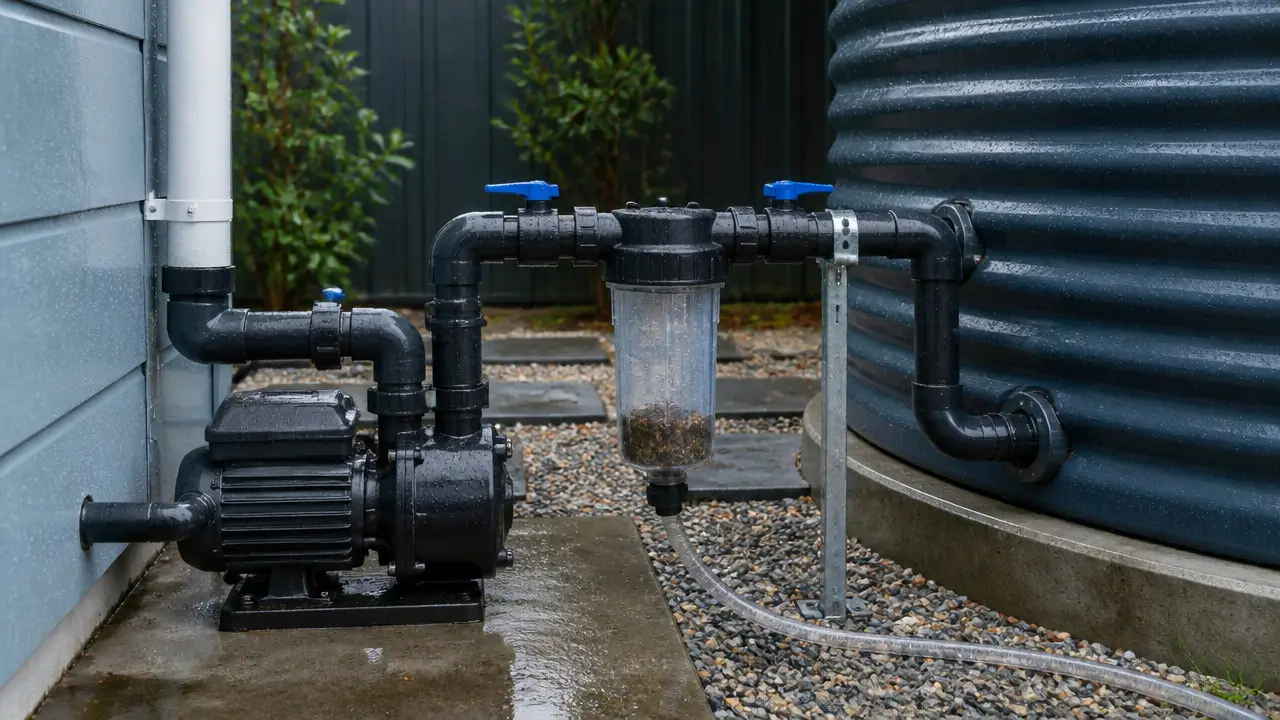
Filtration may require a pump if gravity cannot provide enough pressure.
The pump must provide enough flow rate, meaning how much water it can move in a given time, while overcoming:
- Height between the tank and outlet
- Pipe friction
- Filter resistance
- Required fixture or irrigation pressure
- Pressure loss through UV units and other treatment equipment
Adding a pump, pressure tank, controller, dry-run protection, or backup water connection can make the project much more involved than installing filters alone.
The Intended Use Has the Biggest Effect on Cost
Before choosing equipment, decide where the water will go.
Garden irrigation
Garden watering is often the least complex application.
A typical system may rely on:
- Gutter screens
- A first-flush device
- Tank inlet screening
- A sediment or irrigation filter
Drip irrigation needs special attention because small emitters can clog. The filter must match the emitter manufacturer's requirements.
For simple outdoor watering, paying for treatment stages that the water does not need can add unnecessary equipment and maintenance.
Toilet flushing and laundry
Indoor non-potable use means the water is not intended for drinking.
These systems can require more filtration and plumbing safeguards than garden systems. Local rules may also require specific treatment, labeling, backflow protection, or separation from potable plumbing.
EPA summaries show that treatment requirements differ by location and intended use. For example, some jurisdictions require filtration and disinfection for certain indoor rainwater applications.
This is one reason an indoor system usually costs more to build than a basic garden system.
Drinking water
A rainwater system intended to supply drinking water is a different project.
Do not treat it as a matter of simply adding one better filter.
Roof runoff can contain microorganisms, metals, chemicals, animal waste, and other contaminants. A safe design has to consider the complete path from the catchment surface through storage and treatment.
A drinking-water setup may involve:
- Suitable roof and collection materials
- First-flush management
- Protected storage
- Sediment control
- Appropriate filtration
- Disinfection
- Suitable plumbing materials
- System monitoring
- Current laboratory testing
- Regular maintenance
- Compliance with applicable local requirements
For example, EPA's current summaries of Texas and Ohio requirements describe multi-stage filtration and disinfection approaches for potable rainwater systems.
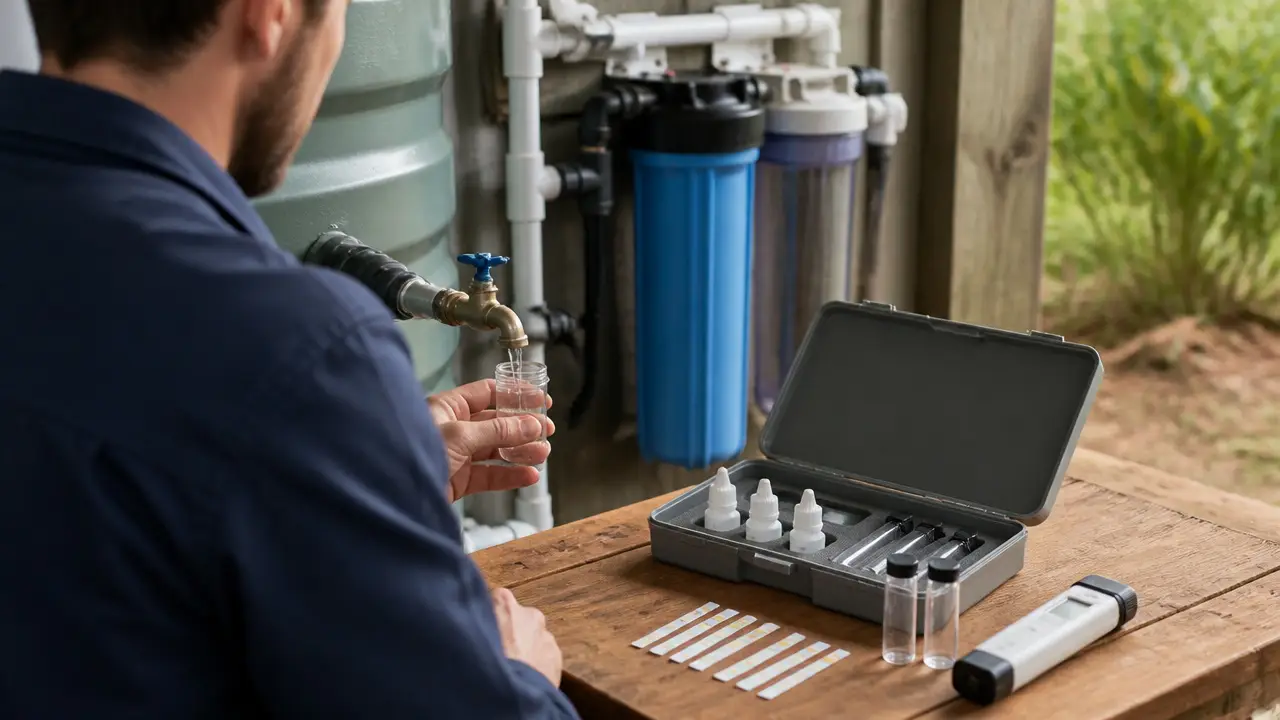
No single cartridge, UV light, purifier, meter, or home test kit can establish that a rainwater supply is safe to drink.
What Makes a Rainwater Filtration System More Expensive?
Regarding legal restrictions on filtering rainwater, investigate legal collection caps for the proposed tank volume.
Several system choices can increase the total project cost.
Higher required flow
A filter serving one garden hose does not have to handle the same demand as a system serving several household fixtures.
Larger housings, pumps, pipes, valves, and treatment units may be needed as required flow increases.
Finer filtration
Fine filters generally need good prefiltration.
Putting a very fine cartridge directly after a dirty cistern can cause frequent clogging and poor flow. A staged system usually works better:
roof debris control → tank → coarse post-tank filtration → finer treatment → disinfection if required.
More stages mean more equipment, but they can also protect the later stages.
Automatic controls
Automatic systems may include:
- Pump controllers
- Pressure switches
- Tank level sensors
- Low-water shutoff
- Automatic municipal-water backup
- Filter pressure gauges
- UV alarms or monitoring
These features can improve operation but increase installation complexity.
Plumbing changes
Running a dedicated rainwater line to toilets or laundry can cost more than the treatment equipment itself in some homes.
Existing walls, pipe routes, backflow protection, access, and local plumbing requirements all affect the work involved.
Potable and non-potable plumbing must not be connected in a way that creates a cross-connection hazard.
Electrical work
Pumps, UV units, controllers, and monitoring equipment may need electrical power.
Electrical equipment around water should be installed using suitable protection and according to applicable electrical requirements. Hire a qualified electrician when new circuits or other fixed electrical work are needed.
Difficult installation locations
A treatment system needs space for servicing.
Trying to fit several filter housings, valves, pumps, and UV equipment into a cramped location can make both installation and future maintenance harder.
Leave room to remove cartridges and clean housings without dismantling the plumbing.
Do Not Forget Ongoing Filtration Costs
The initial equipment is only part of the total cost.
Most systems need recurring maintenance.
Typical tasks can include:
- Cleaning roof and gutter screens
- Emptying first-flush devices
- Cleaning prefilters
- Replacing sediment cartridges
- Replacing carbon cartridges
- Servicing UV equipment
- Cleaning UV sleeves where applicable
- Inspecting pumps and pressure equipment
- Removing tank sediment
- Checking screens and openings for insects
- Testing water when required for the intended use
EPA guidance notes that rainwater treatment equipment needs routine servicing, including filter replacement and UV maintenance where those systems are used.
A system with inexpensive equipment but constant cartridge clogging can become inconvenient and costly to maintain. Good prefiltration and proper sizing often matter more than simply choosing the finest filter available.
A Simple System Can Be Better Than an Overbuilt One
More filtration is not automatically better.
Every filter adds resistance to water flow. Every cartridge needs cleaning or replacement. Pumps must work against the added pressure loss.
Start with the intended use.
For garden watering, focus on keeping debris and sediment away from irrigation equipment.
For indoor non-potable use, check local treatment and plumbing requirements before buying components.
For drinking water, treat the project as a complete water-supply system rather than a collection of individual filters.
That approach helps avoid paying for unnecessary equipment while also avoiding a system that does not provide enough treatment for its intended use.
Before Requesting an Installation Quote
A contractor or system designer can give a more useful quote if you provide the basic system details.
Have these ready:
| Question | Why It Matters |
|---|---|
| What will the water be used for? | Determines required treatment |
| Is the cistern already installed? | Changes the installation scope |
| How far is the tank from the outlets? | Affects piping and pump requirements |
| How high must the water be lifted? | Affects pump sizing |
| How much water must flow at once? | Determines filter, pipe, and pump size |
| Is electrical power available? | Matters for pumps, UV, and controls |
| Will rainwater enter the house? | May trigger additional plumbing requirements |
| Is drinking water planned? | Requires a much more careful treatment and testing approach |
If you already have a pump, tank, or filter housings, provide the model information and connection sizes. Equipment that cannot handle the required flow or pressure can create extra replacement work.
Frequently Asked Questions
Is a rainwater filter necessary for garden watering?
Some form of screening or filtration is usually useful. Leaves and sediment can clog hoses, valves, and irrigation equipment. Drip irrigation often needs finer filtration based on the requirements of its emitters.
Does a rain barrel need an expensive filtration system?
Usually not for basic outdoor watering. A screened inlet, protected openings, debris control, and suitable outlet filtration may be enough depending on the use. Water quality requirements change if the water will be used indoors or where greater human exposure is expected.
Does a finer filter make rainwater safe to drink?
No. A fine sediment filter mainly removes particles within its designed range. It does not provide a complete assessment or treatment of microorganisms, dissolved chemicals, metals, and other possible contaminants.
Do I need UV treatment for rainwater?
Not for every rainwater application. Whether disinfection is needed depends on the intended use and applicable local requirements. UV is often used as one stage in more advanced treatment systems, but it requires suitable pretreatment and maintenance.
Should filtration go before or after the rainwater tank?
Often both. Coarse screening before the tank keeps debris out of storage. Additional filtration after the tank can protect pumps, irrigation equipment, plumbing fixtures, or later treatment stages.
Why do rainwater filters clog so quickly?
Common causes include roof debris, algae, accumulated tank sediment, an undersized filter, or using a very fine cartridge without enough prefiltration. Fixing the upstream debris problem is usually better than repeatedly replacing clogged cartridges.
Can I install a rainwater filtration system myself?
Simple outdoor filters and accessible low-pressure plumbing may be reasonable DIY work for someone with suitable experience. Indoor plumbing, backflow protection, pressure systems, permanent electrical work, chemical treatment, and drinking-water systems may require licensed or qualified professionals and must follow local requirements.