As an affiliate, we may earn a commission from qualifying purchases. We get commissions for purchases made through links on this website from Amazon and other third parties.
A TDS reading below 50 ppm means your water contains a very small amount of dissolved minerals and salts. By itself, that is not a sign that the water is unsafe. It is also not proof that the water is safe to drink.
Low TDS is common in rainwater, distilled water, and water treated by reverse osmosis. What matters next is where the water came from and what you plan to do with it.
What Does TDS Below 50 Mean?
TDS stands for total dissolved solids. It describes the amount of dissolved material in water, such as calcium, magnesium, sodium, chloride, and other ions.
For dilute water, a reading of 50 ppm is roughly 50 milligrams of dissolved solids per liter of water.
A reading below 50 ppm generally means the water has low mineral content.
For example, low TDS can occur with:
- Collected rainwater
- Reverse-osmosis water
- Distilled water
- Some naturally low-mineral surface or groundwater
- Tap water supplied from a low-mineral source
The number does not tell you which substances are present.
Is TDS Below 50 Safe to Drink?
It can be, but TDS cannot answer that question.
The U.S. EPA lists 500 mg/L of TDS as a secondary drinking-water guideline. Secondary standards mainly address issues such as taste, staining, deposits, and other nuisance effects rather than serving as a minimum level that drinking water must contain. A reading below 50 mg/L is therefore not automatically a problem simply because it is far below 500 mg/L.
There is no need to raise TDS just to reach some arbitrary number.
However, a TDS meter cannot tell you whether water contains harmful germs or specific contaminants. Water can have very low TDS and still be unsuitable for drinking.
This distinction is especially important with rainwater.
Low-TDS Rainwater Is Normal
Rainwater usually has fewer dissolved minerals than groundwater because it has not spent long periods moving through mineral-rich soil and rock.
So if water from your rainwater tank measures 10, 20, 30, or 40 ppm, the low number alone is not surprising.
But roof-collected rainwater can pick up contamination from:
- Bird and animal droppings
- Dust and soil
- Roofing materials
- Gutters
- Pollen and plant debris
- Smoke and airborne particles
- Tank sediment
- Pipes and fittings
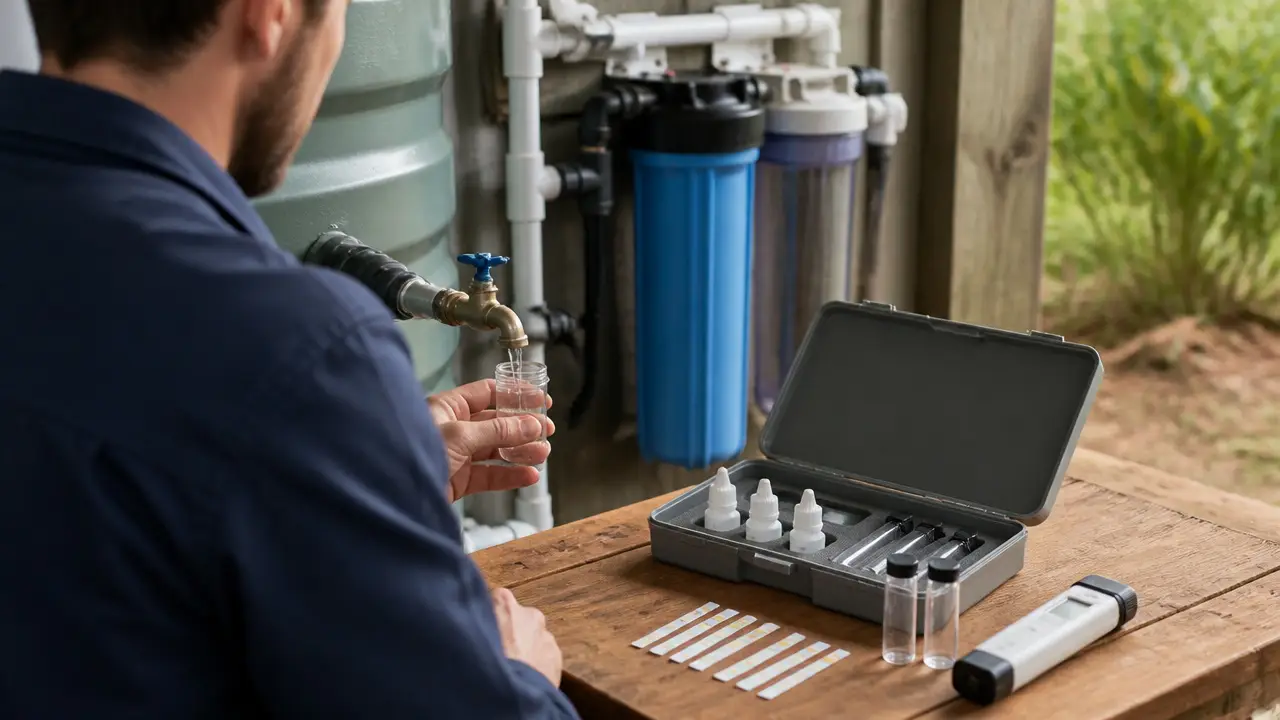
The CDC warns that rainwater is not necessarily safe to drink without suitable treatment. It recommends regular testing for harmful germs and chemicals when rainwater is used for drinking, cooking, or bathing.
A tank showing 25 ppm TDS could therefore require more attention than treated tap water showing 250 ppm TDS.
The TDS number alone cannot make that distinction.
What a TDS Meter Actually Measures
Most handheld TDS meters do not directly weigh all the dissolved material in your water.
They measure electrical conductivity. Water containing dissolved ions conducts electricity better than water containing very few ions. The meter then uses that conductivity reading to estimate TDS.
The U.S. Geological Survey notes that conductivity depends on both the types and amounts of dissolved substances in the water. The relationship between conductivity and actual dissolved solids can vary with the water's chemical makeup.
That makes a TDS meter useful for spotting changes, but not for performing a complete water-quality test.
For example, you can use one to notice that:
- An RO membrane may not be working as expected
- Tank water suddenly contains far more dissolved material than usual
- Two water sources have very different mineral levels
- Your water quality has changed over time
It is much less useful for identifying the cause of that change.
What a TDS Reading Cannot Tell You
A reading of 30 ppm does not mean your water contains only harmless substances.
A basic TDS meter cannot tell you whether the water contains specific:
- Bacteria
- Viruses
- Parasites
- Metals
- Nitrates
- Pesticides
- Industrial chemicals
- Roofing-related contaminants
It also cannot identify which minerals are responsible for the TDS it does measure.
The CDC recommends choosing water treatment based on the contaminants actually present rather than assuming one filter or treatment device handles every water-quality problem.
Should You Add Minerals If TDS Is Below 50?
Usually, not simply because of the TDS reading.
If you have RO water or naturally low-mineral water and you like its taste, a number below 50 does not automatically require correction.
There can be other reasons to adjust water chemistry, however.
Very low-mineral water may also have low alkalinity. Alkalinity is the water's ability to resist changes in pH. Water with low alkalinity can sometimes be more difficult to manage in plumbing systems.
Corrosion risk cannot be determined from TDS alone. Important factors also include:
- pH
- Alkalinity
- Calcium concentration
- Chloride and sulfate levels
- Water temperature
- Pipe and fitting materials
If low-TDS water is causing metallic taste, blue-green stains, unusual corrosion, or plumbing problems, a broader water analysis is more useful than simply adding minerals until the TDS number rises.
What If the Reading Suddenly Drops Below 50?
Factor in 20 ppm TDS drinking-water safety to interpret a water-safety plan appropriate for the intended purpose.
A sudden change deserves more attention than a consistently low reading.
Suppose your tank normally measures around 150 ppm but suddenly reads 25 ppm. Possible explanations include:
- A large amount of fresh rain diluted the stored water
- Your water source changed
- An RO or other treatment stage was added
- The meter needs cleaning or calibration
- The sample container was contaminated or improperly rinsed
- The meter is using a different TDS conversion setting
- The previous reading was inaccurate
Start by repeating the measurement.
Rinse the probe and sample container with the water you are testing, then take another reading according to the meter manufacturer's instructions.
If the number still looks unusual, compare it with another known water source or have the water tested when the result matters for drinking or system operation.
What If My Tap Water Is Below 50 TDS?
If the water comes from a regulated public water system, a low home TDS reading does not by itself indicate a problem.
Check your water supplier's current water-quality report if you want to know what is actually in the water. Public water systems test for contaminants that a household TDS meter cannot identify.
If the low reading appeared only after an RO system, the reading may simply show that the membrane is removing a large share of the dissolved ions.
Do not judge RO performance from the final TDS number alone. Comparing feed-water and treated-water readings is generally more useful, while contaminant removal should be judged according to the treatment system's intended performance and the contaminants of concern.
Is Low-TDS Water Good for Plants?
Often, low-TDS water can be useful for irrigation because it brings relatively little dissolved salt into the soil.
Rainwater is a common example.
But low TDS does not mean the water contains everything a plant needs. TDS is not a fertilizer test.
Plant performance can also depend on:
- Soil conditions
- pH
- Nutrients
- Sodium
- Chloride
- Drainage
- Plant species
For an ordinary garden supplied by clean rainwater, a low TDS reading usually does not need to be corrected just for irrigation.
When Should You Test More Than TDS?
Further testing makes sense when the water will be swallowed or when something about the system has changed.
Consider appropriate laboratory testing when:
- Rainwater will be used for drinking or cooking
- You have a private drinking-water supply
- Your water suddenly changes in taste, smell, or appearance
- You suspect contamination
- Your plumbing shows unusual corrosion
- Floodwater or other contaminated water entered the system
- Roofing, tank, pipe, or treatment components have changed
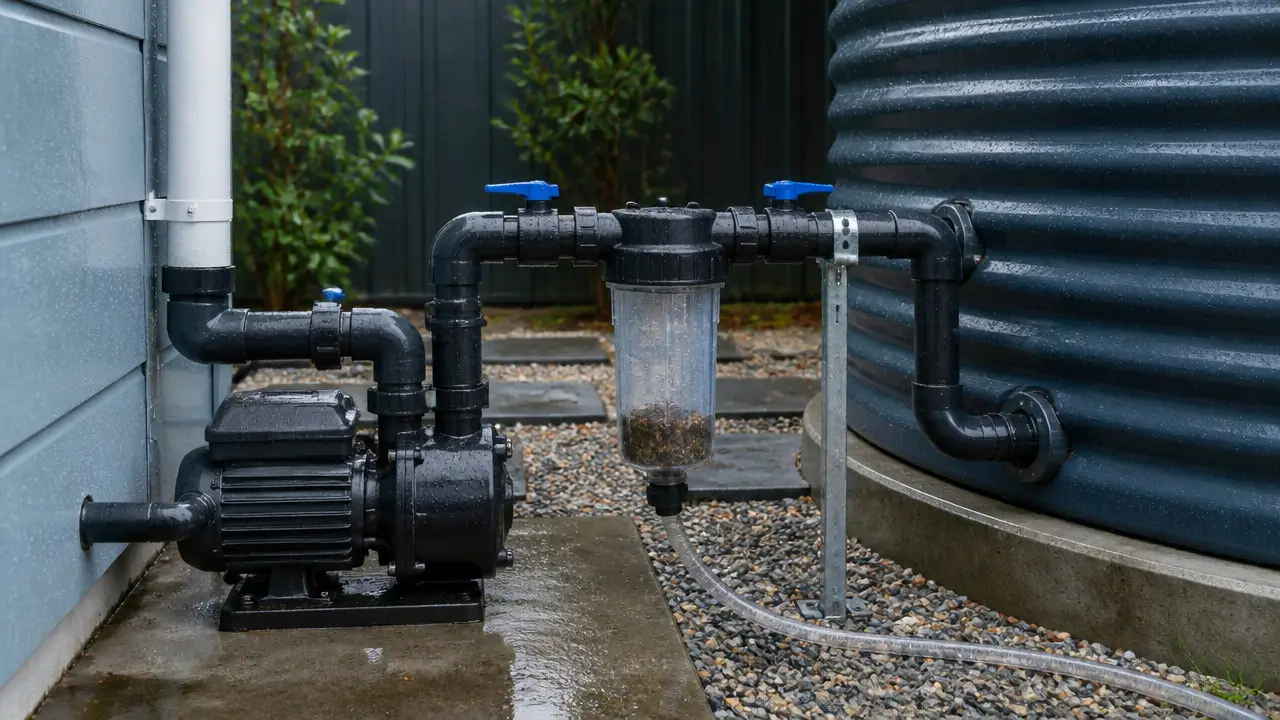
For drinking rainwater, treat safety as a whole-system issue. Collection surfaces, first-flush management, storage, prefiltration, treatment, maintenance, laboratory testing, and applicable local requirements can all matter.
A first flush diverter sends the first portion of roof runoff away from the tank. That first runoff can carry a higher load of dirt and contamination from the roof. It can improve incoming water quality, but it does not make stored rainwater automatically potable. The CDC recommends it as one measure that can improve a rainwater collection system.
The Bottom Line
If your TDS is below 50 ppm, there is usually no reason to panic or automatically add minerals.
The reading simply tells you that the water contains relatively few dissolved ions.
For rainwater, that can be completely normal. For RO water, it can also be expected.
What the number does not tell you is whether the water is safe to drink.
If the water is only being used for garden irrigation or another suitable non-potable use, low TDS may require no action. If you plan to drink collected rainwater, use proper collection and treatment practices and current laboratory testing rather than relying on a TDS meter as a safety test.
Frequently Asked Questions
Is 20 TDS too low for drinking water?
A reading of 20 ppm means the water has very little dissolved mineral content. The number itself does not establish whether the water is safe or unsafe to drink. Its source, contaminants, treatment, and testing matter more.
Is 0 TDS water safe?
A meter reading near zero usually means very few electrically conductive dissolved substances are present. It does not prove that the water is sterile or free of every chemical contaminant.
Does low TDS mean the water is acidic?
No. TDS and pH measure different things. Water can have low TDS at different pH levels. Test pH separately if acidity or corrosion is a concern.
Is rainwater supposed to have low TDS?
Often, yes. Rainwater normally contains fewer dissolved minerals than groundwater. Roof runoff can still contain germs, particles, or chemicals that a TDS meter cannot properly assess.
Can I use water below 50 TDS for my garden?
In many cases, yes. Low dissolved-salt levels can be useful for irrigation. Plant needs, soil chemistry, pH, and specific contaminants still matter.
Should I remineralize water below 50 TDS?
Not solely because the meter reads below 50. Remineralization may be used for taste or water-chemistry management in some systems, but TDS alone does not tell you whether it is needed.
Can a TDS meter tell me if rainwater is safe to drink?
No. A TDS meter estimates dissolved ionic material. It does not provide a complete test for microorganisms or chemical contaminants. Drinking rainwater requires a broader approach to collection, treatment, maintenance, and testing.