As an affiliate, we may earn a commission from qualifying purchases. We get commissions for purchases made through links on this website from Amazon and other third parties.
For most rainwater and home water systems, the best water tester to buy on Amazon is not one all-in-one device. A better choice is a tester matched to the job.
For routine system checks, a digital pH/TDS/EC meter is useful because it can quickly show changes in water chemistry. TDS means total dissolved solids, while EC means electrical conductivity. Neither measurement tells you whether water is safe to drink.
If you want to screen for several specific chemicals, a multi-parameter test-strip kit can be useful. If the water may be used for drinking, cooking, or brushing teeth, home testers should only be part of the process. A certified drinking-water laboratory is the better choice for determining whether important contaminants are actually present. EPA recommends certified laboratories for drinking-water testing, and CDC gives similar guidance for private wells and rainwater systems.
The Best Type of Water Tester Depends on What You Need to Know
Amazon sells many products under the name "water tester," but they do very different jobs.
Some measure only dissolved minerals. Others check pH. Some use disposable strips to screen for several substances. Bacteria tests look for certain microbial indicators.
None of these automatically provides a complete water-quality assessment.
A useful way to choose is to start with the question you are trying to answer.
| What you want to know | Useful type of tester |
|---|---|
| Has the water chemistry changed? | Digital TDS/EC meter |
| Is the water acidic or alkaline? | Digital pH meter |
| What is the approximate hardness? | Hardness test strips |
| Is chlorine present after treatment? | Chlorine test strips or meter made for that purpose |
| Do several basic parameters need checking? | Multi-parameter test strips |
| Could bacteria be present? | Bacteria screening test, followed by laboratory testing when safety matters |
| Is rainwater safe to drink? | Appropriate laboratory testing, not one Amazon tester |
The best purchase is therefore usually the tester that measures the specific parameter you need, rather than the product claiming to test the largest number of things.
Best General-Purpose Choice: A Digital pH and TDS/EC Meter
For a homeowner maintaining a rainwater system, a small digital meter that measures pH, TDS, and EC can be useful.
What pH tells you
pH shows how acidic or alkaline the water is.
It can help identify major changes in your stored water and may be useful when managing treatment equipment or investigating corrosion problems.
A pH reading does not tell you whether bacteria, lead, pesticides, or other contaminants are present.
What TDS tells you
TDS stands for total dissolved solids.
A TDS meter estimates the amount of dissolved material in the water from its electrical conductivity. It is useful for comparing water over time.
For example, you might notice that stored rainwater normally gives fairly consistent readings but suddenly produces a much higher reading. That change could be worth investigating.
The meter still cannot tell you exactly what those dissolved substances are.
A low TDS number does not mean the water is pure, sterile, or safe to drink. Harmful microorganisms and some contaminants can be present without producing a useful warning from a TDS meter.
What EC tells you
EC, or electrical conductivity, measures how easily electricity moves through the water.
More dissolved ions generally increase conductivity.
EC and TDS are closely related, which is why many handheld meters provide both measurements.
For routine rainwater-system monitoring, these measurements are best treated as trend indicators, not safety tests.
When Test Strips Are a Better Choice
Test strips can be more useful when you need to look for one specific parameter that a digital TDS meter cannot measure.
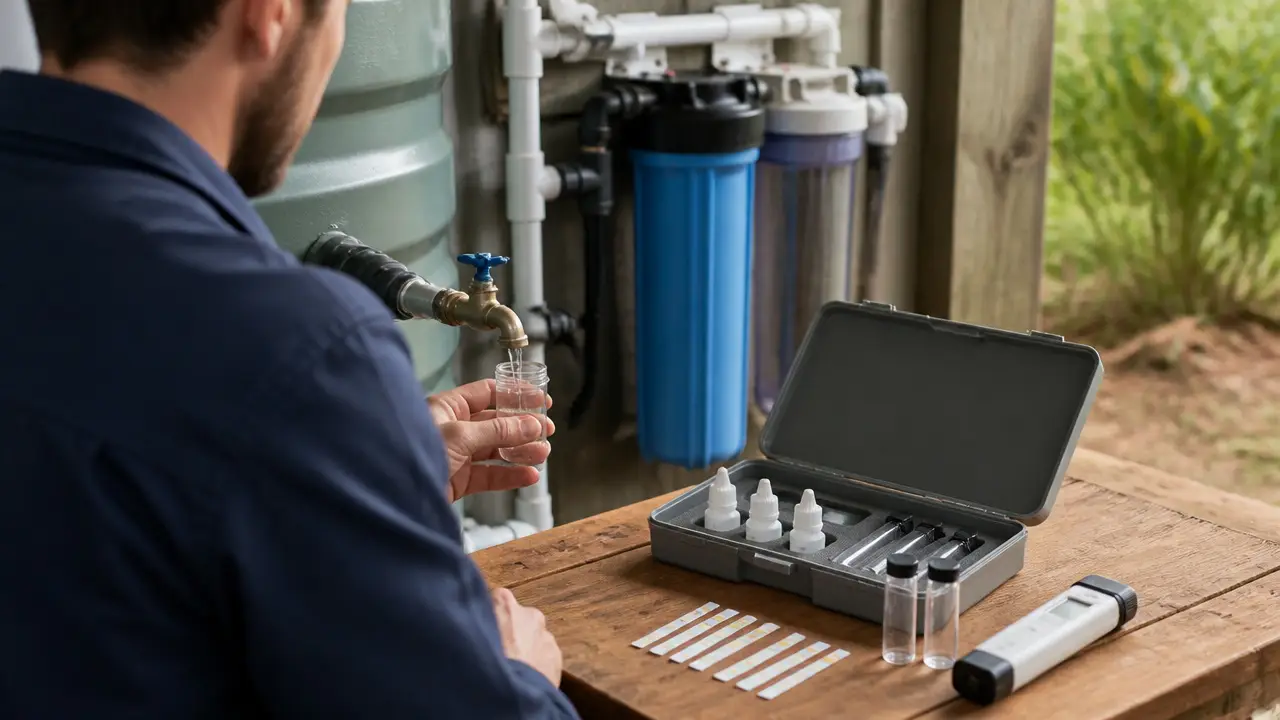
Depending on the kit, strips may screen for things such as:
- pH
- hardness
- chlorine
- nitrate or nitrite
- alkalinity
- iron
- copper
- other selected substances
Check the package carefully because different kits test for different things.
Multi-parameter kits often advertise a large number of tests. More parameters do not automatically make a kit better.
A kit is useful only if it tests for substances that matter in your water system.
Where strips work well
Test strips are convenient for routine checks where an approximate result is enough.
For example, chlorine strips can help someone operating a treatment system check whether chlorine is present within the range the strip is designed to measure.
Hardness strips can help determine whether mineral hardness may be affecting plumbing or equipment.
Where strips fall short
Color comparisons can be difficult to read accurately. Lighting, timing, storage conditions, expired strips, and user interpretation can all affect the result.
They are therefore better for screening than for answering high-stakes drinking-water questions.
What About Home Bacteria Tests?
Roof runoff can collect contamination from birds, animals, insects, dust, leaves, and other material.
Bacteria testing can therefore be important when collected rainwater may eventually be used as drinking water.
Some home kits provide a presence-or-absence screening test for certain bacteria.
These can sometimes provide useful warning information, but they should not be treated as proof that water is safe.
A negative result from one home test does not establish that the water contains no harmful microorganisms. It also says nothing about many chemical contaminants.
CDC advises people using rainwater collection systems to test their water for harmful germs and chemicals, particularly when it will be used as drinking water.
What to Look for When Buying a Water Tester on Amazon
Amazon listings change often, so focus on the tester's specifications rather than its position in search results.
Make sure it measures what you need
Do not buy a TDS meter if your real concern is bacteria.
Do not buy pH strips if you are trying to investigate lead.
Start with the contaminant or system condition you need to measure and choose the testing method from there.
Check the measurement range
The meter needs a range suitable for the water you are testing.
This is particularly important with chlorine, pH, conductivity, and other measurements that may be used while adjusting treatment equipment.
Look at resolution and accuracy separately
A display showing many decimal places does not necessarily mean the tester is highly accurate.
Resolution is the smallest change the display can show.
Accuracy describes how close the measurement should be to the actual value under the stated conditions.
They are not the same thing.
Check whether it can be calibrated
Calibration compares a meter with a known reference solution and adjusts it when necessary.
For a reusable pH meter, easy calibration is especially useful.
Look for clear instructions explaining:
- how calibration works
- what calibration solutions are required
- how frequently the manufacturer recommends calibration
- how the probe should be stored
A meter that cannot hold calibration can become misleading even though its display still looks precise.
Check replacement supplies
With TDS meter accuracy, you can verify an appropriate confirmation test for the suspected contaminant.
Some water testers require ongoing supplies such as:
- calibration solution
- storage solution
- replacement probes
- reagent packets
- disposable strips
Make sure those supplies are practical to obtain before choosing the tester.
Check expiration dates
Chemical strips and reagents do not last forever.
Buy an amount you can reasonably use and store them according to the manufacturer's instructions.
Heat, moisture, and poor storage can affect testing materials.
A Practical Testing Setup for Rainwater Systems
For many rainwater systems, several simple tools work better than one supposed universal tester.
For garden and irrigation water
If the water is only being used on landscaping, the testing needs may be fairly limited.
A pH/TDS/EC meter can be useful when you need to investigate water chemistry, fertilizer mixing, unusual deposits, or changes in stored water.
The condition of the collection system may matter just as much.
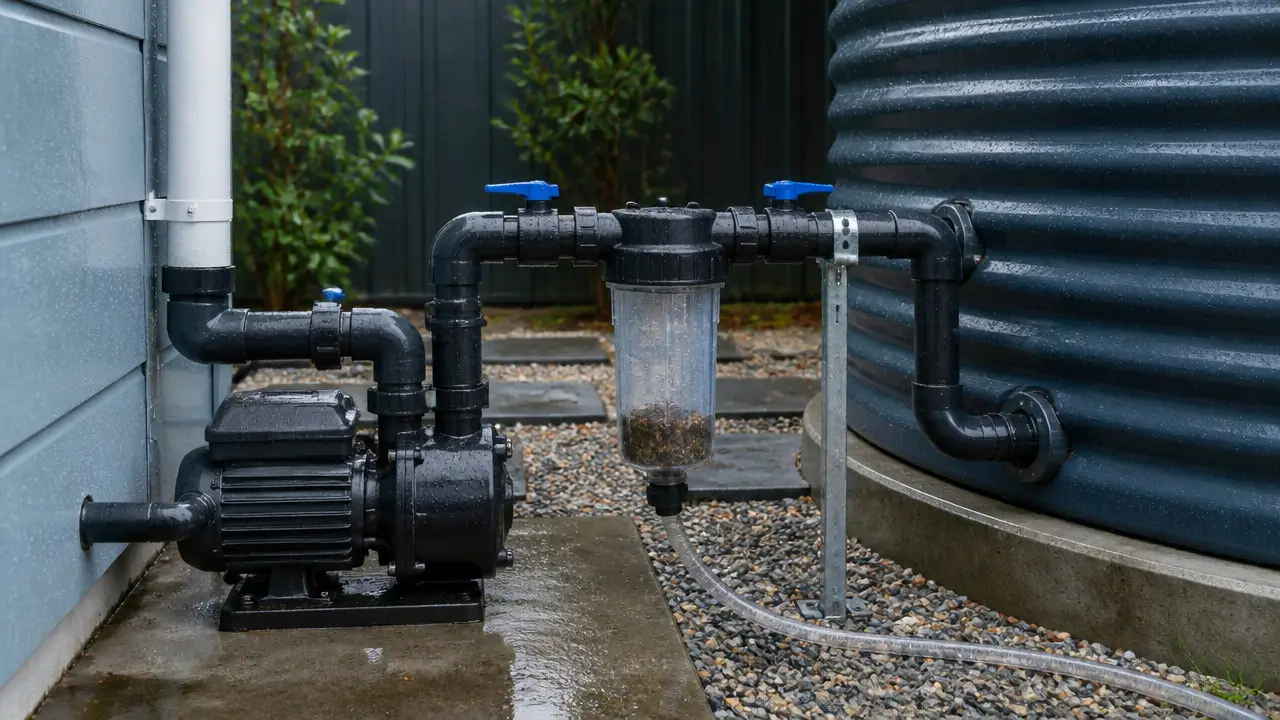
Check gutters, screens, tank sediment, overflow points, and any first-flush equipment.
A first flush device diverts some of the initial roof runoff so that part of the dirt and debris washed from the roof does not immediately enter the main storage tank.
For household non-potable use
Non-potable means water that is not intended for drinking.
Rainwater used for toilets, washing, or other household purposes may need more careful system management than simple garden water.
Testing should be based on how the water will be used and any applicable local plumbing and health requirements.
Home meters can help monitor the system, but they do not replace proper filtration, disinfection, maintenance, or testing when those are required.
For possible drinking-water use
Potable means suitable for drinking.
Do not choose a drinking-water treatment system based only on readings from a TDS meter, pH meter, test strip, or single bacteria kit.
Drinking-water use should be treated as a complete system involving:
- a suitable collection surface
- debris exclusion
- appropriate first-flush management
- protected storage
- appropriate prefiltration
- treatment designed for the contaminants involved
- correct operation and maintenance
- appropriate water testing
- current local requirements
EPA recommends certified laboratories when drinking-water testing is needed.
Why an "All-in-One" Tester Cannot Tell You Everything
Water contains many different possible contaminants.
A single electrical probe cannot somehow identify all of them.
A TDS meter cannot normally tell you whether dissolved material is calcium, sodium, nitrate, arsenic, lead, or something else.
A pH meter cannot detect bacteria.
A bacteria test does not measure dissolved metals.
A nitrate strip does not tell you whether pesticides are present.
This is why claims such as "tests water purity" need to be read carefully. The useful question is not whether a device tests "purity." It is exactly what parameter it measures and how that measurement will be used.
Taste, smell, and appearance have similar limits. CDC notes that harmful germs or chemicals do not always change how water looks, tastes, or smells.
When You Should Skip the Amazon Tester and Use a Laboratory
Use appropriate professional laboratory testing when the result will determine whether questionable water is suitable for drinking.
Laboratory testing is also worth considering when:
- a water source has changed
- flooding or contamination may have affected the system
- there is unexplained odor, color, or taste
- contamination is suspected
- you need to identify a specific chemical
- a home screening test produces a concerning result
- you are selecting treatment for a known water-quality problem
For private wells, CDC recommends at least annual testing for total coliform bacteria, nitrates, TDS, and pH, along with other contaminants that may be relevant locally. It recommends using a state-certified laboratory.
Rainwater systems have different contamination pathways than wells, so the appropriate test panel should reflect the collection surface, surroundings, intended use, treatment system, and local guidance.
How to Get More Useful Results From a Home Water Tester
Even a good meter can give poor results when it is not used correctly.
Follow the manufacturer's instructions for sampling, cleaning, calibration, storage, and test timing.
Keep reusable probes clean. Do not assume a meter remains accurate forever because it still turns on.
For test strips, pay close attention to the specified waiting time. Reading the strip too early or too late can change the apparent result.
When monitoring a rainwater system, consistency also helps. Test from the same sampling point and use the same method when comparing readings over time.
Write readings down.
A record such as:
| Date | pH | TDS/EC | Observation |
|---|---|---|---|
| Routine check | Reading | Reading | Clear, normal odor |
| Later check | Reading | Reading | Heavy rain since previous test |
can make changes easier to notice than relying on memory.
So, What Is the Best Water Tester on Amazon?
For most rainwater-system owners, the most useful general-purpose Amazon purchase is a reputable, calibratable digital meter that measures pH plus TDS/EC.
It is useful for routine monitoring because it is reusable and can quickly reveal changes.
Add parameter-specific strips or tests when you actually need them.
Do not choose a tester simply because it advertises the greatest number of measurements.
And if the real question is whether collected rainwater is safe to drink, there is no single Amazon water tester that can answer that. Use testing appropriate to the possible contaminants and intended use, including a certified drinking-water laboratory when drinking-water safety is being evaluated.
Frequently Asked Questions
Can a TDS meter tell me if rainwater is safe to drink?
No. A TDS meter estimates dissolved solids based on electrical conductivity. It cannot reliably detect bacteria, viruses, many chemicals, or individual contaminants. A low TDS reading does not prove that water is safe to drink.
Are 16-in-1 or 20-in-1 water test strips worth buying?
They can be useful for basic screening if the included parameters match what you need to test. The number of tests should not be the main reason to choose a kit. Check which substances are actually measured and whether approximate strip results are adequate for your purpose.
What is the best tester for a rainwater tank?
For routine system monitoring, a digital pH/TDS/EC meter is a practical starting point. Additional testing should depend on the intended water use and the contaminants you need to investigate.
Can I test rainwater for bacteria at home?
Home bacteria screening kits exist and may provide useful warning information. They should not be treated as proof that rainwater is safe to drink. Laboratory testing is more appropriate when drinking-water safety depends on the result.
Does low TDS mean water is pure?
No. TDS measures dissolved ionic material. Water with a low TDS reading can still contain microorganisms or contaminants that the meter does not detect.
Should I buy a digital meter or test strips?
Buy a digital meter when you want repeatable measurements such as pH, TDS, or conductivity. Use strips when you need a quick screening test for a specific parameter they are designed to measure. Many rainwater-system owners can use both for different jobs.
How often should rainwater be tested?
Testing frequency depends on how the water is used, the collection system, treatment method, and local guidance. CDC advises people using rainwater collection systems to test for harmful germs and chemicals at least annually when the water is used as drinking water, and additional testing may be appropriate after system changes or suspected contamination.