As an affiliate, we may earn a commission from qualifying purchases. We get commissions for purchases made through links on this website from Amazon and other third parties.
Algae can be controlled without chlorine. Common options include blocking sunlight, cleaning the tank, hydrogen peroxide, ozone, UV treatment, and some algaecides. But the right choice depends on how the water will be used.
For a rainwater tank, stopping algae from growing is usually better than adding a chemical to kill it. Keep the tank dark, remove leaves and sediment, and clean surfaces when needed. If the water may be used for drinking, do not assume that killing visible algae makes the water safe.
What Kills Algae Besides Chlorine?
Several treatments can kill or control algae.
Hydrogen Peroxide
Hydrogen peroxide is an oxidizer. It can damage algae cells and is sometimes used in ponds, tanks, and water-treatment systems.
It has one advantage over chlorine: it breaks down mainly into water and oxygen.
However, that does not make it a simple treatment for drinking water. The amount needed depends on:
- Water volume
- Algae type
- Organic matter in the water
- Peroxide concentration
- Contact time
- Water chemistry
Adding too little may not solve the problem. Adding too much can damage plants, equipment, or other organisms.
Hydrogen peroxide also does not remove dirt, sediment, microorganisms, or every possible toxin. In professional drinking-water treatment, hydrogen peroxide may be combined with UV or ozone as an advanced oxidation process. The design and dose are carefully controlled.
For a household rainwater system, do not use a guessed peroxide dose to make questionable water potable.
Ozone
Ozone is another strong oxidizer. It can damage algae and other microorganisms.
Ozone is used in some larger water-treatment systems. It can also break down several cyanobacterial toxins under the right operating conditions. The EPA lists ozone as very effective for several important cyanotoxins, although its effectiveness is not the same for every toxin.
Ozone treatment is more complicated than adding a chemical to a tank. The system needs:
- An ozone generator
- Good contact between ozone and water
- Correct treatment time
- Safe control of unused ozone gas
- Treatment stages before or after the ozone unit
Ozone also does not leave a long-lasting disinfectant residual in stored water.
For most simple rain barrels and garden tanks, ozone is more equipment than is needed.
UV Light
Ultraviolet, or UV, light can inactivate algae and many microorganisms as water passes through a UV chamber.
A UV unit works best when the water is already clear. Sediment and cloudy water can block UV light.
UV also has an important limitation: killing or damaging algae cells does not physically remove them from the water.
This matters when blue-green algae, more accurately called cyanobacteria, are involved. Some cyanobacteria can produce toxins. Normal drinking-water UV doses should not be assumed to destroy those toxins. EPA guidance says UV alone is generally not effective for oxidizing several major cyanotoxins at typical drinking-water treatment doses.
UV can be one part of a treatment system. It is not a complete fix for an algae-filled storage tank.
Copper-Based Algaecides
Copper compounds can kill algae and are commonly associated with pond and reservoir treatment.
They are not a good default treatment for a household rainwater tank.
Copper can remain in the water. The correct application depends on water chemistry, the intended use, and the specific chemical formulation. Killing a large algae bloom quickly can also leave a large amount of dead organic matter behind.
Do not add a pond or pool algaecide to stored rainwater unless its label specifically allows that use and the resulting water use is compatible with the product.
For water intended for drinking, use treatment methods designed and validated for potable water instead.
Other Commercial Algaecides
Some algae-control products use substances such as quaternary ammonium compounds or other biocides.
These may be suitable for specific pools, ponds, cooling systems, or industrial applications. That does not mean they belong in a rainwater tank.
The product label must specifically allow the intended use. A chemical meant for a swimming pool or decorative pond should not be assumed safe for irrigation, livestock, household plumbing, or drinking water.
The Simplest Algae Treatment: Remove the Light
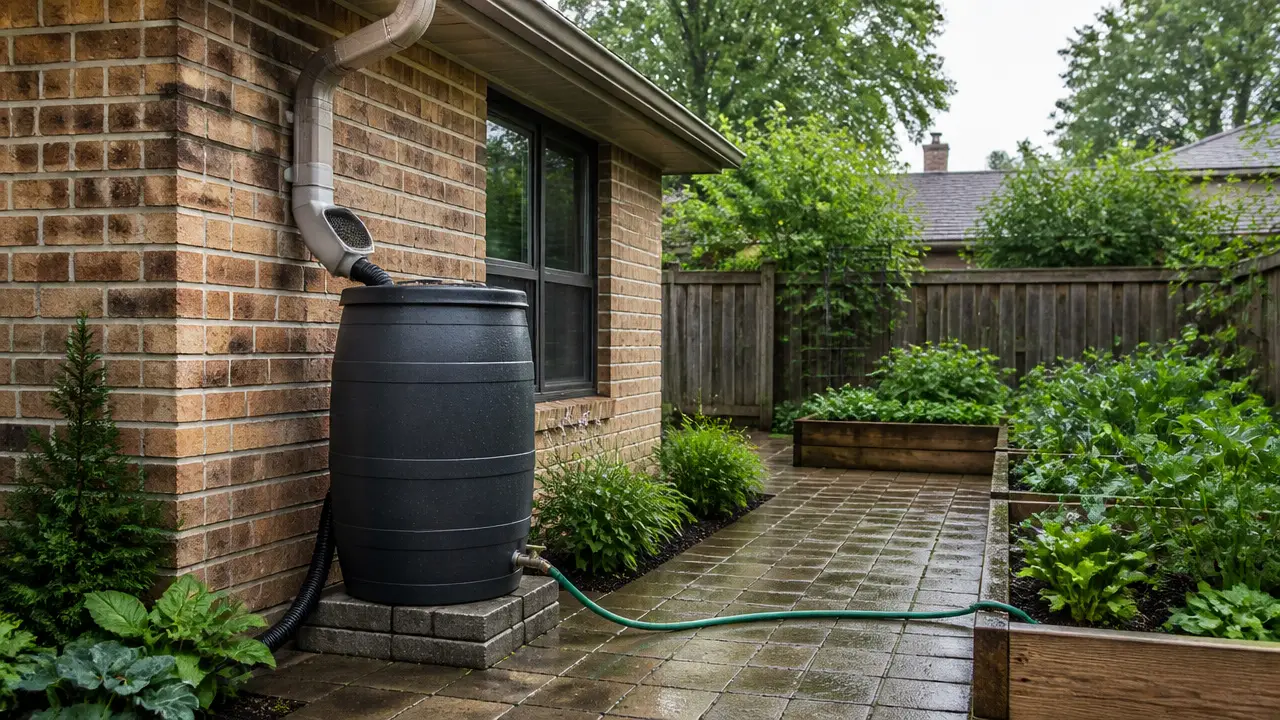
Algae need light to grow. That makes light control one of the most useful tools in a rainwater storage system.
A properly designed rainwater tank should be as dark inside as practical.
Check for:
- Clear or translucent tank walls
- An open lid
- Light entering around pipe openings
- Clear hoses exposed to sunlight
- Inspection ports that do not close properly
Opaque tanks usually have far fewer algae problems than containers that allow sunlight through.
Painting or covering a translucent tank may help, provided the material is suitable for the tank and its intended water use. Avoid coatings that could contaminate stored water.
Remove Leaves and Sediment Too
Sunlight is only part of the problem.
Leaves, pollen, bird droppings, dust, and other roof debris add organic material to the tank. Sediment can accumulate at the bottom.
A better rainwater system reduces this material before it reaches storage.
Useful measures can include:
- Gutter screens
- Leaf guards
- Inlet screens
- A first-flush device
- Calmed inlets
- Periodic sediment removal
A first-flush device diverts the first portion of roof runoff during a rain event. That first runoff often carries more dust and debris from the roof.
With plant-safe algae controls, you can understand this choice within the full rainwater system.
These measures do not sterilize rainwater. They simply reduce some of the material entering the tank.
Cleaning May Be Better Than Trying to Kill the Algae
If a small rain barrel has heavy algae growth, draining and cleaning it may make more sense than adding chemicals.
For non-potable garden-water storage, a typical approach is to remove the water where practical, remove sediment and algae from accessible surfaces, rinse the container, and correct the reason algae grew in the first place.
Do not enter a cistern or large tank to clean it. Tanks can be confined spaces with serious hazards. Large underground or enclosed tanks should be serviced using appropriate equipment and safe procedures.
Also check the tank for the original cause. If sunlight still enters the container, algae will probably return.
Killing Algae Is Not the Same as Removing It
This distinction is important.
A treatment may kill algae while leaving the dead cells in the water. Those cells can:
- Settle as sludge
- Clog filters
- Create odors
- Feed other microorganisms as they break down
- Release substances that were inside the cells
With toxin-producing cyanobacteria, damaging cells at the wrong point in treatment can release toxins into the water. EPA guidance specifically warns that some oxidation treatments can rupture cyanobacterial cells and release their contents.
Professional drinking-water systems therefore often remove intact cells before applying treatment intended to deal with dissolved toxins.
What About Activated Carbon?
Activated carbon does not primarily work by killing algae.
Instead, it adsorbs certain dissolved compounds onto its surface. Depending on the type of carbon and treatment conditions, activated carbon can help remove some cyanotoxins as well as taste and odor compounds.
It does not replace good tank design or algae removal.
A small carbon cartridge should also not be assumed capable of making heavily contaminated rainwater safe to drink.
Can Filters Remove Algae?
Yes, some filters can physically remove algae cells.
The effectiveness depends on the size of the organisms and the filtration system. Microfiltration and ultrafiltration are among the technologies used by water-treatment systems to remove intact cyanobacterial cells.
But removing cells and removing dissolved toxins are different jobs.
For example, some dissolved cyanotoxins require additional treatment such as suitable activated carbon, ozone, nanofiltration, reverse osmosis, or carefully designed advanced oxidation. The right treatment varies with the contaminant.
What Is Best for a Rainwater Tank?
For most rainwater storage systems, start with the cause rather than a chemical.
A practical order is:
- Keep sunlight out. Use an opaque, closed storage tank.
- Reduce roof debris. Keep gutters and screens clean.
- Use suitable prefiltration. Stop larger debris before it reaches storage.
- Manage sediment. Inspect and clean the tank when buildup becomes significant.
- Fix openings. Keep inlet, overflow, and access points screened and properly covered.
- Treat according to the water's intended use.
Garden irrigation usually needs a much different treatment approach than water intended for sinks, showers, or drinking.
If algae repeatedly appears in an opaque tank, inspect the system rather than continually adding chemicals. Light leaks, heavy sediment, stagnant sections, or contamination entering through poorly protected openings may be contributing.
Be More Careful With Drinking Water
Visible algae should be treated as a water-quality warning rather than simply a cosmetic problem when the water might be consumed.
Some cyanobacteria can produce cyanotoxins. Not every bloom produces toxins, and appearance alone cannot tell you whether toxins are present. EPA and WHO guidance treats cyanobacterial contamination as a whole water-treatment issue rather than something solved by one disinfectant.
Rainwater intended for drinking needs a suitable collection system, appropriate prefiltration and treatment, regular maintenance, and current laboratory testing for relevant hazards. Local drinking-water and plumbing requirements also apply.
Do not rely on hydrogen peroxide, UV, ozone, activated carbon, or any single filter by itself as proof that algae-contaminated roof runoff is potable.
Frequently Asked Questions
Does vinegar kill algae in a water tank?
Vinegar can damage some algae because it is acidic, but it is not a reliable general treatment for a rainwater tank. Adding enough vinegar to affect a large tank can substantially change the water chemistry. It should not be used as a substitute for proper cleaning, light control, or drinking-water treatment.
Does hydrogen peroxide kill algae?
Yes. Hydrogen peroxide can oxidize and damage algae cells. Its effectiveness depends on concentration, water chemistry, organic matter, algae type, and contact time. Do not guess at doses for potable-water systems.
Will UV light kill algae?
UV can inactivate algae as water passes through a properly designed unit. It does not remove the dead cells, and normal UV disinfection should not be assumed to remove cyanobacterial toxins.
Can I use a pool algaecide in a rainwater tank?
Not unless the product label specifically permits the intended tank and water use. Pool and pond products should not automatically be considered suitable for irrigation, household use, livestock water, or drinking water.
Why does algae keep growing in my rain barrel?
Sunlight is one of the most common causes. Translucent barrels, open lids, clear tubing, and gaps around fittings can let enough light enter for algae to grow. Organic debris and sediment can make the problem worse.
Will covering a rainwater tank stop algae?
Keeping the tank dark can greatly reduce algae growth because algae need light. It will not correct existing sludge or contamination, so an already dirty tank may still need cleaning.
Is green rainwater safe for plants?
It depends on what caused the green color and how the water will be applied. Ordinary algae in non-potable irrigation water may not always harm plants, but dense growth can clog irrigation equipment. Suspected cyanobacterial blooms require more caution because some cyanobacteria can produce toxins.
Is algae-filled rainwater safe to drink after filtration?
Do not assume so. A filter may remove visible cells without removing dissolved toxins, microorganisms, or other contaminants. Water intended for drinking should be evaluated as a complete collection and treatment system and supported by appropriate laboratory testing.