As an affiliate, we may earn a commission from qualifying purchases. We get commissions for purchases made through links on this website from Amazon and other third parties.
What Kills E. Coli Naturally?
Heat is the most dependable simple way to kill E. coli in water. Bringing water to a rolling boil kills disease-causing bacteria and many other germs. Sunlight can also damage and inactivate E. coli, but its effect is much less predictable and should not be treated as a stand-alone way to make collected rainwater safe to drink.
If E. coli is found in rainwater, well water, or stored water, treat it as a warning of fecal contamination. The World Health Organization says E. coli should not be detectable in a 100 mL sample of water intended for drinking.
For drinking water, killing E. coli is only part of the job. Water may also contain viruses, parasites, chemicals, metals, or other contaminants that need different treatment.
How Heat Kills E. Coli
High heat damages the proteins and cell structures that E. coli needs to survive.
For emergency drinking water, the CDC recommends bringing clear water to a rolling boil for at least one minute. At elevations above 6,500 feet, the CDC recommends boiling for three minutes. Let the water cool naturally and store it in a clean, covered container.
If the water is cloudy, let particles settle or pass the water through a clean cloth or other basic prefilter before boiling.
Boiling is useful because it does not depend on water chemistry or a chemical disinfectant. But it has an important limit: boiling does not remove many chemical contaminants. Fuel, pesticides, heavy metals, salts, and similar contaminants may remain. EPA specifically warns that boiling or disinfection cannot make water contaminated with many chemicals safe.
For that reason, boiling questionable roof runoff does not automatically make it suitable for regular drinking.
Can Sunlight Kill E. Coli?
Sunlight can reduce E. coli. Ultraviolet radiation from the sun damages microorganisms, and heat from sunlight can add to the effect.
The problem is consistency.
Sunlight reaching the bacteria can change with:
- Cloud cover
- Season
- Water depth
- Water clarity
- Container material
- Exposure time
- Dirt and organic matter in the water
Cloudy water is especially difficult because particles can shield microorganisms from ultraviolet light.
Sunlight may therefore help limit bacterial survival in some situations, but simply putting a rain barrel, tank, bucket, or bottle in the sun is not a dependable drinking-water treatment method.
Sunlight can also create other problems in rainwater storage. A clear or translucent tank exposed to light may support algae growth. For stored rainwater, blocking light is normally better than trying to use sunlight as a disinfectant.
Does Leaving Water Sitting Kill E. Coli?
Not reliably.
Some E. coli cells may die over time because of sunlight, temperature changes, competition with other organisms, and poor growing conditions. Others can remain long enough to present a health risk.
Storage time is therefore not a treatment method.
A tank that has been sitting unused for several weeks should not be assumed to be free of bacteria. Sediment at the bottom of a rainwater tank can also hold organic material and microorganisms.
If drinking-water safety matters, use appropriate treatment and testing rather than waiting for bacteria to disappear.
Do Vinegar or Lemon Juice Kill E. Coli in Water?
Acidic liquids such as vinegar and lemon juice can inhibit or kill some bacteria under certain controlled conditions. That does not make them suitable drinking-water disinfectants.
The result depends on factors such as:
- Final acidity
- Amount added
- Contact time
- Water temperature
- Amount of organic material
- Number and type of microorganisms present
Adding a little vinegar or lemon juice to rainwater does not provide a dependable way to make contaminated water potable.
Potable means suitable for drinking. For potable use, treatment must address the full range of relevant hazards rather than only trying to kill one bacterium.
What About Salt, Garlic, or Essential Oils?
These should not be used to disinfect drinking water.
Salt, garlic, herbs, essential oils, and similar household substances may have antimicrobial effects in food or laboratory settings. That does not mean they can reliably disinfect a tank of contaminated water.
There is no practical household dose that should be assumed to remove a microbial drinking-water risk while also producing suitable drinking water.
The same caution applies to homemade mixtures promoted as "natural water purifiers."
Why E. Coli in Rainwater Matters
E. coli normally lives in the intestines of humans and animals. Finding it in water is used as an indicator that fecal contamination has occurred.
On a rainwater collection system, contamination can come from:
- Bird droppings on the roof
- Rodents or other animals
- Gutters containing animal waste
- Open tank access points
- Insects or small animals entering storage
- Dirty screens and filters
- Contaminated hoses or plumbing
- Surface water entering a tank
- Poor cleaning practices
WHO treats E. coli as an important indicator of fecal pollution and recommends immediate investigation when it is detected in drinking water.
The goal should therefore be more than killing the bacteria already in the tank. You also need to find out how contamination entered the system.
Preventing E. Coli in a Rainwater System
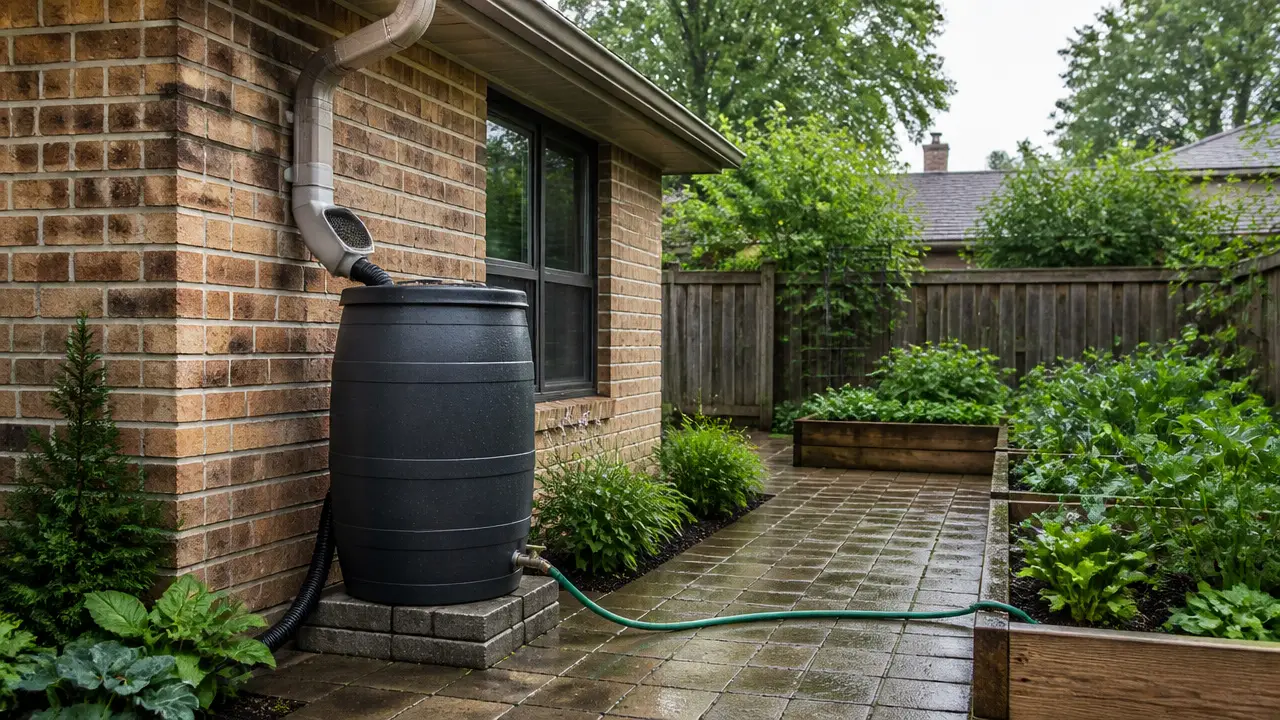
Good rainwater quality starts before the water reaches the tank.
Keep the roof and gutters reasonably clean
Leaves, nests, animal waste, and other debris increase the amount of contamination washed into storage.
Use home E coli testing to compare service priorities supported by the latest reliable readings.
Avoid unsafe roof work. If cleaning requires steep-roof access or work near electrical lines, use a qualified professional.
Use a first-flush system when appropriate
A first flush device diverts some of the first runoff from a rainfall event. This early water may carry a higher load of dirt, droppings, dust, and other material washed from the roof.
A first-flush device can reduce contamination entering storage, but it does not sterilize the water.
Screen tank openings
Keep insects, rodents, birds, and debris from entering through tank inlets, overflows, and vents.
Screens need inspection because damaged or clogged screens may stop doing their job.
Keep light out
An opaque, covered tank helps control algae and reduces biological growth. It also keeps animals and debris from entering through an open top.
Manage sediment
Fine material can collect on the bottom of a rainwater tank. Depending on the system, periodic inspection and sediment removal may be needed.
Avoid climbing into a cistern or enclosed tank. Tanks can be confined spaces with serious hazards.
What If E. Coli Is Found in Your Rainwater Tank?
If a laboratory test detects E. coli, do not assume that adding one "natural" treatment solves the problem.
For water intended for drinking, cooking, brushing teeth, or similar uses, use another safe water source while you investigate.
Check the system for likely contamination points, including the roof, gutters, screens, tank openings, overflow, plumbing, filters, and recent maintenance work.
A drinking-water system may require several treatment stages. Depending on the source and intended use, that might include prefiltration, finer filtration, and a properly designed disinfection stage such as UV or chemical disinfection.
A micron rating describes the approximate size of particles a filter is designed to capture. A particle filter can improve clarity and protect later equipment, but a filter's micron rating alone does not prove that the water is microbiologically safe.
Likewise, a UV unit must receive water within its operating limits for flow and water clarity. Simply installing a UV light does not guarantee safe drinking water.
WHO's current drinking-water guidance takes a whole-system approach, managing risks from the water source through treatment and final use.
Testing After Treatment
If rainwater is used for drinking, laboratory testing is an important part of verifying that the system is working.
Do not rely only on:
- Taste
- Smell
- Water clarity
- A total dissolved solids meter
- A basic home test strip
- One successful test from years ago
Total dissolved solids, often shortened to TDS, measures dissolved substances in water. A low TDS reading does not tell you whether E. coli is present.
Microbial water quality can change after storms, maintenance, animal activity, filter problems, or changes to the collection system.
Testing requirements and acceptable treatment methods also vary by location and intended use. Follow current guidance from your local health or drinking-water authority when rainwater will be consumed.
The Bottom Line
If you are looking for a natural process that kills E. coli, heat is the most dependable choice. Boiling can kill E. coli and many other disease-causing microorganisms. Sunlight can also inactivate bacteria, but it is too variable to assume that ordinary sun exposure has made stored rainwater safe.
For a rain barrel used only on ornamental plants, the treatment needs may be very different from those of a household drinking-water system.
For drinking water, do not focus only on killing E. coli. Prevent contamination, use suitable treatment stages, maintain the system, and verify water quality with appropriate testing.
Frequently Asked Questions
Does boiling water kill E. coli?
Yes. Bringing water to a rolling boil kills E. coli and other disease-causing bacteria. The CDC recommends boiling clear water for at least one minute for emergency drinking-water treatment, with a longer time at high elevations. Boiling does not remove many chemical contaminants.
Does sunlight kill E. coli in water?
Sunlight can damage and inactivate E. coli, but the result depends on water clarity, sunlight strength, exposure time, and other conditions. Ordinary sun exposure should not be assumed to make collected rainwater safe to drink.
Will E. coli die naturally in a rainwater tank?
Some bacteria may die over time, but E. coli should not be expected to disappear on a predictable schedule. Leaving water in storage is not a dependable disinfection method.
Does vinegar kill E. coli in drinking water?
Vinegar can have antibacterial effects under some conditions, but adding vinegar to contaminated water is not a reliable method for producing safe drinking water.
Can a water filter remove E. coli?
Some properly designed treatment systems can physically remove bacteria, but not every water filter can. A sediment or carbon filter alone should not be assumed to make contaminated rainwater safe to drink.
What does finding E. coli in rainwater mean?
It indicates fecal contamination may have reached the water. Possible sources include bird or animal droppings, contaminated gutters, open tank fittings, damaged screens, dirty plumbing, or outside water entering storage.
Can I drink rainwater after killing the E. coli?
Not necessarily. Killing E. coli does not remove every possible microbial or chemical contaminant. Drinking rainwater safely requires suitable collection, treatment, maintenance, current testing, and compliance with applicable local requirements.