As an affiliate, we may earn a commission from qualifying purchases. We get commissions for purchases made through links on this website from Amazon and other third parties.
A dirty water filter can cause slow flow, lower pressure, bad taste or odor, cloudy water, and visible dirt in the filter housing. In some systems, you may also notice a pump running longer than normal or water bypassing a clogged filter.
These signs do not always mean the filter is the only problem. Dirty storage tanks, old plumbing, pump issues, algae, sediment, or contaminated source water can cause similar symptoms.
Common Signs of a Dirty Water Filter
Water Flow Gets Slower
Reduced flow is one of the most common signs of a clogged filter.
As sediment, rust, leaves, organic material, and other particles collect in the filter, water has less room to pass through. You may notice:
- A garden hose filling more slowly
- Weak flow from an outdoor tap
- Longer tank-filling times
- Reduced irrigation performance
- Lower flow at household fixtures
This is especially common with sediment filters used after rain barrels, IBC totes, and cisterns.
A dirty filter is not the only possible cause. A partly closed valve, clogged pipe, low tank level, blocked intake, or weak pump can also reduce flow.
Water Pressure Drops
A clogged filter creates resistance to water movement.
In a pressurized system, the pressure before the filter may remain normal while the pressure after the filter drops. This difference becomes larger as the filter collects debris.
If your system has pressure gauges on both sides of the filter, comparing them can help identify a restriction.
Do not assume a filter is clogged just because pressure is low everywhere. Pump problems, leaks, empty tanks, undersized pipes, or a blocked pump inlet can produce similar symptoms.
The Water Develops an Unusual Taste or Smell
Some filters contain activated carbon, which can help reduce certain tastes and odors. Once the media becomes exhausted or heavily fouled, these problems may return.
You might notice:
- Musty odors
- Earthy smells
- Chlorine taste returning in treated supply water
- Changes in the normal taste of the water
A bad smell should not automatically be blamed on the filter. Storage tanks, stagnant plumbing, organic debris, bacterial growth, or the original water source may be responsible.
For collected rainwater, odor changes are a reason to inspect the whole system rather than simply replacing one filter.
Water Looks Cloudy or Contains Particles
A sediment filter should reduce particles larger than its rated size. If visible material starts appearing downstream, the filter may need attention.
Possible signs include:
- Small particles in clear containers
- Sediment settling at the bottom
- Rust-colored material
- Dark specks
- Cloudiness
However, a dirty filter does not always cause dirty-looking water. Some clogged filters continue trapping particles while simply reducing flow.
Particles downstream can also mean the filter element is damaged, installed incorrectly, or allowing water to bypass around it.
The Filter Looks Heavily Discolored
Many cartridge filters gradually change color as they collect material.
Depending on the water source, a used sediment cartridge may become:
- Brown from soil or fine sediment
- Orange from iron or rust
- Gray or black from fine debris
- Greenish from biological growth or algae exposure
Color alone does not tell you whether a filter is safe or how much useful capacity remains. Some water sources discolor filters quickly even when flow remains acceptable.
Follow the filter manufacturer's replacement or cleaning instructions rather than relying only on appearance.
The Pump Runs Longer Than Normal
A clogged filter can make a pump work against greater resistance.
You may notice that:
- Pressure builds more slowly
- Irrigation zones perform poorly
- A transfer pump takes longer to move the same amount of water
- The pump runs longer before reaching its shutoff pressure
Do not continue operating a pump that is overheating, making unusual noises, repeatedly losing prime, or showing other signs of trouble.
A clogged filter may be part of the problem, but pump intake restrictions, air leaks, low water levels, damaged pressure controls, and other faults should also be checked.
Why Water Filters Get Dirty
Filters are designed to collect material. Becoming dirty is therefore normal.
How quickly this happens depends on the water source and where the filter sits in the system.
Rainwater systems can carry material such as:
- Roof dust
- Pollen
- Small pieces of leaves
- Insect debris
- Roofing particles
- Fine sediment
- Organic material
Good upstream screening reduces the load on finer filters.
For example, a rainwater system may use a leaf screen followed by a first-flush device and then a sediment filter.
A first flush device diverts some of the first runoff from a roof. That early runoff often carries more loose dirt and debris than later rain.
No prefilter removes everything, but keeping large debris out of the tank and plumbing can reduce how quickly finer filters clog.
How a Dirty Filter Affects a Rainwater System
A clogged filter is more than a cosmetic problem.
It can restrict the amount of water available to downstream equipment. That matters for irrigation, pumps, pressure systems, appliances, and additional treatment stages.
For example, a heavily clogged cartridge installed before a pump may restrict the pump's water supply. A clogged filter installed after the pump may increase pressure loss on the discharge side.
Filter placement should match the pump and filter manufacturer's requirements. Some filters are not designed for suction-side installation.
A dirty filter can also reduce the performance of equipment farther downstream. Water treatment systems generally work best when earlier treatment stages are maintained properly.
Dirty Does Not Always Mean Unsafe
A visibly dirty sediment filter does not automatically mean the water itself is unsafe. It may simply show that the filter is doing its job.
The opposite is also important: a filter that looks clean does not prove the water is safe.
Many contaminants cannot be seen, smelled, or tasted.
A sediment cartridge mainly removes particles according to its micron rating. A micron is a very small unit of measurement. The rating describes the approximate particle size the filter is designed to capture.
Consider causes of weak water-pump output to verify pressure response and possible loss of pump prime.
A sediment filter is not the same as complete drinking-water treatment.
For drinking-water use, roof runoff should be treated as a whole system. Collection surface suitability, debris removal, storage conditions, treatment stages, maintenance, and appropriate laboratory testing all matter.
Replacing a dirty cartridge by itself does not establish that collected rainwater is potable.
Potable means suitable for drinking. Non-potable water is water used for purposes that do not require drinking-water quality, such as many irrigation applications.
How Often Should You Check a Water Filter?
There is no single replacement schedule that works for every system.
A filter may clog quickly after a dusty period, heavy pollen, tank cleaning, pipe work, or a storm that carries a large amount of debris into storage.
Check filters more often when:
- Flow suddenly decreases
- Water contains more sediment than usual
- The tank has recently been disturbed
- Your area has had heavy pollen or dusty conditions
- The system has been unused for a long period
- The filter manufacturer specifies regular inspection
For washable screens and reusable filters, clean them according to their instructions.
Disposable cartridges should normally be replaced rather than scrubbed or reused unless the manufacturer specifically says they are washable.
What to Check Before Replacing the Filter
If flow or pressure has changed, inspect the system in a logical order.
Check the Water Supply
Make sure the rain barrel, IBC tote, cistern, or other tank actually contains enough water.
Low water level can cause weak flow and pump problems that look like filter trouble.
Check Valves
Confirm that the valves needed for normal operation are fully open.
A partly closed valve can create the same symptoms as a clogged filter.
Inspect Coarse Screens
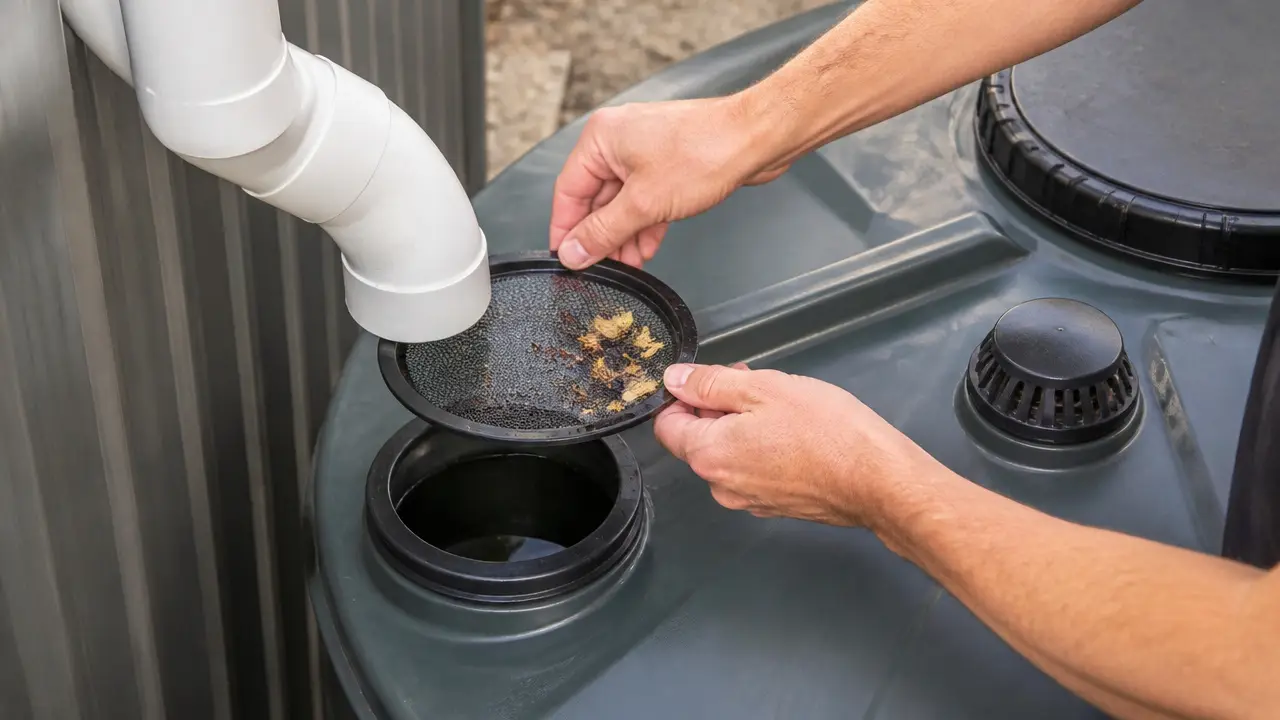
Leaf screens, inlet screens, pump strainers, and other coarse filters can clog before the main cartridge does.
Clean them if needed.
Inspect the Filter
Shut the system down safely and release pressure according to the equipment manufacturer's instructions before opening a pressurized filter housing.
Check for:
- Heavy sediment buildup
- A collapsed cartridge
- Cracks or tears
- Slime or unusual biological growth
- Damaged seals
- Debris around the sealing surfaces
Do not open a housing while it is under pressure.
Compare Performance After Servicing
If replacing or cleaning the filter restores normal flow, the clogged filter was probably a major part of the problem.
If performance does not improve, investigate the rest of the system.
What Causes Filters to Clog Too Quickly?
Replacing a filter unusually often may indicate an upstream problem.
Common causes include:
- Too much roof debris entering storage
- Missing or ineffective inlet screening
- Sediment collecting in the tank
- Pump intake located near settled tank debris
- An overly fine filter used too early in the system
- A filter that is too small for the required flow
- Disturbance of sediment during tank filling
- Pipes or fittings releasing rust or debris
Filter choice matters as well.
A very fine cartridge may trap small particles effectively, but it can clog much faster if it receives water containing large amounts of coarse sediment.
It is often better to remove larger material before sending water through a finer filter.
When Cleaning or Replacing the Filter Is Not Enough
Stop treating the problem as a simple filter issue if you find signs such as:
- Persistent foul odor
- Repeated slime or biological growth
- Animal contamination
- Sewage or chemical contamination
- Oil-like films
- Damaged storage tanks
- Cross-connections with household plumbing
- Repeated pump overheating
- Water-quality concerns involving drinking or food preparation
These situations may require tank cleaning, plumbing repairs, water-quality testing, treatment changes, or professional help.
For drinking-water systems, do not depend on appearance, taste, odor, a basic home test, or one filter to determine safety.
Frequently Asked Questions
Can a dirty water filter make water smell bad?
It can contribute to odor problems, especially if organic material collects in the filter or if carbon media is exhausted. However, odors can also come from the tank, pipes, stagnant water, or the original water source.
Can a clogged water filter reduce pressure?
Yes. A clogged filter increases resistance to flow. In a pressurized system, you may see normal pressure before the filter but noticeably lower pressure after it.
Can I tell a filter is dirty just by looking at it?
Sometimes. Heavy discoloration or visible sediment can show that the filter has collected debris. Appearance alone does not tell you whether the filter has reached the end of its service life, though.
Why does my rainwater filter clog so quickly?
Common causes include heavy roof debris, poor inlet screening, sediment in the storage tank, an overly fine cartridge, or a filter that is too small for the required flow.
Can I wash and reuse a water filter cartridge?
Only if the manufacturer says the filter is reusable. Washable screens and some filter elements are designed for cleaning. Many disposable cartridges are intended to be replaced.
Does replacing a dirty filter make rainwater safe to drink?
No. A clean filter does not by itself make collected rainwater potable. Drinking-water use requires suitable collection, appropriate treatment, maintenance, laboratory testing, and compliance with applicable local requirements.
Why is my water still slow after replacing the filter?
The restriction may be somewhere else. Check the water level, valves, inlet screens, pump strainers, pipes, hoses, pump condition, and other filters or treatment equipment in the system.