As an affiliate, we may earn a commission from qualifying purchases. We get commissions for purchases made through links on this website from Amazon and other third parties.
For a rainwater tank or cistern, replacing a bulkhead fitting is usually a small repair. A DIY replacement often costs about $30 to $100 for the fitting and basic connection parts, while professional replacement commonly lands around $180 to $500 in the U.S. The labor charge is often much larger than the bulkhead itself.
Those figures are practical 2026 planning ranges rather than a published national average for rainwater-tank bulkhead replacement. Current tank-fitting listings show common PVC bulkheads in roughly the $30-to-$90 range depending on size and design. General residential plumbing work commonly costs about $182 to $500, with service-call charges and labor making up much of the bill.
What Does Replacing a Tank Bulkhead Involve?
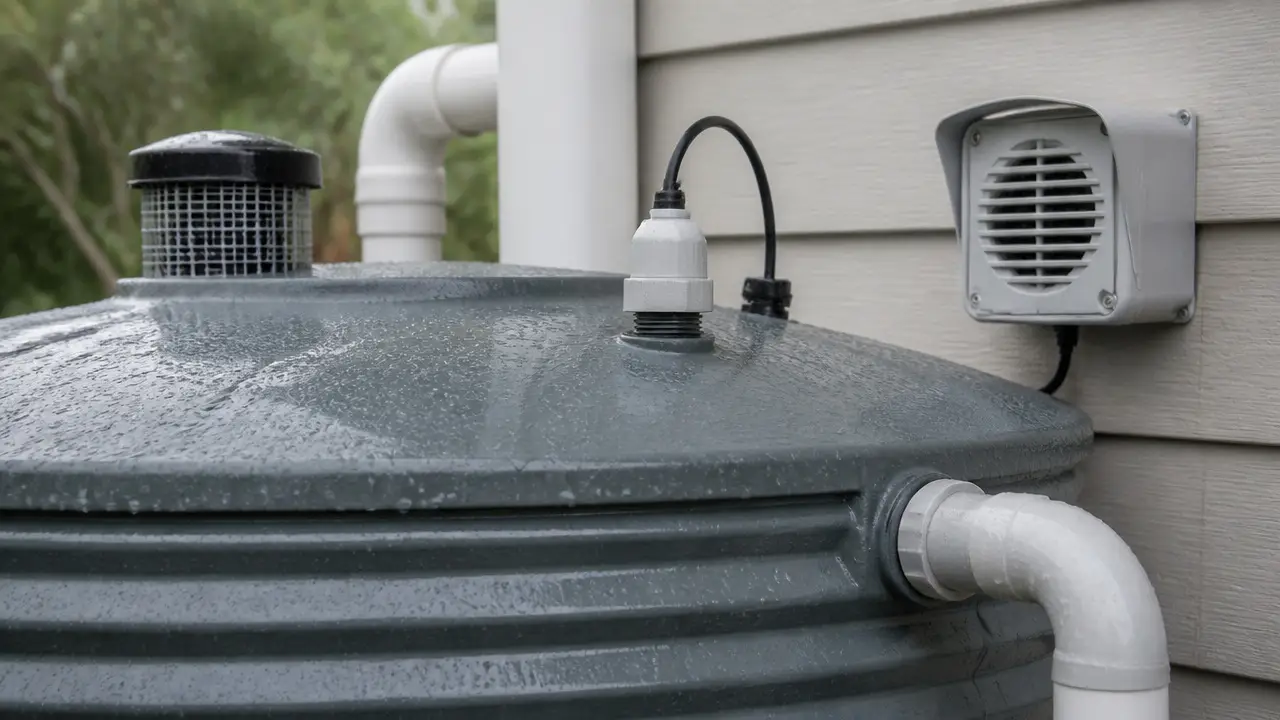
A bulkhead fitting is the watertight fitting that passes through the wall of a tank. It gives you a secure place to connect a valve, hose, pipe, pump line, overflow, or other plumbing.
A typical bulkhead has:
- An inner and outer body
- A gasket that seals against the tank wall
- A retaining nut
- Threaded or socket connections for plumbing
Replacement usually means draining the water below the fitting, disconnecting the attached plumbing, removing the old bulkhead, checking the tank wall, installing the correct replacement, and reconnecting the pipe or valve.
The job can be simple on an accessible rain barrel. It becomes harder when the fitting is low on a large cistern, hidden behind plumbing, difficult to reach from inside, or installed in a damaged tank wall.
Typical Bulkhead Replacement Costs
For a basic rainwater storage system, these are reasonable planning ranges as of August 2026:
| Type of repair | Typical planning range |
|---|---|
| Replacement fitting only | About $30–$90 |
| Basic DIY replacement with small connection parts | About $30–$100+ |
| Professional replacement | About $180–$500 |
| Difficult repair involving damaged tank wall or plumbing | Can exceed $500 |
Current examples from a U.S. industrial-plastics supplier show loose PVC tank fittings at about $32 for a 3/4-inch fitting, $34 for a 1-inch fitting, $49 for a 1-1/2-inch fitting, and about $40 for one type of 2-inch heavy-duty fitting. Different materials, gasket types, and designs can cost more.
The professional total is harder to predict because a contractor may have a minimum service charge even when the actual replacement takes little time. Angi's 2026 plumbing data puts typical plumbing projects at about $182 to $500, with service-call charges commonly around $100 to $250 and hourly rates ranging widely by location and experience.
Why Professional Replacement Costs Much More Than the Fitting
The bulkhead itself is often inexpensive. Getting someone to the property is not.
A plumber or tank technician may charge for:
- Travel
- A minimum service call
- Time spent draining or isolating the tank
- Removing connected valves and pipes
- Cleaning the sealing surface
- Installing and testing the new fitting
- Rebuilding nearby plumbing if it does not line up
A technician may therefore charge several hundred dollars to replace a fitting that costs only a small fraction of the total bill.
This is common with small plumbing repairs. The price reflects the service visit as much as the individual part.
What Changes the Cost?
Bulkhead Size
Larger fittings generally cost more.
A small rain barrel might use a relatively small outlet. Larger cisterns, pump lines, and high-flow outlets may use 1-1/2-inch, 2-inch, or larger fittings.
Do not choose a replacement based only on the nominal pipe size. You also need to match the required hole size and tank-wall thickness.
For example, current fittings from one manufacturer require noticeably different holes even when their nominal connection sizes are fairly close. A 1-inch tank fitting listed by U.S. Plastic requires a 1.88-inch hole, while one 1-1/2-inch model requires a 2.65-inch hole.
Material
Bulkheads may be made from materials such as:
- PVC
- Polypropylene
- ABS
- Other plastics designed for tank service
The gasket material also matters.
A replacement should be compatible with the tank, stored water, temperature range, and intended use. Do not assume two bulkheads of the same pipe size are interchangeable.
Access to the Inside of the Tank
Access can make a large difference in labor.
Some bulkheads require someone to hold or position part of the fitting from inside the tank. Others are designed for easier installation from one side.
Never enter a cistern or enclosed tank simply to reach a fitting. Tanks can present confined-space hazards. A difficult internal repair is a good reason to call a tank professional.
Amount of Water That Must Be Removed
A fitting close to the top of a tank may be easy to service.
An outlet near the bottom can require the tank to be emptied or pumped down first. With a large cistern, dealing with that water may take longer than changing the fitting itself.
Plan where the water will go before draining the tank.
Attached Plumbing
A bulkhead rarely works alone.
There may be a:
- Ball valve
- Union
- Hose adapter
- Pump suction line
- Irrigation pipe
- Overflow pipe
If this plumbing must be cut apart and rebuilt, the repair takes longer and requires additional fittings.
A union near the tank can make future maintenance much easier because it allows the line to separate without cutting pipe.
Tank-Wall Damage
A leaking bulkhead does not always mean the bulkhead itself has failed.
Guidance on practical steps for installing a bulkhead fitting with no access to the inside of the tank helps evaluate cleaning access for sediment and odor control.
The real problem could be:
- A cracked tank wall
- A distorted hole
- A rough sealing surface
- A damaged gasket
- Excessive pipe weight pulling on the fitting
- An incorrectly sized hole
- A loose fitting
Replacing the bulkhead without correcting the underlying problem may result in another leak.
If the polyethylene tank itself is cracked, especially around a low outlet carrying a large water load, get advice from the tank manufacturer or a qualified tank-repair professional before attempting a patch.
Can You Replace a Bulkhead Yourself?
Many rain-barrel and accessible above-ground tank bulkheads are reasonable DIY repairs.
The job is most suitable for DIY work when:
- You can safely drain the tank below the fitting.
- Both sides of the fitting are safely accessible.
- The tank wall is undamaged.
- You know the correct replacement size.
- The connected plumbing is simple.
- No electrical pump work is involved.
The most important step happens before buying the replacement: identify the existing hole size, tank-wall thickness, connection type, and fitting size.
Two fittings labeled "1 inch" can still require different tank openings or have different thread arrangements.
Do You Need to Replace a Leaking Bulkhead?
Not necessarily.
First determine where the leak is coming from.
Water around a bulkhead can result from:
- A loose retaining nut.
- A damaged or aged gasket.
- Dirt trapped under the gasket.
- A cracked fitting.
- A poorly supported pipe pulling sideways.
- Damage around the tank opening.
Do not keep tightening a plastic bulkhead in an attempt to stop every leak. Excessive force can distort the gasket, damage the fitting, or stress the tank wall.
If the fitting body or tank wall is cracked, tightening will not solve the underlying problem.
Should You Replace the Gasket or the Whole Bulkhead?
If the fitting itself is in good condition and the correct replacement gasket is available, replacing only the gasket may be possible.
Replacing the entire bulkhead often makes more sense when:
- The plastic is cracked.
- Threads are damaged.
- The fitting has become brittle.
- The gasket cannot be matched confidently.
- The fitting was incorrect for the tank from the beginning.
Matching matters more than simply finding a gasket that looks close.
How to Keep Replacement Costs Down
The easiest way to reduce labor is to make the fitting easy to service.
Where practical, use plumbing that can be disconnected without cutting it apart. Support pipes separately so their weight does not hang from the tank wall.
Also record the bulkhead size when installing a tank. Keep notes about:
- Nominal connection size
- Required hole diameter
- Tank-wall thickness
- Thread type
- Gasket type
That information can save considerable troubleshooting when the fitting eventually needs service.
When to Call a Professional
A simple rain-barrel bulkhead usually does not require specialized help.
Consider professional service when:
- The tank wall is cracked or badly distorted.
- The fitting cannot be reached safely.
- A large cistern must be drained.
- Someone would need to enter the tank.
- The fitting serves a pressurized system.
- Pump wiring must be disconnected.
- Buried plumbing must be opened.
- You cannot identify the correct fitting.
- The outlet continues leaking after proper replacement.
For household water systems, also consider how the repair affects water quality. Work around tank openings can introduce dirt and debris. Systems supplying water for drinking require suitable collection, treatment, maintenance, and current water-quality testing rather than assuming a repaired fitting makes the stored water safe.
Frequently Asked Questions
How much does it cost to replace a bulkhead fitting on a water tank?
For a rainwater tank or cistern, a basic DIY replacement often costs about $30 to $100. Professional replacement commonly costs about $180 to $500 because service-call and labor charges can exceed the cost of the fitting itself.
How much does a new tank bulkhead fitting cost?
Common PVC tank fittings can cost roughly $30 to $90, although size, material, gasket type, connection style, and supplier can change the amount considerably.
Is replacing a rainwater tank bulkhead difficult?
It can be straightforward when the tank can be drained below the fitting and both sides are easy to reach. It becomes much harder with large cisterns, inaccessible fittings, rigid plumbing, or damaged tank walls.
Can I replace a bulkhead without emptying the whole tank?
Sometimes. You generally need the water level below the fitting being removed. A high overflow fitting may require little draining, while a bottom outlet may require nearly the entire tank to be emptied.
Why is my new bulkhead still leaking?
Possible causes include an incorrectly seated gasket, debris on the sealing surface, an incorrect hole size, excessive tightening, sideways pipe stress, or damage to the tank wall. Confirm the fitting matches the tank before tightening it further.
Can I use any bulkhead with the same pipe size?
No. Match the required tank-hole diameter, allowable wall thickness, thread or socket connection, material, and gasket as well as the nominal pipe size.
Should I replace a leaking gasket or the whole fitting?
A gasket replacement may be enough if the bulkhead body and threads are undamaged and you can obtain the correct gasket. Replace the complete fitting if it is cracked, brittle, damaged, or difficult to match confidently.