As an affiliate, we may earn a commission from qualifying purchases. We get commissions for purchases made through links on this website from Amazon and other third parties.
Connecting multiple IBC totes is usually best done with a common lower manifold so the totes fill and drain together. Each tote connects to the same pipe near its bottom outlet. When the totes sit at the same height and the connecting pipe stays open, water levels can equalize between them.
This setup works well for rainwater storage, garden watering, and other non-potable uses. The main challenges are keeping every tote level, matching the fittings, allowing air to move freely, and giving excess rainwater a safe overflow path.
The Best Way to Connect Multiple IBC Totes
For most rainwater systems, connect IBC totes in parallel, not one after another in a long series.
A parallel system looks like this:
Tote 1 outlet ----\
Tote 2 outlet -----+---- Common manifold ---- Pump, hose, or irrigation
Tote 3 outlet ----/
Each tote has its own connection to a larger shared pipe.
This arrangement has several advantages:
- Water can move between totes as levels change.
- All totes contribute water to the outlet.
- One tote can often be isolated for cleaning.
- Flow is usually better than forcing all water through one tote.
- The system is easier to expand later.
You can connect two totes this way or build a larger bank of totes.
Start With a Level, Strong Base
The base matters more than the plumbing.
A full IBC tote holds a very heavy load. Water weighs about 8.34 pounds per U.S. gallon, or about 1 kilogram per liter. A typical large IBC can therefore weigh several thousand pounds when full, including the tote itself.
Each tote should sit:
- Upright.
- Fully supported.
- On a firm surface.
- At approximately the same elevation.
- Where settling will not twist the plumbing.
Do not depend on flexible hose or pipe to hold misaligned totes together.
Concrete, compacted aggregate, or another properly designed base may work depending on the site and load. If you are unsure whether a deck, platform, retaining structure, or raised stand can safely hold several full totes, have the structure checked before filling them.
Check the Tote Outlets Before Buying Fittings
IBC outlets are not all identical.
Different totes may have different:
- Valve styles.
- Thread types.
- Thread diameters.
- Outlet sizes.
- Gasket materials.
- Adapter requirements.
Do not assume two totes that look alike use the same outlet fitting.
Identify the valve and thread on each tote first. Then choose adapters that convert every tote to the pipe size used by your manifold.
Using one standard connection size after the tote valve makes maintenance much easier.
Use a Bottom Manifold to Equalize the Totes
Water seeks the same level when containers are connected near their bottoms.
For example, if three totes are connected through their lower outlets and water enters Tote 1, the water can travel through the manifold into Totes 2 and 3.
The totes do not have to fill at exactly the same speed. Over time, their levels should move toward the same height as long as:
- The connecting valves are open.
- The manifold is not clogged.
- Air can leave each tote.
- The totes are at similar elevations.
- The connecting pipe can carry enough flow.
A very small connecting hose can slow this equalization significantly during heavy rain.
Choose a Manifold Large Enough for the Job
The manifold is the shared pipe connecting the totes.
Do not size it based only on the diameter of a garden hose. Think about how quickly water may need to move between tanks.
A larger connection generally gives you:
- Faster equalization.
- Less resistance to flow.
- Better pump supply.
- Less chance that one tote fills much faster than the others.
The right size depends on rainfall collection rate, number of totes, outlet fittings, pump demand, and system layout.
A small garden system draining slowly by gravity needs much less flow than a large roof feeding several totes during a heavy storm.
Avoid reducing a large IBC outlet to a very small tube unless slow transfer is acceptable.
Install a Valve on Each Tote
Give each tote its own shutoff valve before it joins the common manifold.
The layout can be:
IBC outlet
    |
 Adapter
    |
 Shutoff valve
    |
 Flexible connection
    |
 Common manifold
Individual valves let you isolate one tote without draining the entire system.
That is useful when you need to:
- Clean a tote.
- Replace an adapter.
- Repair a leak.
- Remove a tote.
- Inspect a valve.
- Expand the system.
Without isolation valves, one failed connection can require draining the whole tank bank.
Add Flexible Connections Where They Help
IBC totes and rigid pipe do not always stay perfectly aligned.
Temperature changes, ground movement, and minor differences in tote position can put stress on rigid fittings.
A short section of suitable flexible hose between each tote and the rigid manifold can make installation easier.
The hose should be:
- Rated for the intended water use.
- Large enough for the required flow.
- Resistant to sunlight if exposed.
- Installed without sharp bends.
- Properly clamped or connected.
Do not use the hose to compensate for major differences in tote height or unstable foundations.
How to Connect the Totes Step by Step
1. Position the Empty Totes
Set all totes in their final locations before plumbing them.
Leave enough room to reach:
- Bottom valves.
- Adapters.
- Shutoff valves.
- Lids or inspection openings.
- Overflow fittings.
Cleaning becomes difficult if the totes are packed tightly against each other.
2. Level the Totes
Check the support under each tote.
Small height differences can cause one tote to hold more water than another. Large differences can make the upper tote overflow before the lower tote reaches its full usable capacity.
Do not try to correct a badly uneven foundation through the plumbing.
3. Identify Every Outlet Connection
Confirm the outlet thread and valve type on each IBC.
Select adapters that convert them to your chosen plumbing system.
Make sure gaskets are suitable for the water and intended use.
4. Install Individual Shutoff Valves
Place a service valve on each branch.
Keep the valves accessible. A valve hidden behind a tote will be difficult to operate once the system is full.
5. Connect Each Tote to the Manifold
Run each branch into the common pipe.
Try to keep the layout simple. Excess elbows, reducers, narrow hoses, and long runs increase resistance.
Support the manifold independently rather than hanging its weight from the tote valves.
6. Add the Main Water Outlet
Install your system outlet from the manifold.
Depending on the application, it may feed:
- A garden hose.
- Drip irrigation.
- A transfer pump.
- A pressure pump.
- Another storage tank.
Gravity pressure depends partly on head height, which is the vertical distance between the water surface and the outlet. Connecting more totes increases stored volume, but it does not automatically create much more pressure.
7. Provide Venting
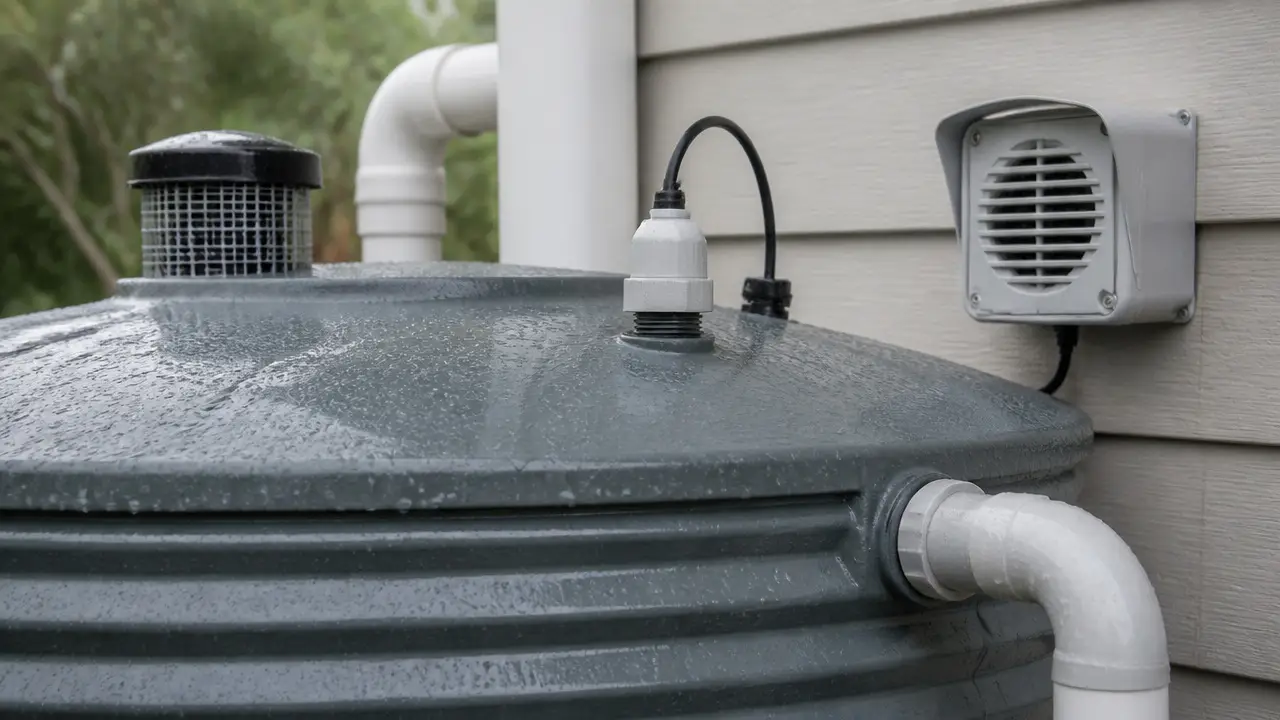
Every tote needs a way for air to move.
As water enters, air must escape. As water leaves, air must enter.
A sealed tote can develop unwanted pressure or vacuum.
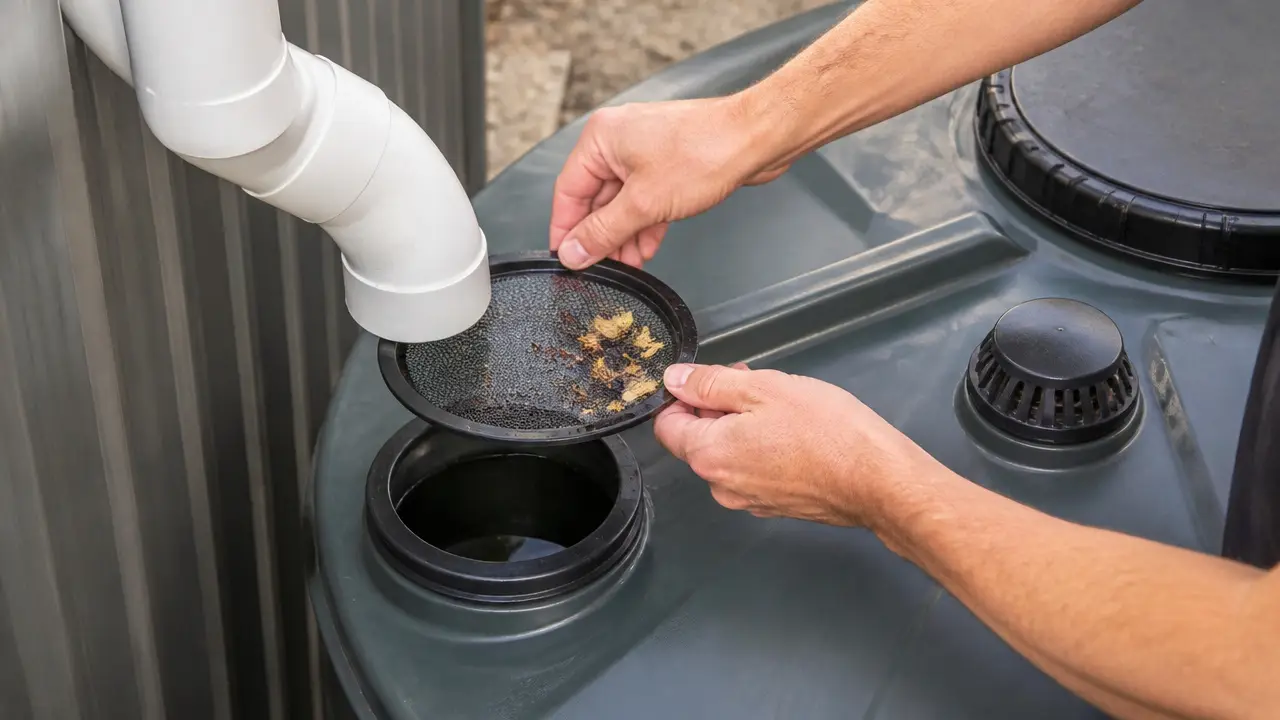
Tank vents should also be protected from insects, debris, and other contamination appropriate to the installation.
8. Install an Overflow
The system needs a controlled overflow once all totes are full.
A good overflow should carry water away from:
- Foundations.
- Tank bases.
- Electrical equipment.
- Walkways.
- Areas prone to erosion.
Do not depend on water backing up through the gutter or roof collection pipe as your normal overflow system.
9. Test With a Small Amount of Water
Do not fill several totes completely during the first test.
Add water gradually and inspect:
- Outlet adapters.
- Gaskets.
- Valves.
- Hose connections.
- Manifold joints.
- Overflow fittings.
Watch the water levels in the totes. They should begin equalizing when the connecting valves are open.
Fix leaks or alignment problems before adding the full water load.
Where Should Rainwater Enter the System?
There are two common approaches.
Feed One Tote
Rainwater enters the first tote and moves through the lower manifold to the others.
This is simple, but the manifold must move water fast enough to prevent the first tote from filling faster than the others.
During intense rainfall, a restrictive connection can cause the first tote to overflow while other totes still have space.
Split the Inlet Between Totes
A larger collection system can divide incoming water between several totes.
This reduces how much water must move through the lower equalization line during a storm.
It can be useful when roof runoff arrives faster than the bottom manifold can redistribute it.
Review practical steps for attaching a hose to an ibc tote to verify long-term maintenance priorities for the installation.
For either arrangement, the roof collection system should include appropriate debris control and prefiltration.
Should the Overflow Be on the First or Last Tote?
If all totes are connected at the bottom and their levels equalize freely, the overflow can often be installed near the normal maximum water level of the tank bank.
However, relying on only one overflow requires confidence that the connecting pipes can equalize the totes quickly enough.
For high-flow roof collection systems, multiple overflow paths or a larger overflow arrangement may be appropriate.
The overflow should be able to handle incoming water when storage is already full.
Can You Connect IBC Totes at the Top Instead?
Yes, but top connections behave differently.
An upper pipe can transfer water after the first tote reaches that connection height. This arrangement is sometimes called a cascade or overflow system.
For example:
Downspout
   |
 Tote 1
   |
 High-level transfer
   |
 Tote 2
   |
 High-level transfer
   |
 Tote 3
This method can fill totes one after another.
However, it does not provide the same bottom-level equalization as a common lower manifold.
If water is drawn only from one tote, the other totes may not automatically replenish it unless they are also connected at the bottom.
For many installations, a lower manifold provides more useful shared storage.
Can You Connect Totes in Series?
You can, but it is usually less convenient.
In a strict series arrangement, water moves from Tote 1 through Tote 2 before reaching Tote 3 or the system outlet.
This can create bottlenecks.
A problem with the first tote, valve, or connecting pipe may affect every tote downstream.
Parallel connections usually provide better isolation and more even water movement.
How to Connect IBC Totes for a Pump
If a pump will draw from several totes, feeding it from the common manifold is usually better than drawing from only one tank.
The plumbing must still provide enough flow rate, meaning the amount of water moving through the pipe over time.
A powerful pump connected to a narrow manifold may pull water from the nearest tote faster than the other totes can replenish it.
That can lead to:
- Uneven tank levels.
- Reduced pump flow.
- Air entering the suction line.
- Pump cycling problems.
- Possible dry running.
Keep the pump within its specified lift, suction, flow, and pressure limits.
Where appropriate, use dry-run protection so the pump shuts down rather than operating without enough water.
Pump wiring and permanent electrical work near water should be handled using equipment and installation methods suitable for the location. Bring in a qualified electrician when required.
Gravity Systems Need Height for Pressure
Connecting several IBC totes gives you more water, but it does not create high pressure.
Gravity pressure comes from elevation.
For example, raising the water level above a garden line can improve pressure. Simply adding another tote beside the first one mostly increases capacity.
Drip irrigation and low-pressure watering can sometimes work well from gravity storage, but sprinklers and long hose runs may need more pressure than a ground-level tote can provide.
Protect the System From Debris
Bottom connections can collect sediment over time.
Keeping leaves and roof debris out of the tanks reduces problems in the manifold.
Depending on the collection system, useful components may include:
- Gutter screens.
- Downspout screens.
- Leaf separators.
- First-flush devices.
- Tank inlet screening.
A first-flush device diverts some of the initial roof runoff before water enters storage. It can reduce the amount of dirt and debris entering the tank, but it does not make roof runoff safe to drink.
Inspect the manifold periodically because sediment can settle in low areas.
Plan for Cleaning
Multiple connected totes should still be serviceable one at a time.
Isolation valves are especially valuable here.
A practical system lets you:
- Close one tote's valve.
- Disconnect or drain that tote.
- Clean or service it.
- Reconnect it.
- Reopen the valve.
Avoid plumbing that traps the totes permanently inside a rigid pipe network.
Consider Freezing Conditions
Water trapped in valves, hoses, manifolds, filters, and pumps can freeze.
Frozen water expands and can damage plumbing even when the IBC itself appears unharmed.
In freezing climates, the system may need seasonal draining, protected plumbing, or another freeze-management plan suitable for local conditions.
Pay special attention to:
- Low points.
- Exposed valves.
- Pumps.
- Filters.
- Narrow hoses.
- Rigid pipe sections.
Do not assume wrapping a pipe or tank guarantees freeze protection.
Do Not Use Unknown IBC Totes for Drinking Water
Used IBC totes are common, but their previous contents matter.
Do not use a tote for drinking-water storage if you cannot verify what it previously contained or whether the container is suitable for that use.
Cleaning does not necessarily make a tote that held hazardous or unknown chemicals suitable for potable water.
Potable means suitable for drinking.
Roof-collected rainwater also should not be considered potable simply because it is stored in a clean tote. Drinking-water systems require suitable collection materials, treatment stages, maintenance, current water testing, and compliance with applicable local requirements.
For garden watering and many other outdoor uses, the system may be much simpler.
Common Problems With Connected IBC Totes
One Tote Fills Before the Others
Possible causes include:
- Connecting pipe is too small.
- A valve is partly closed.
- A hose is kinked.
- Debris is restricting the manifold.
- Totes sit at different elevations.
- Rain is entering faster than water can equalize.
One Tote Stays Almost Empty
Check its branch valve and connecting pipe for a blockage.
Also verify that air can enter and leave the tote.
The Manifold Leaks
Common trouble points include adapters, gaskets, unsupported pipe, and mismatched IBC threads.
Do not force a fitting that does not match the tote outlet.
Water Flow From the System Is Weak
The issue may be limited elevation rather than storage capacity.
Check:
- Water level.
- Outlet size.
- Hose diameter.
- Pipe length.
- Number of fittings.
- Filter condition.
- Pump requirements, if used.
The Totes Do Not Drain Evenly
Some difference is normal, especially while water is flowing quickly.
Large differences suggest excess restriction, different tank elevations, or a partially blocked branch.
A Simple Layout for Three IBC Totes
A practical three-tote system might use:
IBC 1 ---- Valve ----\
                      \
IBC 2 ---- Valve ------+---- Large common manifold ---- Main outlet
                      /
IBC 3 ---- Valve ----/
Each tote is vented, and the tank bank has a controlled overflow near the maximum water level.
The main advantage of this layout is flexibility. You can store water in all three totes while still isolating one when maintenance is needed.
Frequently Asked Questions
Do connected IBC totes fill evenly?
They usually move toward the same water level when connected through an unrestricted bottom manifold and placed at the same elevation. During fast filling or draining, one tote may temporarily have a higher level than another.
What size pipe should I use to connect IBC totes?
There is no single correct size. The pipe must handle the expected transfer flow between totes and the flow required by the outlet or pump. Very small connections can prevent the tanks from equalizing quickly during heavy rainfall.
Can I connect IBC totes with garden hose?
It is possible for a slow-transfer system, but garden hose may severely limit equalization flow. A larger manifold is usually better when several totes receive roof runoff or supply a pump.
Do all connected IBC totes need vents?
Yes. Each tank needs adequate air movement as water enters and leaves. Vent openings should also be protected appropriately against insects and debris.
Can several IBC totes use one pump?
Yes. A common approach is to connect the totes to a shared lower manifold and draw from that manifold. The plumbing must supply the pump's required flow without allowing the pump to run dry.
Can I stack IBC totes to increase water pressure?
Stacking or raising full IBC totes creates serious structural loads. Do not improvise elevated supports. Any platform must safely carry the full water load and resist movement. A properly designed pressure pump is often a safer way to obtain higher water pressure.
Can I add another tote later?
Yes, if the original system was designed with expansion in mind. Shutoff valves, unions, accessible pipework, and enough manifold capacity make future additions much easier.
Should I connect the totes at the top and bottom?
A bottom connection is usually enough for level equalization. Upper connections may be added for filling or overflow management, but they serve a different purpose. The final design should make sure incoming rainwater and overflow can move safely even during high-flow conditions.