As an affiliate, we may earn a commission from qualifying purchases. We get commissions for purchases made through links on this website from Amazon and other third parties.
Intermediate bulk containers, or IBCs, come in several capacities, but a few sizes are much more common than the rest.
For rainwater storage, the sizes you are most likely to find are:
- 275 gallons — about 1,040 liters
- 330 gallons — about 1,250 liters
- 1,000 liters — about 264 US gallons
In North America, 275-gallon and 330-gallon IBC totes are the most common. In countries that use metric sizes, the 1,000-liter IBC is especially common.
Common IBC Tote Sizes
| Nominal capacity | Approximate liters | How common it is |
|---|---|---|
| 135 gallons | 511 L | Less common |
| 180 gallons | 681 L | Less common |
| 220 gallons | 833 L | Occasional |
| 250 gallons | 946 L | Occasional |
| 275 gallons | 1,041 L | Very common |
| 300 gallons | 1,136 L | Common |
| 330 gallons | 1,249 L | Very common |
| 1,000 liters | 264 gallons | Very common internationally |
Exact capacities vary by manufacturer. Do not assume two totes with similar-looking cages hold exactly the same amount.
275-Gallon IBC Totes
The 275-gallon IBC is one of the most widely available sizes for home rainwater systems.
Many versions use a pallet-sized footprint close to 48 by 40 inches, although exact measurements vary. They are shorter than most 330-gallon totes, which can make them easier to fit under a gutter or inside a shed.
A 275-gallon tote works well for:
- Garden watering
- Drip irrigation
- Greenhouse water storage
- Small rainwater systems
- Adding storage tanks one at a time
Its relatively compact size also makes it easier to place several totes beside each other.
330-Gallon IBC Totes
A 330-gallon IBC normally has a similar footprint to a 275-gallon tote but is taller.
That extra height provides about 55 more gallons of storage without taking much more ground space.
This can be useful where:
- Ground space is limited
- A roof produces a lot of runoff
- Several dry days may occur between storms
- You want more storage without installing a large cistern
Remember that the greater height also affects clearance under gutters, roofs, decks, and shelters.
1,000-Liter IBC Totes
The 1,000-liter IBC is an extremely common industrial size.
One thousand liters equals roughly 264 US gallons, so its capacity is close to a 275-gallon tote.
Many metric IBCs use a footprint around 1,200 by 1,000 mm, but dimensions are not universal. Always measure the actual container before designing a platform, enclosure, plumbing layout, or gutter connection.
Does IBC Size Affect Rainwater Storage?
Yes, but capacity is only part of the decision.
A larger tote holds more water, but the right size depends on how much rain your roof can collect and how quickly you use the water.
A simple estimate for US measurements is:
Roof area in square feet × rainfall in inches × 0.623 = theoretical gallons of runoff
For example, 500 square feet of roof receiving 1 inch of rain could theoretically produce:
500 × 1 × 0.623 = about 312 gallons
Real systems collect less because of splash, gutter losses, first-flush diversion, leaks, overflow, and other losses.
That means even a moderate roof can fill a 275-gallon tote during one good storm.
Two Smaller IBCs vs. One Larger Tank
Sometimes two IBC totes make more sense than one large storage tank.
For example, two 275-gallon totes provide about 550 gallons of nominal storage.
Multiple totes can make expansion easier. However, connecting them adds more fittings and possible leak points.
If tanks are connected at the bottom, their outlets and connecting pipes need to handle the expected flow. The tanks should also sit on stable, level support.
Do not assume two tanks will fill or drain evenly simply because they are connected.
Check the Actual Dimensions Before Buying
Capacity names do not tell you everything.
Two 275-gallon IBCs can have different:
- Overall heights
- Cage designs
- Pallet materials
- Fill openings
- Valve styles
- Outlet threads
- Lid sizes
- Manufacturer specifications
This matters when you plan to connect pumps, hoses, filters, irrigation lines, or additional tanks.
Measure the tote and identify the valve connection before buying adapters.
IBC Outlet Sizes Are Not Universal
IBC totes often have large bottom discharge valves, but the connection standard can vary.
Threads that look nearly identical may not fit each other.
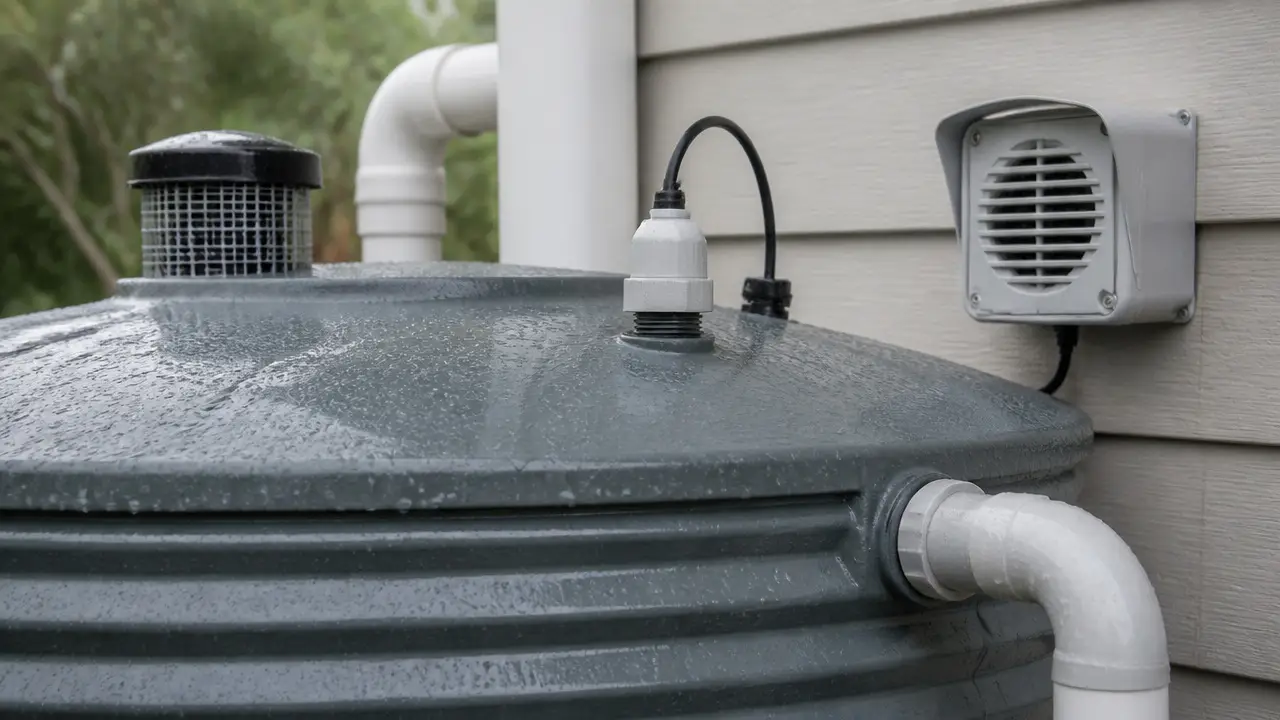
Alongside key facts about the typical sizes of rainwater tanks, compare overflow capacity and ventilation for long-term storage.
Possible differences include:
- Thread diameter
- Thread pitch
- Valve manufacturer
- Male or female connections
- Cam-lock adapters
- Hose-barb adapters
- Reducers
Do not order plumbing parts based only on the tote's gallon capacity. Identify the actual outlet first.
Weight Matters More Than Many People Expect
Water is heavy.
One US gallon of water weighs about 8.34 pounds.
A 275-gallon tote can therefore contain roughly:
275 × 8.34 = 2,294 pounds of water
That is more than one ton, before adding the weight of the tote and cage.
A 330-gallon tote can contain roughly:
330 × 8.34 = 2,752 pounds of water
The base must be level and strong enough for the full load.
Be especially cautious about placing filled IBCs on decks, raised platforms, balconies, or other structures. Structural loading may require professional evaluation.
Previous Contents Matter
For rainwater storage, the tote's history can be more important than its size.
Used IBCs may previously have contained:
- Food ingredients
- Soap
- Oils
- Fertilizers
- Industrial chemicals
- Cleaning products
- Other liquids
Do not use a tote of unknown history for water that may contact food, people, or animals.
Simply rinsing a container does not prove that harmful residues have been removed.
For drinking-water systems, use containers intended for that purpose and treat drinking water as a complete collection and treatment system. A suitable tank alone does not make roof runoff potable.
Leave Room for Overflow
Choosing a larger IBC does not eliminate the need for overflow management.
Once the tote fills, additional roof runoff must go somewhere safe.
An overflow should direct water away from:
- Building foundations
- Crawl spaces
- Walkways
- Neighboring property
- Areas prone to erosion
The overflow also needs enough capacity to handle heavy rainfall.
Which IBC Size Is Best for Rainwater?
For many home systems, 275 gallons is a practical starting size because these totes are common and relatively compact.
A 330-gallon tote makes sense when you want more storage from roughly the same ground footprint and have enough vertical clearance.
A 1,000-liter tote is the standard choice in many metric markets.
The better approach, however, is to size storage around your roof area, local rainfall pattern, intended water use, available space, and expected dry periods rather than choosing a tote simply because it is common.
Frequently Asked Questions
What is the most common IBC tote size?
In North America, 275-gallon and 330-gallon IBC totes are among the most common. Internationally, the 1,000-liter IBC is very common.
Is a 275-gallon IBC the same as a 1,000-liter IBC?
They are close, but not exactly the same. A 275-US-gallon container holds about 1,041 liters, while a 1,000-liter container holds about 264 US gallons.
Are 275-gallon and 330-gallon IBC totes the same dimensions?
Not usually. They often have similar footprints, but 330-gallon totes are commonly taller. Exact dimensions vary by manufacturer.
How much does a full 275-gallon IBC weigh?
The water alone weighs about 2,294 pounds. The actual filled weight is higher once the container, pallet, and cage are included.
Can I connect several IBC totes together?
Yes. Multiple IBCs can be connected to increase rainwater storage. The fittings, pipe size, tank levels, overflow arrangement, and supporting surface all need to work together.
Do all IBC totes use the same valve connection?
No. IBC outlet threads and valves vary. Identify the exact valve and thread before buying adapters or plumbing parts.
Is a used IBC tote safe for collecting rainwater?
That depends on its previous contents and intended use. Avoid totes with unknown or unsuitable chemical histories. For water that may contact people, food, or animals, choose a container with a documented history appropriate for that use.