As an affiliate, we may earn a commission from qualifying purchases. We get commissions for purchases made through links on this website from Amazon and other third parties.
Most rainwater barrels hold 40 to 65 gallons, with 50- and 55-gallon barrels among the most common sizes for homes. Smaller barrels around 30 gallons work well where space is tight, while larger barrels of 75 to 100 gallons provide more storage but become very heavy when full.
The right size depends on your roof area, rainfall, available space, and how quickly you plan to use the collected water.
Common Rainwater Barrel Sizes
Typical residential rain barrels fall into these ranges:
| Barrel Size | Approximate Capacity | Common Use |
|---|---|---|
| Small | 30–40 gallons | Patios, sheds, small gardens |
| Standard | 45–55 gallons | Most residential downspouts |
| Large | 60–75 gallons | Larger gardens and higher water use |
| Extra-large | 80–100 gallons | More storage where space allows |
A 55-gallon barrel is especially common because barrels of this general size are widely available and still manageable to install beside a house.
Capacity does not tell you the exact dimensions. A tall, narrow 55-gallon barrel may take up less ground space than a shorter, wider model. Always check the actual height and diameter before planning your downspout connection.
How Big Is a 55-Gallon Rain Barrel?
There is no single standard dimension for every 55-gallon rain barrel.
Many barrels are roughly a few feet tall and around two feet across, but the exact measurements depend on the barrel shape and design.
Before choosing one, measure:
- The space beside the downspout
- The distance from the ground to the downspout connection
- Clearance around walls, fences, or air-conditioning equipment
- Space needed to reach the spigot and clean the barrel
- Room for an overflow hose or pipe
Remember that raising a barrel on a stable platform also increases its total installed height.
How Much Does a Full Rain Barrel Weigh?
Water is heavy. One U.S. gallon of water weighs about 8.34 pounds.
That means the water alone weighs approximately:
- 30 gallons: 250 pounds
- 50 gallons: 417 pounds
- 55 gallons: 459 pounds
- 75 gallons: 626 pounds
- 100 gallons: 834 pounds
The barrel itself adds more weight.
A full rain barrel therefore needs a firm, level, stable base. Do not place a large barrel on a weak deck, loose blocks, unstable soil, or another surface that may shift under the load.
Does a Bigger Barrel Always Make Sense?
Not necessarily.
A larger barrel stores more water, but it also needs more space and a stronger base. It may also take longer to empty if your garden uses little water.
Your roof can fill even a large barrel surprisingly quickly.
As a general estimate, 1 inch of rain falling on 1,000 square feet of roof produces about 623 gallons of water before collection losses. Some water is normally lost through splash, roof wetting, debris removal, first-flush systems, leaks, and overflow.
Even a much smaller roof section can fill a 50-gallon barrel during a moderate storm.
This is why overflow planning is important regardless of barrel size.
Choosing a Barrel Size Based on Roof Area
You do not necessarily need to connect your entire roof to one barrel. Usually, a rain barrel collects from one downspout serving only part of the roof.
A simple theoretical collection estimate is:
Gallons collected = roof area in square feet × rainfall in inches × 0.623
For example, a 200-square-foot roof section receiving 1 inch of rain could produce about:
200 × 1 × 0.623 = 125 gallons
That is the theoretical amount falling on the roof section. The amount reaching the barrel will be lower because real systems have losses.
A 55-gallon barrel connected to that downspout could therefore overflow before the storm ends.
When a 30- to 40-Gallon Barrel Works Well
A smaller barrel can make sense when:
- You have limited space.
- You collect from a small shed or roof section.
- You use water frequently.
- Your main goal is watering a few containers or garden beds.
- A larger barrel would block a walkway or window.
Smaller barrels are still extremely heavy when full, so they need the same attention to a level base and safe overflow routing.
When a 50- to 65-Gallon Barrel Makes Sense
This range works well for many household installations.
It offers enough water for routine garden use without taking up as much space as a large cistern or tank. It is also relatively easy to connect several barrels together if you later need more capacity.
For many homeowners, starting with one barrel in this range is simpler than installing a very large storage system immediately.
When to Consider 75 to 100 Gallons
Larger barrels can be useful when:
- You have a larger garden.
- Rainfall events are separated by longer dry periods.
- You have enough room beside the building.
- You regularly use the stored water between storms.
- The installation area can safely support the weight.
At this capacity, pay particular attention to the base, connections, overflow system, and access for cleaning.
A large container that remains full most of the time may not provide much additional stormwater storage when the next rain arrives.
Connecting Multiple Rain Barrels
Instead of buying one very large barrel, another option is to connect two or more smaller barrels.
For example, two 55-gallon barrels provide about 110 gallons of total nominal storage.
Connected barrels can provide several advantages:
- Storage can be expanded later.
- Barrels can fit along a wall instead of occupying one large footprint.
- Individual containers may be easier to clean or replace.
The connecting fittings must be compatible with the barrel walls and openings. A bulkhead fitting is a fitting that passes through the wall of a tank or barrel while creating a sealed connection.
Examine choosing the right rain-barrel capacity to verify tank materials suited to the water’s intended use.
The barrels also need properly sized overflow protection. Connecting more storage does not remove the need for a safe overflow route.
Leave Room for Overflow
A rain barrel needs somewhere for excess water to go once it is full.
The overflow should carry water away without causing problems around:
- Foundations
- Crawl spaces
- Walkways
- Neighboring property
- Erosion-prone soil
Do not assume that buying a larger barrel will prevent overflow. Roof runoff volumes can be much greater than barrel capacity.
A properly planned overflow is part of the system, not an optional accessory.
Think About How You Will Use the Water
Barrel size should match your intended use.
Rainwater collected from a roof is commonly used for non-potable purposes. Non-potable means water that is not intended for drinking.
Examples may include garden irrigation and other uses allowed by local rules.
Roof runoff can contain dirt, bird droppings, microorganisms, roofing contaminants, and other pollutants. A rain barrel does not make the water safe to drink.
Using collected rainwater as drinking water requires a properly designed collection and treatment system, suitable materials, ongoing maintenance, current laboratory testing, and compliance with applicable local requirements.
Other Features Matter as Much as Capacity
Two barrels with the same capacity can perform very differently in a rainwater system.
Check the following before choosing one:
Inlet Size
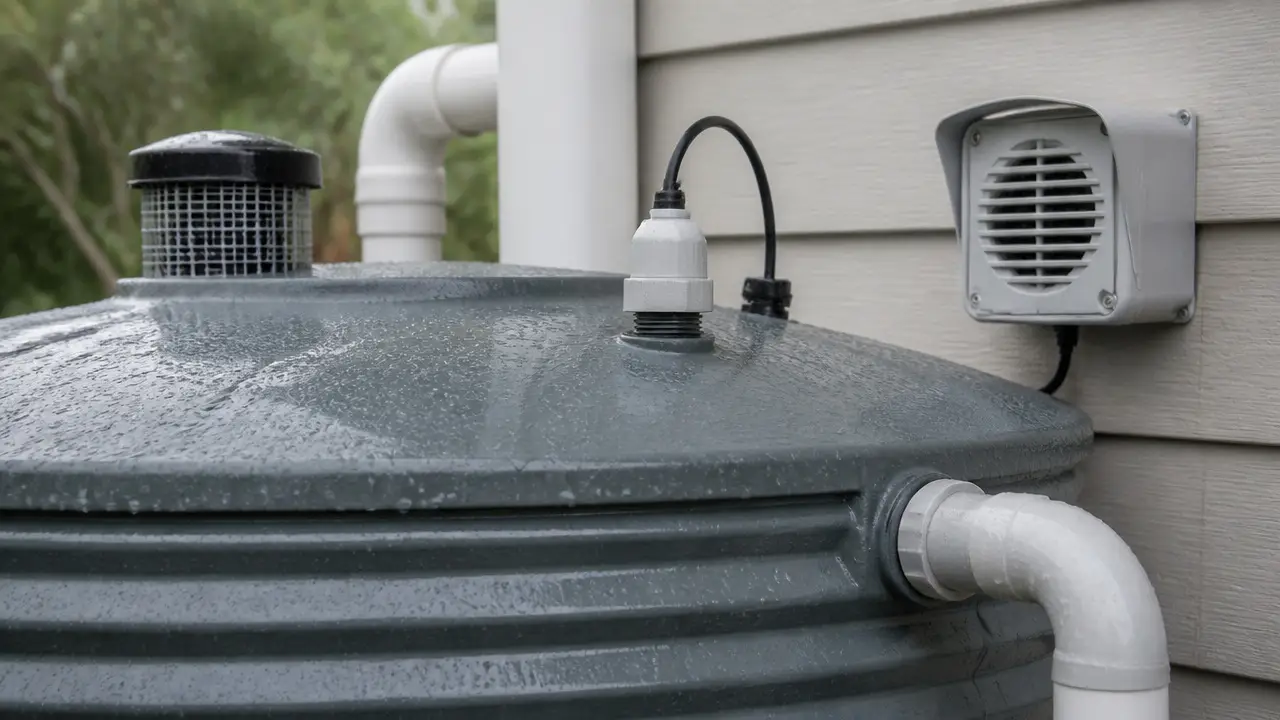
The inlet must work with your downspout diverter or other collection method.
Overflow Connection
The overflow should be large enough and positioned so excess water can leave the barrel safely.
Spigot Height
A very low spigot may leave little room for attaching a watering can or hose unless the barrel is elevated.
Cleaning Access
A removable lid or sufficiently large opening can make sediment removal and cleaning easier.
Screening
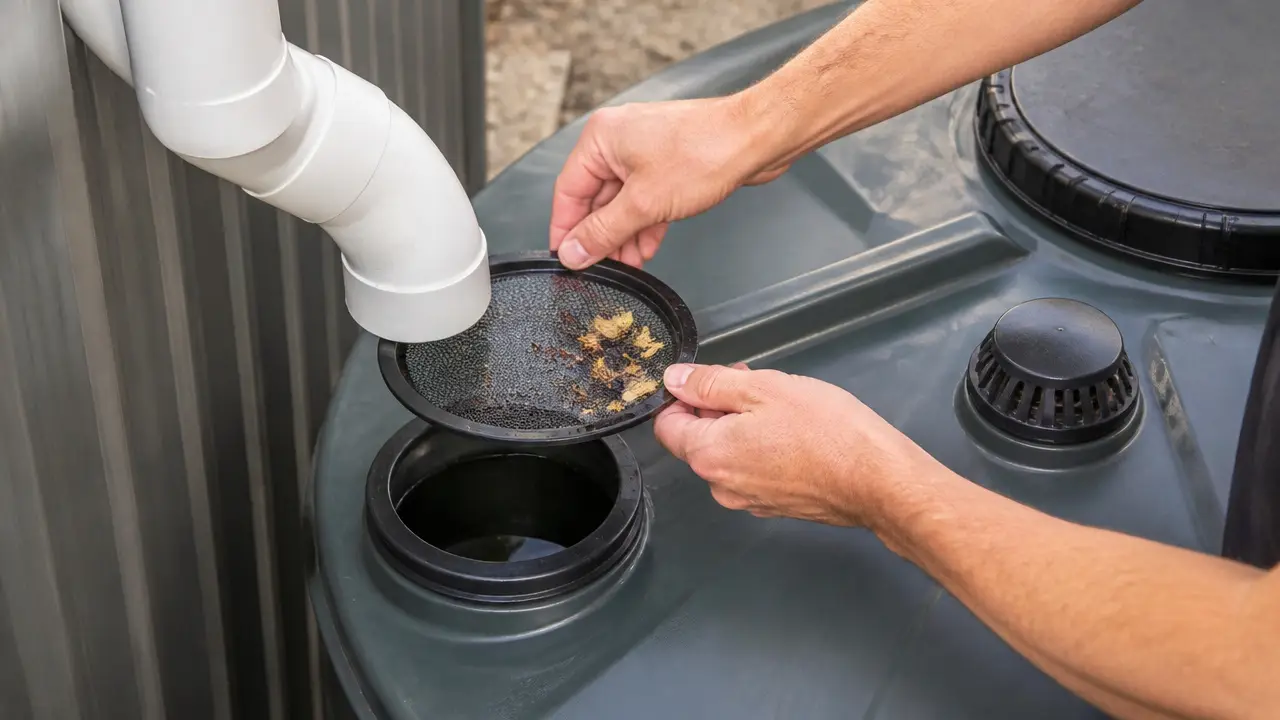
Openings should be screened to reduce leaves and debris entering the barrel and to help prevent mosquitoes from accessing standing water.
Material
Choose a container suitable for water storage and outdoor conditions. Avoid repurposing containers that previously held unknown, toxic, or hazardous substances.
Barrel Size Versus a Larger Storage Tank
Rain barrels work well when you need tens of gallons of storage.
Once your storage goal reaches several hundred gallons, connecting many small barrels can become complicated. More containers mean more fittings, connections, cleaning points, and possible leak locations.
For larger systems, a dedicated storage tank or cistern may be easier to manage.
A cistern is simply a larger container used to store water. Depending on the system, it may hold hundreds or thousands of gallons.
Moving to that scale also introduces additional considerations such as structural support, pumps, plumbing, overflow capacity, access, and local requirements.
Frequently Asked Questions
What is the most common rain barrel size?
Rain barrels around 50 to 55 gallons are among the most common sizes for household use. They provide useful garden-water storage without requiring the space of a large tank.
Is a 50-gallon rain barrel big enough?
It can be enough for a small garden or occasional watering, especially if you use the water regularly. However, many residential roof sections can produce more than 50 gallons during a single storm, so an overflow system is still necessary.
How quickly can a 55-gallon rain barrel fill?
It depends on roof area and rainfall. A relatively small roof section can produce more than 55 gallons during one substantial rainfall event. Use the roof-area formula to estimate how much water reaches a particular downspout.
Are 100-gallon rain barrels available?
Yes. Containers around 100 gallons can be used for rainwater storage. They require more room and a strong, level base because the water alone can weigh more than 800 pounds when the container is full.
Can I connect two 55-gallon rain barrels?
Yes, barrels can be connected when compatible fittings and properly designed plumbing are used. Two 55-gallon barrels provide about 110 gallons of nominal capacity. You still need a safe overflow route.
Should I buy the biggest rain barrel possible?
Not always. Choose a size based on available space, roof runoff, how much water you use between storms, installation weight, and maintenance access. A very large barrel offers little advantage if it stays full and unused.
Can rain barrel water be used for drinking?
A basic rain barrel should not be treated as a source of automatically safe drinking water. Roof runoff can contain biological and chemical contaminants. Drinking-water use requires a whole-system approach that includes suitable collection, treatment, maintenance, current laboratory testing, and applicable local requirements.